Translate

Showing posts with label DRONE. Show all posts

Dec 2, 2017

Armed US Drones to Start Flying Over Niger

The United States and Niger have reached an agreement permitting armed American military drones for use against jihadist terror groups in the African nation, a U.S. official told VOA.
The agreement, finalized this week, is a major expansion of U.S. military’s efforts to counter terrorism in Africa. It is unclear whether the drones will be used to carry out targeted strikes or solely as a defensive measure.
Until now, the U.S. has only been conducting airstrikes against terrorists on the continent operating inside Libya and Somalia. Officials say that arming drones based in Niger would expand the military’s ability to go after extremists in West Africa, where Nigeria-based Boko Haram, Algeria-based al-Qaida in the Islamic Maghreb and Islamic State fighters operate.
Pentagon spokeswoman Army Major Audricia Harris would not comment on the new permissions.
voanews

Feb 12, 2016

Pentagon Kills Its Killer Drone Fleet

The U.S. military spent billions developing an armed drone that could take off from an aircraft carrier. But now, the Pentagon says it doesn’t want that kind of flying robot at all.
The Defense Department’s budget proposal for 2017, released on Feb. 9, terminates an on-again, off-again program dating back to the late 1990s that aimed to develop a bomb-hauling robotic jet capable of launching from and landing on the U.S. Navy’s aircraft carriers.
The decision to cancel the so-called Unmanned Carrier Launched Airborne Surveillance and Strike is reflected in the Defense Department’s 2017 budget proposal, released on Feb. 9. The proposal shows a combined $818 million in funding for the UCLASS killer drone program in 2015 and 2016 and, abruptly, no money at all in 2017.
Instead, there’s a new budget line for 2017—a meager $89 million for a so-called “Carrier Based Aerial Refueling System.” In other words: Goodbye, drone death from above. Hello, flying robot gas stations.
thedailybeast

Jan 9, 2016

Chabelley Airfield in Djibouti The small airstrip that is the future of America’s way of war

The Pentagon is quietly building up a small airstrip in a remote region of east Africa as part of its war against Islamic militants. More importantly, the airfield is a complex microcosm of how Washington runs military operations overseas — and how America’s way of war will probably look for the foreseeable future.
Chabelley Airfield is less than 10 miles from the capital of the small African nation of Djibouti. The small airport is the hub for America’s drone operations in the nearby hotspots of Somalia and Yemen.
But in spite of all of this, Chabelley isn’t what it might otherwise seem – at least not officially. You see, the site is not technically an American base.
“Chebelley [as the Pentagon likes to spell it] was categorized by the U.S. Global Defense Posture Report to Congress as an enduring Cooperative Security Location based upon the U.S. strategic interests in maintaining access for the foreseeable future.”
In plain English, Washington does not own the site, sometimes referred to by the acronym CSL. In contrast to the big American bases in Europe and Asia during the Cold War, the Pentagon has favored cutting deals with countries for access to existing runways and ports in its fight against militants around the globe something that make sense in an era of shrinking budgets
reuters

Nov 6, 2015

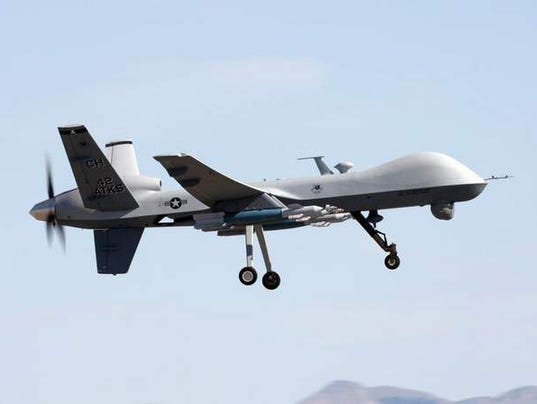
US State Department OKs Spain Buying MQ-9 Reaper Drones

The US State Department has cleared the sale of MQ-9 Reaper unmanned aerial vehicles to Spain's military.
The sale, which covers four MQ-9 Block 5 aircraft and associated equipment, parts and logistical support, would be worth an estimated $243 million.
Spain is looking to join the United Kingdom, France, Italy and the US as countries operating the MQ-9.
Spain intends to use the drones purely for ISR, so the vehicles will not be armed.
In addition to the systems themselves, the sale would include 20 Embedded Global Positioning System/Inertial Guidance United (three per aircraft plus eight spares); two Mobile Ground Control Stations; five multi-Spectral Targeting Systems (one per aircraft plus one spare); and five Synthetic Aperture Radar, Lynx AN/APY-8 (also one per aircraft plus a spare).
Although the notice that the State Department has cleared the sale was posted on the DSCA's website, that does not mean the sale has been completed. Congress must still OK it, and then a contract must be drawn up and finalized.
defensenews

May 18, 2015

Canada Restarts Attempt to Buy Drones

Canada does not have a medium-altitude, long-endurance (MALE) UAV. It uses its CP-140 Aurora maritime patrol aircraft to fulfill the ISR mission against Islamic State extremists in Iraq.
Since 2006, Canada's military has been trying to purchase a fleet of UAVs, but it has faced an uphill battle due to lack of funding.
Air Force officers announced in 2006 that JUSTAS would see the purchase of MALE UAVs, but little has happened on that project.
The Air Force made a pitch to the Canadian government in 2007 for the sole-source purchase of Predator UAVs, built by General Atomics, but that was rejected.
Instead, in 2009 the Canadian military signed a lease arrangement which provided the Heron, made by Israel Aerospace Industries, for operations in Afghanistan. That lease ran from 2009 to 2011.
When the JUSTAS project was active, both MDA and General Atomics indicated they intended to bid.
Northrop Grumman also made an unsolicited offer in 2012 to provide Canada with a fleet of Global Hawks, specifically for Arctic operations, but the Canadian government did not act on that proposal. The Air Force determined that the cost of the Global Hawks was too expensive for the Arctic capability.
defensenews

Mar 11, 2015

US Lawmakers Push White House to Sell MQ-1 Predator Drones to Jordan

Members of Congress are pushing the Obama administration to embrace a plan to lend older-model, surplus drones to Jordan for the fight against the Islamic State.
In a Republican-led letter to the White House, 23 House members said Monday that Jordan should be allowed to borrow U.S. Air Force-owned MQ-1 Predator drones.
The Air Force is currently replacing its MQ-1 fleet with the more advanced MQ-9 Reapers, which are more heavily armed. As a result, a portion of the fleet of older Predators is currently not in use, and those drones aren’t considered critical to U.S. missions.
Predators typically carry two Hellfire missiles. A congressional official said that under the plan, the U.S. would loan three or four Predators to Jordan. That would be enough drones to keep at least one aloft around the clock.
Jordan is an active member of the U.S.-led coalition against Islamic State, also known as ISIS, and has intensified its involvement after a Jordanian pilot captured by the extremist group was burned to death while locked in a cage.
In meetings with members of Congress, Jordan has requested clearance to purchase armed and unarmed drones from General Atomics.
The U.S. Air Force has a shortage of drone pilots, making it difficult for the U.S. to fly the surplus predators themselves. Jordanian pilots, trained to fly F-16 fighters, could be relatively easily retrained to fly the drones.
Jordanian fighter planes have mostly struck fixed targets in Syria, rather than moving vehicles or other so-called dynamic targets. Acquiring their own drones could expand the range of targets Jordanian forces could strike.
wsj

Mar 2, 2015

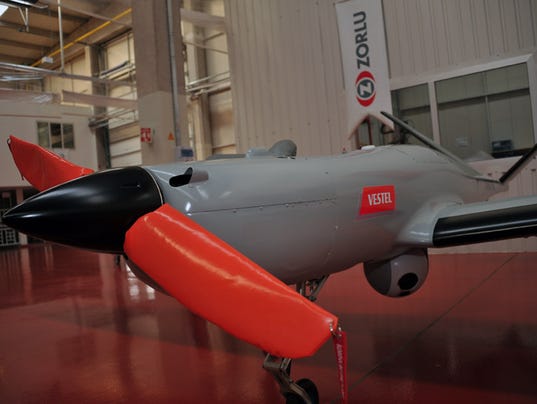
Karayel Turkish Drone Passes Flight Test with Payload

Karayel locally-developed Turkish drone passed a critical flight test, flying with an electro-optical camera and a total payload of 51 kilograms.
Thedrone is ready to enter the Turkish military's inventory.
Vestel has been developing the tactical done since 2005.
The Karayel is an unmanned air vehicle system designed for aerial observation. The Karayel began test flights in 2009. Remote sensing systems on board are able to detect a target and mark for laser-guided munitions.
Vestel will procure six aircraft to the Turkish military.
defensenews

Feb 10, 2015

Reaper sale to the Netherlands approved

The US State Department has approved the of MQ-9 Reapers to the Netherlands.
Certification by the DCSA was delivered to Congress. The Netherlands has requested four Block 5 Reapers, four Block 30 or 50 ground control stations, and various sensor and communications systems.
c4isrnet

Dec 17, 2014

South Korea signs Global Hawk deal for 2017-2019 delivery

South Korea has signed a USD657.4 million Foreign Military Sales contract for four Northrop Grumman RQ-4B Block 30 Global Hawk unmanned aerial vehicles (UAVs), two spare engines, and two ground control systems, the US Department of Defense announced on 16 December.
Deliveries are to begin by 2017 and will be complete by 2019. South Korea first expressed interest in the Global Hawk in 2005 and made a formal request for aircraft in 2009.
The Block 30 Global Hawk's synthetic aperture radar will be helpful in penetrating the mist that often obscures parts of the Korean peninsula, while the system's endurance of some 35 hours and ability to operate at altitudes of 50,000 to 65,000 ft (15,240 to 19,810 m) will provide Seoul with a persistent intelligence, surveillance, and reconnaissance (ISR) capability.
South Korea has always been heavily dependent on US ISR assets for its security. The Global Hawk purchase is the first step in giving it an independent ISR capability.
janes

Dec 9, 2014

X-47B May Begin Automated Aerial Refueling Demonstrations Next Year

The Navy’s carrier-based unmanned aircraft demonstrator is undergoing preparations for automated aerial refueling testing next year, including a possible flight demonstration using the aircraft itself, said officials from the service and X-47B manufacturer Northrop Grumman.
Thusfar, the Navy had used a surrogate aircraft for AAR testing.
The service in June 2014 awarded a contract modification to Northrop Grumman for aerial refueling research, development, test and evaluation efforts at Naval Air Station Patuxent River in Maryland
The X-47B is the Navy’s first carrier-based drone, capable of almost completely autonomous operations even as the ship moves throughout the seas. The stealthy, tailless aircraft can take off, conduct surveillance and land back on the carrier using a combination of algorithms and sensors that allow it to land on the runway with precision. It first showcased that ability in May 2013 during sea trials on the USS George H.W. Bush when it successfully completed its first touch-and-go and arrested landings.
In August 2014, it returned to the carrier deck once again for its first cooperative flight with a manned aircraft. This time, it flew in pattern with an F-18 Hornet over the USS Theodore Roosevelt.

nationaldefensemagazine

Nov 28, 2014

Lockheed Offers Unmanned U-2 Concept

U-2 advocates push optionally manned variant as a rival to Global Hawk.
Lockheed Martin has crafted a reduced-cost plan to “optionally man” its U-2, throwing a new possibility into the mix as Congress weighs whether to shift to an Global Hawk unmanned aircraft fleet for high-altitude reconnaissance. With an optionally manned U-2, advocates for the so-called Dragon Lady say the venerable aircraft finally can match the endurance offered by the RQ-4B Global Hawk.
Amy Butler-aviationweek

Nov 27, 2014

700X NAS, First Royal Navy Drone Squadron

700X – X for ‘Xperimental’ – Naval Air Squadron will be at the vanguard of the Fleet Air Arm’s venture into the world of unmanned flight with ‘eyes in the sky’ pilotless aircraft.
The squadron has been established at RNAS Culdrose to oversee the deployment of Remotely Piloted Air Systems (RPAS) to pave the way for similar aircraft in the future.
For nearly a year, ScanEagle has been launched from the decks of HMS Somerset, Northumberland and Cardigan Bay, and is now being flown from HMS Kent, which has just arrived in the Arabian Sea to begin counter-piracy patrols.
Launched by a catapult on a 14ft ramp, ScanEagle can remain airborne for 12 hours operating at ranges of up to 40 miles from the mother ship, beaming live video of what it sees – by day or night, thanks to its electro-optical and infra-red camera – directly into the ship’s operations room.
Since being introduced to ships deployed east of Suez at the beginning of the year, ScanEagle has clocked up nearly 1,500 hours on missions.
It was brought in to provide eyes for the Royal Navy’s minehunting force in the Gulf, but has proved equally useful in counter-piracy and counter-smuggling operations thanks to its ability to constantly watch over a boarding operation – or monitor a suspicious vessel pretty much undetected.
royalnavy

Nov 15, 2014

Russia will deploy Drones in Far East Region

A detachment of UAVs will be introduced in Russia's Chukotka Autonomous Area, the country's Eastern Military District (EMD).
The detachment will be stationed at one of the airfields near the city of Anadyr.
It is planned that airfield-based UAVs and mobile systems will make up part of the detachment's service.
The main objectives of this UAV detachment will be the provision of safe maritime navigation in the Arctic zone, air reconnaissance in the coastal zone and in the territorial waters of the Russian Federation under the Eastern Military District's control.
Earlier in 2014, Putin ordered the establishment of a separate public body responsible for the implementation of Russian policies in the Arctic and a unified network of naval facilities to host advanced warships and submarines to boost the protection of Russia's interests and borders in the area.
sputniknews

Nov 12, 2014

Australian official confirms Taranis test location

Royal Australian Air has confirmed flight testing of the BAE Systems-led Taranis unmanned combat air system demonstrator took place at the nation’s Woomera test range, removing a classification status previously imposed by the UK Ministry of Defence.
Taranis successfully flight trialled its advanced unmanned combat air vehicle at Woomera in August last year.
A first series of flights was conducted with the stealthy type at Woomera, with a second round having been performed between late the same year and January 2014. The latter involved flying the aircraft in what BAE describes as a “fully stealthy configuration, making it virtually invisible to radar”. Additional trials are now the subject of discussion between the company and the MoD.

flightglobal

Nov 10, 2014

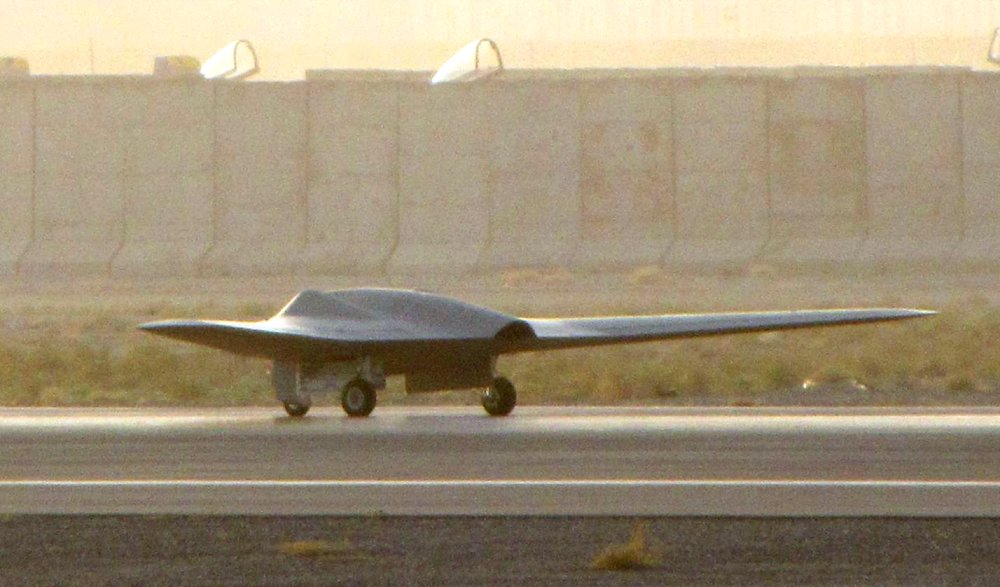
Iran touts successful test of RQ-170 US drone replica

Iran said Monday that it has successfully tested its own version of a U.S.-made drone based on one it captured in 2011.
State TV quoted  head of the aerospace division of the elite Revolutionary Guard, as saying the test was carried out earlier Monday.
"As we promised earlier this year, a test flight of the Iranian version of the RQ-170 was carried out and a video will be released soon," he said. Iran had displayed the drone earlier this year.
Iran has said it managed to reverse-engineer the RQ-170 Sentinel, seized in December 2011 after it entered Iranian airspace from neighboring Afghanistan, and that it's capable of launching its own production line for the unmanned aircraft.
sfgate

Nov 5, 2014

Poland to buy armed drones amid Ukraine crisis

Poland said Tuesday it will acquire combat drones as part of a multi-billion-euro revamp of its armed forces amid heightened tensions with Russia over its role in the Ukraine crisis.
Warsaw will begin acquiring reconnaissance drones in 2017 and attack models in 2018-2019. Talks are underway with US manufacturers, among others.
Poland has earmarked 33.6 billion euros ($42 billion) to upgrade its military equipment over a decade, including acquiring a missile shield and anti-aircraft systems, armoured personnel carriers and submarines in addition to the drones.
The escalation of tensions with Russia over its role in the Ukraine crisis has sounded the alarm on NATO's eastern flank in countries that were once under Moscow's thumb.
globalpost

Oct 25, 2014

MQ-8C Fire Scout readied for upcoming ship-trials

The US Navy has undertaken land-based flight tests of the MQ-8C Fire Scout in preparation of seat-trials later in the year.
The tests, saw the unmanned helicopter perform a series of take-offs and precision landings on sloped surfaces to simulate a ship at sea.
As the Bell 407-based MQ-8C uses the same autonomous take-off and landing systems as the already deployed Schweizer Aircraft 330-based MQ-8B, the tests were carried out primarily to verify their function on the larger platform.
janes

Oct 17, 2014

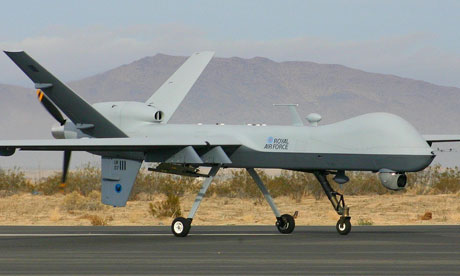
UK To Add Reapers to Air Power Operating in Iraq

Britain is adding Reaper remotely piloted aircraft to its forces deployed to fight Islamic State militants in Iraq.
Defence Secretary said in a statement to Parliament that surveillance and strike missions conducted by the Reaper will start shortly and build up as the aircraft are withdrawn from Afghanistan, where they have been operating for several years in support of NATO’s fight against the Taliban.
The indications are that two Reapers will be deployed initially. Britain has 10 of the General Atomics-built machines.
The Royal Air Force Reapers will boost a British strike force against the Islamic State comprising eight Tornado jets, a Rivet Joint signals intelligence aircraft and an inflight refuelling aircraft.
defensenews

Oct 6, 2014

RAF Reaper drones 'bound for Iraq'

Britain’s heavily armed Reaper drones could soon be sent to spy on Isil militants in Iraq according to plans being drawn up by the RAF.
Defence planners are considering sending the remotely-piloted aircraft to the Middle East once they have finished watching over the withdrawal of British troops from Afghanistan.
If the plan is given the go-ahead, the aircraft could be in place around the end of the year.
Britain is currently building up its surveillance planes in Afghanistan to cover the final weeks of the British withdrawal from Helmand. Commanders fearful that the final pull out from Helmand will see British forces at their most vulnerable want as much intelligence as possible to avoid attacks and ambushes.
As well as Reaper drones flying from Kandahar airfield, the RAF has recently sent a Sentinel spy plane that had been in Nigeria searching for schoolgirls kidnapped by Boko Haram. Last week the Army announced it was finally flying its long-awaited Watchkeeper surveillance drone over Afghanistan, just weeks before the pull out from Helmand.
RAF sources said once the withdrawal was complete, the Reapers would need to be packed up and shipped to an airbase in the Middle East, which could take as long as a month.
American drones are flying from bases inside Iraqi territory, but it is not clear which sites the RAF would use.
telegraph