Translate

Showing posts with label OMAN. Show all posts

Feb 23, 2026

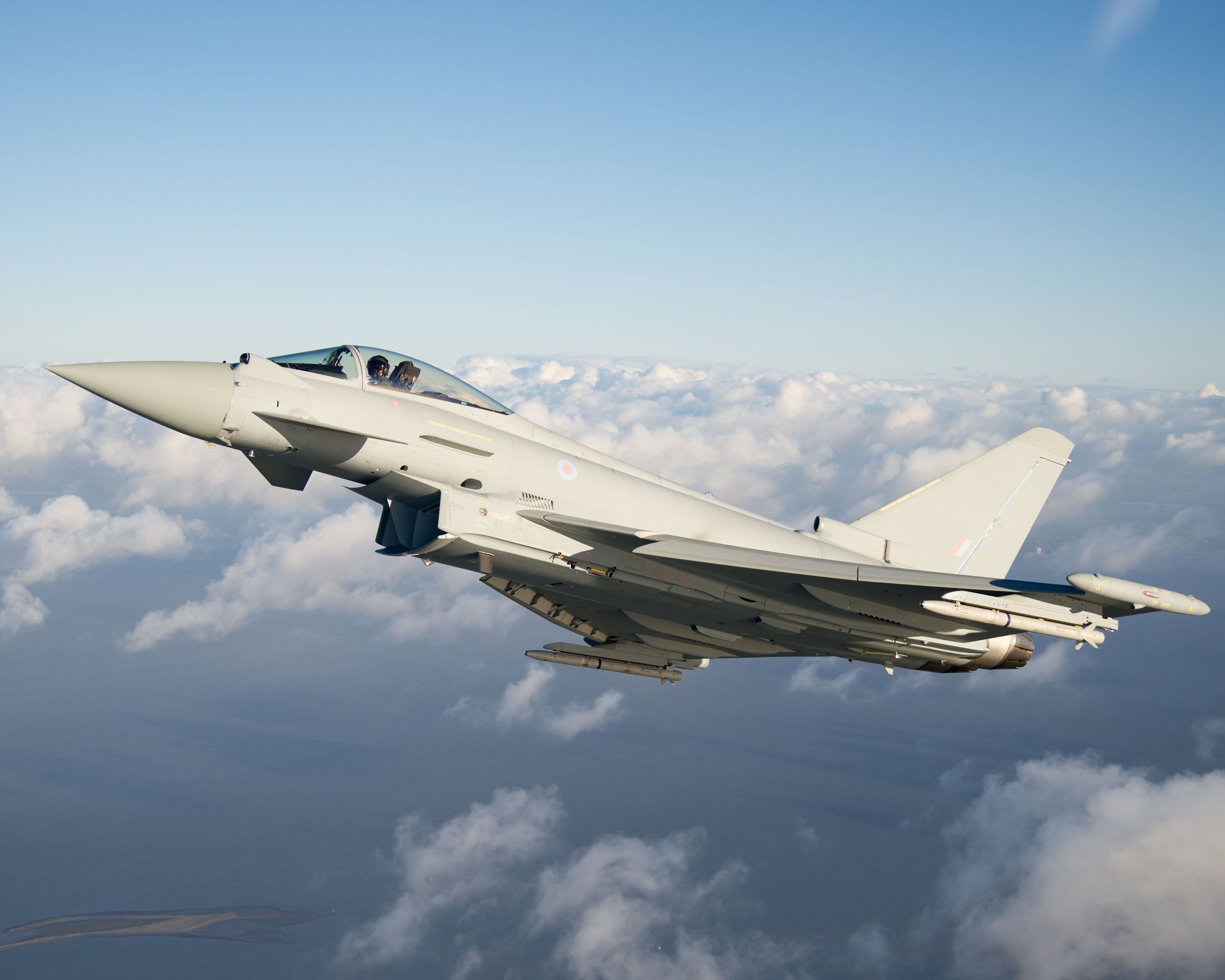
Turkey Reinforces Its Bet on the Eurofighter as the U.S. F-16 Path Cools


Turkey’s interest in the Eurofighter has moved beyond a tactical maneuver and is increasingly shaping into a strategic decision of greater depth. In recent weeks, multiple reports point not only to the continuation of talks with the program’s partner nations, but also to a possible increase in the initially proposed number of aircraft, suggesting a more solid and structural commitment to the European fighter.

This move cannot be analyzed in isolation. It comes at a time when relations between Ankara and Washington in the field of combat aviation remain marked by uncertainty.

The F-16: a large fleet, but a constrained one


Turkey operates one of the largest F-16 fleets outside the United States. However, for years it has faced political restrictions affecting access to upgrades, modernization kits, critical spare parts, and long-term industrial support. While some packages have been partially unblocked, the message has been clear: U.S. support is neither automatic nor guaranteed.

For an air force that requires predictability, this represents a serious challenge. The F-16 remains a valid platform, but its operational value depends directly on political and industrial backing from Washington.

The Eurofighter as a European alternative

In this context, the Eurofighter emerges as an option less exposed to unilateral vetoes, thanks to its multinational structure, which dilutes political control by any single actor. For Turkey, the appeal lies not only in the aircraft’s performance, but in supplier diversification and the ability to sustain an advanced combat capability without exclusive reliance on the United States.

The fact that an expanded order is now being discussed suggests that Ankara no longer sees the Eurofighter as a stopgap solution, but rather as a core pillar of its combat aviation for the next decade.

A favorable European framework: production and available batches

The European industrial context also works in favor of this option. According to recent information, the total number of Eurofighters to be produced in the coming years is increasing, driven by new orders and contract expansions. This keeps production lines active and enables economies of scale.

The most commonly cited outlook within industrial circles is as follows:

  • United Kingdom: 20 + 20 newly built Eurofighters
  • Qatar: 12 + 12 Eurofighters
  • Oman: 12 Eurofighters (to be upgraded in the United Kingdom)

Within this framework, the Turkish Air Force could acquire 56 Eurofighters, with an additional option for 20 more aircraft, significantly increasing the model’s weight within its combat inventory.

Such volumes not only reinforce the Eurofighter’s operational viability, but also ensure industrial support, long-term logistics, and technological continuity—key elements for a country seeking to reduce external dependencies.

Moreover, the Eurofighter fits well into the transition toward the KAAN program. It helps bridge the operational gap while the national fighter matures, provides industrial and doctrinal experience, and reduces pressure on a development effort Turkey aims to keep as independent as possible.

Rather than a contradiction, the coexistence of Eurofighter, F-16, and KAAN reflects a layered strategy: sustaining capabilities today while securing autonomy tomorrow.

The renewed interest—and potential expansion—of the Eurofighter order is not a symbolic gesture. It is the direct consequence of an uncomfortable reality for Ankara: total dependence on the United States for combat aviation is no longer viable.

Turkey is sending a clear signal: its airpower future cannot be subordinated to external political decisions. In that context, the Eurofighter ceases to be an alternative and becomes a key component of Turkey’s strategic balance.

Feb 1, 2026

India Turns to Ex-Ecuador, French and Omani Jaguars to Keep Its Fleet Flying


The SEPECAT Jaguar has long been a workhorse for the Indian Air Force (IAF). Introduced in the late 1970s, this subsonic strike aircraft has performed close air support, deep strike, and reconnaissance roles across decades of operations. Today, the Jaguar remains a critical component of India’s strike capability, even as its airframes age and production lines have long since closed.

Maintaining a fleet of legacy aircraft is never straightforward. India faces the classic challenge of operating a platform for which no new production exists. Engines, landing gear, avionics, and specialized structural components cannot simply be ordered from a manufacturer. To address this, the IAF has relied on a strategy of selective cannibalization from retired airframes, a practice that has become central to sustaining the Jaguar fleet.


Oman has played a pivotal role in this logistics equation. In 2018–2019, the Royal Air Force of Oman retired a number of Jaguars, which India acquired primarily to harvest spare parts. These aircraft were never intended to fly in Indian service; instead, they provide engines, mission avionics, landing gear, and other high-value components that are increasingly difficult to obtain from original suppliers. The Omani airframes effectively extend the operational life of India’s active fleet, allowing the IAF to plan for Jaguar operations well into the mid-2030s.


More recently, attention has turned to Ecuador. Reports indicate that the Ecuadorian Air Force has four Jaguars in storage, preserved since their retirement. India has opened discussions to acquire these airframes, following the same model as the Omani deal: dismantle for parts, integrate into India’s existing Jaguar logistics chain, and maintain fleet readiness. By securing multiple sources of retired airframes, India reduces dependency on a single supplier and ensures the continuity of a complex, legacy supply chain.

The Jaguar is the only aircraft of its type still in operational service with India, and the FMS and original European production lines no longer exist. The only practical way to sustain the fleet is to source retired airframes from other operators, either through direct purchase or through carefully negotiated transfers. India has already done this with airframes from France, Oman, and now looks to Ecuador. Each acquisition strengthens the supply pipeline and secures the ability to operate the aircraft in key strike and reconnaissance roles.

The Jaguars acquired from Oman or Ecuador are purely for sustainment purposes. The IAF is maintaining the current operational fleet size while mitigating the risks associated with an aging platform. This is a practical, low-profile solution that ensures operational continuity without major capital expenditure or the complexity of introducing an entirely new aircraft type.

The IAF’s approach demonstrates a pragmatic application of air logistics in a resource-constrained environment. By carefully sourcing retired airframes, prioritizing cannibalization, and integrating parts into a central maintenance pipeline, India is able to extend the life of its Jaguars for another decade and a half, while simultaneously preparing for gradual replacement by modern platforms in the 2030s.

Jan 22, 2026

Turkey to Receive First Ex-Qatari Eurofighter Typhoons by Late February


Turkey is preparing to receive the first of a batch of second-hand Eurofighter Typhoon fighter jets sourced from Qatar, with initial deliveries expected by the end of February 2026, according to reporting by Turkish broadcaster NTV, citing official statements from the Turkish Ministry of National Defence (MSB).

The announcement follows a high-level trilateral meeting in Doha involving the Turkish, Qatari, and British air force leadership, underlining the strategic and industrial complexity of Ankara’s Eurofighter procurement process.

According to NTV, the Chief of Staff of the Turkish Air Force, General Ziya Cemal Kadıoğlu, travelled to Qatar’s capital, Doha, to participate in a three-party coordination meeting with senior representatives of the Qatari Air Force and the Royal Air Force.

The meeting reportedly focused on delivery timelines, pilot training, aircraft preparation and logistics and integration planning

The Turkish Ministry of National Defence confirmed the visit and emphasized that the talks represent a key milestone in the execution phase of Turkey’s Eurofighter acquisition programme.

First Aircraft Expected by Late February

Turkish media reports indicate that the first Eurofighter Typhoon aircraft sourced from Qatar is expected to arrive in Turkey by the end of February, following the conclusion of contractual and technical preparations.

Turkey is set to acquire 12 Eurofighter Typhoons currently operated by the Qatar Emiri Air Force, forming the first operational tranche of Ankara’s Eurofighter programme.

In parallel, Turkish pilots have already begun flight training, marking the transition from negotiation to operational implementation.

This early delivery is designed to accelerate Turkish Air Force familiarisation and operational integration, while larger fleet modernisation efforts remain ongoing.

Broader Eurofighter Acquisition Plan

Turkey’s Eurofighter roadmap extends well beyond the Qatari aircraft.

Oman Tranche – 12 Aircraft


Turkey has also reached an agreement to acquire 12 Eurofighter Typhoons currently in service with the Royal Air Force of Oman. These aircraft belong to the Tranche 3 production standard and will undergo modernisation in the United Kingdom before delivery.

Deliveries of the modernised Omani aircraft are expected to begin from 2028 onwards.

New Production Tranche – 20 Aircraft

In addition to the second-hand aircraft, BAE Systems is expected to manufacture 20 new-build Eurofighter Typhoons for Turkey, starting production around 2030.

These aircraft will reportedly correspond to the latest Tranche 4 configuration, incorporating:

  • Advanced AESA radar
  • Enhanced electronic warfare systems
  • Improved mission computing
  • Expanded weapons integration

Final deliveries are projected to be completed by 2032, bringing Turkey’s total confirmed Eurofighter fleet to 44 aircraft.

Optional Expansion – +20 Aircraft

The agreement reportedly includes an option for an additional 20 aircraft, which could raise Turkey’s eventual Eurofighter fleet to 64 jets, depending on operational satisfaction, budget availability, and long-term force planning.

Operational Implications for the Turkish Air Force

The Eurofighter Typhoon acquisition significantly enhances Turkey’s air superiority and deep-strike capability, particularly following Ankara’s exclusion from the F-35 programme and delays in domestic fifth-generation fighter development.

The Typhoon offers:

  • High-performance air-to-air combat capability
  • Advanced sensor fusion and data-link networking
  • Integration of long-range Meteor air-to-air missiles, with engagement ranges exceeding 200 km
  • Multi-role flexibility in both air dominance and strike missions

For the Turkish Air Force, the platform provides a critical qualitative leap, restoring advanced fighter capacity while domestic programmes such as KAAN continue development.

Strategic Context

Turkey’s Eurofighter programme reflects:

  • Urgent operational needs driven by regional security tensions
  • The necessity to modernise an ageing F-16 fleet
  • A desire to diversify strategic defence partnerships
  • The requirement to maintain NATO interoperability

By combining second-hand aircraft for rapid induction with new-build jets for long-term force structure, Ankara is pursuing a balanced acquisition strategy, prioritising both speed and sustainability.

Turkey’s Eurofighter plan represents one of the most ambitious European fighter acquisitions of the decade.

The phased approach — starting with Qatari aircraft, followed by Omani jets, and culminating in new-build Tranche 4 fighters — allows the Turkish Air Force to rapidly regain technological parity while building toward long-term fleet renewal.

Operationally, the integration of Meteor missiles and advanced AESA radars significantly strengthens Turkey’s air dominance posture across the Aegean, Eastern Mediterranean, Black Sea, and Middle Eastern theatres.

However, fleet complexity, sustainment costs, and long-term industrial participation will remain key challenges, especially as Turkey balances Eurofighter operations alongside F-16 modernisation and its indigenous KAAN fighter programme.

If fully executed, this acquisition could reshape Turkey’s air power profile well into the 2040s.

Feb 19, 2016

Oman first Typhoon enters in final assembly

The first Eurofighter Typhoon for the Royal Air Force of Oman.
Under a contract signed in 2012, Oman will also take delivery of eight Hawk 166 advanced jet trainers from BAE.
BAE delivered 12 Typhoons to Saudi Arabia last year, and 6 for the UK Royal Air Force.
flightglobal

Sep 11, 2015

Kuwait To Purchase 28 Typhoons

Kuwait has agreed to purchase 28 Typhoon combat jets in a deal with the Italian government.
Kuwait has agreed to buy 22 single seat and six twin-seat Typhoons in a government-to-government agreement.
Italian firm Finmeccanica's Alenia Aermacchi division has been leading the Eurofighter effort to sell the Typhoon to the Kuwaitis.
Kuwait could be the first export customer for the active electronically scanned array (AESA) radar being developed for the jet by Italy's Selex ES.
Saudi Arabia and Oman are already Typhoon customers in the region. The Saudis have been talking about a further buy of the jets and Bahrain is also another potential customer.
The deal follows reports in May that the Kuwaitis were in discussions with the US to purchase up to 40 Boeing F/A-18 fighters.
The position on those negotiations is unknown.
defensenews

Mar 26, 2015

Saudi Arabia Launches Air Campaign in Yemen

Saudi Arabia waged early Thursday “Operation Decisive Storm” against the Houthi coup in Yemen and in support of legitimate President.
A Saudi air campaign was launched overnight which has already resulted in the elimination of several Houthi leaders.
Yemen air space is currently under full control of the Saudi Royal Air Force.
As the operation continues, a coalition of all GCC countries, barring Oman, is taking part in the campaign, including Sudan, Egypt, Morocco, Jordan and Pakistan.
Saudi Arabia has deployed 100 fighter jets, 150,000 soldiers and other navy units.
The White House has voiced support for the campaign against the Houthis. Saudi Arabia’s Ambassador to Washington Adel al-Jubeir announced the kingdom had launched a military operation involving air strikes in Yemen against Houthi fighters who have tightened their grip on the southern city of Aden where Hadi had taken refuge.
alarabiya

Nov 19, 2014

RAF To Be Equipped With Bunker Busting Version of Paveway IV

British combat jets are on course to be armed with a new bunker busting version of the Paveway IV precision guided bomb.
Raytheon UK, the weapon’s maker, is conducting preparatory work using an existing contract with the MoD ahead of a possible deal next year to equip Royal Air Force and Fleet Air Arm jets with a compact warhead.
The contractors carried out ground trials at the UK’s Pendine test range in 2012.
A new warhead and fuze for the Paveway IV would replace earlier generation weapons like the Paveway III bunker buster used by the Royal Air Force in Libya in 2011.
The new generation Paveway IV has a 500-pound warhead compared with 2,000-pounds for the Paveway III.
Paveway IV is carried by RAF Tornado jets and was recently cleared for action onboard the Typhoon.
Typhoon contractor BAE Systems announced earlier this month that two Paveway IVs had been released from the combat jet simultaneously for the first time during a recent flight test.
Aside from the Tornado and Typhoon, the Paveway IV will also be fitted to the F-35B when it enters service with the RAF and the Royal Navy later in the decade.
The weapon has also been acquired by Typhoon and Tornado operator Saudi Arabia.
Executives are now targeting Oman as a second Paveway IV export customer following their purchase of Typhoon jets.
defensenews

Oct 23, 2014

Oman RAFO Retires Jaguar Aircraft After 37 Years In Service

The Royal Air Force of Oman (RAFO) held a ceremony to mark the retirement of its SEPECAT Jaguar ground attack aircraft after 37 years of service. The ceremony was held at the Al Shafaq Club in Seeb last week.
The move leaves India as the only country in the world still using Jaguars.
The Jaguars have now been replaced by new F16 aircraft. Although the ceremony was held last week, RAFO had officially retired its SEPECAT Jaguar operations, with the aircraft carrying out a disbandment flypast at the Thumrait airbase in August.
RAFO received its first Jaguar in 1977, under a 12-aircraft acquisition programme from the UK.
A second batch was ordered in 1982 and introduced the following year.
muscatdaily

Oct 20, 2014

RAF Now Flying Improved Typhoon Aircraft

Typhoon fighters equipped with a package of new capabilities have entered operational service with the Royal Air Force.
BAE Systems, said Friday that the first 15 of the RAF aircraft fitted with what is known as the Phase 1 Enhancements Package (P1E) are now in service.
Separately, BAE is also working on a new set of upgrades for the jet. BAE expects to be under contract to integrate the latest version of the Brimstone ground attack missile, known as Brimstone 2, on Typhoon in the first quarter of 2015.
By next April the RAF should have received 35 of the Tranche 2 fighters upgraded with the new P1E capabilities, that will eventually see all 67 aircraft of the type in the British fleet modified.
The RAF expects to declare full operational capability in April.
The upgrade includes integration of the Paveway IV precision guided bomb, full air-to-surface integration including a Litening III targeting pod, and full integration of the IRIS-T short-range air-to-air missile used by all the Typhoon operators except the UK.
Other Eurofighter partner nations will receive P1E enhancements starting in 2015.
Only Tranche 2 aircraft will receive P1E. The enhancements come as standard on Tranche 3 aircraft now being delivered to European Typhoon partners and customers like Saudi Arabia and Oman.
Brimstone 2 is expected to enter service on RAF Tornado jets next year.
defensenews

Sep 30, 2014

Oman to get Lanza surveillance radar system

Oman has ordered a new air defence surveillance system for its air force based on the Lanza 3D radar.
The Spanish company Indra announced on 30 September that it will "integrate its most advanced air surveillance solutions" in Oman. The company did not identify the system, but said the radar Oman will receive is already in operation with several air forces and "handles the surveillance in Europe's NATO southwest flank".
Lanza surveillance radar, which is in service with both the Spanish and Portuguese militaries, as well as several Latin American countries.
janes

Aug 14, 2014

Oman retires last Jaguar strike aircraft

Oman has retired its last four operational Sepecat Jaguars, with the strike aircraft carrying out a disbandment flypast with 8 Sqn at its Thumrait air base on 6 August.
The Royal Air Force of Oman received its first Jaguars in 1977, under what was originally a 12-aircraft acquisition from the UK. A second batch of the type was ordered in 1982, and introduced from the following year.
Muscat's retirement of the Jaguar leaves the Indian air force as sole operator of the Jaguar, with 161 Sepecat Hindustan Aeronautics-supplied examples in use.
The Oman air force, which had previously expected to halt operations with its remaining Jaguars in 2012, earlier this year took delivery of its first aircraft in the USA from a follow-on order for 12 Lockheed Martin F-16C/Ds. The service already has 10 of the single-seat fighters and a pair of two-seat trainers in use from a previous contract.
Oman also has also ordered 12 Eurofighter Typhoons to meet its future requirements, with these to be supplied by BAE Systems from later this decade.
flightglobal

Feb 24, 2014

Time Running Out on Europe's Typhoon Orders

Production of the Eurofighter Typhoon may conclude at the end of 2017 if there are no further orders from the program's four partner nations or export customers.
Governments and industry are in discussions over the fate of the final order of Eurofighter Typhoon combat jets for the four partner nations involved in the program amid Germany’s plan to end its purchases early.
The British, German, Italian and Spanish governments are in negotiations with industry over whether to go ahead with part or all of what is known as the Typhoon Tranche 3B order.
An Italian source said the industry partners have given the governments a deadline to decide whether they wish to order Tranche 3B aircraft or not.
The four nations are on the hook for a total of 124 Tranche 3B aircraft for what is planned to be the last batch of the twin-engine planes to be delivered to the European partners.
With budget cuts across Europe biting into Air Force fighter jet numbers, analysts have for some time written off the possibility of a Tranche 3B order, unless export orders are counted as part of the commitment.
The governments might have to pay compensation to industry if they do not turn their longstanding commitment to buy the remaining Tranche 3 aircraft into a firm order.
Tranche 3 was split into 3A and 3B portions as a compromise among the four nations and industry in 2009, after the governments balked at committing to the entire remaining order for the fighter jet amid the deepening economic crisis in Europe and beyond.
Britain has the largest 3B commitment at 48 aircraft, followed by Germany with 37, Italy with 25 and Spain with 14. All but the Germans have deep public finance problems, which have led to reductions in defense spending.
The first of 112 Tranche 3A aircraft ordered by the four nations was test flown by BAE for the first time late last year.
Assembly lines across the four nations will start going quiet at the end of 2017 if there are no further orders from the partner nations or export customers.
Executives, though, say they are confident production of the Typhoon will continue well beyond 2020 on the back of export orders.
An additional order for Saudi Arabia and a possible deal with Bahrain look like the best prospects in the export market.
The fighter also is competing in Qatar and Kuwait, and secondhand planes are being offered for lease by Malaysia.
India remains a potential customer if France’s Dassault Aviation fails to seal long-running negotiations to supply the Rafale.
The United Arab Emirates could also re-emerge as a customer, even though the gulf state and BAE broke off negotiations in December for a possible 72-jet order.
More than 400 Tranche 1 and Tranche 2 Typhoons have been delivered to the four partner nations, plus export customers Austria and Saudi Arabia. The aircraft has also been purchased by Oman.
defensenews

Nov 22, 2013

Eurofighter Aims for AESA Radar Contract by Mid-2014

Eurofighter is targeting the middle of 2014 to secure a deal with the fast jet’s European partner nations to develop an active electronically-scanned array (AESA) radar for the Typhoon.
The deal will involve the development of a production-standard AESA radar by the Selex ES-led Euroradar consortium.
A mid-year contract signing means it would be close to a two-year wait since the NATO Eurofighter and Tornado Management Agency (NETMA) , which manages the program on behalf of the British, German, Italian and Spanish governments, issued Euroradar a request for proposals to develop the AESA system.
The drawn-out effort to make a production-standard AESA radar available to the Typhoon partners and export customers has drawn criticism from many quarters .
The slow pace of capability improvement approvals on Typhoon is partly responsible for a determination by industry and partner government to change the construct of Eurofighter and possibly NETMA to make the approval process more agile as the emphasis of the program begins to move away from production of aircraft for the European partners toward meeting export customers’ requirements.
Typhoon has already been sold to Austria, Oman and Saudi Arabia; the aircraft is involved in export competitions in Bahrain, Qatar, the United Arab Emirates, Malaysia and Kuwait.
Development work on the Selex radar, known as Captor-E, has been continuing, partly funded by industry. Typhoon test aircraft IPA7 is almost ready to start shakeout flights following modifications to make it capable of testing an AESA radar.
The first flight is expected before the end of the year, after which the machine will be fitted out with a development standard radar in the first quarter of next year.
Typhoon’s strike weapons capabilities are on track to allow flight test campaigns with Storm Shadow and Taurus cruise missiles to get underway.
In the case of Storm Shadow, Alenia Aermacchi is expected to flight test the weapon at the Decimomannu air base in Sardinia imminently; a similar campaign on the Taurus is scheduled to get underway in December.
Eurofighter’s capability full integration clearance for Storm Shadow is planned for 2015.
The weapon is already used by the Saudis, British and Italians on Tornado strike aircraft.
Integration work on the MBDA Meteor beyond visual range air-to-air weapon is already going full tilt.
The latest standard of Typhoons, known as Tranche 3, now starting to come off the assembly lines in all four European partner nations, are being fitted for but not with conformal fuel tanks.
The first Tranche 3 aircraft, a Royal Air Force machine, is due to fly by the end of the year.
defensenews

Nov 20, 2013

Raytheon in final talks on Qatar Patriot deal

Raytheon hopes to finalize the sale of its Patriot air and missile defense system to Qatar,and wrap up the sale of additional Patriot fire units to Kuwait before the end of the year.
The Qatar deal involves 11 fire units.
The Patriot system is already used by 12 countries - United States, Netherlands, Germany, Japan, Israel, Saudi Arabia, Kuwait, Taiwan, Greece, Spain, South Korea and UAE.
The company is was also working to finalize a significant sale of its medium-range National Advanced Surface to Air Missile System to Oman in the near future.
Saudi Arabia and UAE are possible additional buyers of the system as a replacement for the older Hawk system they used now.
reuters

Jul 26, 2013

Raytheon in final talks to sell air-defense system to Oman

Raytheon is in final negotiations to sell an air-defense system to Oman.
U.S. Secretary of State John Kerry flew to Oman in May for Raytheon’s signing of an arms deal to purchase a ground-based air defense system that would help protect against cruise missile, drone or fighter aircraft attacks.
The Oman sale is valued at around $1.5 billion.
english.alarabiya

Jun 21, 2013

C295 ready to support Omani training

Airbus Military is displaying the 100th production example of its C295 medium transport at the show, and says the twin-engined type is ready to be delivered to future operator the Royal Air Force of Oman.
Sporting camouflage markings and the service number 901, the aircraft features in the Le Bourget Paris Air Show static display . The airlifter will be transferred to Omani ownership in Seville, Spain, immediately.
The delivery will be handed over a little bit ahead of schedule,
Royal Air Force of Oman commander said the they will train their initial pilots and loadmasters, and by the end of this year, the aircraft will be in service as a tactical transport.
Oman signed an eight-aircraft deal for the C295 in May 2012 and its aircraft will be split between the tactical transport and maritime patrol aircraft configurations. The new type will replace an aged inventory of Shorts Skyvans.
flightglobal

May 1, 2013

C-295, Oman's Skyvan replacement nears flight test


Airbus Military's first of eight C295 medium transport and maritime patrol aircraft (MPA) on order for the Royal Air Force of Oman is due to enter flight testing at the company's San Pablo site near Seville on 14 May.
Oman ordered five transports and three MPA in May 2012, as replacements for its aged Shorts Skyvans, with its deal including personnel training. The first of its new aircraft entered the final assembly line in Spain on 27 February.
Once delivered, the new maritime patrol platforms will undertake reconnaissance and anti-piracy missions around the Gulf of Hormuz and other coastal regions, and conduct anti-pollution and exclusive economic zone patrols.
flightglobal

Jan 16, 2013

Oman C-130H to be upgraded by ST Aerospace


ST Aerospace has secured a contract to overhaul and update Oman’s three C-130H. The first aircraft is expected in Singapore this third quarter.
alert5

flightglobal

Dec 21, 2012

Oman to obtain 12 Typhoons, eight Hawks


BAE Systems has secured a deal for 12 Typhoon Tranche 3 fighters and eight Hawk advanced jet trainer aircraft, with deliveries to start in 2017.

Oman will be the seventh air force to operate the Typhoon, says BAE. Other operators are the UK, Germany, Italy, Spain, Austria and Saudi Arabia.

flightglobal, BY GREG WALDRON

Sep 16, 2012

Oman’s Super Hercules Homeward Bound


The first of three C-130J Super Hercules for Oman departed the Lockheed Martin facility here en route to Oman.

learn more