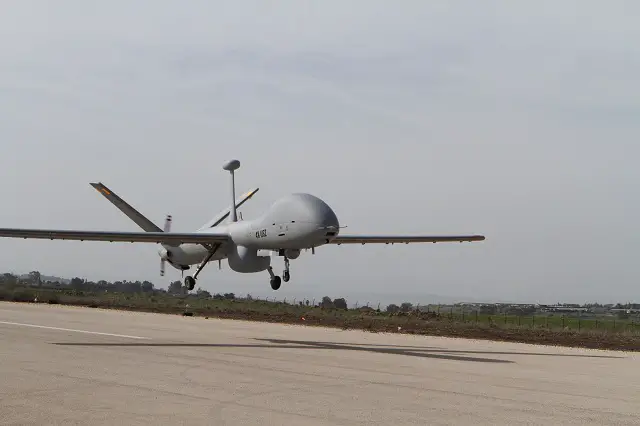
In the wake of suspected infiltration by unmanned aircraft presumed to be made in North Korea, Seoul has laid out plans to buy low-altitude radars to help detect enemy drones.
In recent weeks, three crashed UAVs were discovered near the border areas, including on an island just south of the sea border between the two countries.
Painted sky-blue, the planes were less than 2 meters in length and width and were equipped with Japanese Nikon digital cameras to take pictures of key military installations, as well as the presidential office in central Seoul.
Receiving a barrage of criticism for its air security loophole, the South Korean military said it is considering buying Israel’s RPS-42 Tactical Air Surveillance Radar System.
The system is fitted with an active electronically scanned array radar built by RADA Electronic Industries, and it can detect aerial objects within a radius of 30 kilometers. The radar is also known to detect a 2-meter-long object within 10 kilometers.
The South Korean military operates TPS-840K missile control and ground surveillance radars, but these are not known for being able to detect a non-metal object less than 2 meters wide.
The military also is considering modifying UK-made multipurpose radars for UAV detection. Twenty-four Blighter electronic scanning radars, developed by Plextek, are being operated in South Korea.
Blighter is a long-range ground surveillance radar suited to detecting moving vehicles and people.
In the latest test, the radar detected a UAV 10 kilometers away and a helicopter-borne camera 1.5 kilometers away.
The military asked Plextek to modify the radar enough to spot a UAV that is less than 2 meters.
On top of the radar, the military is pushing to acquire more thermal observation devices and multipurpose telescopes.
A laser weapon system that can destroy an approaching UAV is being considered for integration with the low-altitude radar. A candidate is a system made by Germany’s Rheinmetall Defence.
In bids to bolster the air security in the South, Seoul and Washington plan to define threats of North Korean drones and come up with countermeasures as part of their joint military operational plans.
The military made locally built UAVs public on April 8 amid criticism for failing to counter North Korea’s UAV threats.
One of them is the Remoeye-006, developed by Uconsystem. It is 1.72 meters long, 2.72 meters wide and weighs 6.5 kilograms.
The Remoeye-006 can conduct missions at day and night with infrared cameras and relay data in real time. It can fly up to 12 hours at a maximum speed of 75 kilometers per hour.
South Korea also operates the RQ-101 Songgolmae UAV built by Korea Aerospace Industries. Its camera can swivel around to offer panoramic pictures covering up to 20 kilometers during the day and 10 kilometers at night. It is 5 meters long and 6.2 meters wide and can fly at a maximum speed of 150 kilometers per hour.
South Korea is introducing medium- and high-altitude UAVs in coming years. Last month, the Defense Ministry announced it would buy four Global Hawks from Northrop Grumman million with the first delivery by 2018.
North Korea is believed to have about 300 reconnaissance drones and about 10 Russian-made Shmel UAVs carrying bombs.
Drones called Banghyeon are said to have been remodeled Chinese-made D-4 UAVs. Each drone’s fuselage is estimated to be 3.6 meters long with a wingspan of 4.8 meters. The UAV is believed to fly at a maximum speed of 160 kilometers per hour.
The Shmel is a short-range UAV that the North is believed to have procured in the 1990s. With a range of 60 kilometers, it can fly at a maximum speed of 150 kilometers per hour.
defensenews
Translate
Showing posts with label ELBIT. Show all posts
Apr 17, 2014
N. Korea's Drones Prompt Seoul To Seek Radars
Etiquetas:
DRONE,
ELBIT,
GLOBAL HAWK,
ISRAEL,
North Korea,
NORTHROP GRUMMAN,
SOUTH KOREA,
UAV
Mar 26, 2014
Elbit Systems Awarded Contract to Supply Brazil with Hermes 900 UAS
Elbit Systems has announced that it has been awarded a contract by the Brazilian Air Force-FAB for the supply of a Hermes 900 UAS. The Hermes 900, will be operated by FAB in combined missions with the Hermes 450 fleet, already in operational use. Both UAS will carry safety and security missions in the 2014 FIFA World Cup Games. The Hermes 900 will be supplied within two months.
FAB, is the eighth customer of the Hermes 900.
Elbit Systems subsidiary in Brazil, AEL SYSTEMAS S.A. will supply FAB with technical and engineering support as well as logistic and maintenance services.
elbitsystems
FAB, is the eighth customer of the Hermes 900.
Elbit Systems subsidiary in Brazil, AEL SYSTEMAS S.A. will supply FAB with technical and engineering support as well as logistic and maintenance services.
elbitsystems
Etiquetas:
BRAZIL,
DRONE,
ELBIT,
FAB,
FORÇA AEREA BRAZILEIRA,
HERMES 450,
HERMES 900,
ISRAEL,
UAS,
UAV
Feb 14, 2014
Israel bans IAI, Elbit from selling UAVs to Poland
Israel has withdrawn the export licenses to Poland for two large Israeli defense companies - Elbit Systems Ltd. and Israel Aerospace Industries. Following the extraordinary decision, the two companies are banned from operating in Poland and selling unmanned aerial vehicles (UAV) there.
The decision was taken because of a quarrel between the companies in the affair of UAV exports to the Polish Army, which resulted in the resignation of Poland's Minister of Defense two months ago. He was forced to resign for internal reasons, but the competition between Elbit Systems and IAI for the sale of UAV's to the Polish Army, which got out of control, was a contributing factor. A high point in the competition occurred when IAI questioned Minister's preference for Elbit Systems' Hermes 450 UAV. Complaints by IAI and other correspondence reached the Polish media, causing a storm that shook Poland's defense establishment.
Now, neither IAI nor Elbit Systems may sell UAVs and peripheral systems in Poland until further notice. This is happening when the Polish Army is undertaking an extensive procurement plan, which could have been good business for the Israeli companies.
globes
The decision was taken because of a quarrel between the companies in the affair of UAV exports to the Polish Army, which resulted in the resignation of Poland's Minister of Defense two months ago. He was forced to resign for internal reasons, but the competition between Elbit Systems and IAI for the sale of UAV's to the Polish Army, which got out of control, was a contributing factor. A high point in the competition occurred when IAI questioned Minister's preference for Elbit Systems' Hermes 450 UAV. Complaints by IAI and other correspondence reached the Polish media, causing a storm that shook Poland's defense establishment.
Now, neither IAI nor Elbit Systems may sell UAVs and peripheral systems in Poland until further notice. This is happening when the Polish Army is undertaking an extensive procurement plan, which could have been good business for the Israeli companies.
globes
Jan 6, 2014
US-Israel Arrow-3 Marks Milestone Test
The US-Israel Arrow-3 upper tier intercepting missile passed another developmental milestone with a successful exo-atmospheric maneuvering flight after launch over the Mediterranean Sea on Friday.
The Arrow-3 was successfully launched and flew an exo-atmospheric trajectory through space, according to the test plan.
The fly-out of the two-stage, hit-to-kill missile marked the second in a series of developmental milestones aimed at readying the system for a full-up intercept test in early 2015. It follows a successful maiden flight in February 2013.
Planned for initial fielding in 2015-16, Arrow-3 is designed as Israel’s first line of defense against emerging threats from Iran. Supported by the same fire control radar and battle management systems developed for Israel’s operational Arrow-2, the smaller and much more agile Arrow-3 aims to destroy advanced, maneuvering, unconventionally tipped Shahab-class missiles in space before they re-enter Earth’s atmosphere.
Israel’s planned upper tier layer of Arrow-3 active defense will be buttressed by the Arrow-2, which both countries continue to upgrade for intercepting missions high within Earth’s atmosphere.
Israel Aerospace Industries (IAI) is prime contractor for both Arrow missiles, with significant content produced in the United States by Boeing. IAI also provides the Super Green Pine fire control radar, while Elbit’s Tadiran provides the system’s battle management control center.
defensenews
The Arrow-3 was successfully launched and flew an exo-atmospheric trajectory through space, according to the test plan.
The fly-out of the two-stage, hit-to-kill missile marked the second in a series of developmental milestones aimed at readying the system for a full-up intercept test in early 2015. It follows a successful maiden flight in February 2013.
Planned for initial fielding in 2015-16, Arrow-3 is designed as Israel’s first line of defense against emerging threats from Iran. Supported by the same fire control radar and battle management systems developed for Israel’s operational Arrow-2, the smaller and much more agile Arrow-3 aims to destroy advanced, maneuvering, unconventionally tipped Shahab-class missiles in space before they re-enter Earth’s atmosphere.
Israel’s planned upper tier layer of Arrow-3 active defense will be buttressed by the Arrow-2, which both countries continue to upgrade for intercepting missions high within Earth’s atmosphere.
Israel Aerospace Industries (IAI) is prime contractor for both Arrow missiles, with significant content produced in the United States by Boeing. IAI also provides the Super Green Pine fire control radar, while Elbit’s Tadiran provides the system’s battle management control center.
defensenews
Nov 22, 2013
Turkey launches new bid for light trainer aircraft
Turkey has issued a Request for Proposals (RfP) for the contract that foresees the off-the-shelf purchase of a small fleet of trainers to replace the fleet of ageing SF 260s used in the Turkish Air Force for preliminary training.
Turkey still operates with nearly 40 SF 260s assembled by TAI in the early 1990s. For preliminary training purposes the Air Force operates Cessna 172s.
Potential bidders are the U.S. Beechcraft and Cirrus, Austria’s Diamond, Germany’s Grobe, Czech Zlin and Italy’s Aermacchi.
Meanwhile, Turkey has silently phased out a fleet of 48 F-5 lead-in trainer aircrafts, which Israel’s Elbit upgraded and delivered in the early 2000s.TAI is upgrading nearly 60 T-38 basic trainers to replace the F-5s and the older T-38s.
The Defense Industry Executive Committee, the ultimate decision-maker in defense procurement, decided Sept. 26 to make an order for the serial production of the Hürkuş, Turkey’s first indigenous basic trainer aircraft.
Turkey’s first indigenous basic trainer aircraft has been approved for flight testing, with the maiden flight planned within the next year.
The Hürkuş, also developed by TAI, has been undergoing tests for runway-holding, steering and braking time limits.
TAI is manufacturing four prototypes of the Hürkuş for a round of tests. The first prototype successfully went through engine tests in February, the second is being tested for static durability and cabin pressure, the third is being assembled, and the fourth will be tested for metal fatigue.
The two-seat Hürkuş will have a 35-year service life, or 10,500 flight hours. The turboprop aircraft has a 1,600-horsepower engine that can fly at an altitude of 10,577 meters at a maximum speed of 574 kilometers per hour.
The Hürkuş will come in four variants:
Hürkuş-A: A basic version that has been certified with EASA, according to CS-23 requirements and is intended for the civilian market.
Hürkuş-B: An advanced version with integrated avionics, including a mission computer and cockpit avionics layout similar to F-16 and F-35 fighters. The Turkish Army is considering an initial order of 15 aircrafts.
Hürkuş-C: An armed version for close-air support, which will have a maximum weapons load of 3,300 pounds. The Turkish Army has expressed interest in the Hürkuş-C to provide support for its attack helicopters.
The Coast Guard version: TAI plans to offer another version of the Hürkuş to support the Turkish Coast Guard’s maritime patrol activities. The aircraft’s back seat would be occupied by an operator for a forward-looking infrared sensor.
hurriyetdailynews
Turkey still operates with nearly 40 SF 260s assembled by TAI in the early 1990s. For preliminary training purposes the Air Force operates Cessna 172s.
Potential bidders are the U.S. Beechcraft and Cirrus, Austria’s Diamond, Germany’s Grobe, Czech Zlin and Italy’s Aermacchi.
Meanwhile, Turkey has silently phased out a fleet of 48 F-5 lead-in trainer aircrafts, which Israel’s Elbit upgraded and delivered in the early 2000s.TAI is upgrading nearly 60 T-38 basic trainers to replace the F-5s and the older T-38s.
The Defense Industry Executive Committee, the ultimate decision-maker in defense procurement, decided Sept. 26 to make an order for the serial production of the Hürkuş, Turkey’s first indigenous basic trainer aircraft.
Turkey’s first indigenous basic trainer aircraft has been approved for flight testing, with the maiden flight planned within the next year.
The Hürkuş, also developed by TAI, has been undergoing tests for runway-holding, steering and braking time limits.
TAI is manufacturing four prototypes of the Hürkuş for a round of tests. The first prototype successfully went through engine tests in February, the second is being tested for static durability and cabin pressure, the third is being assembled, and the fourth will be tested for metal fatigue.
The two-seat Hürkuş will have a 35-year service life, or 10,500 flight hours. The turboprop aircraft has a 1,600-horsepower engine that can fly at an altitude of 10,577 meters at a maximum speed of 574 kilometers per hour.
The Hürkuş will come in four variants:
Hürkuş-A: A basic version that has been certified with EASA, according to CS-23 requirements and is intended for the civilian market.
Hürkuş-B: An advanced version with integrated avionics, including a mission computer and cockpit avionics layout similar to F-16 and F-35 fighters. The Turkish Army is considering an initial order of 15 aircrafts.
Hürkuş-C: An armed version for close-air support, which will have a maximum weapons load of 3,300 pounds. The Turkish Army has expressed interest in the Hürkuş-C to provide support for its attack helicopters.
The Coast Guard version: TAI plans to offer another version of the Hürkuş to support the Turkish Coast Guard’s maritime patrol activities. The aircraft’s back seat would be occupied by an operator for a forward-looking infrared sensor.
hurriyetdailynews
Etiquetas:
AERMACHI,
AUSTRIA,
BEECHCRAFT,
CESSNA 172,
DIAMOND AIRCRAFT INDUSTRIES,
ELBIT,
F-5,
GERMANY,
GROB,
HURKUS,
ISRAEL,
ITALY,
SF-260,
T-38,
TAI,
TURKEY,
TURKISH AIR FORCE,
TURKISH NAVY,
UNITED STATES,
USA
Nov 18, 2013
Colombia seeks new fighter purchase
Colombia’s air force is planning to bolster its combat capabilities, with the purchase of an additional squadron of fighter aircraft.
Air force officials are now completing a study into potential candidates for the requirement, which is likely to total 18 aircraft. To potentially include a mix of used and new-build airframes, these would be operated in concert with the service’s current Israel Aerospace Industries Kfir C10 strike platforms.
Multiple types have been included in a potential candidate list:Boeing F/A-18, Dassault Mirage 2000, Lockheed Martin F-16 and Sukhoi Su-30
The need to acquire a dedicated air superiority fighter was highlighted through Colombia’s deployment of eight Kfirs to the USA in 2012 to participate in a Red Flag-series air combat exercise flown from Nellis AFB in Nevada.
Colombia’s remaining Rockwell OV-10 Broncos are likely to remain operational for around another five years, before a multi-role replacement could be sought to work with its Embraer EMB-314/A-29 Super Tucanos. Operations with its Cessna A-37B Dragonfly counter-insurgency aircraft are expected to continue for some more years though, with the air force having recently acquired a low flight-hour example from Chile and to receive two more via the Dominican Republic.
The Colombian air force also has an interest in fielding an armed unmanned air system capability as part of its future force mix. This could initially involve adding air-to-surface weapons with its existing Elbit Systems Hermes 450 and Hermes 900 air vehicles. The service also wants to field a new-generation airborne early warning and control system type, due to the age of its current one Boeing 707-based example.
flightglobal
Etiquetas:
A-37B DRAGONFLY,
B-707,
COLOMBIA,
ELBIT,
F-16,
F-18 HORNET,
FUERZA AEREA COLOMBIANA,
HERMES 450,
HERMES 900,
KFIR,
MIRAGE 2000,
OV-10 BRONCO,
RED FLAG,
RUSSIA,
SU-30,
SUPER TUCANO,
UNITED STATES,
USA
Oct 8, 2013
Watchkeeper UAV edges towards UK acceptance
The British Army’s late-running Watchkeeper unmanned air system has cleared a major hurdle on its way to delayed service introduction, with the UK Military Aviation Authority (MAA) having approved a statement of type design assurance.
With this MAA approval now in place, Thales/Elbit Systems joint venture UTacS and the army will next seek to secure military type certification for the Watchkeeper before it can be introduced by Royal Artillery batteries.
The MoD in mid-September announced that an interim intelligence, surveillance, target acquisition and reconnaissance service being provided by Thales in Afghanistan using Elbit’s Hermes 450 UAS (below) has passed 70,000 flying hours. Operated from Camp Bastion in Helmand province since 2007 under an urgent operational requirement deal, air vehicles are currently organised in five “task lines”. Roughly 1,460 flights per year are currently being conducted with the fleet.
flightglobal
With this MAA approval now in place, Thales/Elbit Systems joint venture UTacS and the army will next seek to secure military type certification for the Watchkeeper before it can be introduced by Royal Artillery batteries.
The MoD in mid-September announced that an interim intelligence, surveillance, target acquisition and reconnaissance service being provided by Thales in Afghanistan using Elbit’s Hermes 450 UAS (below) has passed 70,000 flying hours. Operated from Camp Bastion in Helmand province since 2007 under an urgent operational requirement deal, air vehicles are currently organised in five “task lines”. Roughly 1,460 flights per year are currently being conducted with the fleet.
flightglobal
Etiquetas:
AFGHANISTAN,
ELBIT,
MOD,
ROYAL ARMY,
THALES,
UAV,
UK,
UNITED KINGDOM,
WATCHKEEPER
Oct 7, 2013
Chilean navy considers Hermes 900 deal
The Chilean navy is evaluating a possible procurement of Elbit Systems' Hermes 900 tactical unmanned air vehicle for maritime patrol tasks.
In 2011 Elbit won a contract to supply Hermes 900 systems to the Chilean armed forces, with the nation's air force currently operating three UAVs on strategic reconnaissance missions. One of these is equipped with a maritime search radar.
flightglobal
In 2011 Elbit won a contract to supply Hermes 900 systems to the Chilean armed forces, with the nation's air force currently operating three UAVs on strategic reconnaissance missions. One of these is equipped with a maritime search radar.
flightglobal
Jun 19, 2013
Thales Watchkeeper UAS gains French colours
Thales is hoping that its offer of the Watchkeeper tactical unmanned air system could take off with the French army, with the company exhibiting a full-size model of the reconnaissance asset sporting the service's markings.
Developed for the British Army from the Elbit Systems Hermes 450, the Watchkeeper carries an electro-optical/infrared sensor turret and Thales's I-Master synthetic aperture radar/ground moving target indication payload.
flightglobal
Developed for the British Army from the Elbit Systems Hermes 450, the Watchkeeper carries an electro-optical/infrared sensor turret and Thales's I-Master synthetic aperture radar/ground moving target indication payload.
flightglobal
Etiquetas:
ELBIT,
FRANCE,
HERMES 450,
ISRAEL,
THALES,
WATCHKEEPER
First Israeli Boeing 737 Flys C-MUSIC DIRCM Self-Protection System
Elbit Systems is presenting the newest member of the MUSIC Directional Infrared Countermeasure (DIRCM) systems at the 2013 Paris Airshow.
Etiquetas:
B-737,
ELBIT,
ISRAEL,
ISRAEL AIR FORCE,
PARIS AIR SHOW
Jun 12, 2013
F-35 Supplier in Israel Delivers First Advanced Composite Component
Northrop Grumman supplier in Israel - Elbit Systems-Cyclone - delivered its first advanced composite component for the F-35 Lightning II joint strike fighter center fuselage produced by Northrop Grumman.
spacemart
spacemart
Etiquetas:
ELBIT,
F-35,
ISRAEL,
ISRAEL AIR FORCE,
NORTHROP GRUMMAN,
UNITED STATES,
USA
Apr 27, 2013
Brazilian navy begins UAS evaluation
The Brazilian navy has begun to evaluate unmanned air systems for its missions. The two current options are the Elbit Systems Hermes 450 and Israel Aerospace Industries Heron 1, both of which are already in service in Brazil in other configurations.
flightglobal
Etiquetas:
BRAZIL,
BRAZILIAN NAVY,
ELBIT,
HERMES 450,
HERON,
IAI,
ISRAEL,
UAV
Mar 22, 2013
Israel seeks to sell Heron control stations to Turkey
Israeli company Elbit has applied to the Israeli government to request approval to sell new ground control stations for Heron unmanned serial vehicles to Turkey.
Israel has a new strategy among its various maneuvers to try to improve relations with Turkey after the Mavi Marmara flotilla crisis. Israeli company Elbit has applied to the Israeli government to request approval to sell new ground control stations for Heron unmanned serial vehicles to Turkey.
It is reported that after receiving approval from the Israeli government, the company will provide the new ground control stations through representative companies in Turkey.
Out of the 10 Herons purchased from Israel, only 3 can be flown because Turkey currently has only one ground control station. New ones were requested from Israel but the request was denied due to strained relations following the Mavi Marmara crisis. Israel now seeks to deliver these systems to Ankara in order to repair relations.
worldbulletin
Mar 12, 2013
The First Upgraded Argentina TAM Medium Tank by Elbit Delivered

The Argentine Army received the first tank TAM (Tanque Argentino Medium) modernized by the Israeli company Elbit, on site Army.
Improvements that projects are completed on all TAM fleet (around 235 units) include replacing hydraulic mechanisms of movement of the tower by electrical, thermal sleeve for the gun, stabilized system installation COAPS (Commander Open Architecture Panoramic Sight) with day and night cameras, an early warning system ELBIT (with detection of laser guidance systems and radar). Also, you will install an auxiliary power unit for operating systems without having to keep the vehicle running.
defense-studies
Feb 26, 2013
Elbit begins Hermes 900 deliveries to Latin American buyer
Elbit Systems has delivered its first Hermes 900 system to an undisclosed customer in Latin America, with its programme including the delivery of unmanned air vehicles, universal ground control stations to be installed in a mission control centre, Elop electro-optical sensors and other equipment.
In August 2012, Elbit announced its receipt of an order to supply a mixed fleet of Hermes 900s and smaller Hermes 450s to a Latin American buyer. Sources in the Israeli defence establishment said the contract was with Colombia, and had been signed under a government-to-government agreement imposed by the Israeli defence ministry after a previous deal was cancelled because of a "power struggle" between Elbit and Israel Aerospace Industries.
flightglobal
Etiquetas:
COLOMBIA,
ELBIT,
HERMES 450,
HERMES 900,
IAI,
ISRAEL,
SOUTH AMERICA,
UAV
Feb 1, 2013
Elbit Systems and Windward Team to Introduce Advanced Maritime Surveillance Solution for India
Elbit Systems Ltd. has teamed with Windward Ltd. to offer integrated maritime solutions for the Indian authorities. The joint solution combines Windward’s innovative satellite-based maritime analytics system, MarInt, with Elbit Systems’ wide range of solutions for maritime domain awareness, including Hermes 900 maritime patrol unmanned aircraft systems (UAS).
The cooperation between the two companies addresses the specific needs of India and its vast and complex maritime arena and will be demonstrated for the first time globally at the upcoming Aero-India 2013. The cooperation makes available a unique system adapted for very large maritime area monitoring, providing authorities with powerful means to control India's waters.
navyrecognition
Etiquetas:
DRONE,
ELBIT,
HERMES 900,
INDIA,
INDIAN AIR FORCE,
ISRAEL,
UAS,
UAV
Elbit Systems to Develop Advanced UAS Features for Israel MoD
Elbit Systems has received an approximately $35 million contract from the Israel Ministry of Defense ("IMOD") for the development of advanced features for Unmanned Aircraft Systems ("UAS") to be supplied within three years. One of the mission requirements is the quick re- configuration of the UAS' payloads.
spacewar
Etiquetas:
DRONE,
ELBIT,
HERMES 900,
ISRAEL,
ISRAEL AIR FORCE,
UAS,
UAV
Jan 19, 2013
Israeli 707 tests commercial anti-missile system
Israel's air force has used a Boeing 707-300 to trial a missile-defence system intended for deployment on board commercial aircraft.
The aircraft, which carries air force designation 272, is close to 40 years old and was previously in service with operators including British Caledonian.
Israeli firm Elbit Systems has used the four-engined jet to conduct a series of test flights with its C-Music infra-red countermeasures system.
flightglobal
Dec 23, 2012
Elbit to Upgrade Israeli C-130H Transports
Elbit Systems Ltd. announces that it has been awarded a contract by the Israel Ministry of Defense to upgrade the Israeli Air Force’s (IAF) C-130H (Hercules) transport aircraft.
defencetalk
Dec 6, 2012
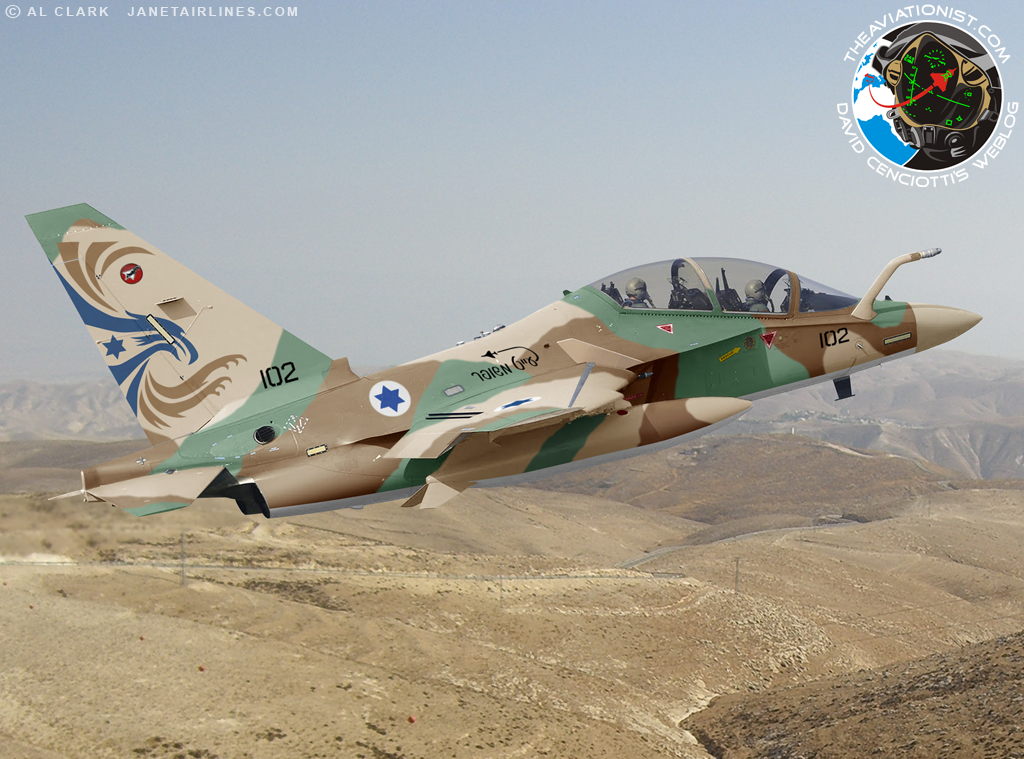
Elbit Systems to develop Israeli M-346 training centre
Elbit Systems has been chosen to develop a flight training centre to support the Israeli air force's future use of the Alenia Aermacchi M-346.
flightglobal
Subscribe to:
Posts (Atom)