Translate

Showing posts with label NIGERIA. Show all posts

Mar 24, 2026

🇳🇬 Nigeria advances C-295 talks following Airbus visit in Spain


The Nigerian Air Force has once again signaled its interest in the CASA C-295, following a high-level visit to Airbus Defence and Space facilities in Spain in March 2026. While no contract has been signed, the visit offers a clear indication that the platform remains under serious consideration as part of Nigeria’s ongoing effort to strengthen its airlift capabilities.

The delegation, led by Chief of the Air Staff Air Marshal Sunday Kelvin Aneke, spent several days engaging directly with both operators and industry. At Getafe Air Base, home of the Spanish Air and Space Force’s 35th Wing, the Nigerian team was introduced to the operational profile of the aircraft. The briefings focused on how the C-295 performs in day-to-day missions such as troop transport, logistics support, medical evacuation and humanitarian operations, highlighting its flexibility and relatively low operating footprint.

From an operational perspective, this kind of profile aligns closely with Nigeria’s current needs. The ability to sustain operations over long periods, often in demanding environments, makes platforms like the C-295 particularly attractive for air forces balancing capability with cost and availability.

The visit then shifted to Madrid, where discussions with Airbus Defence and Space centered on the aircraft’s global track record and the support structure behind it. Beyond the platform itself, Airbus emphasized training, logistics and long-term sustainment, areas that are often decisive in procurement decisions but receive less public attention.

One of the more forward-looking aspects of the visit was a briefing on the SIRTAP, a next-generation unmanned system designed for intelligence, surveillance and reconnaissance missions. Its potential integration with manned platforms points toward a broader operational concept rather than a standalone acquisition.

The final stop in Seville provided a closer look at the industrial side of the program, with the delegation touring the production lines where both the C-295 and the Airbus A400M Atlas are assembled. Seeing the manufacturing process firsthand often plays a key role in shaping confidence in both the platform and its long-term supportability.


Nigeria’s interest in the C-295 is not new, but it has yet to translate into a firm order. Financial constraints and competing priorities have slowed progress in the past, and the program remains in a tentative phase. At the same time, alternative platforms such as the Embraer C-390 Millennium are also part of the wider conversation, adding another layer of complexity to the decision.

What is clear, however, is that Nigeria is actively exploring options to modernize its transport fleet. The C-295 continues to stand out as a practical and proven solution, but until a contract is signed, it remains a candidate rather than a confirmed acquisition.

Apr 17, 2020

First Nigerian Air Force A-29 Super Tucano light attack aircraft successfully completes inaugural flight

Embraer Defense & Security and Sierra Nevada Corporation (SNC) announced the first of 12 A-29 Super Tucano light attack, combat and reconnaissance aircraft for the Nigerian Air Force (NAF) successfully completed its inaugural flight at the production facility in Jacksonville, Florida.
The full fleet of A-29 Super Tucano aircraft for the NAF are currently in production by SNC and Embraer at the Jacksonville facility with delivery to the NAF expected on schedule in 2021.
embraer

Aug 4, 2017

US approves A-29 Super Tucano sale to Nigeria

The U.S. State Department has approved a $593 million foreign military sale to Nigeria, including 12 A-29 Super Tucano light-attack aircraft, in order to further the nation’s campaign against the militant group Boko Haram.
Nigeria has been seeking permission from the U.S. government to buy A-29s since 2015; however, the Obama administration had put the sale on hold due to concerns about the country’s human rights record.
In February, U.S. President Donald Trump signaled his support for the sale during a phone call with Nigerian President
defensenews

Dec 8, 2016

Nigeria Takes Delivery of Pakistani-made Super Mushshak Trainer Aircraft

The Nigerian Air Force (NAF) has taken delivery of the first four out of 10 MFI-17 Super Mushshak primary trainer aircraft ordered from the Pakistan Aeronautical Complex (PAC), five months after the two parties signed a supply and delivery agreement.
They were commissioned into service four days after delivery to Kaduna on Dec. 1. According to the supply contract signed in June this year, the PAC would also provide technical training to the NAF teams charged with operating and maintaining the aircraft.
Four more on-loan aircraft would be delivered to Nigeria in early 2017. By mid-2017, the loaned aircraft would be replaced with new assets, which are already under assembly.
The four have since been commissioned into service at the 301 Flight Training School in Abuja, replacing an aging fleet of Dana Air Beetle trainer variants which has been in service since 1995.
Apart from Nigeria, four Super Mushshak trainers are in service with the Pakistani Air Force. Global interest in the Super Mushshak soared in 2016 with Qatar signing a deal for the supply of eight in May.
Late in November, the Turkish Air Force signed a memorandum of understanding that set the groundwork for acquisition of up to 52 trainers. Iran, Oman, Saudi Arabia and South Africa are also reported to be interested in acquiring the aircraft.
A derivative of the Mushshak aircraft, the Super Mushshak is a version of the Saab MF-17 Supporter, which is produced in Pakistan under license from Sweden.
The latest version is powered by a 260 horsepower Textron Lycoming IO-540 V4A5 engine. It features a US-designed glass cockpit as well as environmental controls.
According to Abubakar, Nigeria will soon take delivery of four new, Russian-made Mi-35N attack helicopters from Russia and three JF-17 Thunder aircraft from Pakistan.
The West African country has also ordered at least three ex-Brazilian Air Force Super Tucano light-attack aircraft. A parallel aircraft-refurbishment program has led to the restoration and recommissioning of helicopters, which include three Mi-24V and Mi-35P attack variants, two EC-135s, two AugustaWestland A109s, and one Super Puma.
A single Beechcraft light aircraft, one Falcon jet, one Diamond DA-42 and two Dornier DO-228 maritime surveillance planes have also been restored and returned to service.
defensenews

May 7, 2016

U.S. seeks to approve A-29 Super Tucano Sale for Nigeria in Boko Haram fight

The U.S. administration is seeking to approve a sale of as many as 12 A-29 Super Tucano light attack aircraft to Nigeria to aid its battle against the extremist group Boko Haram, U.S. officials say.
Washington also is dedicating more intelligence, surveillance and reconnaissance assets to the campaign against the Islamist militants in the region and plans to provide additional training to Nigerian infantry forces.
The sale could offer Nigeria a more maneuverable aircraft that can stay aloft for extended periods to target Boko Haram formations.
reuters

Jan 8, 2016

Nigeria plans to procure three JF-17 fighters

Nigeria plans to acquire three JF-17 Thunder multirole fighter aircraft in 2016.
The procurement plans, which set aside $25 million for the fighters, were reported by Nigerian newspaper Punch. The Nigerian government also plans to acquire ten PAC Super Mushshak basic trainers and two Mi-35M helicopters.
Punch obtained the information on the government's procurement plans from a leaked copy of their 2016 budget, which was presented to the National Assembly by Nigerian President Muhammadu Buhari in December 2015.
Nigerian defense officials have been reportedly interested in the JF-17 following the IDEAS 2014 exhibition in Pakistan. DefenceWeb reports that during the exhibition a Pakistani defense official stated Nigeria was close to signing a contract for the jets to modernize its air force.
upi.com

Mar 30, 2015

Nigerian Air Force receiving additional Alpha Jets

The Nigerian Air Force has acquired at least two second hand Alpha Jet aircraft as it continues to expand its aerial fleet.
One of the jets was seen passing through the United Kingdom on 25 March, having travelled from the United States via Iceland. It then continued to Palma de Mallorca, Spain, on its way to Nigeria.
It was flown by Air USA Inc, which specialises in military air combat readiness training and flies Hawks, Alpha Jets, MiG-29s and L-59 Super Albatroses. The Alpha Jet seen transiting the UK was cancelled from the United States register on 19 March together with a second Alpha Jet, both originally flown by the Luftwaffe before operating in the States.
The delivery status of the second aircraft is unclear. It is also not clear if the two Alpha Jets are attrition replacements or part of a larger batch being acquired by the Nigerian Air Force (NAF).
Air USA Alpha Jets were converted for night vision goggle (NVG) operations, according to the company, and flight certified for operational use of TER, IMER and SUU-20 bomb racks.
Nigerian Alpha Jets have been used in the ground attack role to strike Boko Haram targets and a couple have been lost on operations.
The NAF has recently reactivated a number of its Alpha Jets. A total of 24 were acquired in the 1980s but several have been lost in crashes. Apparently 11 have been made flyable again.
In addition to refurbishing some of its existing aircraft such as the Alpha Jets, L-39s, Super Pumas and C-130s, the NAF is also acquiring additional platforms. For instance, it recently inducted Gazelle helicopters, which are believed to have entered service in February this year.
Three Beechcraft King Air 350i light transport aircraft were delivered in August last year, together with two AgustaWestland AW101 VIP transport helicopters. The NAF is also acquiring six Mi-35M attack helicopters and 12 armed Mi-171Sh helicopters, which were ordered in August 2014.
defenceweb

Feb 10, 2015

Nigeria looking for more attack aircraft

The Nigerian Air Force (NAF) has received a proposal from a defence company for the sale of six Puma gunship helicopters, four Sukhoi Su-25KM ground attack jets, and two upgraded Su-25UB trainers.
According reports unidentified company had "reached an agreement with the NAF to substitute the initial order for Cobra AH-1V with alternative attack platforms".
The US State Department confirmed in November 2014 that it had blocked a deal to sell Bell AH-1 Cobra attack helicopters to Nigeria because of concerns about its military's human rights record and ability to operate the aircraft. The Nigerian press reported that the attack helicopters would have been ex-Israeli Air Force Cobras.
The only Pumas upgraded into gunships were Romanian-built IAR 330s that were converted into the SOCAT armed version with a chin-mounted 20 mm gun and Rafael Spike guided missiles with the help of the Israeli company Elbit Systems between 2000 and 2005.
Elbit Systems was also involved in the Su-25KM 'Scorpion' upgrade programme along with Georgia's Tblisi Aircraft Manufacturing company.
janes

Dec 3, 2014

Nigeria 'close to signing up' for JF-17

The Nigerian Air Force (NAF) is close to finalising an order for the purchase of one or two squadrons of (25-40) the JF-17 Thunder fighter aircraft co-produced by Pakistan and China.
janes

Nov 19, 2014

Nigerian Air Force Interested in Textron’s Scorpion Combat Jets

The Nigerian air force is concerned that efforts to acquire new combat aircraft from Textron to battle Boko Haram militants will be blocked over concerns about the country’s human rights record.
The air force currently relies on a fleet of older jets, including Chinese-made F-7 planes and European Alpha Jets.
Textron has been marketing the Scorpion military jet as a low-cost option for many nations that can’t afford more traditional and expensive designs.
The country would initially look to acquire 12 jets to form one squadron. A formal request to buy the plane has not been made, though that could happen soon. The company have said first deliveries could occur 18 months after they receive an order.
blogs.wsj.com

Sep 27, 2014

Nigeria AW101 makes debut flight

The maiden flight of the first of two VIP transport-roled AW101 helicopters for the Nigerian air force was performed on 19 September from manufacturer plant.
It was previously allocated to India as part of the nation's now-cancelled order for 12 of the 15t-class rotorcraft.
flightglobal

Sep 14, 2014

Russia, Nigeria Sign Contract for Mi-171Sh, Mi-35 Helicopters

Russia and Nigeria have signed a contract for the supply of Mi-171Sh and Mi-35 helicopters, Rosoboronexport deputy general director told reporters Friday.
ria.ru

Sep 9, 2014

Air Force may move drones, personnel inside Niger

The Air Force may redeploy its remotely piloted aircraft in Niger, moving the drones to a remote area in the Sahara to better position them to watch Islamic militants in the area.
Last year, the Air Force deployed about 100 airmen and remotely piloted aircraft to Niamey in the southwestern region of Niger to “provide support for intelligence collection and ... facilitate intelligence sharing with French forces conducting operations in Mali”. The deployment included Air Force security forces to protect the aircraft.
U.S. Africa Command is looking to move the aircraft about 450 miles north to Agadez. That city of in the northern part of the country has a small airstrip on its southern edge.
The move is at the request of, and in coordination with the government of Niger and the Nigerian Armed Forces, AFRICOM.
This location would be closer for crews to keep an eye on militants spreading in Libya to the north. Nigeria agreed to the U.S. presence to help secure the country’s borders against jihadist infiltrations from Libya.
Aircraft would still operate at the Niamey base.
The Air Force, on Aug. 21, posted a solicitation for 18 shelter systems to house U.S. aircraft and personnel in in Agadez. Earlier solicitations sought jet fuel and runway repair in the area. The move would not fully take place until the infrastructure at the base is ready.
U.S. drones have also been deployed to N’Djamena, Chad, and bases in the Horn of Africa and the Seychelles. Additional surveillance flights over Libya are flown from bases in Italy.
airforcetimes

May 20, 2014

USAF assisting search for missing girls in Nigeria

The Air Force is flying manned MC-12W Liberty and unmanned RQ-4 Global Hawk surveillance sorties over Nigeria to assist in locating more than 200 girls kidnapped by militants.
The Nigerian government requested the flights.
On April 15, the militant group Boko Haram kidnapped the girls from their school. The group said it is open to exchanging the students for the release of terrorists imprisoned in Nigeria.
The Defense Department has sent more than 10 personnel to the country to help with the search. The troops are trained in intelligence, communications and logistics.
The Defense Department would not release the number of sorties or the specific origin of the flights “due to operational security concerns.
The department is not sharing the intelligence directly with the Nigerian government.
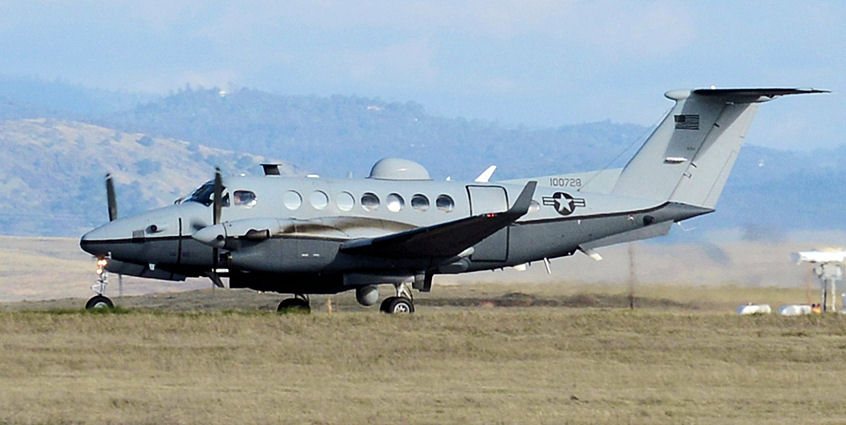
The MC-12W Liberty manned aircraft is a modified Hawker Beechcraft Super King Air 350 outfitted with sensors and cameras. The aircraft has seen extensive use in Afghanistan. The RQ-4 Global Hawk is the Air Force’s largest remotely piloted aircraft, and has been deployed to provide high-altitude surveillance. Global Hawks have deployed to the Middle East and flown “treaty verification” missions in the Middle East.
airforcetimes

May 17, 2014

U.S. says Boko Haram now 'top priority'

The U.S. State Department acknowledged it could have acted sooner to designate Nigeria’s Boko Haram a foreign terrorist organization, even though the Nigerian government and many Africa experts opposed the move when it was first considered two years ago.
The acknowledgment — accompanied by a caveat that it is impossible to say if an earlier designation would have had a significant impact on the group — came amid Republican criticism of former Secretary of State Hillary Clinton’s decision not to take the step in 2012. And it was made as senior U.S. officials declared to Congress that freeing the schoolgirls abducted by the radical Islamist group last month has become one of the Obama administration’s top priorities.
As the 276 girls entered a second month in captivity that has sparked global outrage, senior officials from the State Department, the Pentagon and the U.S. Agency for International Development told a Senate Foreign Relations subcommittee that the U.S. is committed to assisting Nigeria in combating the al-Qaida-linked Boko Haram as it expands its reach and builds capacity for more sophisticated and deadlier terror attacks.
At the same time, though, the officials lamented limitations on U.S. cooperation with the Nigerian military due to its poor human rights record. And they expressed concern about the Nigerian government’s commitment to fight the group and the ability of its army to do so.
militarytimes

May 13, 2014

U.S. mission in place to aid in the search for 250 schoolgirls abducted in Nigeria

The US are conducting surveillance flights over Nigeria in the search for more than 250 abducted schoolgirls and is considering the deployment of drones to the region to bolster the effort.
The US has 27 experts and security officials assigned to the mission already in place in the Nigerian capital, Abuja. The team includes five State Department officials, 10 Pentagon planners and advisers who were already in Nigeria, and seven more sent from the U.S. military’s Africa Command, along with four FBI experts in safe recovery, negotiations and prevention of kidnappings.
Officials say U.S. drones could be called into service in hunt for the 250 schoolgirls abducted by Islamists.
The United States will use its own satellite or other surveillance data and provide intelligence analysis for the search effort.
A senior Pentagon official said that the United States has not mobilized drones to aid the search but that commanders in Africa are exploring whether to do so.
The United States has drones at three military outpost in Africa — in Djibouti in the eastern Horn of Africa, where both armed and unarmed aircraft are based, and in Ethi­o­pia and Niger, which shares a long border with Nigeria. The U.S. Air Force began using unarmed drones from Niger early last year on surveillance missions in search of al-Qaeda fighters and guerrillas from other groups in north and west Africa.
The United States also is likely to provide help monitoring and intercepting communications among members of Boko Haram.
U.S. officials cautioned that the mission to find the schoolgirls would not be easy.
washingtonpost

Dec 19, 2013

Nigeria unveils locally made drone

Nigeria unveiled its own drone on Tuesday, appropriately named “GULMA,” (Hausa word for gossip).
The unmanned aerial vessel was designed and constructed by the Nigeria Air Force (NAF) in collaboration with other local institutions.
Analysts believe the UAV would be deployed to monitor the activities militant Islamic sect, Boko Haram, which has been operating in the rugged mountains and forests of Nigeria’s North east.
pmnewsnigeria

Dec 2, 2013

Nigeria interested in buying Super Tucanos

The Nigerian Air Force is considering buying Super Tucano trainer and light attack aircraft from Embraer.
Nigeria has a strong requirement for an aircraft like the Super Tucano as it battles the domestic Boko Haram insurgency and also deploys combat aircraft to foreign countries on peacekeeping operations.
Piracy and oil smuggling in the Gulf of Guinea and a contribution to peacekeeping operations are expected to drive the country's military expenditure to register a growth rate of 13.62% over the next five years. The domestic Boko Haram insurgency is also expected to drive Nigeria’s security needs.


African Super Tucanos

Embraer has recorded a number of orders for its Super Tucano from African countries, which see it as a low cost light attack aircraft that can also be used as a trainer. On the continent, the Super Tucano has been ordered by Angola, Burkina Faso, Mauritania and Senegal.
Angola officially received its first three of six Super Tucanos in July this year and is using them for border surveillance, attack and pilot training. Burkina Faso was the first African country to take delivery of a Super Tucano, receiving three aircraft in September 2011 for border patrol missions. In October last year Mauritania received their first aircraft, featuring sensor turrets for surveillance duties, although they will also be used for counter-insurgency missions.
In April Senegal bought three A-29 Super Tucanos as well as a training system for pilots and mechanics.
defenceweb.co.za

May 20, 2013

Air strikes, dozens dead in Nigeria assault on Islamists


Nigeria's military on Friday attacked Boko Haram Islamist strongholds across the northeast, launching air strikes on insurgent camp with dozens of militants killed in the fighting, the military said.

spacewar

Jan 18, 2013

Nigerian Air Force Begins Deployment of War Planes to Mali


Chief of Air Staff Air Marshal Alex Barde yesterday disclosed that the Nigerian Air force will today commence the deployment of Nigeria war planes to check the activities of Islamist fighters in Mali.

alert5
allafrica.com