Translate

Showing posts with label MALI. Show all posts

Dec 5, 2020

The Republic of Mali orders an additional Airbus C295

The Ministry of Defence of the Republic of Mali has placed a firm order for an additional Airbus C295 airlifter in the transport configuration. 
This second aircraft, to be delivered in 2021, will supplement the first C295 already in operation since December 2016 which has already accumulated 1,770 flight hours and transported more than 38,000 passengers and 900 tonnes of cargo in less than four years of operations. This new order also includes an integrated logistics support package with spare parts for the two aircraft and training for flight crews and mechanics. 
This acquisition is in response to the urgent need of the authorities of the Republic of Mali to have permanent air transport capacity within a very short timeframe, providing a vital link supporting operations and actions for the development of isolated areas in the northern regions of the country.  airbus

Aug 15, 2017

Australia, Germany and Spain ground Tiger attack helicopters

Australia has joined Germany in grounding its fleet of Airbus Helicopters Tiger attack rotorcraft in the wake of a fatal crash in Mali in which two crew members were killed.
Investigations are ongoing into the late July accident involving a German army-operated example that came down in unexplained circumstances around 44nm (82km) northeast of Gao.
Berlin immediately withdrew its Tigers from service, although its four aircraft remaining in Mali – deployed as part of a multinational fight against an Islamic insurgency – will be allowed to perform missions in emergency situations, says its defence ministry.
Australia on 14 August decided to cease flying its Tiger armed reconnaissance helicopters "until further information becomes available".
Spain is also thought to have suspended flights of its army's Tiger inventory, although there has been no official confirmation of the move.
Madrid’s defence ministry says: "The army will follow the technical recommendations of the manufacturer once it conducts the necessary investigations and checks to find out what could have caused the accident."
France, the other operator of the Tiger, continues to fly its helicopters in Mali, but most domestic training missions are on hold in any case because of the summer holidays.
So far, little detail has been released about the circumstances of the crash, but statements from the German defence ministry indicate that the Tiger lost its main rotor blades after entering into a sudden steep descent.
It hit the ground around 10s later, and the wreckage was consumed by a post-impact fire.
Crash investigators have recovered the helicopter’s flight-data recorders, but both are heavily damaged and may be unable to be accessed.
With Airbus Helicopters not directly participating in the accident probe, it was required, as part of its contract with the nations, to issue a notice advising that the Tiger is unsafe, without being able to offer any safety guidance. This was released shortly after the crash and updated on 10 August.
"Airbus Helicopters declares [an] UNSAFE condition for all Tiger versions. AH can neither identify the part, the failure of which would lead to the accident, nor the origin of the failure (design, manufacturing, maintenance). Consequently, AH is not in the position to propose a protective measure," says the warning.
flightglobal

Jan 15, 2017

Germany to deploy eight attack and transport helicopters to Mali

Germany's cabinet on Wednesday approved the deployment of eight attack and transport helicopters as well as 350 additional soldiers to Mali as part of a U.N. peacekeeping mission, sources told Reuters.
The helicopters will replace those of the Dutch army, and the additional troops will service and maintain the fleet.
After the deployment, Germany will have some 1,000 soldiers in Mali taking part in the 15,000-strong U.N. mission that oversees a peace deal agreed in 2015 between the government and rebels.
The additional deployments will have to be approved by the Bundestag, the lower house of parliament.
The four attack helicopters and a similar number of transport machines will stay in Mali until mid-2018.
reuters

Feb 19, 2016

Mali To Acquire One C-295W

Mali has become the 23rd nation to purchase the C295, ordering a sole winglet-equipped example. Delivery of the aircraft is expected in the second half of 2016.
It will join Mali’s small fleet of fixed-wing aircraft, which includes nine Mikoyan MiG-21s, one Alenia SF-260, and one Britten-Norman BN-2 Islander.
The Philippine air force, meanwhile, has taken delivery of its third C295.
flightglobal

Jul 1, 2015

Mali To Acquire 11 Super Tucanos

Embraer is continuing its African presence with a sale to Mali of 11 Super Tucanos A-29 light attack and advanced trainer turbo-prop aircraft.
In a statement posted to its website, Embraer announced Mali signed an order for six A-29s while the Ghanaian Defense Ministry agreed to procure five of the aircraft.
Both countries intend to use the Super Tucanos for advanced pilot training, border surveillance and a wide range of other internal security missions.
defensenews

Jun 20, 2015

France to modify NH90 for special forces sooner than expected

France's special forces are poised to begin operating the NH90 Caïman sooner than expected, after the helicopter proved itself during Operation 'Barkhane' in Mali.
The 4ème RHFS is expected to customise the NH90 for the special forces role, and the familiarisation will play a key role in shaping their requirements. It is expected that the 4ème RHFS will want to add another electro-optic/infrared (EO/IR) system for observation, a datalink, and a rope system for extraction. A basic set of requirements for customising the NH90 to special forces' needs could be written before the year's end.
Compared with the H225 Caracal, the NH90 offers better range and speed.
Initial operational capability on the NH90 was declared before the 1er Régiment d'Hélicoptères de Combat (RHC) deployed to Mali in November 2014, although full operational capability will not be announced before mid-2016.
Within a few months, the Malian theatre should receive a third NH90 and a plan exists to send a fourth one in due course. Fifteen have been delivered so far, as the availability of the airframes is not an issue, but the French Army Light Aviation (ALAT) is struggling to train more crew and maintenance specialists.
janes

Jan 21, 2015

Netherlands UN attack helicopters strike Mali rebels in north

Dutch United Nations attack helicopters carried out air strikes on Tuareg rebel forces in northern Mali on Tuesday, the first such engagement by Dutch forces serving in the U.N. mission in Mali.
The U.N. mission, known as MINUSMA, said it was responding to heavy weapons fire directed at its peacekeepers in the town of Tabankort. It said the helicopters only destroyed a rebel vehicle after firing warning shots that were ignored.
The incident highlights how Mali's north is still awash with various armed groups and is likely to complicate the last round of U.N.-backed peace talks due to take place next month between the government and the rebel factions that are involved.
Some 450 Special Forces troops, intelligence operatives and four Apache helicopter gunships from the Netherlands have been deployed in northern Mali as part of a force of up to 12,000 men.
reuters

Nov 9, 2014

France deploys NH90 to Mali

France has deployed its NH90 Caiman helicopters on operations for the first time, with two helicopters arriving in Gao on 3 November to take part in France's Operation 'Barkhane' in Mali.
The helicopters are from the 1er Régiment d'Hélicoptères de Combat, based in Phalsbourg, with the deployment coming less than a year after their entry into service within the Alat (French army light aviation).
The two helicopters arrived in Gao on 3 November after a four day ferry flight. The helicopters made 10 stops and clocked a total of 32 flying hours in the process. The longest branch was from Bamako to Gao, 4 flying hours, most of it being flown close to the deck in a tactical fashion as Mali is considered a war zone by the French authorities.
The NH90s were fitted with three extra fuel tanks (450 kg each) in the cabin for the journey, bringing the total fuel on board at slightly more than three tons. The NH90s were flying at their max gross weight (11 tons), with four crew members and some freight. At an average speed of 130 kt, this configuration gives the NH90 an endurance of five hours.
Coming from Dakar, the two helicopters entered Mali through the border town of Kayes where an Armée de l'Air C-160 Transall transport aircraft, flying out of Niamey, Niger, refuelled them on the ground, providing them each with 1.3 tons of fuel.
Entering Mali, the crew were flying with their flak jacket, guns and ammo. However the FN Mag 58 machine guns, which are due to equip the NH90 in Mali were not mounted on the helicopters yet. After a 24 hrs rest, the NH90 were back in the air to provide the crew with a first taste of the Malian theatre and some training on dusty landing zone in day and night conditions. They are now assigned to the Sous Groupement Aeromobile Hombori VIII, which includes a dozen helicopters (Gazelles, Tigers, Pumas, Cougars and now the NH90).
The NH90 has previously been deployed on operations in Afghanistan by both Germany and Italy.
janes

May 20, 2014

Netherlands Apaches arrive in Mali

The first two of the four Boeing AH-64DN Apache that the Netherlands is contributing to the UN Multidimensional Integrated Stabilisation Mission in Mali (MINUSMA) flew into Camp Castor in Gao province on 16 May.
All four Apaches were shipped to Mali's capital Bamako in a chartered Antonov transport aircraft earlier in May and the second two will fly to Camp Castor in a few days.
This is the first time Apaches have been deployed to support a UN peacekeeping mission. The Dutch Ministry of Defence said they will be used to gather intelligence and provide close air support for ground troops if required.
The Dutch engineers who constructed Camp Castor, which includes temporary hangars for the Apaches, handed the base over to the deployment element on 2 May.
janes

Apr 18, 2014

Apr 12, 2014

Netherlands to deploy Chinooks to Mali

After committing four Boeing AH-64D Apache attack helicopters in November last year to support the UN's stabilisation activities in Mali, the Royal Netherlands Air Force has announced it will also deploy three Boeing CH-47 Chinook transport helicopters.
The reason behind the expanding deployment is that the UN cannot guarantee the medical evacuation of Dutch forces on a "24-7" basis. Currently-available civilian helicopters are unable to operate at night or in high-risk areas, due to a lack of self-protection capabilities.
Expected to arrive in the second half of this year, the Dutch Chinooks will be stationed in Gao. In addition to medical evacuation tasks, the rotorcraft will also be used for tactical transport and logistical support.
French helicopters participating in the nation's Operation Serval campaign in Mali will support Dutch ground forces until the Chinooks arrive.
flightglobal

Feb 23, 2014

Spain Military trains Mali troops

Feb 12, 2014

France Eyes King Air, Upgrades for C-130

The French Air Force is eyeing the King Air for ISR missions, while France’s special operations forces are keen to fit mission packages to their Hercules airlifters.
The Air Force is studying the twin-engine Beechcraft King Air as part of its search for a light aircraft to deliver a “development of force”.
Meanwhile, France’s special operations forces are looking to add various capabilities to their 14 Lockheed Martin C-130s, such as intelligence, surveillance and reconnaissance (ISR), gunship and low-level air-drop.
France is studying bids to upgrade the C-130s’ avionics and cockpits.
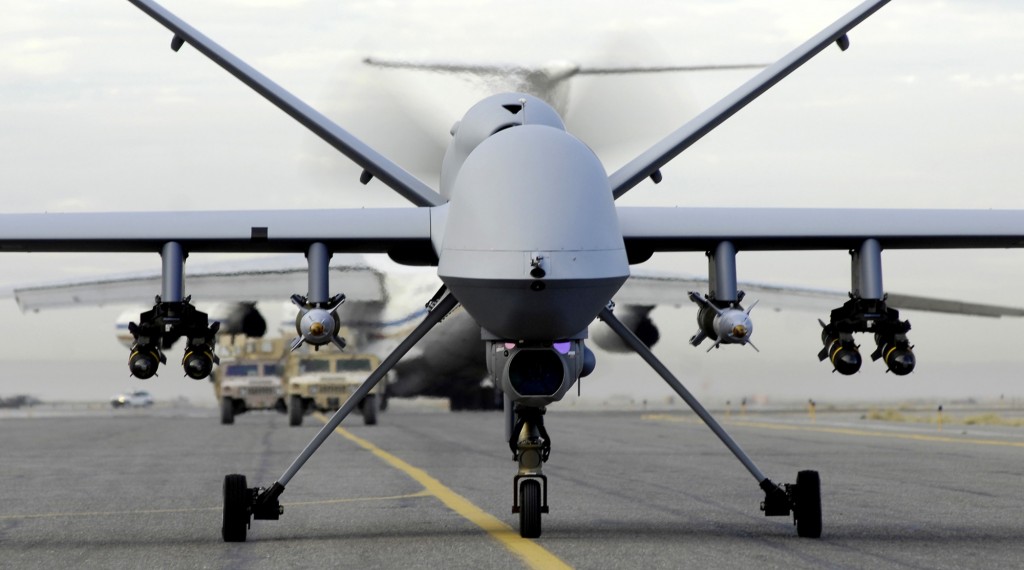
The French Air Force is flying MQ-9 Reaper UAVs from Niger to back up special forces in northern Mali.
Today, the French Air Force flies two C-160 Gabriel aircraft for ISR missions..
defensenews

Jan 21, 2014

Morocco to acquire surplus French Harfangs UAV

The Royal Moroccan Air Force is evaluating the purchase of additional Israel Aerospace Industries Heron 1/Harfang unmanned air systems via France.
A version of the medium-altitude, long-endurance Heron adapted for the French air force, the Harfang is used to perform strategic reconnaissance and tracking missions.
According to foreign sources a Moroccan purchase of three Harfang UAS has been made, with Israeli approval, and additional aircraft could follow. The ties between Morocco and Israel are good, despite the fact that diplomatic relations between the nations were cut in 2000.
It is not clear what payloads will be carried by the UAS Morocco has purchased, but these are likely to be Israeli-produced.
The French air force recently fielded its first two of a planned 12 General Atomics Aeronautical Systems Reaper UAVs, with the aircraft now supporting its military intervention in Mali.
flightglobal

Jan 19, 2014

No end in sight for 1-year-old US Air Force mission over Mali


The yearlong U.S. Air Force operation over Mali in support of the French mission there is set to continue for the immediate future.
January marks the one-year anniversary of the U.S. mission over the West African nation. While the Pentagon does not expect it to go on indefinitely, no end date has been set.
Although Mali has regained some stability, holding elections for a new government since French forces intervened to halt the advance of al-Qaeda-linked militants, the French continue to deploy a military contingent there.
French President wants to cut the French presence considerably in the near future and hand over security responsibility to African Union and U.N. forces. Paris plans to reduce the number of its troops in Mali to 1,600 next month, down from the 2,500 now serving there.
351st Expeditionary Air Refueling Squadron, which runs the refueling missions out of Moron, Spain, continues flying almost every day to fuel French aircraft, but that the pace of operations has decreased.
Read more

Jan 8, 2014

First French Reapers arrive in Africa

France’s first General Atomics Aeronautical Systems Reaper unmanned air vehicles have been accepted by the nation’s air force, and deployed to Africa’s Sahel region in support of its ongoing intervention in Mali.
Rapidly acquired following a decision reached by defence minister in mid-2013, France’s first Reaper system was delivered in late December.
The French air force’s first batch of Reaper operators completed their training with the US Air Force at Holloman AFB, New Mexico in late November 2013, around two months after having performed their first training flights using the long-endurance type.
France’s aircraft are for now being acquired in an unarmed configuration, and will be used to conduct intelligence, surveillance and reconnaissance operations.
General Atomics is also expecting to supply one Reaper system of four UAVs and one GCS to the Netherlands, with the nation having announced its selection of the type late last year. To be operated by the Royal Netherlands Air Force also without weapons, the type is expected to enter service from 2016.
flightglobal

Jan 2, 2014

Airbus A400M tactical airlifter makes combat debut in Mali


L'Armée de l’Air (French Air Force) has released images showing the Airbus A400M Atlas tactical airlifter during its first combat sortie in support to Operation Serval in Mali.
The Atlas “F-RBAB” carrying 22 tons of material, took off from Orléans-Bricy airbase on Dec. 29 at 10.30 LT and arrived at Bamako, Mali, after 6 hours and 40 minutes. On Dec. 31, the aircraft flew from Bamako to Gao.
The first A400M was taken on charge by the Multinational Entry into Service Team (MEST) at Orléans on Aug. 2, 2013. The first operational mission therefore came only five months after the induction of the aircraft into active service.
Currently, two A400M Atlas are assigned to the MEST. The first operational mission is a step towards the type full operational capability of the type, expected in late 2014.
theaviationist

Dec 30, 2013

France has begun operating one of its new RQ-9 Reaper UAVs in Mali


Earlier in 2013 France decided to buy two RQ-9s and by the middle of the year had upped the order to a dozen. This was apparently with the understanding that one or two would be available for French use in Mali before the end of the year. This was less of a problem than it appears because the U.S. was already (since January 2013) operating RQ-9s in Niger, next door to Mali and the British have their own RQ-9 operations center (where satellite links allow UAV operators to control RQ-9s anywhere on the planet) in Britain that could be used to quickly train French operators. Facilities are also available in the United States, which is also were RQ-9 ground crews are also trained. The U.S. apparently delivered on its end of the deal and France got its operators and ground support personnel up to speed on time.
France was apparently not pleased with the performance of its locally developed Harfang UAV and after a year of deliberation decided is buy American RQ-9 Reapers with the intention of getting more and standardizing on this proven UAV design. Currently two Harfang UAVs are present in Mali (operating from neighboring Niger) along with some American RQ-9s.
The MQ-9 Reaper is a 4.7 ton, 11.6 meter (36 foot) long aircraft, with a 21.3 meter (66 foot) wingspan that looks like the MQ-1 Predator. It has six hard points and can carry 682 kg (1,500 pounds) of weapons. These include Hellfire missiles (up to eight), two Sidewinder or two AMRAAM air-to-air missiles, two Maverick missiles, or two 227 kg (500 pound) smart bombs (laser or GPS guided). Max speed is 400 kilometers an hour and max endurance is 15 hours. The Reaper is considered a combat aircraft, to replace F-16s or A-10s in many situations.
The Harfang was based on the Israeli Heron Shoval UAV, which in turn is very similar to the MQ-1 and sold well to foreign customers who could not obtain the MQ-1. In addition to being one of the primary UAVs for many armed forces (Israel, India, Turkey, Russia, France, Brazil, El Salvador), the United States, Canada, and Australia have either bought, leased, or licensed manufacture of the Heron. France has bought four Harfang ("Eagle") UAVs and used them in Afghanistan, Libya, and Mali over the last four years. The RQ-9 was a more recent and more mature design, which the British think highly of. The RQ-9 has an impressive combat record in Afghanistan and elsewhere (Yemen, Pakistan, Somalia). So France decided to switch.
The U.S. will not provide Predators or Reapers weapons ready, forcing foreign users to develop their own equipment for arming the UAVs. France also, like other Predator and Reaper users, has to spend a lot of money to develop satellite link technology and set up a ground control facility (or pay to use the American one in the United States or, possibly, the new control center that just opened in Britain).
strategypage

Dec 21, 2013

France to use unarmed U.S.-made drones to hunt al Qaeda in Mali


France will deploy its first U.S.-made unarmed surveillance drones to West Africa by the end of the year, as it seeks to "eliminate all traces of al Qaeda".
France's military intervention in Mali in January exposed its shortage of surveillance drones suitable for modern warfare, forcing it to rely on the United States to provide French commanders with intelligence from drones based in neighboring Niger.
Paris said in June it would buy 12 Reaper reconnaissance drones built by privately owned U.S. firm General Atomics to eventually replace its EADS-made Harfang drones.
Niger gave permission in January for U.S. surveillance drones to be stationed on its territory to improve intelligence on al Qaeda-linked Islamist fighters in the region.
France intervened in Mali at the start of the year as Islamist forces, who seized control of the north in the confusion following a military coup in March 2012, pushed towards the capital Bamako.
reuters

Oct 21, 2013

The Netherlands mull commandoes, AH-64 attack helicopters for Mali

The Netherlands is considering sending some 400 soldiers including elite commandos, as well as Apache attack helicopters to war-torn Mali following an appeal for more UN peacekeepers.
The plan follows an urgent request by the UN's special representative in the west African country for more blue helmets as its peacekeeping force faced a new surge of Islamist attacks.
It also pondered sending 70 intelligence officers, a small force of training staff and soldiers to protect the task force.
The Dutch cabinet is said to make a decision on the issue within the next two weeks.
The UN special representative to Mali, former Dutch politician Bert Koenders, told the Security Council on Wednesday that Mali's international force needed helicopters and troops as it built up to replace a French force that intervened this year to halt an Islamist takeover.
French troops entered Mali in January to halt an advance on the capital Bamako by Al-Qaeda linked Islamist troops and alleged Tuareg rebels.
A presidential election was held in July but militant attacks have resumed in northern Mali where extremist groups are based.
France still has 3,200 troops in Mali but wants to reduce the figure to 1,000 by the end of this year.
The Netherlands twice attempted to join a European Union-flagged military training mission to Mali, but both times the plans were dropped due to infighting within the ruling coalition.
news.yahoo.com