Translate

Showing posts with label B-707. Show all posts

Jun 13, 2015

NATO withdraws first E-3A AWACS from service

NATO has withdrawn one of its Boeing E-3A (AWACS) aircraft from service, due to budget restrictions.
The alliance currently operates 17 E-3As out of Geilenkirchen Air Base in Germany. NATO's E-3As entered service from 1982 onwards. Originally 18 were purchased by NATO, however one was lost in a non-fatal accident in July 1996.
The alliance awarded Boeing a USD250 million contract in August 2014 to make only 13 of them Global Air Traffic Management (GATM)-compliant, in addition to an initial trials aircraft. This had raised the prospect of three of the aircraft being cut.
At present, only 14 of the 17 aircraft in the NATO AEW&C fleet are currently programmed for modernisation.
The aircraft (no.449) made its final operational flight on 13 May, and will be formally retired on 23 June when it flies to the US Air Force's 309th Aerospace Maintenance and Regeneration Group in Arizona - better known as 'The Boneyard'.
janes

Mar 13, 2015

First Flight of Upgraded NATO E-3 AWACS

Boeing recently completed the first flight of a NATO AWACS aircraft with modern flight deck and avionics systems that replace 1970s-era analog systems.
During the two-hour flight testers evaluated five full-color glass displays with customizable engine, navigation and radar data. The systems performed better than expected and the program will now enter an extensive flight test qualification phase. Fourteen NATO AWACS in total will receive the flight deck modernization, delivery of the first upgraded aircraft is scheduled for January 2016.
The upgrades ensure compliance with current and future air traffic control and navigation requirements. They also resolve recurring issues involving out-of-production avionics by using commercial, off-the-shelf digital avionics. The AWACS is based on the Boeing 707.
Thirteen additional NATO AWACS will receive installation of the upgrade. boeing

Dec 26, 2014

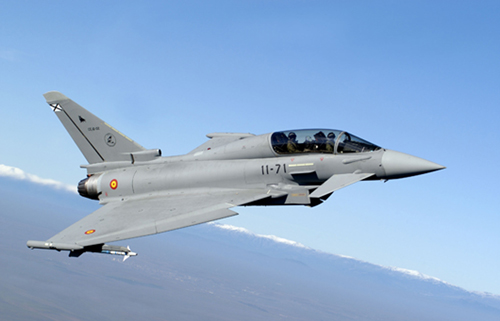
Comienza el Despliegue de los Typhoon del Ejército del Aire en los Países Bálticos

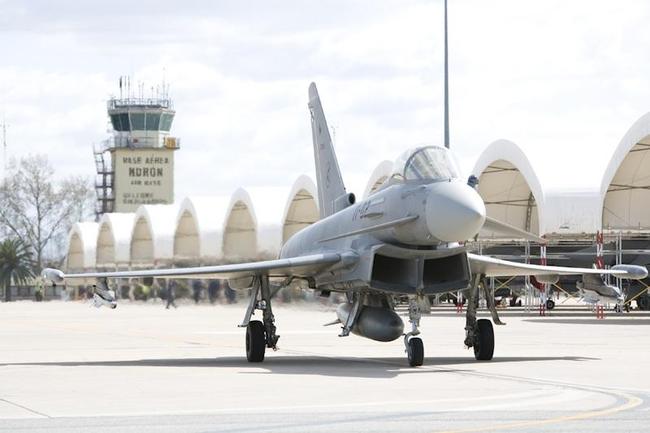
El próximo lunes, 29 de diciembre, volarán hacia Estonia los cuatro Eurofighter del Ala 11, que hasta el mes de abril, garantizarán la seguridad del espacio aéreo de los Países Bálticos.
Los aviones se desplegarán en la Base Aérea de Ameri, a unos 40 kilómetros al suroeste de Tallín.
Más de 120 hombres y mujeres del Ala 11, con base en Morón de la Frontera (Sevilla), se desplazarán hasta Estonia. Algunos de ellos ya están allí y los demás se irán incorporando a lo largo de los próximos días. Es el caso del grueso del personal de mantenimiento, que volarán el domingo 28 en un Hércules del Ala 31 (Base Aérea de Zaragoza).
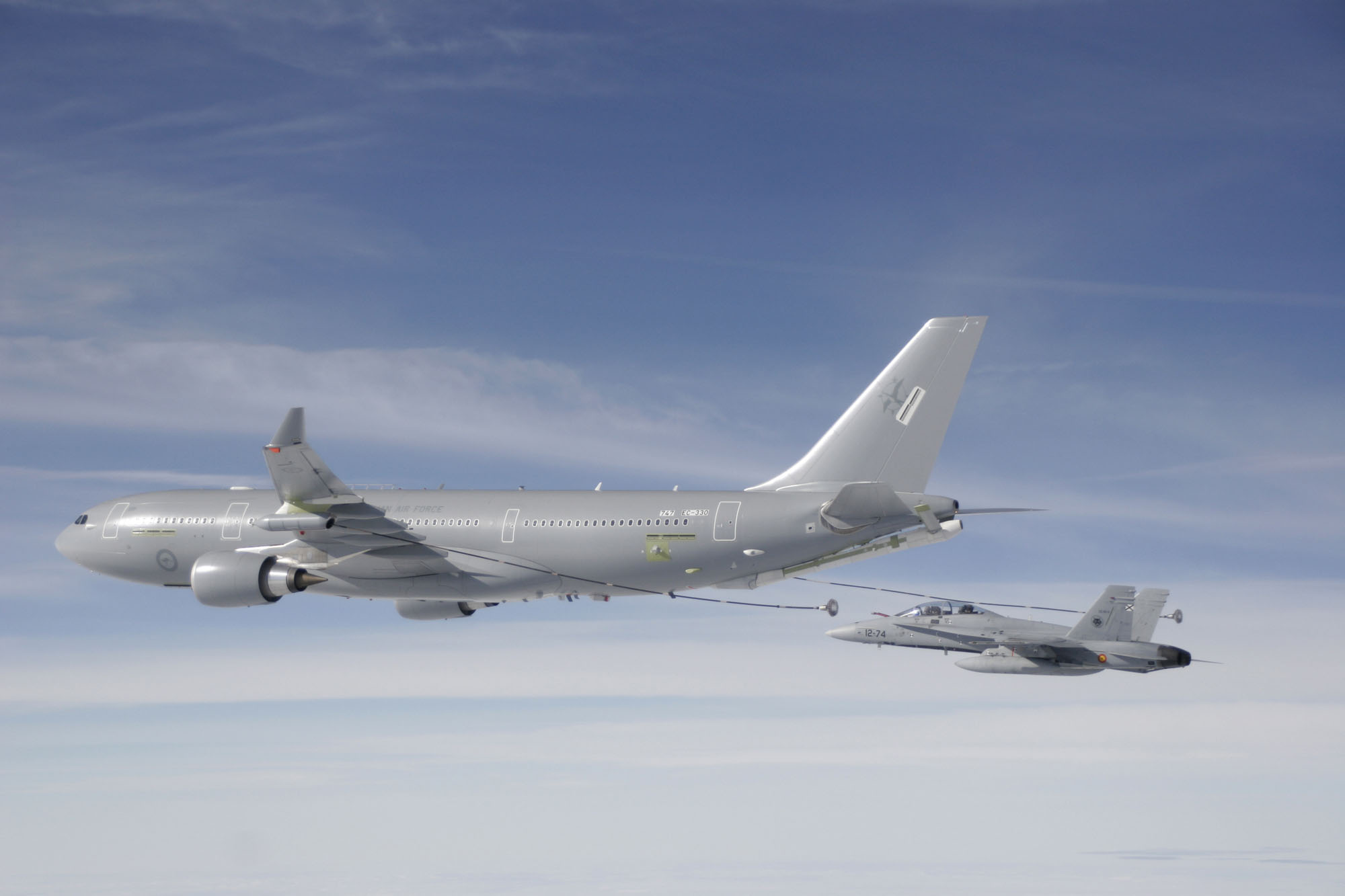
En su vuelo hasta el Báltico, los Eurofighter irán acompañados por un Boeing 707 del 47 Grupo con base en Torrejón de Ardóz (Madrid), en el que viajará otro grupo de integrantes del Ala 11, en apoyo a la misión.
El Ejército del Aire ya desempeñó esta misión en el año 2006. En aquella ocasión fueron aviones Mirage F-1M del Ala 14 de la Base Aérea de Albacete los que se desplazaron, también durante cuatro meses, a la Base Aérea de Siauliai , en Lituania.
ejercitodelaire

Nov 18, 2014

Japan to upgrade cabin and cockpit avionics for E-767 AWACS fleet

Boeing will upgrade cockpit avionics and cabin avionics on four E-767 of Japan's wide-area radar surveillance jets.
The Boeing E-767 is an AWACS aircraft that mimics the Boeing E-3 Sentry's surveillance radar and air control system, except it is installed on a Boeing 767-200 passenger jet airframe, rather than the E-3's Boeing 707 airframe.
The aircraft upgrade is to provide Japan with an upgraded AWACS command and control capability, and to enable Japan’s AWACS fleet to be more compatible with the U.S. Air Force AWACS fleet baseline and provide for greater interoperability. Japan will use this enhanced capability to provide for its self-defense.
Boeing will do the work in Kent, Wash., and should be finished by the end of February 2015.
intelligent-aerospace

Sep 15, 2014

Boeing Eyes 737-700 Solution for New JSTARS

Boeing is officially planning a variant of its 737-700 commercial jetliner as a competitor for the Air Force’s next-generation Joint Surveillance Target Attack Radar System (JSTARS) replacement.
The current JSTARS surveillance fleet, 18 planes strong, is based on a modified Boeing 707-300 airframe. The systems are equipped with long-range radars the Air Force says can locate, track and classify ground vehicles at a distance of up to 124 miles.
defensenews

Jun 13, 2014

Spain strengthens the NATO’s deployment in the Baltic with four Eurofighters

Spain has put at the disposal of the NATO four Eurofighters, that could join the forces deployed by the NATO in the Baltic.
The Spanish Executive also offered a Boeing 707, as well as a frigate for the Baltic operation and another one for the Mediterranean area and the Horn of Africa.
The inventory of means promised to the NATO is completed by the activation of a mechanized squad and an additional frigate within the framework of the rapid operational force, as well as the headquarters of Bétera (Valencia).
thediplomatinspain

Dec 25, 2013

Brazil selects IAI 767 tanker to replace KC-137s


The Brazilian air force has selected Israel Aerospace Industries (IAI) to convert two Boeing 767-300ER airliners into aerial refueling tanker transports.
The converted aircraft, will replace the country's existing Boeing 707-derived KC-137s. Brazil's two KC-137s were built in the 1960s but only entered service with the country's air force in 1986.
The aircraft need to be replaced because of high operating costs and high fuel consumption. The aircraft's excessive engine noise also played a factor in Brazil's decision to replace the KC-137.
Brazil has been looking for a replacement tanker since 2008 under the KC-X2 programme. Boeing, Airbus Military and IAI had been invited to submit bids.
The award comes nearly three years after IAI delivered to Colombia a 767-200 modified into a tanker.
IAI's Bedek division performs the tanker modifications. The company offers refueling by probe-and-drogue and a fly-by-wire boom, although it was not clear which
configuration Brazil selected.

flightglobal

Dec 5, 2013

Spanish Air Force Has A330 MRTT Ambitions

The Spanish air force is looking to purchase a trio of Airbus Military A330-200 multi-role tanker-transports (MRTTs) to replace its aging Boeing KC-707 tankers.
The purchase of new tankers is now one of the air arm’s top priorities.
But the country’s financial troubles are having major effects on equipment programs for the entire Spanish armed forces, and there is no funding for the project.
Spain is hopeful the current air force budget will begin to increase in 2016 from an expected record low in 2014. Spanish officials hope their buy will come off the back of an expected European Defense Agency (EDA) purchase of tankers expected during the second half of this decade. EDA hopes to have an agreement signed in late 2014 allowing for the possible procurement of tankers in conjunction with Occar, the European armament cooperation agency, for initial operations in 2020 and a full operational capability in 2021.
But Spain wants its own sovereign aircraft that it can configure to transport Spanish royal family members, who currently use a pair of Airbus A310s in a VIP configuration.
Air force officials had hoped the A330s could be purchased by adjusting the air arm’s order for the Airbus A400M airlifter, but Airbus Military would not allow such a change. Spain has 27 of the new transport aircraft on order, but the financial constraints mean it is currently budgeting to operate only 14, and may store the other 13. It has previously said it may try to sell the aircraft.
Spain’s first A400M is due to roll off the Seville line in 2014 and enter service in late 2015. The air force will then receive four or five aircraft per year until 2022.
Spain will use the A400M to replace its C-130 and KC-130 Hercules transports and tankers. Spain had planned to retire its C-130s in 2016. But delays with the A400M have pushed that aircraft’s introduction back, forcing the air force to embark on a C-130 life-extension program.
aviationweek

Spain to operate fewer A400Ms, but seeks 3 A330 MRTT tanker purchase


Spain’s air force expects to be able to employ only around half of the A400M tactical transports on order from Airbus Military, but hopes to widen its fleet renewal effort to also introduce a new fleet of A330-based tankers.
Ejército del Aire (Spanish Air Force) will receive 27 A400M aircraft, but due to budget restrictions it's planne to operate and maintain only 14.
Madrid’s first A400M is due to be delivered in January 2016, followed at a rate of four or five per year for its air force until 2022. Despite the smaller than expected size of the future active fleet, Ejército del Aire wants to operate the type in a multi-role configuration, featuring defensive aids and satellite communications equipment, and a modular air-to-air refuelling kit.
The Spanish air force also hopes to acquire three A330 multi-role tanker transports from Airbus Military, with these to represent its contribution to a proposed pooled fleet being eyed by the European Defence Agency. To also be suitable for national VIP transport tasks, the type would provide a replacement for the air force’s current Boeing 707s, although no funding has yet been allocated for such an order.
The acquisition of a new tanker is one of two top priorities for the Spanish air force, with the other being a plan to acquire a medium-altitude, long-endurance unmanned air system capability.
Longer term, the air force would like to acquire a multi-role successor for its existing Airbus Military C295/CN235 medium transports, with airborne early warning and electronic warfare as potential applications beyond the airlift role.
flightglobal

Nov 18, 2013

Colombia seeks new fighter purchase


Colombia’s air force is planning to bolster its combat capabilities, with the purchase of an additional squadron of fighter aircraft.
Air force officials are now completing a study into potential candidates for the requirement, which is likely to total 18 aircraft. To potentially include a mix of used and new-build airframes, these would be operated in concert with the service’s current Israel Aerospace Industries Kfir C10 strike platforms.
Multiple types have been included in a potential candidate list:Boeing F/A-18, Dassault Mirage 2000, Lockheed Martin F-16 and Sukhoi Su-30
The need to acquire a dedicated air superiority fighter was highlighted through Colombia’s deployment of eight Kfirs to the USA in 2012 to participate in a Red Flag-series air combat exercise flown from Nellis AFB in Nevada.
Colombia’s remaining Rockwell OV-10 Broncos are likely to remain operational for around another five years, before a multi-role replacement could be sought to work with its Embraer EMB-314/A-29 Super Tucanos. Operations with its Cessna A-37B Dragonfly counter-insurgency aircraft are expected to continue for some more years though, with the air force having recently acquired a low flight-hour example from Chile and to receive two more via the Dominican Republic.
The Colombian air force also has an interest in fielding an armed unmanned air system capability as part of its future force mix. This could initially involve adding air-to-surface weapons with its existing Elbit Systems Hermes 450 and Hermes 900 air vehicles. The service also wants to field a new-generation airborne early warning and control system type, due to the age of its current one Boeing 707-based example.
flightglobal

Feb 16, 2013

El Ejército del Aire inicia el lunes sus maniobras más importantes del año


Participan cazas de combate, aviones de transporte y helicópteros. Incluye los cazas de la Armada y sistemas antiaéreos de Tierra.

Las capacidades aéreas españolas se ponen a prueba. El Ejército del Aire realizará sus maniobras más importantes del año, el conocido como ejercicio sirio, durante toda la próxima semana. En el mismo participarán la práctica totalidad de las unidades de combate que tiene este arma de las Fuerzas Armadas, así como otros medios aéreos del Ejército de Tierra y la Armada.

El objetivo de las mismas es adiestrar y evaluar a las unidades participantes en el espacio aéreo de responsabilidad nacional dentro del territorio peninsular para conseguir la superioridad aérea en una situación de crisis y de conflictos de baja intensidad.

Durante la pasada semana, se llevó a cabo una fase previa en la que se diseñó una crisis nacional ficticia y se planearon las misiones a realizar, al tiempo que se inició el proceso de activación de alerta con los centros de operaciones de las diferentes unidades. A partir de este lunes, y hasta el viernes 22 de febrero, se ejecutarán las misiones ofensivas y defensivas que se planearon en respuesta a la falsa crisis diseñada.

En este ejercicio militar se simulará la existencia de tres bandos enfrentados entre sí. El bando Blueland se extiende por el norte de la Península Ibérica y su capital estará situada en Madrid. Whiteland englobará zonas de Castilla La Mancha y la costa de Levante y tendrá su capital en Albacete; y Redland abarcará zonas de Andalucía y Murcia y tendrá su capital en Cánovas, próxima a la localidad murciana de Alcantarilla.

Participan aviones de combate F-18 de las Alas 12 (Torrejón de Ardoz), 15 (Zaragoza) y 46 (Gando); Eurofighter Typhoon de las Alas 11 (Morón de la Frontera) y 14 (Albacete); Mirage F-1 del Ala 14 (Albacete), F-5 del Ala 23 (Talavera la Real); aviones de transporte C-130 Hércules del Ala 31 (Zaragoza); C-295 del Ala 35 (Getafe); Boeing 707 del 47 Grupo Mixto (Torrejón de Ardoz); y helicópteros Súper Puma del Ala 48 (Getafe). A estos se unirán cazas AV88 Harrier de despegue vertical de la Armada y unidades antiaéreas del Ejército de Tierra.

Este ejercicio tendrá una tercera fase que se desarrollará entre el 25 y el 28 de febrero en el Polígono de Tiro de Bardenas Reales, en el sur de Navarra. En el mismo, los aviones de combate del Ejército de Tierra, que partirán desde la base aérea de Zaragoza, ejecutarán diversas misiones de ataque a objetivos terrestres.

libertaddigital

Jan 19, 2013

Israeli 707 tests commercial anti-missile system


Israel's air force has used a Boeing 707-300 to trial a missile-defence system intended for deployment on board commercial aircraft.

The aircraft, which carries air force designation 272, is close to 40 years old and was previously in service with operators including British Caledonian.

Israeli firm Elbit Systems has used the four-engined jet to conduct a series of test flights with its C-Music infra-red countermeasures system.

flightglobal