Translate

Showing posts with label CF-188. Show all posts

Mar 5, 2026

Russian Tu-142 Maritime Patrol Aircraft Intercepted Near Alaska and Canada ADIZ


The North American Aerospace Defense Command (NORAD) detected and tracked two Tupolev Tu-142 maritime patrol aircraft operating within the Alaskan and Canadian Air Defense Identification Zones (ADIZ) on Wednesday, according to information reported by Defense News.

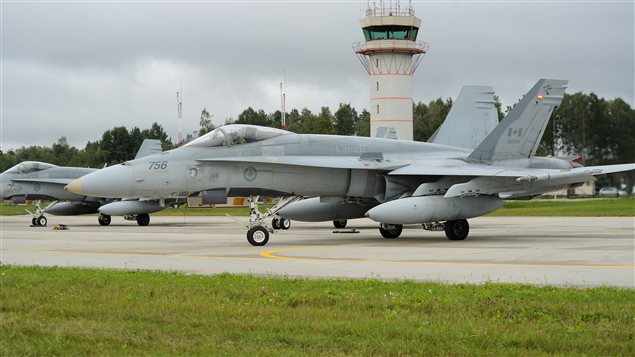
In response, NORAD launched a sizeable interception package to monitor and identify the aircraft. The allied response included two F-35 Lightning II fighters, two F-22 Raptor air-superiority aircraft, four KC-135 Stratotanker aerial refueling aircraft, and one E-3 Sentry airborne early warning aircraft. Canada also contributed two CF-18 Hornet fighters and one CC-150 Polaris tanker to the operation.

According to NORAD, the Russian aircraft remained in international airspace at all times and did not enter the sovereign airspace of either the United States or Canada. The command emphasized that such flights occur regularly and are not currently assessed as a direct threat.

“This Russian activity in the Alaskan and Canadian ADIZ occurs regularly and is not seen as a threat,” NORAD stated.

The Tupolev Tu-142 is a long-range maritime patrol and anti-submarine warfare aircraft developed during the Soviet era and still operated today by the Russian Navy. The aircraft is designed for extended overwater missions, including submarine detection, maritime surveillance, and strategic patrol operations. 

An Air Defense Identification Zone extends beyond a country's sovereign airspace into international airspace. Within this zone, approaching aircraft are required to identify themselves so that air defense authorities can monitor and assess potential threats. The system allows for early warning and reaction without implying sovereignty over the airspace.

The latest intercept follows a similar event on February 19, when NORAD tracked a formation of five Russian military aircraft operating near Alaska’s ADIZ. That group included two Tupolev Tu-95 bombers, two Sukhoi Su-35 fighters, and one Beriev A-50 airborne early warning aircraft.

NORAD responded to that earlier flight with two F-16 Fighting Falcon fighters and two F-35 Lightning II aircraft, supported by an E-3 Sentry and four KC-135 Stratotanker tankers. As with the most recent incident, the Russian aircraft remained in international airspace and were not considered a threat.

Headquartered at Peterson Space Force Base, NORAD operates a layered defense system that includes satellites, ground-based radar, airborne sensors, and fighter aircraft. This integrated network allows the command to detect, track, and respond to aircraft approaching North American airspace.

While such intercepts are routine, they illustrate the continuous monitoring conducted over the Arctic and North Pacific—regions that remain strategically important for both NATO and Russia.

Oct 31, 2018

Canada issues fighter draft RFP

The Canadian Government has released a draft request for proposals (RFP) for the competition to replace the Royal Canadian Air Force’s (RCAF) Boeing F/A-18 (CF-18/CF-188) Hornet fighter jets. Draft RFPs were issued by Public Services and Procurement Canada (PSPC) to all five eligible suppliers on 26 October.
According to an official announcement from PSPC, the five suppliers will provide feedback on the draft in around eight weeks’ time, enabling PSPC to draft the final RFP. The Future Fighter Capability Project (FFCP) to replace the RCAF’s Hornet fleet was originally outlined in Ottawa’s 2017 defence policy document ‘Strong, Secure, Engaged’, where the government outlined a plan to procure 88 aircraft through a competition.
janes

Nov 12, 2017

Canada expects fifth-generation fighter contract by 2021

The Royal Canadian Air Force expects to release a new request for proposals for its fifth-generation fighter competition by 2019 with a contract award by 2021, the RCAF’s commander says this week.
In June, Canada proposed 88 new fighters for the RCAF , an increase from the previous government’s plan to purchase 65 jets to replace the aging CF-18 fleet, but did not outline a timeline for the RFP.
Canada launched an open competition for the CF-18 replacement last summer following a campaign promise from Prime Minister Justin Trudeau’s Liberal party to step away from the controversial Lockheed Martin F-35 Joint Strike Fighter. The government is considering all options, including the F-35, although a Boeing F/A-18 acquisition appears unlikely in the wake of the airframer's commercial dispute with Bombardier.
RCAF commander Lt Gen Michael Hood would not comment directly on whether Boeing’s Super Hornet is still under consideration in the competition. This autumn the government announced it had suspended direct engagement with Boeing.
“I would say my personal relationship is limited to the support of our ongoing Boeing products and those normal day-to-day discussions we would have with them,” Hood tells FlightGlobal at the annual Dubai International Air Chiefs Conference.
Meanwhile, Canada is considering options for an interim CF-18 replacement. The government had previously proposed buying 18 new Super Hornets, but the commercial dispute has pushed the government to change course and examine Canada’s used Boeing F/A-18A/B Hornets. Last month, Canada submitted a formal declaration known as an expression of interest to Australia. Canada operates a similar Hornet configuration and both the CF-18s and Australian F/A-18A/Bs began operating within a few years of each other. Canada also bought the intellectual property on the jet and already uses L-3 for F/A-18 sustainment, Hood adds.
flightglobal

Sep 30, 2017

Canada considered getting Hornets from Kuwait

Canada kicked the tires on the idea of buying used fighter jets from Kuwait to address a shortage of CF-18s, Defence Minister Harjit Sajjan revealed Thursday, but found they wouldn't be ready in time.
The revelation comes amid a bitter and escalating dogfight between U.S. aerospace giant Boeing and Montreal-based Bombardier, which has the backing of Justin Trudeau's federal Liberal government.
The Liberals had planned to buy 18 Super Hornets from Boeing to fill what they claim is a critical shortage of fighter jets, but have since threatened to go elsewhere over the Bombardier dispute.
ctvnews

Nov 22, 2016

Canada Plans to Buy 18 Super Hornets, Start Fighter Competition in 2017

Canada will explore an interim buy of 18 Super Hornet fighter jets from Boeing, a blow to Lockheed Martin that kicks a final decision on whether to procure the F-35 further down the road.
"Canada will immediately explore the acquisition of 18 new Super Hornet aircraft to supplement the CF-18s until the permanent replacement arrives," the Canadian government announced in a release. "Canada's current fleet is now more than 30 years old and is down from 138 aircraft to 77. As a result, the Royal Canadian Air Force (RCAF) faces a capability gap."
Canadian Defence Minister Harjit Sajjan said Canada will launch a larger fighter competition next year, after it wraps up its defense policy review. But the competition will likely take about five years, which kicks the decision into the next administration. Liberal Party Prime Minister Justin Trudeau had vowed not to buy the F-35 joint strike fighter.
"We have a capability gap. We have selected the minimum number of aircraft to meet this capability gap here. At the same time, we are launching a full competition and making sure that we take the appropriate time, without cutting corners to get the right airplane," said Sajjan.
"Boeing is honored to provide the Royal Canadian Air Force with the only multi-role fighter aircraft that can fulfill its immediate needs for sovereign and North American defense," the company stated in a news release. "The Super Hornet's advanced operational capabilities, low acquisition and sustainment costs, and Boeing's continued investment in the Canadian aerospace industry — US$6 billion over the past five years alone — make the Super Hornet the perfect complement to Canada's current and future fighter fleet."
Meanwhile, Lockheed Martin was less pleased with the decision, restating its hope that the Canadian government would ultimately purchase the fighter.
“Lockheed Martin recognizes the recent announcement by the Government of Canada of its intent to procure the 4th generation F/A-18 Super Hornet as an interim fighter capability,” the company said in a statement. “Although disappointed with this decision, we remain confident the F-35 is the best solution to meet Canada's operational requirements at the most affordable price, and the F-35 has proven in all competitions to be lower in cost than 4th generation competitors. The F-35 is combat ready and available today to meet Canada's needs for the next 40 years.”
Further down the road, Lockheed could strip Canadian industrial participation — which totals 110 Canadian firms with $750 million in contracts, according to Lockheed —should the country ultimately opt not to by the F-35. The company has not signaled whether it would be willing to do so.
defensenews

Feb 27, 2016

Canada To Deploy 4 CF-188 Hornets to Romania in March

Starting in March 2016, about 100 Royal Canadian Air Force (RCAF) personnel mainly from Canadian Forces Base (CFB) Bagotville, Quebec, and four CF-188 Hornet fighter aircraft will conduct bilateral training with the Romanian Air Force in Constanta, Romania, for about a month.
Exercise Resilient Resolve is being conducted to foster relations between the RCAF and the Romanian Air Force while exchanging best practices. While not part of Canadian Armed Forces Operation Reassurance, this exercise continues to build on the strong relationship between Canada and Romania.
The CF-188 aircraft will deploy from Kuwait, where they were based during their employment on Operation Impact. As part of the Operation Impact mission transition, the CF-188 Hornets, associated aircrew, and support personnel are departing Kuwait in a phased approach in the coming weeks.
rcaf-arc

Apr 9, 2015

Canada conducts first airstrike in Syria With Two CF-188

Canada conducted its first airstrike in Syria on Wednesday, after its government voted last week to expand its mission against the Islamic State in Iraq and Syria and extend it for another year.
The strike was conducted by two Canadian CF-18 Hornets, using precision guided munitions, against an ISIS garrison near Ar Raqqah. A total of 10 coalition aircraft, including six from the U.S., were involved in the strike, according to Canada's Department of National Defence.
Canada began conducting airstrikes in Iraq in October and began training peshmerga fighters in September.
Although the United Kingdom, France, Belgium, Denmark and the Netherlands are also conducting airstrikes in Iraq, Canada is the only NATO member other than the U.S. to conduct strikes in Syria.
Canada has conducted three previous surveillance sorties over Syria, but Wednesday's airstrike was its first in the nation.
Canada is also supporting coalition air assets in the region with aerial refueling, as well as intelligence, surveillance and reconnaissance missions.
Approximately 600 Canadian forces are taking part is its mission against ISIS, including 69 special operations forces inside Iraq.
thehill

Mar 25, 2015

Canada Govenmment Motion allows Canadian Fighters to Bomb Syria to Fight ISIS

The new plan also allows for warplanes to enter Syria uninvited and strike ISIS targets. The extension will not require additional troops and no Canadian special forces will be deployed in Syria.
The government won’t ask the Assad regime for permission before conducting airstrikes against ISIS.
nationalpost

Feb 21, 2015

Canadian jets destroyed Islamic State bomb factory

The military says Canadian CF-18 fighter jets conducted a single attack in Iraq last week, leading a coalition strike that destroyed a factory making improved explosive devices last Friday.
Since the Canadian mission began last fall, CF-18s have flown 328 missions.
A Canadian Polaris tanker aircraft has flown 82 sorties and delivered more than two million kilograms of fuel to coalition aircraft and CP-140 Aurora has flown another 91 missions, bringing the total number of Canadian sorties to 501.
Canada has also deployed up 69 special forces advisers in northern Iraq, who took along vehicles and other specialized equipment.
ctvnews.ca

Dec 12, 2014

Canada rates Eurofighter Typhoon and other F-35A rivals equal on most missions

A Canadian government report suggests other fighter jets are just as capable as the Lockheed Martin F-35A at fulfilling the nation’s most likely mission needs, potentially opening the door to a competitive acquisition process to replace a fleet of 77 Boeing CF-18s.
Four aircraft – the F-35, the Boeing F/A-18E/F Super Hornet, Dassault Rafale and Eurofighter Typhoon – were compared in the report, called the Evaluation of Options for the Replacement of the CF-18 Fighter Fleet.
Each was assessed on its ability to carry out six mission sets including defence of Canadian airspace, responding to an “international event”, such as the Olympics, in Canada or a terrorist attack, peace enforcement, humanitarian disaster relief and state-on-state war fighting.
All aircraft were deemed low-risk candidates to perform each of the missions up to 2030 and beyond, except in fighting another peer nation. In that category, all the aircraft were deemed a higher risk platform beyond 2030 and none distinguished itself.
Canada does not intend to fight state-on-state wars and rated that contingency as highly unlikely. In the state-on-state war fighting mission, the range was from low to significant in the first timeframe and medium to high in the second timeframe “largely due to the higher level of potential threat confronting fighter aircraft in that mission and the evolution of those threats”, the report says.
It is more likely that Canada will join in on coalition military actions not “clearly defined state-on-state warfare or explicitly humanitarian assistance missions but rather, as in the case of Libya or Kosovo, something in between,” the report says.
For now, the Harper Administration in Canada still intends to buy 65 F-35s beginning in 2020. Its third annual report on the cost of potentially replacing its fleet of CF-18s with the jet assumes an average per-unit cost of $88.9 million over the period of acquisition. That tallies up to a total $45.8 billion over the life cycle of the fleet, a $141 million increase over the estimate in the 2013 report.
The analysis assumes that Canada will lose 11 F-35As over the fleet’s expected 30-year service life due to normal attrition.
At present, the Canadian government has only $76 million set aside for programme contingencies, far short of the $1 billion estimate for replacement aircraft. The report says that contingency budget is “low for a project of this scope and size”.
That could force Canada to lower the number of F-35s it purchases. That could affect the overall programme cost. Lockheed has promised to bring the per-aircraft cost for the conventional takeoff and landing variant of the jet below $100 million by 2019, but that will require a dramatic ramp in production after 2016 that relies heavily on non-US purchases.
flightglobal

Nov 10, 2014

Canadian CF-18s intercept Russian IL-20 over Lithuania

Two RCAF CF-18 Hornet pilots on a routine training mission over Lithuania Saturday were redirected because the Russians were coming.
And soon, the Russians were right over top of them.
Canadian fighter jets intercepted a Russian spy plane inside NATO air space, military sources said Saturday in nearby Lithuania.
The CF-18 Hornets were part conducting a routine training mission and were “re-tasked airborne in response to a non-NATO aircraft off the Baltic coast” early Saturday afternoon. The CF-18s intercepted and visually identified a Russian Federation Air Force (RFAF) Ilyushin Il-20 COOT A Lithuanian airspace and over international waters.
They got photographic proof, too.
From there the RCAF jets “shadowed the Il-20 for approximately five minutes before being ordered to return to base by NATO controllers”.
That type of plane is used by the Russian Air Force for electronic warfare and as a surveillance platform”.
The Royal Canadian Air Force is also currently flying CF-18s over the skies of Iraq as well as part of the targeting of ISIL targets.
torontosun

Nov 4, 2014

Canada launches first air strikes against ISIS: CF-18 fighter jets drop laser-guided bombs on targets in Iraq

Canadian fighter jets dropped bombs over Iraq late Sunday night, Iraqi time.
Canada’s CF-18s conducted their first combat strike since joining the fight against ISIS on Oct. 30. Two CF-18s attacked ISIS targets with GBU12 500-pound laser-guided bombs in the vicinity of Fallujah, Iraq.
The approximately four-hour mission included air-to-air refueling from Canada’s Polaris aircraft.
Few other details were released about the airstrike, which was the first use of bombs by CF-18 Hornets since the war to oust Muammar Gaddafi.
The announcement of the air strike on the fourth day of operations came after the chief spokesman for Task Force Iraq said that the mission had been going well since it started on Thursday, with the CP-140 M Aurora spy planes singled out for praise.
The mostly Canadian-built electro-optical and infrared sensors on the pair of upgraded Block 3 CP-140M Aurora spy planes the Royal Canadian Air Force has been flying over territory held by the Islamic State of Iraq in western and northwest Iraq have been a boon to Hornets pilots and other coalition aircrews.
nationalpost

Oct 23, 2014

Canada’s CF-188 Hornets depart for Operation Impact to fight ISIS

Operation Impact is the Canadian Armed Forces’ contribution to coalition assistance to security forces in Iraq who are fighting against ISIL.
The Hornets will transit through 3 Wing Bagotville, Quebec, before flying to Kuwait to participate in Operation Impact.
Canadian contribution to coalition operations against ISIL includes six CF-188 Hornet, one CC-150T Polaris air-to-air refueller and two CP-140M Aurora long-range patrol aircraft to provide reconnaissance capabilities and approximately 600 personnel. Seventy members of the Canadian Armed Forces are already working with American forces in an advisory and assistance role by providing strategic and tactical advice to Iraqi security forces.
rcaf-arc

Oct 8, 2014

Canadian CF-188 will operate out of a Kuwait to strike ISIS

Canadian warplanes that are to bomb targets in Iraq held by the Islamic State of Iraq & Al-Sham (ISIS) will operate from an airfield in Kuwait.
However, it will be at least one week and perhaps not until near the end of October before six Canadian CF-18 Hornets from CFB Cold Lake are launched from Kuwait, only 400 kilometres from territory held by ISIS.
nationalpost

Oct 5, 2014

Canada to send a combat mission to Iraq against ISIS

Canada's Prime Minister Friday announced a combat mission for Canada in Iraq.
CF-18s will be used to attack ISIL gunmen, vehicles and other military equipment. Aurora aircraft can be used to search for ground targets as well as report back on the success of coalition attacks. The government says it will also provide one CC150 Polaris and one dedicated airlift aircraft to enhance the refuelling, air surveillance and transportation capacity of coalition members.
The United States, France, Britain, Saudi Arabia, the United Arab Emirates, Bahrain and Qatar have taken part in attacks. Australia and the Netherlands will also contribute. Iran, in conjunction with Iraqi forces, is conducting its own air and ground campaign against ISIL.
The deployment of 26 Canadian special forces in northern Iraq has been extended.
The Royal Canadian Air Force has also delivered almost 226,800 kilograms of military supplies donated by allies to Iraqi security forces.
ottawacitizen

Sep 21, 2014

USAF F-22 fighters intercept Russian military planes 55 miles off Alaska

Two U.S. F-22 fighter jets intercepted six Russian military airplanes that were flying near Alaska.
NORAD, said the jets intercepted the planes about 55 nautical miles from the Alaskan coast at about 7 p.m. Pacific time Wednesday.
The Russian planes were identified as two IL-78 refueling tankers, two Mig-31 fighter jets and two Bear long-range bombers. They looped south and returned to their base in Russia after the U.S. jets were scrambled.
At about 1:30 a.m. Thursday, two Canadian CF-18 fighter jets intercepted two of the long-range Russian Bear bombers about 40 nautical miles off the Canadian coastline in the Beaufort Sea.
In both cases, the Russian planes entered the Air Defense Identification Zone, which extends about 200 miles from the coastline. They did not enter sovereign airspace of the United States or Canada.
foxnews

Sep 9, 2014

The Netherlands F-16s join Baltic Air Policing Mission

The Netherlands has contributed fighter aircraft to the current Baltic Air Policing Mission, NATO announced on 8 September.
Five F-16 of the Royal Netherlands Air Force (RNLAF) will operate alongside aircraft from Canada, Germany, and Portugal.
The RNLAF will operate out of Malbork in northern Poland, relieving four French Air Force Rafale fighters that had been stationed there on the previous rotation. Previously, the alliance had suggested that these Rafales might be replaced by four Royal Danish Air Force (RDAF) F-16s once their air policing duties at Amari Airbase in Estonia were complete at the end of August.
With the Dutch contribution, the current Baltic Air Policing Mission now comprises six Portuguese Air Force (Força Aérea Portuguesa - FAP) F-16s and four Boeing F/A-18 (CF-18/CF-188) Hornets of the Royal Canadian Air Force (RCAF) flying out of Siauliai Air Base in Lithuania, six German Air Force Eurofighter Typhoons at Amari Airbase, and six RNLAF F-16s in Poland.
This current rotation is set to continue through to the new year. NATO has not disclosed for how long the augmented Baltic Air Policing Mission will continue, saying only that "decisions regarding whether to continue with an enhanced air policing presence in the region will be made in due time".
janes

Sep 4, 2014

Portugal takes over lead of Baltic Air Policing Mission

Portugal assumed responsibility for the NATO Baltic Air Policing Mission on 1 September, taking over from Poland which has had the role with the support of the United Kingdom and Denmark since May.
Six Portuguese Air Force (Força Aérea Portuguesa - FAP) F-16 have now begun operations out of Siauliai Air Base in Lithuania, supported by four Boeing F/A-18 (CF-18/CF-188) Hornets of the Royal Canadian Air Force (RCAF).
This deployment (which includes Canada for the first time) marks the third NATO mission which has been strengthened with additional countries and aircraft because of the regional tensions between Ukraine and Russia.
While the previous two deployments saw extra US Air Force (USAF) Boeing F-15 Eagles, UK Royal Air Force (RAF) Eurofighter Typhoons, Royal Danish Air Force (RDAF) F-16s, and French Air Force Dassault Rafales added to the mission, this deployment will see the FAP F-16s and RCAF F/A-18s augmented by four-to-six Typhoons of the German Air Force operating out of Amari Airbase in Estonia, and four RDAF F-16s which will relieve the same number of French Rafale fighters at Malbork in northern Poland.
The heightened political tensions between NATO and Russia in recent months have seen a corresponding increase in military air activity near the Baltic states. During the previous air policing mission, UK Typhoons intercepted multiple Russian aircraft on 17 June, including a Tupolev Tu-22 'Backfire' bomber, four Sukhoi Su-27 'Flanker' fighters, one Beriev A-50 'Mainstay' early warning aircraft, and an Antonov An-26 'Curl' transport aircraft. It should be noted, however, that these all took place in international airspace.
janes

Royal Canadian Air Force begins Baltic Air Policing mission

The Canadian Air Task Force (ATF) officially joined NATO’s Baltic Air Policing (BAP) mission following a hand-over ceremony yesterday in Siauliai, Lithuania, as Canada’s continues to promote security and stability in Central and Eastern Europe in the face of increasing Russian hostility.
Four CF-18 Hornet aircraft and more than 130 airmen and airwomen from the Royal Canadian Air Force will work with NATO Allies from September to December 2014, to preserve the integrity of the airspace of Estonia, Latvia and Lithuania, and react to any intrusions.
The Canadian ATF recently relocated to Siauliai, Lithuania, from Câmpia Turzii, Romania, where they had conducted training with their NATO Allies from early May until August 22. The Canadian ATF arrived in Siauliai on August 26.
Based on the operational requirements for the BAP mission, four of the CF-18 Hornets which deployed to Romania were relocated to Lithuania to participate in BAP. Two Canadian aircraft will remain in Europe. The decision about the number of Canadian aircraft required for participation in BAP was made following planning and coordination with NATO and Canada’s Allies.
Portugal, Netherlands, Germany and Canada are all contributed forces to the BAP mission. Canada and Portugal will be operating side by side out of Siauliai Air Base in Lithuania.
The Canadian ATF based in Lithuania is composed of personnel from 2 Wing and 3 Wing Bagotville, Quebec; 4 Wing Cold Lake, Alberta; 8 Wing Trenton, Ontario;14 Wing Greenwood, Nova Scotia;17 Wing Winnipeg, Manitoba; and 22 Wing North Bay, Ontario. These personnel include aircrew and personnel who provide operational support to air assets, such as force protection, intelligence, aerospace management and maintenance coordination.
airforce.forces.gc.ca

Jun 13, 2014

Canada To Choose New Fighter Jets in Coming Weeks

The Canadian government said Thursday it will choose one of four fighter jets in competition to replace its aging fleet of CF-18s “in the coming weeks.”
Critics, however, contend the procurement process, which was reset in 2012 amid complaints of several manufacturers being shut out of it — is rigged in favor of the American Lockheed Martin F-35 stealth fighter jet.
Over the past 14 months, an independent review panel compiled the costs, capabilities and weaknesses of Boeing’s F-18 Super Hornet, the Eurofighter Typhoon, Dassault’s Rafale and the F-35.
Prime Minister said this week his cabinet would now review the panel’s report, which has not been made public.
The F-35 has been touted as a technological wonder. However, it has suffered setback after setback, notably with troublesome software. It is seven years behind schedule with a budget blow-out, making it the costliest weapons program in US history.
Australia, Britain, Denmark, Italy, the Netherlands, Norway and Turkey have also taken part in the development of the jet, along with the United States.
Australia and Turkey are the latest this year to place orders. South Korea is also expected to finalize plans to buy F-35 jets by year’s end.
defensenews