Translate

Showing posts with label P-3 ORION. Show all posts

Sep 20, 2024

The Argentine Navy Receives Its First P-3 Orion Aircraft to Strengthen Maritime Surveillance


On September 19, Argentina's Minister of Defense, Luis Petri, led the ceremony marking the incorporation of the first of four Lockheed Martin P-3 Orion aircraft acquired from Norway to enhance the Argentine Navy's capabilities in maritime space surveillance.

The aircraft landed at Almirante Zar Naval Air Base in Trelew, Chubut Province, earlier in September. During the ceremony, Petri emphasized the importance of this acquisition: "After decades where those responsible for leading the destiny of our Nation laughed in our faces, today we have a President who not only believes in what he says but also delivers on his promises."

Petri also highlighted that this purchase is part of a broader strategy to modernize the Armed Forces: "Since December 10, we have been tasked with making our Armed Forces a key player in this new Argentina, after 20 years of populism." He added that the acquisition of the P-3 Orion represents a technological leap that brings Argentina on par with other countries in the region.

Acquisition Details

Argentina purchased three P-3C Orions and one P-3N for logistical support, all of which underwent the Aircraft Service Life Extension Program (ASLEP), ensuring at least 15 more years of service, with around 17,000 flight hours remaining. This modernization process is crucial for keeping the maritime patrol aircraft fleet operational.

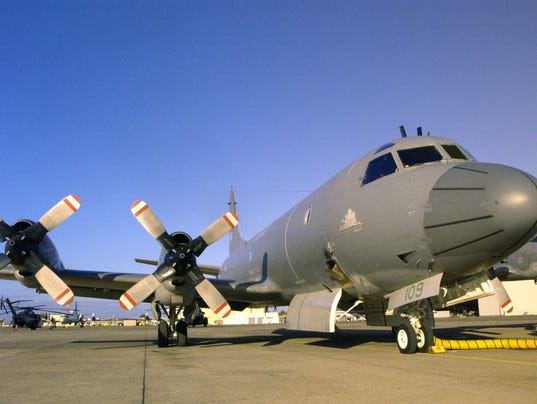
The P-3 Orion is a long-range patrol aircraft designed for control and surveillance missions in maritime areas, contributing to the preservation of sovereignty in Argentina's Exclusive Economic Zone (EEZ) and other areas under its jurisdiction. The P-3's capabilities include anti-surface and anti-submarine warfare, search and rescue (SAR), and humanitarian aid missions.

Operational Benefits for the Argentine Navy

The incorporation of these aircraft strengthens the concept of an Integrated Naval Force, improving coordination between aircraft and ships to expand the range of search and surveillance operations. With its flight autonomy and advanced systems, such as infrared cameras and high-precision sensors, the P-3 Orion offers real-time surveillance capabilities and a higher probability of detection over large maritime areas.

The aircraft has a wingspan of 30.38 meters and a range of 1,500 nautical miles, allowing it to cover Argentina's maritime coast and even Antarctica. It is also equipped with an automatic ship identification system and can carry rescue equipment, which significantly enhances the Argentine Navy's search and rescue operations.

Context of Modernization

This purchase is part of the National Public Investment Project, which aims to improve the operational and logistical capabilities of the Argentine naval aviation. The process to acquire the P-3s began due to the need to replace the previous fleet of P-3B aircraft, which had been in service for decades. The new aircraft, originally operated by the Royal Norwegian Air Force, underwent upgrades, including avionics and radar system improvements.

Regional Impact and Future Prospects

This acquisition not only strengthens Argentina's ability to monitor its vast maritime territory, including areas around the Falkland Islands, but also enhances its presence in the South Atlantic. The P-3 Orion aircraft are known for their reliability and operational versatility, enabling Argentina to perform long-range patrols, anti-submarine warfare, and search and rescue missions.

The Argentine government has emphasized that this purchase is a significant step towards modernizing its military capabilities, despite the country's budgetary constraints. Officials have noted that this investment is designed to protect Argentina's maritime resources and enhance its ability to address challenges such as illegal fishing.


Oct 21, 2023

Argentina secures four P-3 Orion planes from Norway.


The acquisition, valued at approximately 60 million dollars, includes one P-3N variant and three P-3C variants. The contract, formalized on board the ARA Sarmiento frigate, establishes the purchase of four aircraft at the mentioned value, along with maintenance equipment, accessories, spare parts, test benches, and other components.

The aircrafts have an average of 17,000 remaining flight hours and a potential service life of 15 years.

Currently, an Argentine crew is in the United States for training. The first aircraft is expected to arrive in Argentina before the end of 2023, with the remaining three scheduled for 2024. The aircraft will be based at the Almirante Zar Naval Air Base in Trelew. Additionally, the return to service of the P-3B aircraft, which is currently undergoing inspection and maintenance at FAdeA, is expected soon.

The P-3 Orion aircraft will be used in surveillance, control, search, and rescue missions in the South Atlantic.

NEW HELICOPTERS FOR THE ARGENTINE NAVY


Regarding the acquisition of helicopters for ocean patrol vessels, a letter of intent has been formalized for the purchase of six Leonardo AW109 helicopters. The Minister stated, "The intention is to progress in this process, considering both technical aspects and financial considerations, in a challenging economic environment." The expenditure to finalize the helicopter acquisition has already been included in the budget for the year 2024.

Related: 

USA clears the transfer of 24 F-16s from Denmark to Argentina

Argentina near to select the JF-17 as future Air Force fighter

Argentine MoD, FAdeA reach deal for three Pampa IIIs


May 25, 2019

Greek navy takes initial reactivated P-3B

Greece has received its first revived Lockheed Martin P-3B Orion as part of a “rebirth” of the country’s maritime patrol capability as it brings stored aircraft back to service.
Following work performed by Hellenic Aerospace Industries (HAI), the initial aircraft, described as an “interim” step, was presented to Greece’s navy on 17 May.
An additional four aircraft are scheduled to be modernised under the effort, which includes a mid-life upgrade to extend the service life of the turboprop type by 15,000h and the installation of new mission equipment.
Athens purchased six ex-US Navy P-3Bs in 1996, parking them in 2009 amid financial cutbacks.
flightglobal

Jul 29, 2018

SPANISH AIR FORCE A400M IN YIBUTI FOR THE FIRST TIME, SUPPORTING COUNTER PIRACY EUNAVFOR MISSION "ATALANTA"


An Airbus A400M from Spanish Air Force has landed at Yibuti for the first time, in support of Destacamento Orión, that operates an P-3 Orion in support of EUNAVFOR counter piracy Mission "Atalanta" in Indian Ocean.
A400M has brought back home members of 31º rotation or Destacamento Orión.
twitter

May 6, 2017

Japan seeks to give P-3 patrol planes to Malaysia

Japan is looking to donate retired military patrol aircraft to Malaysia, letting that Southeast Asian country keep closer watch over the South China Sea to rein in China's maritime expansion.
Parliament is currently weighing revisions to the foundational law of the Ministry of Defense that would allow equipment to be given to other nations at no cost. Currently, some form of compensation is legally required for any national asset. Malaysia will likely be the first beneficiary once that change is made, receiving P-3C patrol aircraft previously used by the Maritime Self-Defense Force.
nikkei

May 28, 2016

Vietnam May Request F-16s, P-3 Orions From US

With the lifting of the US arms embargo to Vietnam, a US defense industry source indicates Hanoi is seeking to improve its air defense and maritime security capabilities with the procurement of F-16 fighter aircraft from the US Pentagon’s excess defense articles (EDA) program and refurbished P-3C Orion maritime patrol aircraft, armed with torpedoes.
defensenews

Aug 31, 2015

Australia Formally Buys its first Four P-8A 'Poseidon'

The Royal Australian Air Force (RAAF) formally bought its first four P-8A Poseidon maritime surveillance aircraft in a $1.49-billion contract with Boeing that also includes the U.S. Navy’s next nine aircraft, Boeing announced today.
Australia’s participation in the program goes back to 2009, and though it has recently procured a complete training system and signed a contract for long-lead materials, it had not formally signed a contract for its aircraft.
The RAAF announced in February 2014 it intends to buy eight P-8As to replace its AP-3C Orions, and could buy as many as 12 pending the outcome of a Defence White Paper review. It said the first aircraft would deliver in 2017 and the full 8-plane fleet would be operational by 2021.
The contract announced today keeps ahead of that schedule, with Boeing saying that “production of the first Australian P-8A will begin later this year, with delivery to the RAAF scheduled for 2016.”
usni

Jun 27, 2015

Philippines confirms its interest in getting P-3C, helicopters from Japan

The Department of National Defense on Thursday confirmed reports that it is planning to acquire a P-3C patrol aircraft from Japan to boost the military’s capabilities especially in monitoring the nation’s maritime boundaries.
Several P3-C Orion aircraft from Japan’s Self Defense Force are participating in ongoing military exercises in Philippines.
The aircraft, together with a Philippine Navy Islander spotter plane, conducted a joint patrol exercise near the Recto (Reed) Bank off the South China Sea (West Philippine Sea).
Aside from the Orion aircraft, Galvez said the Philippines is also eyeing to acquire helicopters from Japan.
manilatimes

Jun 6, 2015

The Philippines Could Acquire P-3C Orion From Japan

Japan and the Philippines agreed to strengthen security ties and discussed transferring military equipment and technology on Thursday in Tokyo's latest move to strengthen cooperation with Southeast Asian countries to counter China's maritime ambitions.
Japanese Prime Minister Shinzo Abe and visiting Philippine President Benigno Aquino also agreed to expand joint training and exercises between their militaries and to co-operate in building up the Philippines Coast Guard.
China has become increasingly assertive in the South China Sea, building artificial islands in areas over which the Philippines and other countries have rival claims.
The Philippines has already handed the Tokyo government a list of Japanese military equipment it wants to acquire such as P-3C maritime surveillance aircraft, a senior Philippine naval officer has said.
reuters

May 5, 2015

Argentina begins P-3 Orion update

The Argentine Navy has begun a service-life extension programme for its four P-3B Orion maritime patrol fleet.
The first P-3B (serial 6-P-56) was delivered to Fábrica Argentina de Aviones (FAdeA) Brigadier San Martin on 27 April. The aircraft is to operate for another 15 years after its modernisation programme, the service said.
The programme includes a comprehensive structural revision and integration of new ISR sensors.
janes

Apr 22, 2015

Taiwan to deploy P-3Cs to Spratlys

Taiwan announced on 20 April that it will deploy newly-delivered P-3C Orion maritime patrol aircraft on surveillance missions over its claimed territory in the South China Sea.
The aircraft are currently deployed in anti-submarine reconnaissance and surveillance operations in and around Taiwan's air defence identification zone.
However, the scope of the P-3C operations will be expanded to include waters in southeastern Taiwan and areas around the Spratly and Pratas islands.
Taiwan has to date taken delivery of eight of a total of 12 refurbished P-3C Orion aircraft from the US. The remaining four are due to be delivered by the end of 2015.
The P-3Cs are set to replace the Republic of China Air Force's fleet of 11 S-2T anti-submarine aircraft, which have been in service for more than 40 years.
China has built islands at Cuarteron, Gaven, Hughes, Johnson South, Subi and Mischief reefs, while it is also putting pressure on the Philippines.
For its part, Taiwan is seeking to expand its runway on Taiping Island (Itu Aba) in the Spratlys from the existing 1,150 m-long and 30 m-wide strip, which was completed in early 2008.
janes

Mar 7, 2015

Canada upgrades CP-140 Aurora ISR

Canada is upgrading its Lockheed CP-140 Aurora maritime patrol aircraft with a ViaSat satellite communications system.
The upgrade will enable data streaming from Aurora aircraft over the ViaSat satellite network.
The project was completed from project start to first light in less than 90 days.
c4isrnet

Jan 29, 2015

Royal New Zealand Air Force to Upgrade P-3K Orion

The New Zealand Ministry of Defence has revealed the total cost of the seven-year project is projected to be $332.3 million.
The P-3K Orion Upgrade Project would finish halfway through this year with only a software upgrade to go.
Equipment such as computers, mission systems, radar systems, wiring and antennas had been upgraded.
"The configuration of the aeroplane it was quite modern compared to some P3s in the world, but the computing power that was put in the original upgrade back in the 80s/90s was about the power of a commodore 64."
The planes were first introduced into service in 1965.
radionz

Jan 6, 2015

RCAF receives first Aurora with new satellite comms system

MP Aerospace delivered the first of three CP-140M Aurora aircraft fitted with an Interim Beyond Line of Sight (IBLOS) satellite communications system to the Royal Canadian Air Force (RCAF) on December 15, 2014.
The prototype CP-140M Aurora aircraft will provide an improved Intelligence, Surveillance and Reconnaissance (ISR) capability in support of Canada’s military requirements internationally. Working with Department of National Defence personnel, IMP Aerospace provided the installation design and modification of the IBLOS system in Halifax, Nova Scotia.
The system enables secure, high-speed data streaming from the aircraft via satellite in areas which are remote from familiar ground stations.
airforce.forces.gc.ca

Dec 10, 2014

Canadians, French, U.S. Hunt For Submarine Off Scotland

The U.K. called in assistance to help hunt for a foreign submarine off the west coast of Scotland starting in late November.
Maritime patrol aircraft (MPAs) from France, Canada and the U.S. conducted patrols in conjunction with British surface warships in the search for the submarine in late November and the first week of December, operating out of RAF Lossiemouth in northern Scotland.
The incident began when a periscope was sighted in waters where U.K. and other submarines would normally surface as they head into or out of the Royal Navy’s submarine base at Faslane, home of the U.K.’s ballistic missile submarines.
At the height of the operation, aircraft involved in the hunt included two U.S. Navy P-3 Orions, a single CP-140 Aurora from the Royal Canadian Air Force and a Dassault Atlantique 2 of the French navy. Also involved was one of the U.K.’s Raytheon Sentinel radar-reconnaissance aircraft.
The U.K. defense ministry and the participating air arms have not confirmed they were hunting for a submarine. But a U.K. defense ministry spokesman told Aviation Week that Britain had “requested assistance from allied forces for basing of maritime patrol aircraft at RAF Lossiemouth for a limited period.
Maritime patrol aircraft are occasionally deployed to Scotland, mainly for NATO’s Joint Warrior exercise. Such exercises are usually announced in advance, but November’s deployment was unexpected, with the aircraft and supporting airlifters arriving around Nov. 26. The deployment appeared to end last last week.
The incident comes more than a month after Swedish authorities halted a search for a foreign submarine operating in its territorial waters in the Stockholm archipelago. While the Swedish search was unsuccessful, defense officials said there was no doubt that the country’s waters had been violated by a foreign power.
It is not clear whether the submarine being hunted by the U.K. and other Western nations had entered U.K. territorial waters, or if the maritime patrol aircraft successfully located the sub.
The Sentinel may have been using its radar to try to spot periscope-sized objects on the surface and then cue MPAs onto the target.
On Nov. 28, the U.K. reported it was tracking four Russian warships passing through the Strait of Dover and into the English Channel heading out into the Atlantic. The surface ships included a Ropucha-class landing ship and an Udaloy-class destroyer. These were shadowed by HMS Tyne, a Royal Navy offshore patrol vessel.
The U.K. retired its own fixed-wing maritime patrol capability provided by the Nimrod in 2010, and has been limited to the use of ships and helicopters for the anti-submarine mission.
aviationweek

Nov 3, 2014

Spanish air force P-3 forces to divert an illegal British Airways flight landing in Gibraltar

A British Airways flight was forced to veer off course on landing approach to Gibraltar because of the presence of a Spanish air force jet, the Gibraltar government reported.
Gibraltar's government said it had launched an investigation after a Spanish military P-3 aircraft – a Lockheed P3 Orion four engine anti-submarine and marine surveillance aircraft operated by the Spanish air force – disturbed the flight path of BA490 from London Heathrow on Friday afternoon.
Gibraltar Air Traffic Control issued emergency instructions for the BA flight to change course from its landing approach while 10-15 miles out on "on account of the need to maintain a safe distance between the two aircraft", said a spokesman from No. 6 Convent Place.
It is the most recent example of what have been labelled intimidating tactics by Spanish authorities against the tiny illegal British Overseas territory at the foot of southern Spain.
telegraph

Oct 8, 2014

Greece to Overhaul an Reactivate its P-3B Orion

The Government of Greece has requested a possible sale for modification and reactivation of two P-3B aircraft, and the upgrade of up to five P-3B aircraft that will include structural Mid Life Upgrades (MLU), Phased Depot Maintenance (PDM), Mission Integration and Management Systems (MIMS), and new flight avionics. The MLU kits will provide service life extensions for 15,000 flight hours.
dsca

Sep 25, 2014

USA Could Be near to sell P-3 Orion to Vietnam, Lifting Arms Embargo

Nearly 40 years after the United States helicoptered its last soldiers out of Vietnam in an ignominious retreat, Washington is moving closer to lifting an arms embargo on its former enemy, with initial sales likely to help Hanoi deal with growing naval challenges from China.
Senior U.S. officials with knowledge of the initiative said Washington wants to support Vietnam by strengthening its ability to monitor and defend its coastline, and said unarmed P-3 surveillance planes could be one of the first sales.
Such aircraft would also allow Vietnam to keep track of China's increasingly assertive activities in the South China Sea, a potential flash point because of interlocking claims from many countries to its islands and reefs.
Two senior Obama administration officials said discussions on easing the embargo are taking place in Washington and could result in a decision later this year.
The move to lift the embargo follows a gradual resumption of links between the United States and Vietnam over two decades, which accelerated with a series of high-level diplomatic and military meetings in recent months.
reuters

Aug 4, 2014

US Navy's Poseidon completes debut deployment

The inaugural deployment of the P-8A Poseidon is now in the books.
Patrol Squadron 16 returned to NAStation Jacksonville, Florida, after a seven-month deployment to Kadena Air Base on Okinawa, Japan. The squadron’s last P-8A touched down at NAS Jacksonville on July 16, signaling the beginning of the end for the venerable P-3C Orion, which will phased out over the rest of the decade.
navytimes

May 24, 2014

Canada’s modernized CP-140M achieved IOC

The Royal Canadian Air Force (RCAF) knows it as the Block III CP-140M Aurora long-range patrol aircraft. Fourteen Auroras are undergoing a significant modernization; six have now passed rigorous RCAF testing and achieved “Initial Operational Capability” (IOC).
The Block III modernization puts the Aurora tops among the world's leading surveillance planes of its kind.
19 Wing Comox, British Columbia, and 14 Wing Greenwood, Nova Scotia, are home to the Aurora. The aircraft functions primarily as a command, control, communication, computer, intelligence, surveillance, and reconnaissance platform for domestic and international operations.
The Aurora, Canada's strategic surveillance aircraft, is tasked with domestic surveillance of Canada’s Atlantic, Pacific, and Arctic coastlines and maritime approaches. It also conducts anti-submarine and anti-surface warfare, maritime and overland ISR, strike coordination, and supports search and rescue in a secondary role.
The Aurora was originally acquired in the 1980s, and the Aurora Incremental Modernization Project (AIMP), consisting of blocks of modernization work, began in 1998 to upgrade its capabilities. To ensure its continued viability as an ISR platform, the RCAF additionally developed the Aurora Extension Proposal (AEP), which combines the original Aurora Incremental Modernization Project and the Aurora Structural Life Extension Project (ASLEP) with three additional capability enhancements. Moreover, the total number of modernized and life-extended aircraft is now 14, up from 10.
This work will ensure that the fleet remains effective up to the 2030 timeframe.
airforce.forces.gc.ca