Translate

Showing posts with label SU-27. Show all posts

Feb 4, 2026

Vietnam, the Rafale Rumors


Recent commentary in European media and on social networks has suggested that Vietnam could become a future customer for the Dassault Rafale, a claim that has sparked considerable discussion within defence and aviation circles. While the idea is not entirely implausible given Vietnam’s ongoing effort to diversify its military suppliers, the available evidence points to a far more cautious and preliminary situation than some headlines imply.

For decades, the Vietnam People’s Air Force has relied almost exclusively on Russian-built aircraft, including the Su-27 and Su-30 families. This dependence has become increasingly complex in recent years due to geopolitical shifts, sanctions on Russia, and supply chain uncertainty. As a result, Hanoi has quietly explored alternative suppliers and platforms, particularly in the training and support segments, signalling a long-term interest in diversifying its procurement strategy rather than committing to any single Western fighter programme immediately.

The Rafale has appeared periodically in discussions about Vietnam’s potential future fleet. Reports referenced by French media outlets indicate that Vietnamese personnel have had exposure to the aircraft in the past, including opportunities to observe or fly Western platforms during multinational deployments. Such interactions are not unusual and do not necessarily represent procurement intent. Many air forces conduct familiarisation flights or technical exchanges as part of broader defence diplomacy without progressing toward acquisition.

From a market perspective, Dassault Aviation has enjoyed considerable success in Southeast Asia, most notably with Indonesia’s order for 42 Rafales. This regional presence naturally fuels speculation that neighbouring countries could follow a similar path. However, speculation alone does not equal negotiation. To date, there has been no confirmed government-to-government agreement, request for proposals, or formal negotiation publicly acknowledged by either Vietnam or France regarding a Rafale purchase.

More credible indicators of Vietnam’s near-term direction point elsewhere. Several defence analyses and industry reports suggest that US-made fighters, particularly the F-16 Block 70/72, may represent a more realistic option should Vietnam move toward Western combat aircraft in the next decade. The reasons are largely practical. The F-16 offers broad international support networks, lower acquisition costs compared to twin-engine European fighters, and potential political benefits linked to expanding security ties with the United States.

That said, the Rafale cannot be entirely ruled out over the long term. Vietnam’s strategic planning tends to be incremental and pragmatic, balancing cost, operational independence, and political flexibility. Western European aircraft, including Rafale or Gripen, remain theoretically compatible with Vietnam’s diversification goals, especially if export financing, industrial cooperation, or regional partnerships become attractive factors.

The broader context also matters. Vietnam’s defence policy is traditionally cautious, avoiding rapid shifts that could disrupt regional balance or provoke political sensitivities. Major combat aircraft acquisitions require years of technical evaluation, budget planning, infrastructure adaptation, and diplomatic negotiation. Even if interest existed today, an operational transition to a completely new Western fighter ecosystem would likely be gradual rather than immediate.

In short, current claims that Vietnam is on the verge of purchasing Rafales are not supported by publicly verifiable defence procurement evidence. What exists instead is a pattern of exploratory engagement, strategic observation, and long-term market positioning by multiple manufacturers seeking opportunities in Southeast Asia’s evolving defence landscape.

The Rafale remains a credible candidate in theory, but for now it is best understood as part of a wider conversation rather than an imminent contract. Vietnam’s fighter modernisation path is still unfolding, shaped by budgetary realities, political considerations, and the careful balancing act that has long defined Hanoi’s defence strategy.

Jun 3, 2018

Kazakhstan to boost Su-30SM fleet

Announced during the KADEX exhibition in Astana on 24 May, the new deal is for an undisclosed number of aircraft. "The contract will be completed in 2020," says Irkut.
The Kazakhstan air force has eight Su-30SMs in active use, with these aged at up to three years. A further 17 examples were already on order prior to the new deal being announced. Astana had previously expressed interest in acquiring up to another 11 of the two-seat type. The Kazakhstan air force also operates 12 single-seat Su-27s.
flightglobal

Feb 7, 2016

Russia's New Su-35S Arrives in Syria

Russia has deployed at least four advanced Sukhoi Su-35S Flanker-E aircraft to Syria, beefing up its air superiority capabilities in the war-torn region.
The move follows protests from Turkey that a Russian Sukhoi Su-34 Fullback bomber violated its airspace on Friday—a claim Moscow denies. In an earlier incident in November, Ankara shot down a Russia Su-24 Fencer that had crossed the Turkish border for about eighteen seconds. Following that incident, Moscow deployed the power S-400 air and missile defense system to Syria and started to arm its fighters with live air-to-air missiles.
“Starting from last week, super-maneuverable Su-35S fighter jets started performing combat missions at Khmeimim airbase," Russian defense ministry spokesman Maj. Gen. Igor Konashenkov told the TASS news agency on February 1.
The addition of the Su-35 provides Russia with more fighter escorts for its fleet of Su-24 Fencer and Su-25 Frogfoot strike aircraft that are operating from the Khmeimim air base, which is located in Syria’s northwestern Latakia province. Those aircraft have minimal air-to-air self-defense capability and are reliant on the Sukhoi Su-30SM and Su-27SM3 Flankers currently in theatre for protection. Russia has also deployed fourteen Su-34 Fullback bombers to Syria, but those warplanes have a significant air-to-air self-defense capability.
nationalinterest

Jun 13, 2015

Russia SU-27 Fighter Flies Dangerously Close To USAF RC-135 Plane

A Russian fighter jet flew dangerously close to an American reconnaissance aircraft during an "unprofessional" intercept in international airspace over the Black Sea last month, the Pentagon said Friday.
The American RC-135 was conducting routine operations May 30 when a Russian SU-27 Flanker flew up from behind, passed underneath then crossed over to the American plane's right-hand side. "This intercept was conducted unprofessionally" . "It may have been a lack of training on the part of the Russian pilot. It may have been just a general level of unprofessionalism of the individual who was flying the Flanker", told USAF Spokeperson
The Russian plane came within just 10 feet of the US aircraft.
The US plane was intercepted a second time on the same flight, but that was deemed to have been done appropriately.
Russian and US planes routinely monitor each other's movements in international airspace, but this encounter is the latest in a series of incidents sparking concerns over how Russia carries out airborne intercepts.
On April 7, a Russian Flanker jet performed "aggressive manuevers" in close proximity to a US reconnaissance plane in an incident that occurred over the Baltic Sea, in international airspace north of Poland.
The US Navy last month posted a video on YouTube showing a Russian SU-24 jet flying close to the American guided-missile destroyer USS Ross in the Black Sea. The Navy said the Russian jet was not carrying weapons.
defensenews

May 25, 2015

China will have to purchase Su-35 fighters To Fill The Gaps In Its Air Force

China needs Russian Su-35 fighters, despite the fact that Beijing has carried out flight testing of it own latest fighter J-11D.
J-11D was derived from J-11B, which is analogue of Su-27 manufactured in China. Probably the most outstanding feature of J-11D is the fact that it is fitted with avionics installed on the more advanced J-16 fighter. The jet is fitted with radar with an active electronically scanned array (AESA).
China needs Su-35 in order to fill the gap in the fleet of its air forces. Even if China increases output to two J-11 jets per month it won’t be enough to reduce the gap between Chinese air forces and air forces of other countries. In addition, it is unclear, when J-11 will be able to compete with other fifth-generation fighters.
Su-35 is the “4++”-generation fighter derived from Su-27.
ruaviation

Mar 25, 2015

Sweden, NATO report Russian military planes over Baltic Sea

The Swedish Air Force and NATO jets on Tuesday tracked two Russian Tu-22M3 and two Su-27 aircraft flying with their transponders turned off over the Baltic Sea.
NATO scrambled Danish jets and Italian jets based in Lithuania early Tuesday to identify the Russian aircraft which were heading to the Russian Baltic exclave of Kaliningrad.
The Russian military aircraft did not use their onboard transponder; they were not in contact with civilian Air Traffic Control and they were not on a pre-filed flight plan.
Swedish Foreign Minister said it was "unacceptable" for the Russian planes to be flying with shut-off transponders that are necessary for identifying aircraft on radar, calling it violation of international aviation rules.
NATO and Sweden, have reported an increase in Russian air maneuvers over the Baltic Sea in recent years.
stripes

Mar 19, 2015

Russia Deploys 10 Su-34 and Su-27 Fighters To Kaliningrad Region

About 10 Su-34 and Su-27 have been relocated to the Russia's Kaliningrad Region to conduct bombing drills.
The crews of the multipurpose Su-34 aircraft are to conduct bombing of ground targets at an unknown firing field in the Kaliningrad Region.
The exercise is part of Russian Northern Fleet snap drills that will last until March 21 and include land, sea and air activities.
Russian President Vladimir Putin ordered to bring the country's Northern Fleet to full alert in a snap combat readiness exercise on March 16. The drills involve 38,000 military personnel, 3,360 pieces of equipment, 41 ships, 15 submarines, and 110 airplanes and helicopters.
The main goal of the current snap drills is to assess combat readiness of Russian forces deployed in the Arctic region, according to Defense Minister.
sputniknews

Mar 15, 2015

Indonesia deploys 4 Su-27s to Papua

Some four Indonesia Sukhoi Su-27 aircraft from Makassar Air base have been deployed on the "Tangkis Petir" (Thunder Repellent) training operation in the fourth sector of the National Air Defense area in Biak Numfor district, Papua.
The training operation began on March 12, 2015, will conclude on March 31, 2015.
antaranews

Mar 1, 2015

Indonesia Press says Spanish offer of Eurofighter Typhoon is the best choice for Indonesia Air Force

Spain stressed on Wednesday that the Eurofighter Typhoon jet fighter is the best choice for Indonesia to modernize its air force when it comes to technical capabilities and the transfer-of-technologies offer.
Spanish Ambassador to Indonesia said that the Typhoon might be more expensive than its competitors, but it offers a better operational cost over the jet fighter’s life cycle of some 30 years.
The Indonesian Air Force (TNI AU) made it public that it wanted to replace its ageing F-5 E/F Tiger IIs with Russian-made Sukhoi Su-35s, Currently, TNI AU operates a mixed fleet of Su-27s and Su-30s in the 11th squadron.
Engines for the Flankers, however, have a very short lifetime when compared to Western-built jet fighters.
Another strong contender is the single-engine Swedish-built SAAB Gripen, while both the Flanker and Typhoon are twin-engine jet fighters.
Gripen is a good fighter, but not the best for Indonesia considering the vast airspace and maritime space to be covered.
“With the Typhoon’s range of operations, you can cover the entire Indonesian air space".
Ambassador said the cooperation started between PT Industri Pesawat Terbang Nurtanio (IPTN) and Construcciones Aeronauticas Sociedad Anonima (CASA) in the 1970s to build the C-212 Aviocar light transport aircraft. The aircraft is licence-built and was given the designation NC-212 in Indonesia. Now the production of this type is located solely in Bandung as the Spaniards are focusing on bigger aircraft types.
PT IPTN is now known as PT Dirgantara Indonesia, while CASA is now part of Airbus Defense and Space.
thejakartapost

Feb 9, 2015

Kazakhstan to acquire Su-30SM fighters

Kazakhstan is to acquire the Sukhoi Su-30SM 'Flanker' as it looks to recapitalise its Soviet-era fighter force.
The disclosure was made by the Commander in Chief of the Kazakhstan Air Defence Forces , during a visit to the Irkutsk Aviation Plant where the Su-30SM is built.
The government announcement did not disclose aircraft numbers or delivery timelines.
The Su-30SM has been developed from the Indian Su-30MKI and is intended by the Russian Air Force as a stop-gap until the Su-35 and Sukhoi T-50 PAK-FA enter service later in the decade. The two-seat Su-30SM features an improved radar, communications, and ejector-seat system. In addition, the aircraft's weaponry configuration has been adjusted to Russian specifications.
Kazakhstan currently fields MiG-27, Su-25, MiG-31, Su-27, and MiG-29, all inherited from the Soviet Union in the early 1990s.
Kazakhstan has recently been procuring Western aircraft for the first time in the guise of the Airbus C295 transport aircraft, as well as EC145 and Bell UH-1 Huey II helicopters (and has been touted as a potential customer of the Airbus A400M transport aircraft).
janes

Jan 9, 2015

Ukraine returns refurbished combat aircraft to service

Ukraine has returned to service four combat aircraft that have recently undergone refurbishment work.
Two MiG-29 and two Sukhoi Su-27 fighters were handed back to the Ukrainian Air Force.
In addition to the aircraft, about 150 ground vehicles and other weapons systems were handed over to the military.
Since hostilities with Russia began in early 2014, Ukraine has returned scores of aircraft to service that would otherwise have become unairworthy due to a lack of investment in the country's armed forces. These have included MiG-29s and Su-27s, as well as Sukhoi Su-24 and Su-25 strike aircraft, and Antonov An-26 transport aircraft.
Having suffered from chronic underinvestment for years, the Ukrainian Air Force was placed at an instant disadvantage when Russian forces entered Crimea in early 2014. The air force's inability to respond with the assets that it did have was compounded when a number of its bases were overrun and its aircraft seized.
It is thought that 45 aircraft, including MiG-29 fighter and Aero L-39 trainer/light strike aircraft, were lost this way when the 204th Tactical Aviation Brigade at Belbek was overrun by Russian Spetsnaz troops on 21 March.
Further to this, when the Ukrainian Air Force did get involved in hostilities in a meaningful way in the east of the country, it found that this endemic underinvestment manifested itself in outdated and poorly maintained combat aircraft, as well as poorly trained pilots. Combined with a lack of combat experience and poor use of intelligence, this meant that the air force has suffered a high loss rate that continues through to today. At least 20 fighters, transports, and helicopters have been shot down in the past year.
While Ukraine's aircraft inventory remain impressive on paper, the country desperately needs to continue its refurbishment effort if it is to have at its disposal the numbers of serviceable and capable aircraft it requires to combat separatist factions.
janes

Jan 8, 2015

Libyan Air Force receives four new Su-27 fighter jets

The Libyan Air Force has reportedly taken delivery of four new Su-27 aircraft from an undisclosed country.
As Libya is not listed as an official buyer of the Sukhoi Su-27, it is believed to have acquired second-hand or refurbished fighters from other countries.
However, the LNA did not disclose whether the jets were new, or loaned from neighbouring states or allies, or an addition of upgraded old aircraft to the existing Air Force squadrons.
The delivery comes as the Libyan Armed Forces pledge to intensify airstrikes on all vital infrastructure in the city of Misrata.
airforce-technology

Dec 29, 2014

Russia to station additional SU-27 combat aircraft in Belarus

Russia is to permanently deploy an additional eight Sukhoi Su-27 'Flanker' fighters to Belarus, as relations with the West remain tense.
The eight Su-27s will join the four already based at Baranovichi Air Base, near the Belarus borders with Lithuania and Poland.
Russia deployed its first Su-27 fighters to Belarus in late 2013, and had deployed six Su-27 fighters, as well as transport and airborne early warning and control aircraft, to this location in the immediate aftermath of the annexation of Crimea in March. It had, however, since reduced the number of 'Flankers' permanently stationed there to four.
janes

Dec 11, 2014

Finnish Air Force reports intense Russian activity in Baltic

The Finnish Air Force revealed on Tuesday that unusually intense Russian activity has been detected over the Gulf of Finland and the Baltic Sea in general during a major military exercise by the Russian Armed Forces.
The activity was first detected on 6 December and has continued between Sunday and Tuesday. It remains unknown when the exercise is scheduled to end.
Finnish Minister of Defence, estimated on Tuesday that the activity is clearly a show of force by Russia.
The activity has prompted the Finnish Air Force to step up its air-policing operations by, for example, adjusting the number of Hornet jets on stand-by at several airbases. Nato has similarly bolstered its efforts to monitor the airspace of Sweden and the Baltic countries.
The activity is unusual also in light of the number and types of aircraft detected in the region.
The detected detachments have included bombers, stealth and interceptor jets as well as transport aircraft.
Perhaps the most unusual aircraft is Tupolev Tu-95.
None of the aircraft have violated Finnish airspace.
The aircrafts have been moving between mainland Russia and Kaliningrad, back and forth.
In addition to the Tupolev Tu-95, Finnish jets have identified Tupolev Tu-22M bombers as well as Suhoi Su-27 and MiG-31 jets. Suhoi Su-24 and Suhoi Su-34 jets as well as Ilyushin Il-76 and Antonov An-26 multi-purpose aircraft have also been detected over the Baltic Sea.
helsinkitimes

Nov 2, 2014

NATO Baltic Jets Intercept Russian Airplanes for Third Day

NATO jets in the Baltic countries intercepted two Russian military aircraft today as the alliance said Russian air activity has surged on its borders.
F-16 jets from NATO’s Baltic air policing mission intercepted a Russian Su-27 fighter and Eurofighter aircraft later shadowed an IL-76 military transport plane, Latvia’s army said on its Twitter account. It reported interceptions of seven Russian jets yesterday and on Oct. 28.
Amid tensions with the Kremlin over the crisis in Ukraine, North Atlantic Treaty Organization jets have tracked more than 100 Russian aircraft so far this year, more than triple the number in 2013.
Russians are exercising and moving aircraft in the Baltic area between St. Petersburg and the Kaliningrad exclave much more than they did in the past as a result of higher military spending.
NATO warplanes monitored four groups of Russian military aircraft conducting “significant” maneuvers in European airspace over the Baltic, North and Black seas, the alliance said in a statement today.
Repeated Incidents
While most interceptions don’t involve airspace incursions, Latvia’s northern neighbor Estonia and non-aligned Finland have reported repeated incidents this year where Russian aircraft violated their airspace. Sweden staged its biggest naval mobilization since the Cold War earlier this month in a week-long hunt for a suspected foreign vessel in the Stockholm archipelago.
Russian warplanes practiced a bombing mission against Denmark’s Baltic Sea island of Bornholm in June, the Jyllands-Posten newspaper reported, citing information from military intelligence.
bloomberg

Oct 23, 2014

Russian Air Force Receives New Su-34

Russia's Southern Military District aviation regiment has received six new Su-34 fighter-bombers, renewing the regiment's fleet by 75 percent.
In the near future the SMD is expecting to receive more than 40 new aircraft, including the modernized Su-27 SM3 fighters and Mi-35 attack helicopters.
ria.ru

Oct 8, 2014

Indonesia’s Air Force Adds More Flankers

Indonesian Military Commander tells that they’re leaning toward the Su-35 as their F-5 replacement, with the JAS-39 in 2nd place and the F-16 a distant 3rd.
Indonesia’s turn toward Russian fighters stemmed partly from necessity. Its 12 remaining F-16A/Bs and 16 remaining F-5E/F fighters experienced severe maintenance problems external link in the wake of a US embargo, triggered by the Indonesian military’s widespread human rights abuses in East Timor. Its 30+ single-seat Hawk 209 sub-sonic light combat aircraft, derived from the trainer jets the TNI-AU also operates, were the country’s only fighter alternative.
A $192 million contract began to address that in 2003, by buying 2 SU-27SK single-seat and 2 SU-30MK twin-seat multi-role fighters from Russia. Indonesia submitted a formal request to buy 24 used F-16s in 2011, but it isn’t backing away from its high-end Flanker fleet. In fact, the TNI-AU has steadily added more. Now, they’re reaching out to their neighbors for training and support.
defenseindustrydaily

Aug 3, 2014

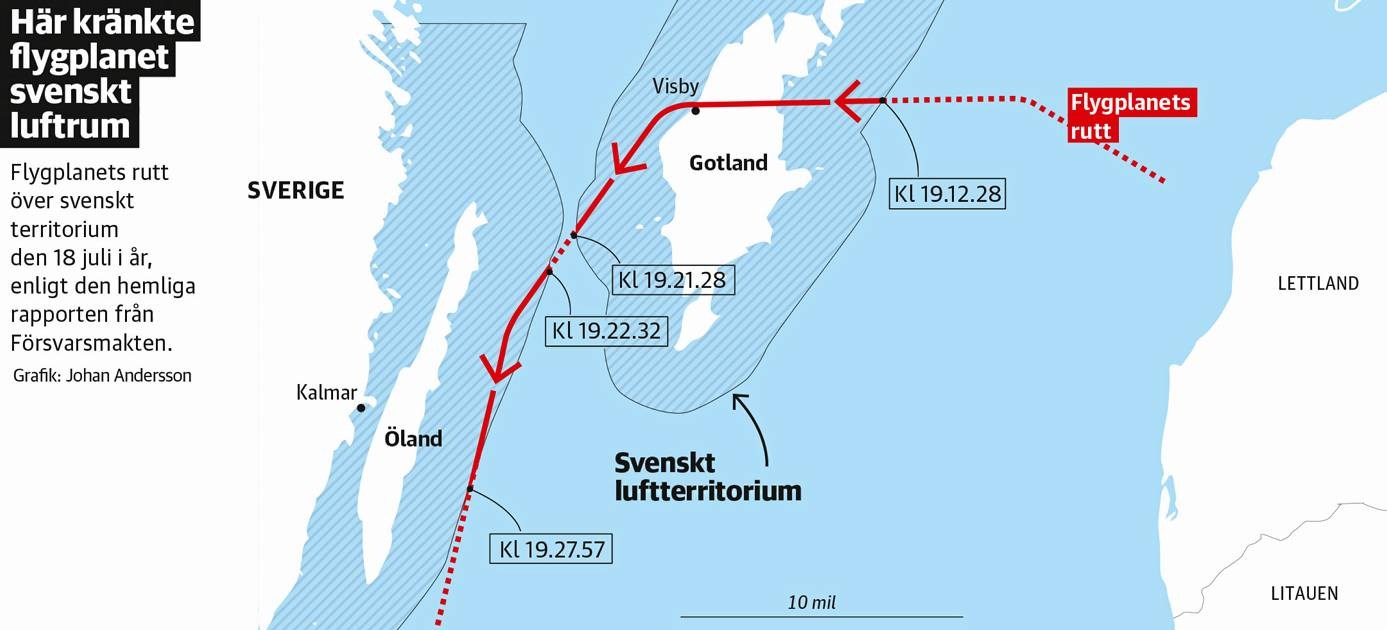
USAF RC-135 intrudes Swedish airspace to avoid being intercepted by Russian fighters


The Cold War aerial games of chicken portrayed in the movie "Top Gun" are happening in real life again nearly 30 years later.

A U.S. Air Force spy plane evaded an encounter with the Russian military on July 18, just a day after Malaysia Airlines Flight 17 was downed by a suspected surface-to-air missile that Ukraine and the West allege was fired by pro-Russia rebels in eastern Ukraine.
The RC-135 Rivet Joint fled into nearby Swedish airspace without that country's permission. The airplane may have gone through other countries' airspace as well, though it's not clear if it had permission to do so.
The U.S. plane had been flying in international airspace, conducting an electronic eavesdropping mission on the Russian military, when the Russians took the unusual action of beginning to track it with land-based radar.
The Russians then sent at least one fighter jet into the sky to intercept the aircraft, the U.S. official said Saturday.
The spy plane crew felt so concerned about the radar tracking that it wanted to get out of the area as quickly as possible, the official said. The quickest route away from the Russians took them into Swedish airspace.U.S. officials acknowledged that was done without Swedish military approval.
As a result of this incident, the United States is discussing the matter with Sweden and letting officials know there may be further occurrences where American jets have to divert so quickly they may not be able to wait for permission.
The incident was first reported by the Swedish media group DN.se. Russian officials did not provide any immediate reaction about the encounter.
This was at least the second potentially-dangerous encounter between a U.S. plane and Russia over the past few months. On April 23, a Russian Su-27 Flanker fighter jet buzzed within 100 feet of the nose of a U.S. Air Force RC-135U reconnaissance plane over the Sea of Okhotsk between Russia and Japan.
Russian fighter jet nearly collided with U.S. military plane in April
Russian and U.S. aircraft often encounter each other, both in Northern Europe as well as the area between the Russian Far East and Alaska. But the official said the land radar activity by the Russians in this instance was unusual.
edition

Jun 18, 2014

Royal Air Force Typhoons scrambled to Intercept Russian Aircraft during NATO Baltic Air Policing mission


RAF Typhoons were yesterday (Tuesday 17 June) scrambled to intercept multiple Russian aircraft as part of NATO’s ongoing mission to police Baltic airspace.
The Typhoon aircraft, from 3 (Fighter) Squadron, were launched after four separate groups of aircraft were detected by NATO air defences in international airspace near to the Baltic States.
Once airborne, the British jets identified the aircraft as a Russian Tupolev Tu22 ‘Backfire’ bomber, four Sukhoi Su27 ‘Flanker’ fighters, one Beriev A50 ‘Mainstay’ early warning aircraft and an Antonov An26 ‘Curl’ transport aircraft who appeared to be carrying out a variety of routine training. The Russian aircraft were monitored by the RAF Typhoons and escorted on their way.
raf

Jun 13, 2014

Japan Protests Chinese Flybys Over East China Sea

Japan protested to Beijing on Wednesday after Chinese fighter jets flew within 100 feet of Japanese military planes in airspace claimed by both nations. Similar flybys in the same area took place several weeks ago.
In two separate episodes on Wednesday morning, Chinese Su-27 fighters flew dangerously close to two Japanese propeller-driven reconnaissance airplanes in skies over the East China Sea.
The flybys are the latest escalation in an increasingly tense test of wills between China and Japan for dominance of the East China Sea, which includes a group of uninhabited islets that both nations claim. Japan took control of the island group when it was a rising imperial power in the late 19th century, but now a newly resurgent China wants to regain what it sees as stolen territory.
The ministry said the Japanese planes had returned safely to base, though the faster Chinese jets came close enough that the crew of one Japanese craft photographed what appeared to be white missiles on the underside of the jets.
A similar encounter took place late last month, when Chinese fighter planes flew as close as 100 feet to Japanese reconnaissance planes in the same area.
Japan’s Defense Ministry said the incidents had taken place in airspace where both nations claim overlapping “air defense identification zones” — areas bordering sovereign airspace where foreign aircraft were required to identify themselves and to provide flight plans. Japan has ignored the Chinese air zone since Beijing declared it late last year.
The flybys could be a sign that China has begun trying to enforce its air zone.
nytimes