Translate

Showing posts with label EA-18G. Show all posts

Jan 31, 2026

Movimientos de aviones militares estadounidenses desde Morón y Rota en un contexto de creciente tensión con Irán

En los últimos días se ha observado un incremento de movimientos de aviones militares estadounidenses hacia Oriente Medio, detectados a través de seguimiento de vuelos de fuentes abiertas y cuentas especializadas en aviación militar. Estos movimientos han generado un escenario de preparación operativa y disuasión reforzada, más que una decisión inmediata de ataque, que podrían llevar a una posible acción militar contra Irán. 

Morón y Rota, el papel logístico de las bases estadounidenses en España 


(Recientes movimientos de KC-135 de la USAF desde la base de Morón mostrados por el usuario de X @WarMonitor3

La Base Aérea de Morón vuelve a aparecer como un nodo logístico clave dentro de la arquitectura de proyección de poder de Estados Unidos. Su uso recurrente por parte de aviones cisterna KC-135 y KC-46 responde a factores bien conocidos: ubicación estratégica en el eje Atlántico–Mediterráneo, infraestructura consolidada y capacidad para sostener operaciones de largo alcance hacia el Golfo.

Las recientes salidas de aviones cisterna desde Morón, han estado apoyando vuelos de traslado y despliegue a la base aérea de Al Udeid, en Catar.


Su sincronización con otros movimientos aéreos eleva su relevancia y las sitúa claramente fuera de una simple rotación rutinaria.


itamilradar.com: 3 KC-135 en vuelo hacia la base estadounidense de Al Udeid, en Catar, desde Morón, España

El despliegue de EA-18G Growler desde la base de Rota

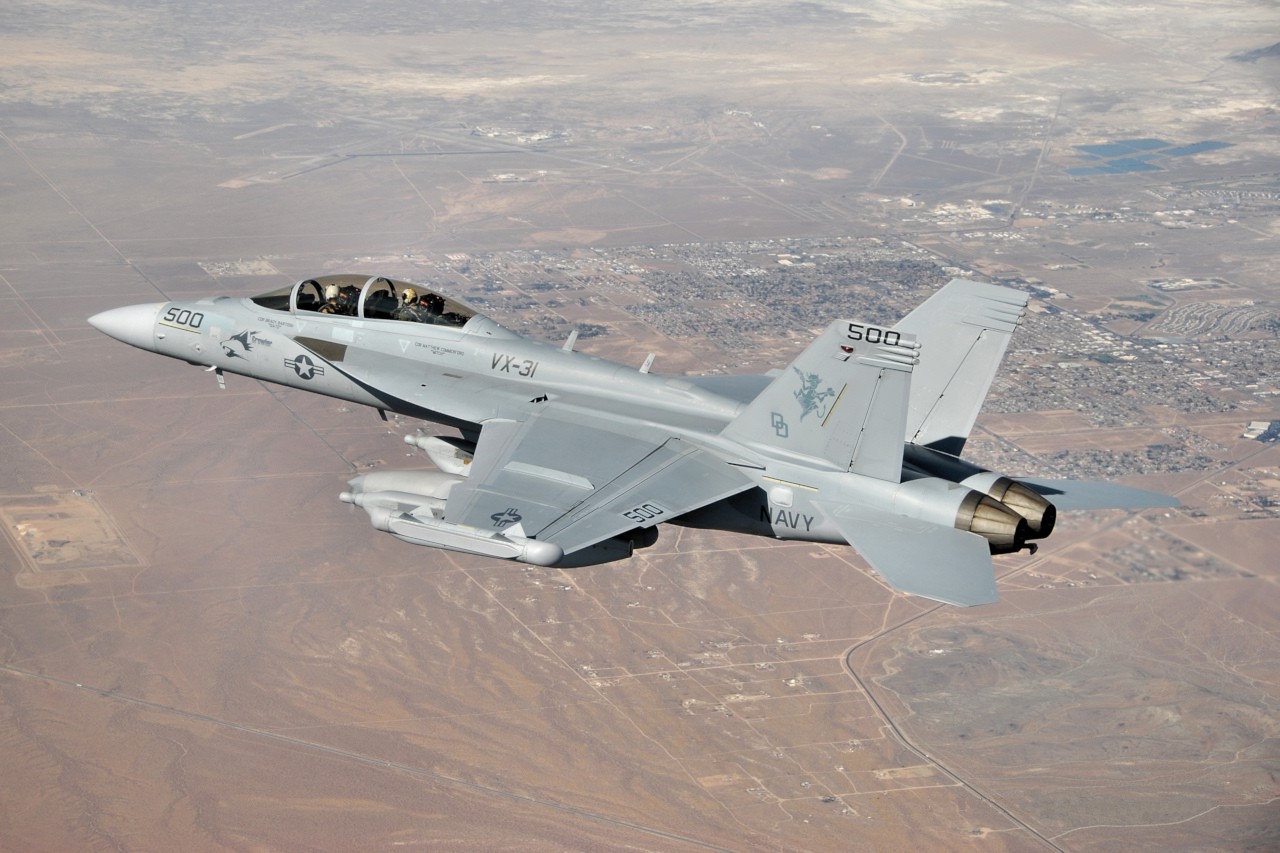
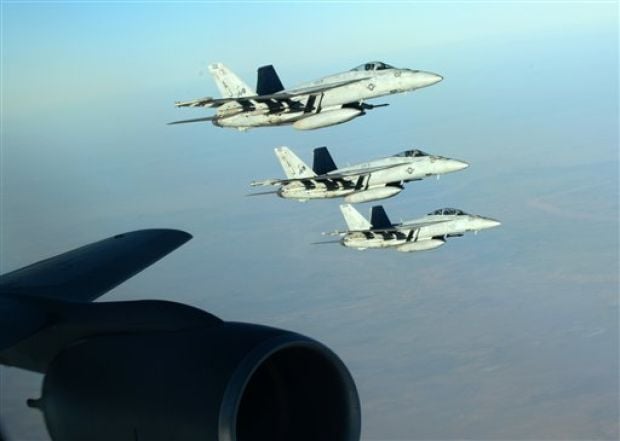
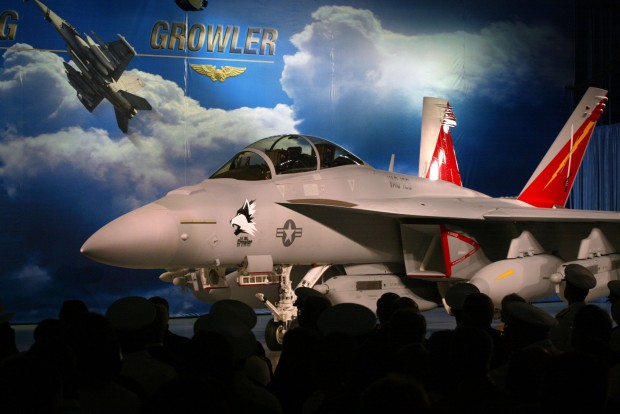
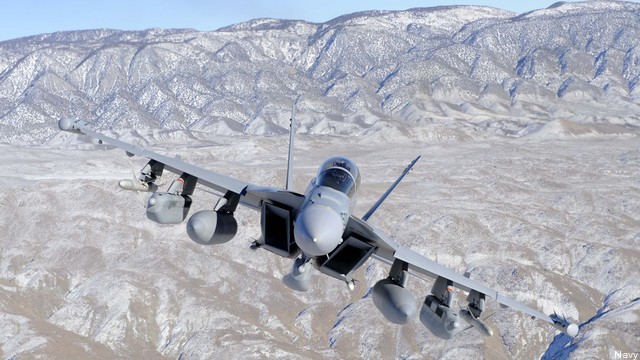
Más significativo resulta el movimiento de aviones EA-18G Growler de la US Navy, escoltados por cisternas, hacia posiciones avanzadas en Oriente Medio, incluyendo Catar. El Growler es un sistema especializado de guerra electrónica, diseñado para la supresión y degradación de defensas aéreas enemigas, la interferencia de radares y la protección de paquetes aéreos tanto furtivos como convencionales.

Itamilradar.com: 6 EA-18G Growler despegan desde Rota, España, en dirección a posiciones en Oriente Medio

Históricamente, el despliegue de estas plataformas ha buscado maximizar la libertad de acción aérea, especialmente frente a entornos defendidos por sistemas SAM avanzados.


Qué señala realmente esta combinación de activos

La combinación de cisternas y aeronaves de guerra electrónica apunta a un refuerzo de capacidades clave: alcance, persistencia y supervivencia. Los aviones cisterna permiten sostener operaciones a gran distancia, mientras que los Growlers reducen el riesgo operativo en caso de que el espacio aéreo se vuelva disputado.

Desde una perspectiva doctrinal, este tipo de movimientos indica una transición desde la señalización estratégica hacia la preparación operativa. No implica necesariamente una orden de ataque, pero sí la voluntad de asegurar que, si se toma una decisión política, los medios estén ya posicionados para ejecutarla sin demoras.

Irán, disuasión y especulación sobre el calendario

Algunas operaciones se planifican teniendo en cuenta factores políticos, civiles o económicos. Este fin de semana coincide con el cierre de mercados financieros, y su reanudación el lunes, sería de forma más realista, una vez confirmados los resultados de una posible acción militar.

Los avisos a civiles, despliegues navales o incrementos de retórica deben entenderse como parte de una estrategia de presión y disuasión más amplia, no como pruebas concluyentes de un conflicto inminente.

Un patrón conocido

El patrón observado encaja con episodios anteriores de tensión entre Estados Unidos e Irán: movimientos visibles pero controlados, despliegue escalonado de capacidades críticas y una ambigüedad deliberada. El objetivo principal suele ser moldear el entorno estratégico, influir en la toma de decisiones del adversario y mantener la iniciativa en la escalada.

En este marco, España, con las bases estadounidenses situadas en Rota y Morón, actúa como facilitador logístico, un papel silencioso y esencial para permitir que las fuerzas estadounidenses operen con flexibilidad y profundidad estratégica.

La actividad reciente de aviones cisterna estadounidenses y EA-18G Growler debe interpretarse como una señal de preparación seria. En los conflictos modernos, las decisiones no se anuncian de forma explícita, sino que se anticipan mediante ajustes discretos en logística, bases y activos de apoyo.

Por ahora, lo que se observa es el posicionamiento de capacidades y la apertura de opciones. La maquinaria está lista, pero aún no se ha puesto en marcha.

Sep 5, 2015

Cyber missions could fuel Boeing EA-18G orders: U.S. Navy chief

The Pentagon is evaluating whether potential cyber missions could drive demand for additional EA-18G, Growlers, the top U.S. Navy officer told on Thursday.
Any decisions about additional orders of Growlers should be included in the Pentagon's budget request for fiscal 2017, since Boeing will shut the production line after all orders have been fulfilled.
Boeing said it was imperative to map out any additional orders now, given the high cost of restarting production once the line closed.
Boeing was pursuing several other foreign orders, but he did not believe they were large enough to sustain production of the jets.
Boeing's combined St. Louis production line for F/A-18E/F fighter jets and the EA-18G Growlers was slated to shut in 2017, until Congress added funding for 12 more F/A-18E/F Super Hornets to the fiscal 2016 budget plan, and Boeing signed a deal to sell 28 of the jets to Kuwait.
If those orders are confirmed, the line should remain open well into 2019, Boeing has said.
reuters

May 8, 2015

US Near to Sell 40 Super Hornet to Kuwait

The US s nearing agreement to sell up to 40 F/A-18 E and F Super Hornet strike fighters to Kuwait.
The deal, has yet to be officially announced, but officials in Washington have confirmed an agreement is close.
Any deal will would require approval from the US Congress, but it's unlikely a proposed sale to Kuwait, a staunch US ally in the Persian Gulf, would meet serious opposition.
A major Super Hornet sale would breathe new life into the Boeing production line, which is working on new aircraft for the US Navy and Australia, but which will deliver the last of those aircraft by the end of 2017. Boeing officials have said production of two aircraft per month, or 24 per year, is necessary to keep the St. Louis, Missouri production line at the break-even point.
The Navy has not officially requested any Super Hornet variants since the 2014 budget. But Congress added fifteen EA-18G Growler electronic attack variants into the 2015 defense acts, and the service listed 12 Super Hornets in its 2016 unfunded requirements list.
In Kuwait, Boeing had been up against the Eurofighter Typhoon. Kuwait tentatively agreed in early 2014 to go with the Typhoon, but subsequently backed off.
It is not yet clear how many single-seat F/A-18Es and two-seat F/A-18Fs are involved in the Kuwait deal. Some media accounts reported a deal for 28 of the Boeing aircraft, while US sources indicate as many as 40 F/A-18s could be sold -- probably under an initial deal for 28 aircraft with an option for 12 more..
If confirmed, Kuwait would become the second international customer for the Super Hornet, after Australia, that operates 24 F/A-18Fs, and is set to take initial delivery this summer of the first of 12 EA-18G Growlers.
defensenews

Mar 27, 2015

New US Navy EMALS Launch System Can't Launch Fighter if They Are Carrying Fuel Tanks

The U.S. Navy’s top can’t be launched off its newest aircraft carrier if they’re carrying fuel tanks, range because the ship’s high-tech catapults cause too much wear.
Military weapons testers view this as a deficiency that would “preclude the Navy from conducting normal operations” on the USS Gerald R. Ford until it’s corrected.
The previously undisclosed troubles with the EMALS catapult system from General Atomics add to shortcomings for the first in a new class of aircraft carriers being built by Newport News.
The 480-gallon tanks for extended flights are carried under the wings of two models of the F/A-18, the Super Hornet fighter and the Growler. The carrier’s electromagnetic launch system, made by General Atomics, puts more stress on the tanks than older steam-powered catapults, and that would cause premature damage to the planes.
The wing tanks and the pylons they hang from are designed to withstand twisting and yanking when an aircraft is launched, but the stresses add up over time. Given the test results, the warplanes wouldn’t be able to launch with fuel tanks.
The Navy says it will install corrective software on the launch system intended to reduce acceleration forces and will test it on board the USS Ford after delivery next March.
bloomberg

Mar 23, 2015

U.S. Navy wish list has 12 Super Hornets, eight F-35s

The U.S. Navy included 12 F/A-18 Super Hornet and eight F-35s on a list of "unfunded priorities" prepared for Congress.
The Navy's list was reviewed by senior Pentagon officials and the Joint Chiefs of Staff this week, and should be sent to U.S. lawmakers in coming days.
Top Pentagon officials are skeptical about the weapons wish lists, and worry they help lawmakers "cherry pick" specific weapons programs to fund, while crowding out bigger priorities.
A decision by Congress to fund the extra Boeing jets as part of the Navy's fiscal 2016 budget would help the company extend its St. Louis production line beyond the end of 2017.Company officials have said they must decide this summer whether to start shutting down the line or bet their own money to buy titanium and other supplies that take a long time to deliver, before Congress finalize the 2016 budget.
Ordering Super Hornets now would also preserve the option of ordering additional EA-18G electronic attack aircraft, or Growlers.
Boeing has said it needs to build two jets a month at the facility to maintain current pricing.
The company is also chasing a possible order from Kuwait that could keep the factory running through the end of 2018.
reuters

Feb 28, 2015

U.S. Navy opens door to more orders of Superhornet, Growler

The U.S. Navy on Thursday opened the door to further purchases of F/A-18 and EA-18G fighter jets, saying it may ask lawmakers to finance the planes as part of a list of "unfunded priorities" to be sent to Congress.
More orders would help Boeing extend its St. Louis F/A-18 production line beyond 2017, but congressional aides and defense officials said it remained unclear if Congress would ultimately fund more jets at a time when it has yet to reach agreement about removing budget caps that are due to resume in 2016.
Navy could face possible fighter jet shortfalls on its aircraft carriers next decade when most older model F/A-18s will be retired but the Navy will still be buying newer F-35 fighter jets built by Lockheed Martin Corp.
The Navy is also starting to work with Boeing on refurbishing existing jets to improve the current availability rate of the aircraft, which has sunk to around 50 percent.
reuters

Nov 17, 2014

U.S. Navy says looking at possible further orders EA-18G Growler

The U.S. Navy is looking at possible additional orders of EA-18G Growlers, as it shapes its fiscal 2016 budget request.
The Navy is reviewing its inventory of tactical aircraft, including Growlers and strike fighters, to ensure its electronic attack needs are met.
Congress, responding to an "unfunded priority" list submitted by the Navy earlier this year, is poised to approve orders for 12 more EA-18G Growlers in the fiscal 2015 budget, which will help Boeing extend the production line for the jets through 2017.
The Navy did not request funding for the jets in its 2015 budget, but did add 22 EA-18G jets to its unfunded priorities list.
No final decisions had been made about potential Growler orders.
The Navy is wrapping up two weeks of testing of the C-model of the F-35. The Navy plans to buy 260 F-35s to replace older model F/A-18C/D Boeing jets for use on aircraft carriers, but they will work together on the warships with newer model F/A-18E/F jets and the EA-18G Growlers.
Lockheed is pressing the Navy to increase its orders of F-35.
reuters

Oct 31, 2014

F/A-18 line could run beyond 2017

Boeing remains optimistic about the F/A-18 fighter assembly line in St. Louis, saying there's a good chance the line could stay open beyond 2017.
Current orders will keep the assembly line open until 2016. If approved, a Congressional proposal to buy 12 EA-18G Growlers, would allow Boeing to keep the line up running end of 2017.
Boeing has more than a “50-50 chance” of receiving enough Navy and foreign orders to keep the Super Hornet line open beyond that date.
stltoday

Oct 2, 2014

RAAF Growler programme boss says deliveries on track for 2017

The director of the Royal Australian Air Force's RAAF's Boeing EA-18G Growler Transition Office gave an update on the status of the electronic attack aircraft's acquisition at the RAAF Air Power Development Centre on 23 September.
Australia opted to purchase 12 newbuild EA-18Gs under Project 5349 Phase 3 in 2013 after an Air Combat Capability Transition Review. Since then, Australia's future Growler aircrew and engineering and other personnel have been training with the US Navy in the continental United States.
janes

Jul 16, 2014

F/A-18 fighter line continuing through 2017

Boeing said on Sunday it was optimistic it could maintain production of its F/A-18 and EA-18G fighter jets through the end of 2017 - a year longer than expected - if Congress approved additional orders of a dozen more planes.
But the Pentagon's chief weapons buyer, Frank Kendall, told reporters that slowing production to extend the line was likely to increase costs at a time when budgets were already tight.
President and chief executive of Boeing Defense, Space & Security, said the company was in discussions with the U.S. Navy about revamping the production schedule for jets already ordered, but added no decisions had been made.
Chadwick said action by several congressional committees to add funding for 12 more EA-18G electronic attack fighters or Growlers "looked very positive" and should allow the company to keep the production line running a year longer than expected.
Boeing, has been lobbying U.S. lawmakers to add funding for additional EA-18G aircraft, arguing the planes offer the most sophisticated electronic attack capabilities available.
The company has previously said it needed to build at least two airplanes a month at the facility to keep rates economical.
Boeing is also chasing international orders for the F/A-18 Super Hornet.
Later this year, the U.S. Navy plans to test the possibility of using seven EA-18G Growlers on an aircraft carrier instead of the five currently used.
reuters

Jul 1, 2014

US Navy awards contract to produce final 44 F/A-18 Super Hornets and EA-18G Growlers

The F/A-18 and EA-18G Program Office announced a contract award to Boeing for 44 F/A-18 Super Hornet and EA-18G Growler aircraft over the next two years.
With this production contract, the Navy will acquire the remaining aircraft included in the program of record by the end of fiscal year 2016 in addition to the 12 EA-18Gs requested by Australia in July 2013.
navair

May 6, 2014

US Navy receives 100th EA-18G Growler

Boeing delivered the 100th EA-18G Growler to the U.S. Navy.
The Growler is the only aircraft in production that provides tactical jamming and electronic protection for U.S. and allied forces. Growlers are expected to be in service until at least 2040.
The Growler plays a major role in identifying, tracking, targeting and potentially firing upon the enemy.
The U.S. Navy has 22 Growlers on its unfunded priorities list for the 2015 fiscal year budget. Current orders take Growler and Super Hornet production through the end of 2016.
boeing

Apr 27, 2014

New Growler construction may depend on upcoming US Navy exercise

The Navy will conduct a battle exercise off the West Coast next month that could help determine whether another 22 more EA-18G Growler aircraft will be built.
The Navy’s Carl Vinson Carrier Strike Group will conduct three days of exercises to see whether seven or eight Growlers on an aircraft carrier — rather than the five currently assigned — would provide better support for attacks from fighter jets and ground forces.
The test will involve eight Growlers on the aircraft carrier.
Thousands of jobs and dozens of suppliers in Missouri are tied to the construction of the plane, which in five years will be the Pentagon’s primary weapons system designed to block and disrupt enemy electronics.
The Navy currently has 138 Growlers in its fleet or under construction, and the 22 extra would be used to boost its capability to work jointly with other branches of the military.
Under pressure to cut the future Defense Department budget in the wake of the wars in Iraq and Afghanistan and large federal deficits, President Barack Obama did not include the $2.1 billion price tag for the new planes in his 2015 budget. The Navy has put the additional 22 Growlers on its “unfunded priorities” list.
stltoday

Apr 14, 2014

South Korea, US To Hold Largest-Ever Joint Air Drill

South Korea’s military said Thursday it would hold its largest-ever joint air drill with the United States as tensions mount over a series of threats from North Korea.
The twice-yearly Max Thunder exercise — to be held from Friday to April 25 — will be the largest-ever involving 103 aircraft and 1,400 troops.
Seoul’s F-15K jet fighters will take part along with US Air Force F-15 and F-16s and US Marines’ FA-18 and EA-18 aircraft.
The exercise will focus on “practical scenarios” involving precision attacks on enemies or supply drop missions for troops infiltrating enemy territory.
North Korea has slammed the drills as a rehearsal for invasion. In a pointed protest, Pyongyang has launched a series of rockets and missiles in recent weeks.
The two Koreas also traded fire across the tense Yellow Sea border on March 31, after the North dropped some 100 shells across the border during a live-fire drill, prompting the South to fire back.
The rare exchange of fire came a day after the North warned that it might carry out a “new” form of nuclear test — a possible reference to a uranium-based device or a miniaturized warhead small enough to fit on a ballistic missile.
South Korean President this week called for tighter vigilance against the North, days after its leader Kim Jong-Un warned of a “very grave situation” on the peninsula.
defensenews

Apr 13, 2014

Australia Likely To Order More F-35s

Australia is likely to commit to buying 58 more Lockheed Martin F-35 Lightnings this month, setting aside the alternative of consolidating its combat aircraft squadrons on the Boeing F/A-18E/F Super Hornet. The decision will increase the country's total commitment to 72 F-35s and expand the Royal Australian Air Force's fast-jet fleet, counting a separate order for 12 EA-18G Growler electronic attack aircraft as additional to, not part of, the fighter force renewal.
The defense department has recommended the F-35 order. The government shows every sign of accepting the recommendation. Australia had issued an original requirement for about 100 F-35.
The Royal Australian Air Force's (RAAF) originally simple and logistically attractive plan to buy about 100 F-35s to replace a similar number of F-111s and F/A-18A/B Hornets was thwarted by delays to the F-35 program, unexpectedly early retirement of F-111 strike bombers in 2010 and a decision last year to buy Growlers. With 24 Super Hornets having replaced the F-111s and no longer considered stopgaps, the issue now is how to replace the 71 surviving Hornets, which will run out of airframe life around 2020.
The official answer has always been the F-35, but the introduction of Super Hornets into service has presented a clear alternative: Australia has had the choice of buying more of the Boeing fighters and waiting for F-35 to look dependable, or giving up on the stealth fighter and going for a homogenous Super Hornet fleet.
Canberra has already ordered two F-35s and committed itself to another 12.
If the government does buy 58 F-35s, then the RAAF will have a fast-jet force of 72 Lightnings, 24 Super Hornets and 12 Growlers, not counting BAE Systems Hawk fighter trainers. The total of 108 is about 10% higher than the 1980s levels that previous policy has consistently sought to maintain. Unlike other Western countries, Australia has not felt more secure since the end of the Cold War, and in general has not cut its forces. It has added important capabilities such as airborne early warning, in-flight refueling and over-the-horizon radar. Fast population growth and 23 years of unbroken economic expansion have helped, although defense spending has lately been a historically small fraction of GDP.
aviationweek

Mar 28, 2014

Why The US Navy Really Wants 22 More Growlers

After several years of appearing to dislike the F-35C, or at least appearing lukewarm to buying it, the Navy today finally revealed why it wants to buy more F-18Gs from Boeing.
Basically, it all boils down to the fact that the F-18G, known as the Growler, emits a broader set of electronic warfare frequencies than does the F-35. The two planes flying together are a much more effective strike package, according to Navy analysis, than either one flying on its own. The F-18G “supplements and complements” the F-35, he said. In fact, Manazir said the new planes were not needed for strictly naval missions but for joint forces, including fighting alongside our allies.
The F-35 is targeted against a narrower array of frequencies and emits only in a fairly narrow swath in front of the aircraft. The F-35 is the only US aircraft designed to defeat the most advanced Russian anti-aircraft systems such as the S-400 so the guess is that the JSF emits in frequencies designed to confuse and disable the radar systems that feed those. The Growler can engage in electronic warfare not only as it flies forward but continues to emit even after it begins to return to base.
The Navy has determined that using EA–18Gs reduces the length of a campaign and increases effectiveness. And this is with the current Growler, not ones that will use the Next Generation Jammer. Those aircraft, would be even more capable.
breakingdefense

Mar 18, 2014

US Navy to request additional Boeing E/A-18G Growlers

The US Navy has confirmed it wants to buy additional Boeing E/A-18G Growler aircraft. The navy, which did not immediately respond to a request for additional information, currently has five Growlers per squadron.
The US Navy is seeking to include 22 additional Growlers in its “unfunded” requirements request for fiscal year 2015.
Boeing’s Super Hornet and Growler production line in St Louis, Missouri will run out of work in the third quarter of 2016, if the company does not receive additional orders from the US government or foreign militaries.
flightglobal

Mar 3, 2014

Boeing may slow F/A-18 plane output to keep line going longer

Boeing is considering a slower build rate to keep production of its EA-18G electronic attack planes running into 2017, and give Congress time to add more orders.
The St. Louis production line for Boeing's F/A-18E/F Super Hornets and EA-18G Growlers is slated to shut down after 2016 unless Boeing wins additional U.S. or foreign orders for the planes soon. The plant will build F-15 fighters through at least 2018, based on current orders.
U.S. Navy officials often laud the performance, on-time deliveries, and low operating cost of the Super Hornet and Growler aircraft.
The Pentagon's 2015 budget will not fund any more of the Boeing planes given competing budget demands and a growing focus on F-35.
Boeing says detailed studies reveal a need for more electronic attack aircraft given work by potential adversaries on new radar systems that could detect steltht fighters like F-22 and F-35.
The EA-18G Growlers fly into battle with other warplanes, jamming, confusing and disrupting enemy radars.
The company already plans to slow production to three jets a month from four.
Navy and the Pentagon are very seriously studying the need for more electronic attack capability, and Boeing could eventually land 50 to 100 more Growler orders.
Some U.S. lawmakers worry about ending the Boeing production line in 2016, three years before the Navy is due to start using its F-35 jets in combat, especially given continued issues with the development of software that the F-35 fighter needs to be able to operate certain key weapons.
reuters

Feb 26, 2014

Prowlers Depart on Last Carrier Deployment

The Feb. 14 departure of the aircraft carrier USS George H.W. Bush on its current deployment from Norfolk Naval Station, Va., marks the final scheduled carrier deployment of the EA-6B Prowler electronic attack aircraft.
Unless another carrier with a squadron of Prowlers surges over the next year, the deployment of Electronic Attack Squadron 134 (VAQ-134) on the George H.W. Bush will be the last carrier cruise for the EA-6B.
The EA-6B will be retired from Navy service in 2015, but will continue in Marine Corps service until 2019.
The Prowler made its first deployment in 1971 during the Vietnam War. Grumman Aircraft Corp. built 170 EA-6Bs.
Upon its return from deployment, VAQ-134 will convert to the Boeing-built EA-18G Growler electronic attack aircraft.
seapowermagazine

Dec 10, 2013

Boeing must decide on F/A-18 production in March 2014

Boeing must decide in March 2014 whether to invest tens of millions of dollars to continue production of the F/A-18 fighter jet underscoring his confidence that sufficient orders would emerge to keep the plane in production until beyond 2020.
The fighter is currently scheduled to end production in 2016. Boeing and its backers have launched a major campaign pressing the U.S. military to buy more Super Hornets at a cost of about $51-52 million per plane, including engines, radars and electronic warfare equipment, especially since the Navy's version of the F-35 fighter will not be ready for combat use on an aircraft carrier until 2019.
Boeing is also promoting foreign sales of the warplanes to Canada, Denmark, Brazil, Malaysia, Kuwait and several other Middle Eastern countries, but executives concede that there is no Navy budget for more planes and several of the foreign competitions have been delayed.
The Navy's current plan does not call for additional purchases of F/A-18E/F Super Hornets or the EA-18G electronic attack planes based on the same design. But his office had prepared options for additional purchases if Pentagon leaders decided to fund them.
reuters