Translate

Showing posts with label TURKISH NAVY. Show all posts

Mar 15, 2026

Turkey Accelerates Construction of Its First Indigenous Aircraft Carrier, Launch Target Set for 2027


Turkey appears to be moving ahead at pace with the construction of its first indigenous aircraft carrier under the MUGEM National Aircraft Carrier program. According to statements by Rear Admiral Recep Erdinç Yetkin, commander of the Istanbul Naval Shipyard Command, the project has already reached several key milestones, with the steel cutting phase completed and testing infrastructure for aircraft operations now finished.

The Turkish Navy is reportedly aiming to launch the ship by the end of 2027, a timeline that suggests Ankara is accelerating its ambitions to join the small group of nations capable of building and operating large aircraft carriers.

While the launch date does not mean the ship will enter service immediately—major warships typically require several years of fitting-out and sea trials—the target indicates that Turkey intends to move quickly in developing a new generation of naval aviation capabilities.

A Larger Step Beyond TCG Anadolu


The new carrier would represent a significant leap beyond Turkey’s current flagship, the TCG Anadolu, which entered service in 2023 as a light aircraft carrier and amphibious assault ship.

Unlike Anadolu, which displaces around 27,000 tons, the MUGEM carrier is expected to reach approximately 55,000–60,000 tons, placing it in the same general size category as the Queen Elizabeth-class aircraft carrier operated by the United Kingdom.

Preliminary figures discussed by Turkish defense sources suggest the new ship could measure around 285–300 meters in length, with a wide flight deck equipped with a ski-jump ramp and multiple aircraft elevators.

A Drone-Centric Air Wing


What makes the MUGEM project particularly interesting is its unconventional aviation concept. Rather than relying primarily on traditional carrier fighters, Turkey is investing heavily in unmanned combat aircraft designed for naval operations.

Among the systems expected to operate from the carrier are:

  • Bayraktar TB3, a navalized drone with folding wings designed for ski-jump takeoffs
  • Bayraktar Kızılelma, a jet-powered unmanned combat aircraft capable of air-to-air and strike missions

These drones are being developed primarily by Baykar, in coordination with the Turkish defense industry.

If this concept materializes as planned, the MUGEM carrier could operate dozens of unmanned aircraft simultaneously, creating a highly distributed and flexible air wing.

The Possibility of a Naval Hürjet


In addition to drones, Turkish planners have also discussed the possibility of a navalized version of the TAI Hürjet, the country’s new advanced jet trainer developed by Turkish Aerospace Industries.

A carrier-capable Hürjet would likely require structural reinforcement and an arrestor hook for deck landings. However, since the current design of the MUGEM carrier is believed to rely on a ski-jump launch system rather than catapults, the feasibility of operating such aircraft from the ship remains uncertain.

For now, drones appear to be the primary focus of Turkey’s future naval aviation plans.

A Potential First in Naval Aviation

If Turkey successfully integrates large numbers of combat drones into its carrier air wing, the MUGEM project could represent a significant shift in naval warfare concepts.

In fact, Turkey could end up fielding the first carrier air wing dominated by drones, something that even the United States Navy and the People's Liberation Army Navy have not yet achieved.

While both navies are experimenting with unmanned systems, neither currently operates a carrier whose air wing is designed primarily around drones.

Looking Toward the 2030s

Even if the ship is launched in 2027, analysts expect several years of testing and integration before the vessel becomes operational. A realistic timeline for entry into service could place the MUGEM carrier in the early 2030s.

Still, the project highlights Turkey’s ambition to become a major naval power with indigenous carrier-building capability, while simultaneously experimenting with new concepts in naval aviation that could influence the future of carrier operations worldwide.

Apr 23, 2025

Bayraktar TB3 Proves Naval Strike Capabilities with Autonomous Flights from TCG Anadolu


Baykar’s TB3 drone completes four successful autonomous takeoffs and landings from TCG Anadolu, confirming Turkey’s leap into naval drone warfare.

The Bayraktar TB3 unmanned combat aerial vehicle (UCAV) has marked a historic milestone for Turkey’s naval aviation. Successfully conducting four autonomous takeoffs and landings aboard the TCG Anadolu, the TB3 confirms its readiness for carrier-based operations—ushering in a new era of drone-enabled maritime strike capabilities.

Turkey has taken a major step in integrating unmanned aerial capabilities with naval operations. The Bayraktar TB3 UCAV, developed by Baykar, has completed four fully autonomous flights—including takeoff and landing—from the deck of the TCG Anadolu, Turkey’s first amphibious assault ship and drone carrier.

The milestone confirms the TB3’s ability to operate in maritime environments, adding strategic flexibility to Turkey’s power projection in the region. The TB3 is unique in its class, capable of folding its wings for compact storage aboard ships, and performing precision strike and ISR (intelligence, surveillance, reconnaissance) missions.

Conducted in April 2025, the trials included day and night missions and tested the TB3’s autonomous control systems in takeoff and landing scenarios on a moving deck. The flights were carried out without pilot intervention, showcasing advanced AI flight algorithms and robust naval interface integration.

The TCG Anadolu was originally intended to host F-35B jets, but after the U.S. removed Turkey from the F-35 program, the Turkish Navy shifted toward an indigenous drone-based concept of operations. The TB3, alongside the upcoming jet-powered Kızılelma, now forms the core of this innovative carrier aviation strategy.

This achievement positions Turkey as one of the few nations to successfully integrate UCAVs with naval operations. The TB3's operational readiness aboard Anadolu significantly enhances Turkey’s surveillance and strike capabilities across maritime zones, from the Mediterranean to the Aegean and beyond.

The successful deployment of the Bayraktar TB3 from TCG Anadolu marks a pivotal moment for naval aviation and drone warfare. As Turkey pushes forward with its indigenous defense initiatives, the TB3 stands as a symbol of innovation and strategic autonomy at sea.

Jan 7, 2024

Turkey confirms the construction of a second aircraft carrier based on Navantia's Juan Carlos I


In a meeting of the Turkish Defense Industry Executive Committee, chaired by President Recep Tayyip Erdoğan, held at the Presidential Complex, the committee assessed the current state of the Turkish defense industry, outlined future objectives, and deliberated on crucial projects.

Decisions were made during the meeting, including the initiation of the design phase for an Aircraft Carrier as part of military ship projects. 

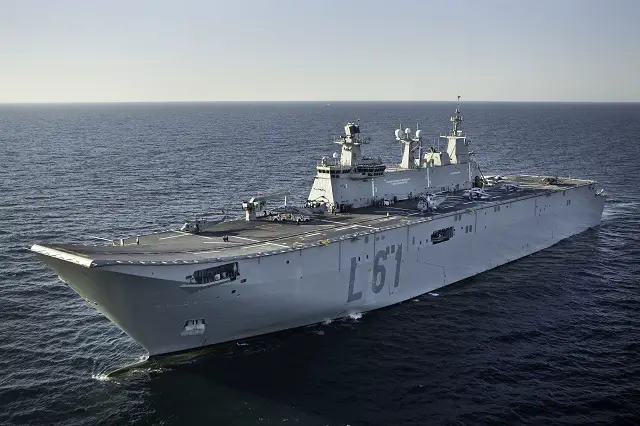
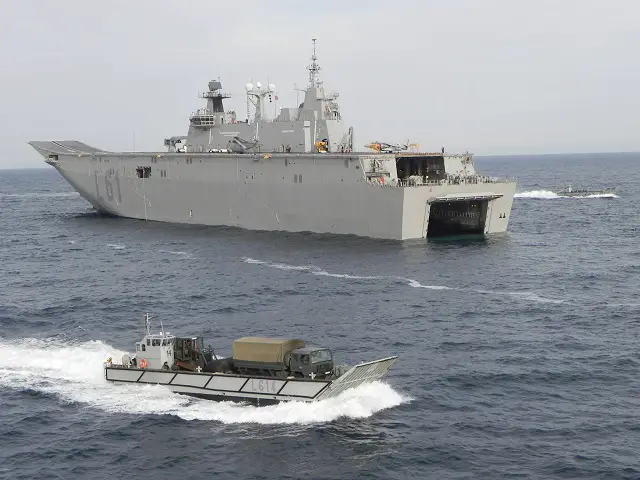
According to the known plans before the plans were finally confirmed for the construction of a new Turkish aircraft carrier, which will be an upgraded version of the TCG Anadolu. This project is based on Navantia's previous work, the Spanish company that designed the Juan Carlos I. However, there is no mention of new submarines in these plans, despite a potential collaboration agreement between Turkey and Spain for a medium-term program based on the design of the Spanish Navy's S-80.

The disagreement between Ankara and Washington over Turkey's purchase of Russian S-400 missile systems led to Turkey's exclusion from the F-35 fighter jet program. As a result, for now, only unmanned fixed-wing aircraft can operate on the TCG Anadolu.

The TCG Anadolu, with a deck of over 200 meters in length and a displacement of 28,000 tons, is the world's first ship to carry armed drones. This vessel was designed to accommodate unmanned models like the TB3 Bayraktar and Kizilelma, and possibly the light combat aircraft Hurjet in the future. Additionally, it is equipped to operate helicopters.

Plans were also approved for constructing ships such as MİLGEM 9-10-11-12th ships (I-class frigates), offshore patrol vessels, new types of landing ships, new generation minehunters, and Turkish Type Fast Attack Crafts (FACs).

Additionally, the decisions covered a wide range of initiatives, including new missiles, radars, electronic warfare, communications, various weapons, ammunition and equipment, air defense systems, and satellite and space systems.

The defense industry has significant contribution to the Turkish economy, noting a record-breaking figure of $5.5 billion, indicating a 27% increase compared to the previous year, demonstrating the growing confidence in Turkish defense industry products, with export destinations increasing from 176 to more than 185 countries.

Turkey is fully commited to achieve a fully independent defense industry, utilizing domestic and national technologies. It confirms the expansion of the Turkish Navy, particularly mentioning the official confirmation of the Aircraft Carrier project, expected to be a larger and more capable version of the TCG Anadolu.

However, there was no mention regarding to the TF-2000 destroyer project, raising questions about the decision's coverage, but there are ongoing and upcoming projects in shipbuilding, including the construction of Hisar-class offshore patrol ships and the Turkish Type Fast Patrol Boat project.


May 1, 2019

Turkish first aircraft carrier on fire TCG ANADOLU Sedef Shipyard

A fire broke out aboard the Turkish Navy’s future landing helicopter dock (LHD) Anadolu at a shipyard in Tuzla, Istanbul, on April 30.
Fire aboard the ship, which is being constructed by shipbuilder Sedef for the Turkish Navy, was contained by shipyard workers and firefighters.
No injuries or fatalities were reported in the incident, according to Turkish reports. The cause of the fire is yet to be determined.
TCG Anadolu is currently in dry dock and was expected to be launched in 2019. Depending on the extent of the damage sustained in the fire, the launch could potentially be delayed.
navaltoday

Mar 5, 2015

Russia's SU-30 and SU-24 Performed Mock Up Attacks on NATO Vessels in Black Sea

Russia's Su-30 fighter jets and Su-24 attack bombers are using two NATO ships in the Black Sea to practice penetrating anti-air systems.
The jets are monitoring the movements on the two ships, the USS Vicksburg missile cruiser and the Turkish TCG Turgutreis frigate, which are located in the southwestern part of the Black Sea. On Tuesday, three Su-30 jets and four Su-24 bombers conducted monitoring flights over these ships from the Novofedorovka air base.
Russia's Black Sea Fleet began receiving Su-30 jets in 2014, following Crimea's reunification with Russia. The USS Vicksburg is the flagman of the Standing NATO Maritime Group 2.
sputniknews

Jan 6, 2015

Turkey's Future LHD Could Be Modified as an "Aircraft Carrier" to Deploy F-35B Jets

Turkish-German media Deutsch Tuerkische Zeitung is reporting that during the last meeting of the Turkish National Security Council (in presence of the Turkish President) the decision was made to built the future LHD (Turkish designation: LPD Project) as an aircraft carrier capable to deploy the F-35B, the short takeoff and vertical landing (STOVL) variant of the Lockheed Martin built Joint Strike Fighter. The vessel should be delivered to the Turkish Navy by 2019.
Turkey's Undersecretariat for Defense Industries (SSM) announced in December 2013 that it selected Sedef shipyard as winner of its LPD tender and that final contract negotiations with this shipyard could begin. Sedef shipyard in Turkey offers a design based on Juan Carlos LHD under the collaboration with Spain's Navantia.
navyrecognition

Mar 28, 2014

Turkey Havelsan to Upgrade the Classic FFG Oliver Hazard Perry for Modern Combat

The Oliver Hazard Perry guided missile frigates are one of the most numerous warships classes built since World War II. The first ships entered service in the 1980s, but many still serve under the flags of other nations, all of whom are intensely interested in keeping these vintage ships as effective as possible.
With the last of the ships scheduled to leave US service by the fall of 2015, even more Perrys—FFGs, or “figs”will become available for foreign transfer and in need of upgrades.
At the forefront of the FFG modernization effort is Havelsan. The Turkish electronics and systems development firm is upgrading all eight of Turkey’s ex-US Navy FFGs, and is seeking to sell its combat system expertise to other countries operating similar ships.
Havelsan has a tentative agreement to upgrade Bahrain’s single FFG.
Havelsan,also has surveyed the Pakistani Alamgir, the country’s lone FFG, and the company has a contingency agreement with Pakistan to upgrade the ships should more frigates be transferred.
The company also has held talks with FFG operators Poland and Thailand.
Havelsan’s FFG upgrade program is marketed as the Genesis Combat Management System. The upgrades include not only sensors but also weapons.
All eight of Turkey’s frigates were upgraded by 2012 with the Genesis systems, but replacement of the air search radars has not been completed.
Genesis can handle more upgrades, including installation of the Phalanx Block 1 close-in weapon system; integration of Rolling Airframe Missiles (RAM) or SeaRAM systems.
Other systems that can be installed or integrated with the Genesis system are Evolved Sea Sparrow Missiles, 40mm guns and new 76mm guns.
defensenews

Feb 24, 2014

Turkey, Sikorsky Sign $3.5 Billion Helicopter Deal


Turkish Prime Minister announced Friday that his government and Sikorsky Aircraft had signed a long-dormant contract to co-produce an initial batch of 109 utility helicopters.
Turkey in 2011 selected Sikorsky as its partner company to lead production of the country’s next-generation utility helicopters. Sikorsky defeated Italian-British AgustaWestland by bidding its T-70, the Turkish version of its S-70 Black Hawk International.
The first batch will be for 109 utility helicopters, but with follow-on orders, more than 600 platforms could be built.
Most helicopters in the first batch will go to the military, with the Gendarmerie receiving the largest portion, and the Army, Navy, Air Force and the special forces command each getting their share. The remaining machines will go to the Security Directorate, meaning the police forces, and to the Firefighting Department
defensenews

Dec 29, 2013

Turkey selects Navantia's Juan Carlos LHD design as winner of its LPD tender


Turkey's Undersecretariat for Defense Industries (SSM) just announced via press release that it selected Sedef shipyard as winner of its LPD tender and that final contract negotiations with this shipyard can now begin. Sedef shipyard in Turkey offers a design based on Juan Carlos LHD under the collaboration with Spain's Navantia.
Landing Platform Dock Project According to SSM, the Landing Platform Dock Project (LPD)’s main purpose is the acqusition of one Landing Platform Dock in order to meet the operational requirements of Turkish Naval Forces. The scope of the procurement is for: - 1 LPD and - Four Landing Craft Mechanics (LCM) - Twenty seven Amphibious Assault Vehicles (AAV), - Two Landing Craft Personnel Vehicles (LCVP), - One Commander Boat - One RHIB (Rubber Hull Inflated Boat) will be acquired
Juan Carlos class LHD The multi-purpose Strategic Projection Ship "Juan Carlos I" is the largest naval unit ever built in Spain. Her NATO denomination is LHD (Landing Helicopter Dock). In June 2007, Australia announced it would purchase and build two ships of the same design to become the Canberra-class landing helicopter docks.
The ship has been designed for 4 mission profiles: - Amphibious ship transporting a Marine Corps Force for landings and land support operations. - Force projection ship transporting Army forces to any theatre of operations. - Aircraft-carrier - Non-combatant operations: humanitarian aid, evacuation from crisis zones and hospital-ship in catastrophe areas.
The crew consists of 261 people: 30 officers, 49 NCOs, 59 leading seamen and 123 ratings.
freerepublic

Nov 22, 2013

Turkey launches new bid for light trainer aircraft

Turkey has issued a Request for Proposals (RfP) for the contract that foresees the off-the-shelf purchase of a small fleet of trainers to replace the fleet of ageing SF 260s used in the Turkish Air Force for preliminary training.
Turkey still operates with nearly 40 SF 260s assembled by TAI in the early 1990s. For preliminary training purposes the Air Force operates Cessna 172s.
Potential bidders are the U.S. Beechcraft and Cirrus, Austria’s Diamond, Germany’s Grobe, Czech Zlin and Italy’s Aermacchi.
Meanwhile, Turkey has silently phased out a fleet of 48 F-5 lead-in trainer aircrafts, which Israel’s Elbit upgraded and delivered in the early 2000s.TAI is upgrading nearly 60 T-38 basic trainers to replace the F-5s and the older T-38s.
The Defense Industry Executive Committee, the ultimate decision-maker in defense procurement, decided Sept. 26 to make an order for the serial production of the Hürkuş, Turkey’s first indigenous basic trainer aircraft.
Turkey’s first indigenous basic trainer aircraft has been approved for flight testing, with the maiden flight planned within the next year.
The Hürkuş, also developed by TAI, has been undergoing tests for runway-holding, steering and braking time limits.
TAI is manufacturing four prototypes of the Hürkuş for a round of tests. The first prototype successfully went through engine tests in February, the second is being tested for static durability and cabin pressure, the third is being assembled, and the fourth will be tested for metal fatigue.
The two-seat Hürkuş will have a 35-year service life, or 10,500 flight hours. The turboprop aircraft has a 1,600-horsepower engine that can fly at an altitude of 10,577 meters at a maximum speed of 574 kilometers per hour.
The Hürkuş will come in four variants:
Hürkuş-A: A basic version that has been certified with EASA, according to CS-23 requirements and is intended for the civilian market.
Hürkuş-B: An advanced version with integrated avionics, including a mission computer and cockpit avionics layout similar to F-16 and F-35 fighters. The Turkish Army is considering an initial order of 15 aircrafts.
Hürkuş-C: An armed version for close-air support, which will have a maximum weapons load of 3,300 pounds. The Turkish Army has expressed interest in the Hürkuş-C to provide support for its attack helicopters.
The Coast Guard version: TAI plans to offer another version of the Hürkuş to support the Turkish Coast Guard’s maritime patrol activities. The aircraft’s back seat would be occupied by an operator for a forward-looking infrared sensor.
hurriyetdailynews

Jul 25, 2013

Alenia Delivers First ATR 72-600 to Turkish Navy

Alenia Aermacchi has delivered the first ATR 72-600 maritime utility aircraft to the Turkish Navy, the first of eight planes. Turkey’s order consists of two maritime utility aircraft and six maritime patrol and anti-submarine aircraft.
defensenews

May 12, 2013

ATR 72-600 TMPA: the new generation maritime patrol aircraft for the Turkish Navy


Alenia Aermacchi has signed an agreement with Savunma Sanayii Müstesarligi (SSM), the Turkish Undersecretariat for Defence Industries to deliver two ATR 72-600 TMUA (Turkish Maritime Utility Aircraft) and six ATR 72-600 TMPA (Turkish Maritime Patrol Aircraft) to the Turkish Navy.
navyrecognition

Oct 7, 2012

Turkey increases navy force in Mediterranean


Turkey is reinforcing its position in the Mediterranean Sea following the escalation in tension along its border with Syria.

learn more

Mar 29, 2010