Translate

Showing posts with label ISAF. Show all posts

Dec 10, 2014

UK to deploy upgraded Puma helos to Afghanistan

Three SA 330E Puma HC.2 medium transport helicopters are to be deployed to Afghanistan next year in the recently upgraded type's first combat mission.
The helicopters from the Royal Air Force's (RAF's) only operational Puma HC.2 unit, 33 Squadron, are to provide casualty evacuation, troop transport, and VIP movement support the British infantry battalion and training team. This team remained in Afghanistan following the main UK combat forces withdrawal from the south of the central Asian country last month.
There are three Chinook HC.2 helicopters and 51 associated personnel within the aviation detachment deployed in Kabul in support of the UK's contribution to the NATO Resolute Support Mission. In 2015 these will be replaced by three Puma HC.2 helicopters, which will remain until the mission concludes.
It is expected that 33 Squadron and its sister unit, 230 Squadron, will then take turns to provide detachments of aircraft and helicopters to Kabul until UK troops finally withdraw after the end of the NATO training and assistance mission in late 2016. A handful of Puma HC.1s were deployed to Kabul in the spring of 2002 to provide support to the UK contingent in the early days of the NATO peacekeeping mission in the city. Since then the RAF Puma Force has concentrated its efforts on supporting the UK mission in Iraq, including supporting special forces operations in Baghdad from 2003 to 2009.
Airbus Helicopters was originally contracted in 2008 to convert 30 Puma HC.1s into the new configuration. This was subsequently cut to 22 as an economy measure, but later revised up to 24 helicopters. The enhanced type is due to remain in operational service until 2025.
janes

Dec 2, 2014

UK retains Chinooks in Afghanistan

The UK has retained a number of Chinook transport helicopters in Afghanistan to support personnel assigned to the NATO training and advisory mission in the country.
Three RAF Chinooks previously assigned to operations in Helmand Province in southern Afghanistan have been relocated to Kabul to support the servicemen that remain in the country following the wider withdrawal of UK forces last month.
The Chinooks become the last UK air assets to remain in Afghanistan following the announcement in mid-November that all UK forces had now left. While the RAF's Panavia Tornado GR.4 strike aircraft were withdrawn to much fanfare in mid-November, there has been no public announcement related to the other air assets in theatre, beyond the general announcements about UK forces having left their main area of operations in southern Afghanistan.
Other UK air assets stationed in Afghanistan comprised the RAF's General Atomics MQ-9 Reaper unmanned aerial vehicle (UAV), a number of which have now been transferred to operations over Iraq, as well as the British Army's AgustaWestland-Boeing Apache AH.1 attack helicopters, AgustaWestland Lynx AH.9A support helicopters, and Thales Watchkeeper WK450 UAVs. All of these are now understood to either be back in the UK or in transit back to the UK.
In July, military sources disclosed that the upgraded Westland/Aerospatiale SA 330E Puma HC.2 medium-lift transport helicopter may be deployed to Kabul in 2015 to help support the NATO training mission in Afghanistan.
This MoD statement regarding the retention of some Chinooks in Kabul demonstrates that NATO and the West was never going to be able (or even willing) to make a clean break from Afghanistan with the cessation of combat operations at the end of 2014.
janes

Nov 24, 2014

Italy deploys latest Mangusta attack helo variant to Afghanistan

Italy has deployed the latest version of the AgustaWestland Mangusta attack helicopter, the AW129D, to Afghanistan.
Task Force 'Fenice', the Italian Army Aviation component of Train Advise Assist Command West (TAAC-W) in Afghanistan, started testing the new version of the helicopter in early November. Once testing is complete, the new version will replace the earlier A129 CBT Mangusta, which has flown more than 10,500 hours in Afghanistan and was previously deployed in Iraq.
The AW129D is fitted with Rafael's Toplite III turret and Spike ER (Extended Range) missiles, and retains the Oto Melara TM-197B turret armed with a 20 mm gun. The new version has been tested in numerous firings in Sardinia, where missiles have been fired in all conditions, while Mangusta pilots also carried out target laser designation to guide bombs dropped from air force fighters. The Toplite III turret allows a much longer target detection, recognition, and identification range compared to the old HeliTOW, designed in the mid-70s.
Currently Task Force 'Fenice', based on the 5th Army Aviation Regiment, operates an improvised explosive device disposal (IEDD) 'Purple Team' (currently formed of one A129 CBT and one NH90 utility helicopter with a heli-sniper/JTAC and an eight-man IEDD team on board), and a reconnaissance and combat 'Red Team' (formed of two A129s).
janes

Nov 11, 2014

RAF Tornados Complete Afghanistan Mission


Royal Air Force Tornado GR4s have left Afghanistan and are heading back to the UK after more than five years of operations in the country.
The jets, from 31 Squadron based at RAF Marham, Norfolk, flew out of Kandahar airfield early this morning having flown their final missions. Aircrew and ground crew from the squadron have provided vital support to NATO efforts in the country since they took over from RAF Harriers in June 2009.
During its time in Afghanistan, the Tornado GR4 has provided vital information about enemy activity on the ground, using the Litening III and RAPTOR reconnaissance pods to spot potential hazards such as roadside bombs. The jets have also provided close air support deterring enemy forces by flying low and fast over their location or striking important targets with precision when necessary to do so.
Air and ground crew will now make their way via RAF Akrotiri, Cyprus, to RAF Marham where they will be welcomed home by friends and family.
raf.mod.uk

Sep 30, 2014

Last NATO AWACS Comes Home From Afghanistan

The last NATO E-3A airborne warning and control system (AWACS) returned to its home base in Geilenkirchen, Germany, Sept. 25. Since January 2011, the NATO Airborne Early Warning and Control Force has flown 1,240 missions totalling 12,240 flying hours from Mazar-e-Sharif, conducting air surveillance, tactical battle management functions such as support and control of aircraft involved in offensive and defensive counter air operations, close air support, battlefield air interdiction, combat search and rescue, reconnaissance, and tactical air transport.
aviationweek

Sep 9, 2014

USAF ends four years of MC-12W ops in southern Afghanistan

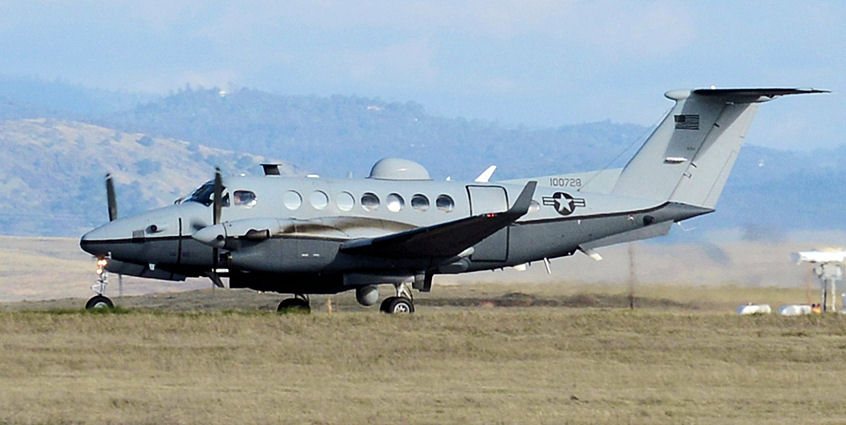
The US Air Force (USAF) has withdrawn its Beechcraft MC-12W Liberty special mission aircraft from southern Afghanistan after four years in theatre.
The final mission of the intelligence, surveillance, and reconnaissance (ISR) aircraft was flown out of Kandahar Airfield (KAF) by the 361st Expeditionary Reconnaissance Squadron (ERS) "at the beginning of September".
Since deploying to KAF in May 2010, the 361st ERS has flown 25,000 sorties over 115,000 hours, contributing to the "elimination" of 450 insurgents, the USAF said. The aircraft had also achieved a 99% mission readiness rate throughout operations.
With the end of the 361st ERS' mission in southern Afghanistan, the MC-12W remains in operation with the 4th ERS operating out of Bagram Air Base, north of Kabul. The USAF has not disclosed precisely how many aircraft have been deployed to theatre.
Built around the King Air 350ER twin-turboprop, the MC-12W is manned by a flight crew of two, a sensor operator, and what the USAF calls a 'cryptologic operator'. Imagery analysts in the ground-based ISR exploitation cell then interpret and use the information gathered.
The platform has a more than eight hours' endurance, and taking-off at gross weight with full fuel and payload can fly out to 100 n miles, perform a low-altitude surveillance mission for seven hours 20 minutes, and fly back 100 n miles (landing with more than 45 minutes of fuel on board).
janes

Jul 3, 2014

German Tigers Leave Afghanistan

The Bundeswehr's Tiger mission ended June 30 with none of the four combat helicopters firing a shot.
Since the mission began January 30, 2013, the Tigers flew 260 missions, clocking around 1,860 hours supporting NATO ground troops and Afghan seccurity forces. Shows of force by the Tigers sufficed to overcome threats, according to the Bundeswehr.
The helicopters are scheduled to return to Germany in August.
aviationweek

Apr 30, 2014

Taliban claim they shot down US AC-130 warplane in eastern Afghanistan

The Afghan Taliban claimed that their forces hit an US Air Force AC-130 gunship with antiaircraft fire and forced it to land in the eastern province of Logar.
The Taliban released a video purporting to show their forces hitting what appears to be a US Air Force C-130 aircraft. The AC-130 is a heavily armed ground attack variant of the C-130 airframe.
The video "was posted on the Facebook page of Bot Shikan on April 27, 2014, and was promoted on the Twitter account of an Afghan Taliban website representative on April 29.
The video shows a group of Taliban fighters firing antiaircraft machine guns mounted on the backs of pickup trucks. The video then shows tracer rounds fired at what appears to be a C-130. Several rounds appear to hit the aircraft and bright flashes are seen underneath the plane. The video then shows what the Taliban claim is the wreckage of the aircraft as well as footage of the plane as it lands on or near an airbase in Logar province. At the end of the video, the Taliban show a helicopter and another aircraft being fired upon.
The International Security Assistance Force has not reported that any of its aircraft have been shot down or crash-landed, and would neither confirm nor deny that the aircraft shown in this video was fired upon by the Taliban.
The release of video of the C-130 coming under attack took place just one day after the Taliban claimed to have shot down a British Army helicopter in the southern province of Kandahar. ISAF confirmed that a helicopter crashed and five ISAF soldiers were killed on April 26.
The United Kingdom's Ministry of Defence denied that the Taliban shot down the Lynx helicopter, which is used by the Joint Special Forces Aviation Wing to ferry troops such as the SAS and SBS on missions, and are also heavily armed for supporting fire. The Ministry of Defence instead claimed that the helicopter was likely brought down by a technical problem.
On at least one occasion, ISAF has denied a Taliban claim to have shot down a Coalition helicopter in Afghanistan, only to backtrack on the statement. In December 2013, the Taliban claimed to have shot down a US Army Blackhawk helicopter in the southern Afghan province of Zabul and killed six soldiers.
ISAF quickly denied the report.
longwarjournal

9.000 horas de vuelo de los AMX de la Aeronautica Militare Italiana en Afganistan

Los cuatro cazas AMX de la Aeronautica Militare Militare han alcanzado 9.000 horas de vuelo en 3.000 misiones efectuadas desde el 7 de noviembre de 2009, desde la base de Herat dentro de la misión ISAF de la OTAN en Afghanistán.
Las aeronaves proceden del 51° stormo con base en Istrana y del 32° stormo, con base en Amendola, y están encuadradas en el grupo de vuelo “Black Cats” de la Joint Air Task Force. Realizan misiones de inteligencia, vigilancia y reconocimiento, en favor del Regional Command West.
aeronautica.difesa.it

Mar 9, 2014

Airbus delivers the German Army’s final upgraded Tiger support helicopter for deployment in Afghanistan

The Germany Army received the last of 12 Tiger UHT support helicopters upgraded by Airbus Helicopters for Afghanistan missions to support ground troops, protect convoys and perform reconnaissance operations.
It completed the three batches of four Tiger UHT support helicopters modified to the ASGARD (Afghanistan Stabilization German Army Rapid Deployment) configuration through a program launched in late 2011 by Airbus Helicopters and the German Federal Ministry of Defense. The ASGARD conversion includes installation of engine sand filters and additional ballistic protection, along with the incorporation of a mission data recorder and enhanced communication equipment for multinational missions.
The German Armed Forces began deploying its initial Tiger UHTs modified to the ASGARD configuration in December 2012, with operations beginning a month later in Mazar-e-Scharif.
To date, these ASGARD-upgraded Tigers have accumulated well over 1,000 flight hours in German military service.

Feb 3, 2014

Final Flight of The Dambusters

The Royal Air Force’s 617 Squadron “Dambusters” have flown their final mission over Afghanistan and will be returning home to disband.
The last flight was a mission in support of coalition troops; the Tornado Force in Afghanistan fulfil the vital Close Air Support and Reconnaissance roles, providing protection and information from above directly to commanders on the ground. This task is now handed over to No II (Army Co-operation) Squadron from RAF Marham.
During their final operational tour the Dambusters flew 188 missions, clocking up more than 1500 total flying hours supported by 11,352 engineering man hours.
The Dambusters have a legacy of low level flying from their origins in World War II. In Afghanistan they carried out 14 Shows of Force, flying fast and low to deter enemy forces from attacking coalition ground troops.
raf

Jan 21, 2014

Italian Predator Bs start Afghan duty


The Italian air force has begun using its General Atomics Aeronautical Systems Predator B unmanned air system in Afghanistan.
Operating from Herat air base in support of the NATO-ISAF, the new type will replace the A-model Predators previously flown by the Italian air force in the country.
Italy’s unarmed Predator Bs will be used for intelligence, surveillance and reconnaissance tasks. The type was previously used by the air force during the NATO-led campaign to protect Libyan civilians in 2011.
Italy’s Predator B acquisition totals six air vehicles, plus related equipment.
flightglobal

Dec 11, 2013

Unmanned Australian Heron spy planes to remain in Afghanistan

Unmanned Australian spy planes will continue to target Taliban insurgents in Afghanistan until at least July next year.
Federal Government has agreed to a request from NATO'S International Security Assistance Force (ISAF) to keep the 40-person RAAF led Heron unmanned aerial vehicle (UAV) detachment at Kandahar airfield in southern Afghanistan.
About 1100 of the 1500 Australians serving in the country will return home this month and the 40 Heron staff will join more than 350 other Australians who will remain behind in various training and administrative roles.
news.com.au

Nov 20, 2013

Belgium to launch F-16 replacement process


Belgium will issue a request for information in early 2014 to potential suppliers of a replacement for its F-16s.
The Belgian military has a current active fleet of 54 F-16A/Bs, with a further five being kept in flyable condition as an attrition reserve. Flown from Florennes and Kleine Brogel air bases, these are the retained examples from original acquisition of 160 of the type.
Current plans call for Belgium’s remaining F-16s to start leaving service in 2023.
Belgium has a close operational collaboration with the Royal Netherlands Air Force, which plans to replace its own F-16s with a fleet of 37 Lockheed F-35A Joint Strike Fighters. The US manufacturer has previously identified Belgium as being a potential future customer for the stealthy type.
The Belgian and Dutch governments recently signed an agreement under which they will pool the future delivery of air policing cover for both nations and Luxembourg.
Four of Belgium’s F-16s are currently providing quick reaction cover for Baltic states Estonia, Latvia and Lithuania on behalf of NATO.
Six Belgian F-16s are also now supporting the NATO-led ISAForce in Afghanistan, operating from Kandahar airfield.
flightglobal

Nov 12, 2013

Acaba el repliegue aéreo en Afganistán


Con la llegada este sábado a la base de Torrejón (Madrid) de los últimos tres helicópteros desplegados en Afganistán, concluye el repliegue de las unidades de helicópteros que han operado en Herat durante ocho años, en los que han realizado 6.405 horas de vuelo y casi 12.000 salidas en labores de protección y evacuación médica.
Con la vuelta a España de los helicópteros se habrá culminado el 95 por ciento del repliegue de material de la misión en Afganistán.
El pasado 9 de noviembre aterrizó en la base madrileña un avión Antonov 124,con un Cougar y un Chinook, del Ejército de Tierra, y un Súper Puma, del Ejército del Aire, los tres últimos helicópteros que mantenía la misión española en Afganistán.
Se trata del tercer vuelo procedente de Afganistán para trasladar a suelo español los nueve helicópteros que permanecían en la base de Herat, operados por unidades del Ejército de Tierra y el Ejército del Aire. El pasado lunes llegaron los tres helicópteros de combate «Tigre» desplegados en Afganistán desde el pasado marzo.
Durante su estancia en Afganistán estos helicópteros de ataque llevaron a cabo misiones de apoyo específico a las tropas españolas, como dar seguridad a convoyes de repliegue desde la base de Qala i Naw hasta la base de Herat, labores de reconocimiento y de apoyo a otros contingentes.
Su última misión, el pasado 13 de octubre, puso fin a más de ocho años de actividad de la Unidad de Helicópteros del Ejército de Tierra (ASPUHEL) y del destacamento de Helicópteros del Ejército del Aire de la Fuerza Internacional de Asistencia a la Seguridad (HELISAF). ASPUHEL comenzó a operar en Herat con cuatro helicópteros de transporte AS-532 «Cougar» a principios de 2005, a los que se sumaron en 2007 tres helicópteros de transporte pesado CH-47D «Chinook». Por su parte, HELISAF mantuvo desplegados HD-21 «Superpuma» realizando misiones de evacuación médica.
Quedan Afganistán unidad de apoyo logístico, un avión de transporte Hércules, el hospital Role 2, la unidad PASI que opera los aviones no tripulados y los efectivos que se encargan de la gestión del aeropuerto.
abc

Nov 5, 2013

RAF Dambusters begin final Afghan mission

The Royal Air Force’s "Dambusters", 617 Squadron, have taken over from 12 (Bomber) Squadron at Kandahar Airfield, Afghanistan. The handover marks the start of 617 Squadron’s final mission as a Tornado GR4 Squadron, working alongside the RAF’s 904 Expeditionary Air Wing at Kandahar.
In its new role at Kandahar 617 Squadron will provide armed overwatch and vital aerial reconnaissance for Afghan-led ground forces. It is the last operational tour for 617 Squadron as a Tornado GR4 unit; next year the famous Squadron, currently celebrating its 70th Anniversary, will disband. It will reform in 2016 to fly the RAF’s new Lightning II aircraft.
raf.mod.uk

Nov 4, 2013

Los helicópteros de ataque ‘Tigre’ desplegados en Afganistán ya están de regreso en España


Los tres helicópteros EC-665 ‘Tigre’ de las Fuerzas Aeromóviles del Ejército de Tierra (FAMET) que España había desplegado en la misión de ISAF regresaron en la pasada madrugada a la base aérea de Torrejón a bordo de un avión de transporte Antonov 124.
Durante su estancia en Afganistán, los helicópteros ‘Tigre’ han completado con éxito las misiones asignadas y han demostrado su operatividad en el apoyo a las operaciones de repliegue del contingente español.


Los ‘Tigre’ llegaron a Afganistán a finales del pasado mes de marzo, y llevaron a cabo misiones de apoyo a las tropas españolas, como dar seguridad a convoyes de repliegue desde la Base de Apoyo Provincial (PSB) de Qala-i-Naw hasta la Base de Apoyo Avanzado (FSB) de Herat, labores de reconocimiento y de apoyo a otros contingentes.

La última misión la realizaron el pasado 13 de octubre y con ella se puso fin a más de ocho años de actividad de la Unidad de Helicópteros españoles del Ejército de Tierra (ASPUHEL) y del destacamento de Helicópteros del Ejército del Aire de la Fuerza Internacional de Asistencia a la Seguridad (HELISAF).

ASPUHEL comenzó a operar en Herat con cuatro helicópteros de transporte AS-532 ‘Cougar’ a principios de 2005, a los que se sumaron en 2007 tres helicópteros de transporte pesado CH-47D ‘Chinook’. Por último en abril de 2013 se desplegaron tres helicópteros de ataque EC-665 ‘Tigre’ que aumentaron de modo significativo las capacidades de la Unidad. Por su parte, HELISAF mantiene desplegados HD-21 Superpuma que han realizado misiones de aéro-evacuación médica.
Desde el inicio de su despliegue, los helicópteros españoles han realizado 16.405 horas de vuelo y casi 12.000 salidas
defensa.gob.es

Oct 17, 2013

Las unidades españolas de helicópteros finalizan su misión en Afganistán


'Ministerio de Defensa de España

Después de los últimos vuelos, realizados el 13 de octubre, comienzan las tareas de repliegue del material,
que finalizará el próximo mes de noviembre.
Ese mismo día , se puso fin a más de ocho años de actividad de la Unidad de Helicópteros del Ejército de Tierra en Afganistán (ASPUHEL) y del destacamento del Ejército del Aire de la Fuerza Internacional de Asistencia a la Seguridad (HELISAF).
Tras la realización de los últimos vuelos, comienzan ahora las tareas de repliegue de las aeronaves y todo su material.
A partir de hoy, las unidades desmontarán los doce helicópteros, para poder repatriarlos mediante aviones de transporte estratégico, y prepararán todo el material asignado para su posterior repliegue.
Los últimos componentes de ASPUHEL y HELISAF regresarán a España junto con los componentes del 24 contingente desplegado en Herat. Con ello, habrán concluido exitosamente la misión encomendada desde que en 2005 fueron desplegadas en Herat.
HELISAF inició su despliegue en Afganistán en mayo de 2005. Desde entonces, sus helicópteros HD-21 'Superpuma' y su personal han estado de alerta para realizar misiones de aeroevacuación médica (MEDEVAC, en sus siglas en inglés) en la región oeste, que comprende cuatro provincias, bajo control táctico del Mando Regional Oeste y dependencia orgánica del jefe de Fuerza Herat.
Desde esa fecha y hasta finales de 2009, cuando otros Ejércitos comenzaron también a llevarlas a cabo, HELISAF fue la única unidad en el Mando Regional oeste con capacidad para misiones MEDEVAC, constituyéndose así en la más veterana, en ese sentido, en el teatro de operaciones de esta zona del país.
Por su parte, ASPUHEL comenzó a operar en Herat con cuatro helicópteros de transporte medio AS-532 'Cougar' a principios de 2005, a los que se sumaron en 2007 tres helicópteros de transporte pesado CH-47D 'Chinook', con los que se alternaron desde entonces y hasta finales de 2012, cuando ambos modelos pasaron a operar de forma simultánea.
Por último, en abril de 2013 se desplegaron tres helicópteros de ataque y reconocimiento EC-665 'Tigre', que aumentaron significativamente las capacidades de la unidad.
Desde el inicio de su despliegue, ASPUHEL ha realizado 10.486 horas de vuelo y casi 8.500 salidas.
Por su parte, HELISAF ha completado 5.919 horas de vuelo y 3.444 salidas, salvando las vidas de 1030 evacuados, entre los que se incluye personal español, de la Fuerza Internacional de Asistencia a la Seguridad (ISAF, en sus siglas en inglés), de las Fuerzas Armadas y los Cuerpos de Seguridad de Afganistán y personal civil afgano.
defensa.gob

Sep 7, 2013

US Defence Secretary Hagel Discusses Syria, Cooperation With Spain’s Defense Minister

Defense Secretary Chuck Hagel met with Spanish Defense Minister Pedro Morenés at the Pentagon yesterday
In a statement summarizing the meeting, Hagel and Morenés spoke at length about the violence in Syria.
The two leaders discussed Spain's support of a joint statement issued at the G-20 summit in St. Petersburg, Russia, condemning the Syrian regime’s Aug. 21 chemical weapons attack on Syrian civilians and supporting the efforts by the United States and other countries to reinforce the prohibition on chemical weapons use.
Hagel also thanked Morenés for Spain's support of U.S. forces, specifically at Morón Air Base and Naval Station Rota. Hagel and Morenés discussed security challenges in Africa, including piracy, illicit trafficking, and terrorism.
The importance of supporting security and stability in Afghanistan after the NATO military mission ends there in 2014 was another subject the two leaders discussed
Secretary Hagel thanked Spain for being a valued ally, and conveyed the United States' appreciation for Spain's steadfast commitment to Afghanistan".
defense.gov