Translate

Showing posts with label MQ-4C. Show all posts

Apr 22, 2020

USAF Ends Continuous Bomber Presence in Guam

USAF announced April 17 it will no longer base strategic bombers outside of the continental United States, marking an end to the service’s 16-year continuous bomber presence at Andersen Air Force Base, Guam.
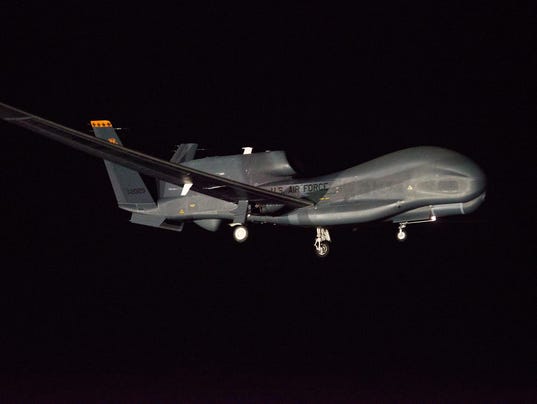
But before the last bomber left the island, USAF reminded the world of its combat power with an impressive “elephant walk” that included five B-52 strategic bombers, six KC-135 tankers, an MH-60S Knighthawk helicopter, an RQ-4 Global Hawk, and a U.S. Navy MQ-4C Triton.
airforcemag

Apr 7, 2018

Potential MQ-4C sale to Germany

Northrop Grumman’s long courtship with Germany’s requirement for a high-altitude unmanned air system took another step toward a contract on 5 February.
The US State Department approved a potential sale of four MQ-4C Tritons to Germany, the Defense Security Cooperation Agency announced on 5 April.
The approval allows Northrop to export the high-altitude surveillance aircraft, but doesn’t mean Germany has committed to sign a contract.
The DSCA notification says the full package, including a ground control station, spares and support, is worth $2.5 billion.
Germany would acquire a modified version of the MQ-4C configuration that Northrop has developed for the US Navy, but the notice doesn’t list the changes.
The USN’s version of the aircraft comes with several major sensors, including Northrop’s multi-function airborne system (MFAS) radar, a camera-based targeting system and electronic support measures.
In 2000, Germany launched a programme to acquire a high-altitude UAV for electronic surveillance. Northrop delivered one “Euro Hawk” aircraft to Germany, using an RQ-4B Global Hawk airframe and an Airbus sensor payload. But the Germany cancelled the Euro Hawk programme due to financing and airspace integration problems.
The Australian government also plans to buy the MQ-4C for the maritime surveillance mission in the Pacific and Indian oceans.
flightglobal

Mar 9, 2015

USAF Looks to Global Hawk Upgrades

After multiple attempts to end the Global Hawk Block 30, the US Air Force has now included the high-altitude, long-endurance unmanned system in two straight budget requests, giving a sense of stability to the program — and allowing operators to turn their eyes to future upgrades.
The service had wanted to retire the Global Hawk and funnel that money into keeping the manned U-2 flying. But intense pressure from congressional allies of manufacturer Northrop Grumman kept the Global Hawk alive. Now, it appears set to be the high-altitude option for the future.
In last year's budget, the Air Force sought to retire the U-2 immediately, but Congress again intervened. In this year's budget request, the service instead said it plans to retire the U-2 in 2019, providing a buffer zone during which the Global Hawk can be upgraded.
Northrop announced in February that it had driven flying-hour costs down to $14,876 in 2014. That number was $24,336 in 2013 and $33,598 in 2012. That cost drop occurred as the RQ-4 saw a 40 percent increase in flying hours between 2013 and 2014.
The upgrades needed are a weather radar, a universal payload adapter, which would allow Global Hawk to carry a wider range of electro-optical/infrared sensors, as well as legacy systems such as the U-2's wet film optical bar camera.
The Royal Australian Air Force announced last year it will procure the MQ-4C Triton to meet its maritime surveillance requirement. The Triton, a variation on the RQ-4 being developed for the US Navy, comes equipped with an active, electronically scanned array advanced radar and the ability to go below cloud cover.
Although details are still being finalized, the information released by Australia indicated it plans to purchase seven MQ-4Cs.
defensenews

Feb 3, 2015

Northrop Grumman to Start Production on Republic of Korea Global Hawks

Northrop Grumman will begin production of four RQ-4 Global Hawk for the Republic of Korea's Air Force.
The contract announcement follows procurement decisions made by the Japanese and Australian governments to purchase the Global Hawk and the MQ-4C Triton.
globenewswire

Jan 13, 2015

Germany May Revive Euro Hawk Using MQ-4C

Germany may turn to the U.S. Navy’s MQ-4C Triton to resurrect its Euro Hawk program and claw back some of the almost €600 million ($750 million) invested in the project. The May 2013 cancellation was the result of concerns about the ability of the system to satisfy airworthiness regulations necessary to permit flight in civil airspace. However, another Northrop Grumman Global Hawk derivative—the U.S. Navy’s MQ-4C Triton—may enable the German defense ministry to restart the airborne signals intelligence capability, filling a gap left since the German navy’s fleet of five Br.1150 Atlantique aircraft were retired in 2010.
aviationweek

Dec 22, 2014

Indian Navy seeks US MQ-4C UAVs for ocean surveillance

The Indian Navy has earlier shown interest in acquiring six to eight of the maritime variants of the US high altitude, long endurance (HALE) Unmanned Aerial Vehicles (UAV) for extended ocean surveillance MQ-4C Triton.
The Global Hawk has been deployed by the U.S. in Japan, and the U.S. this week approved the sale of four Global Hawks to South Korea. Australia and Japan too have expressed interest in these drones, though Australia later backed out because of the high price.
If the deal goes through, it will be a huge force multiplier for the Indian military in carrying out round-the-clock surveillance across the border or tracking suspicious vessels in the open seas. Apart from the UAVs, both sides are also working to conclude final negotiations of the $2.5 billion helicopter deal for 22 Apache attack helicopters and 15 Chinook heavy lift helicopters.
thehindu

Nov 4, 2014

RAAF Orion drawdown begins

A Royal Australian Air Force Orion has been scrapped and two more are scheduled for disposal by the end of 2014.
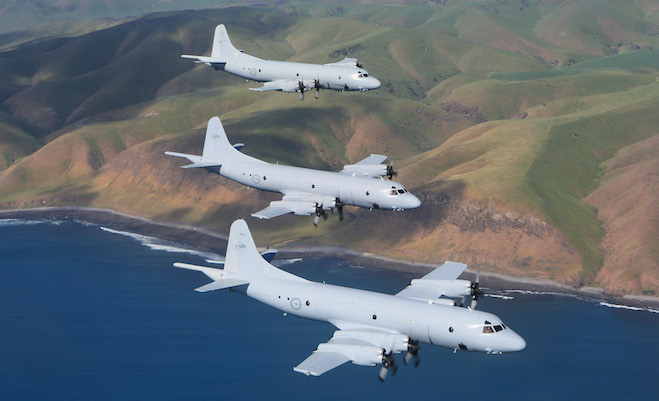
The first aircraft, A9-663, which was the only aircraft in the RAAF’s 19-strong Orion fleet not upgraded under the AP-3C program, was scrapped on October 20. All 19 Orions are due to be progressively drawn-down through to June 2019.
The Orion’s maritime intelligence, surveillance and reconnaissance (ISR) capability is scheduled to be replaced by a mix of manned P-8A Poseidons and unmanned Northrop Grumman MQ-4C Tritons.
australianaviation

Sep 19, 2014

US Navy’s Triton unmanned aircraft completes first cross-country flight

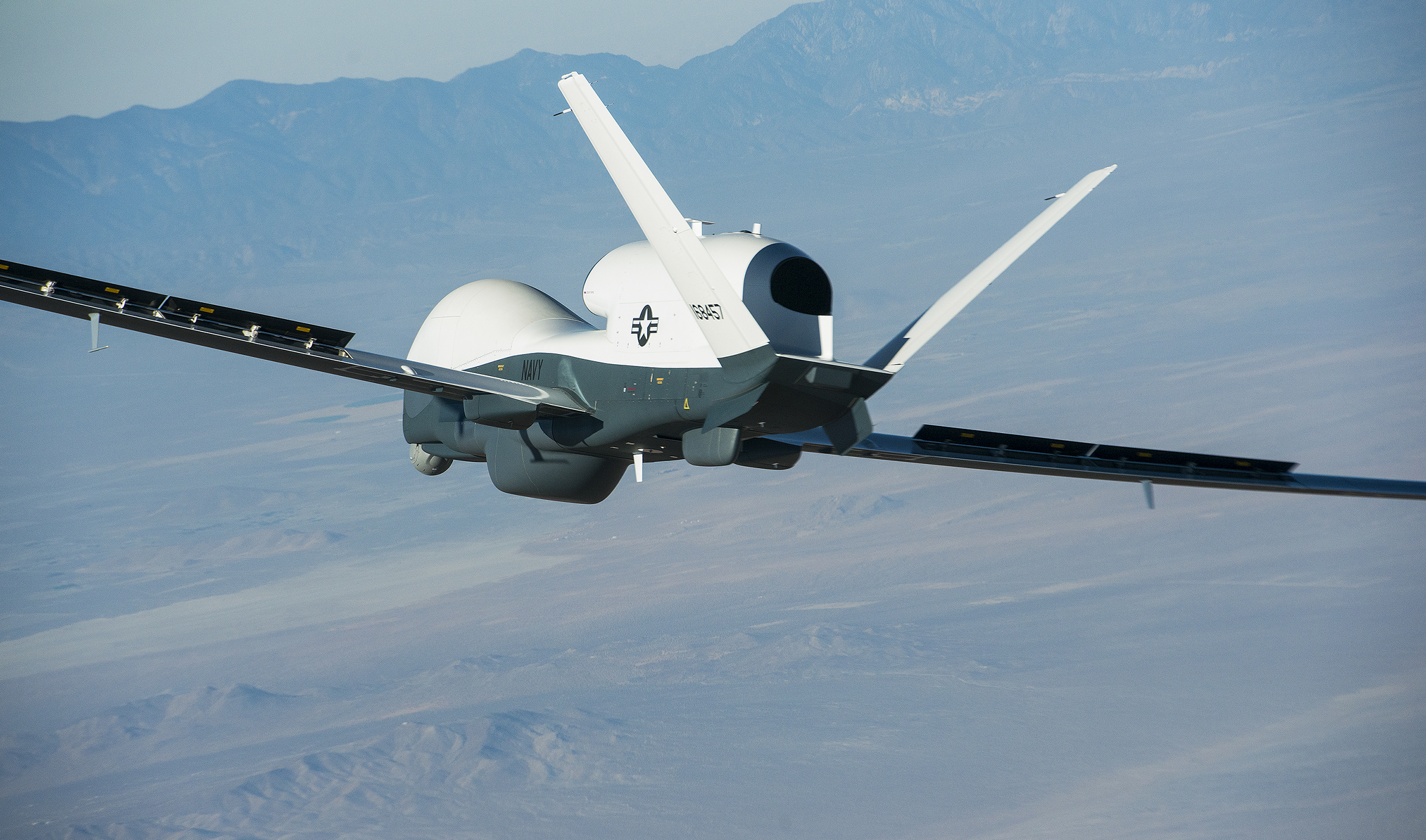
The MQ-4C Triton arrived at Naval Air Station Patuxent River Sept. 18 after completing its inaugural cross-country ferry flight, bringing the US Navy closer to delivering this new capability to the fleet.
This flight marked the transition from initial flight test, to testing that will demonstrate Triton’s capability to perform operational missions in the maritime domain.
navair

Apr 23, 2014

Australia orders 58 F-35 Lockheed Martin stealth fighters

Australia will order 58 more F-35 Prime Australina Minister said on Wednesday.
Australia approved the purchase of 14 of the stealth fighters in 2009, and the additional jets will provide the Royal Australian Air Force with enough aircraft to form three operational squadrons and one training squadron.
The first F-35 aircraft will arrive in Australia in 2018 and enter service with the RAAF in 2020.
The Australian purchase is a signal of confidence in the F-35 Joint Strike Fighter (JSF) program, which is about 70 percent over budget and years behind schedule.
Australia has moved recently to upgrade its air defense capabilities, announcing in February that it would buy eight of Boeing P-8A Poseidon and committing in March to purchasing the U.S. Navy's MQ-4C Triton unmanned aircraft.
reuters

Apr 8, 2014

UK Team To Train on Triton as Government Ponders Maritime Patrol Future

Britain’s Ministry of Defence is dispatching a team to train on Northrop Grumman’s MQ-4C Triton UAV in the run-up to a possible decision next year on whether to re-establish a maritime patrol capability.
The government said that four personnel are scheduled to train on the MQ-4C Triton during June and August, 2014.
The Triton is a maritime version of the Global Hawk remotely piloted surveillance vehicle. The high-altitude, long-endurance aircraft is in its flight-test phase ahead of deliveries to the US Navy.
The British government said the team will be trained at the US Navy’s Patuxent River Naval Air Station in Maryland.
Defence Secretary has said on a number of occasions that unmanned aircraft could meet at least part of the requirement for a future maritime patrol aircraft capability if the 2015 Strategic Defence and Security Review (SDSR) resurrects the requirements.
The government controversially axed Britain’s maritime patrol aircraft capability as part of a budget-cutting exercise in the 2010 SDSR when BAE Systems’ long-delayed and over-budget Nimrod MRA4 program was canceled before the aircraft entered service.
Two demonstration versions of the Triton are scheduled to be delivered to Patuxent River in the next few weeks.
Triton has already been ordered by the US Navy to operate alongside Boeing P-8 Poseidon MPAs. Australia has also said it intends to buy the machine to work with the P-8s it has on order.
Twenty british personnel have been embedded with US Navy P-8 operations as part of a program to retain crew skills until a decision is made on whether to recreate a maritime patrol capability.
defensenews

Mar 26, 2014

MQ-4C completes initial flight test phase

The Northrop Grumman MQ-4C Triton unmanned aerial vehicle (UAV) has completed its initial flight test phase.
The Initial Envelope Expansion tests, concluded on 13 March, were designed to measure the maritime surveillance aircraft's performance at a variety of speeds and altitudes. The MQ-4C flew a total of 81 hours and reached a maximum altitude of 59,950 ft.
The two demonstration aircraft are now being prepared for transition to NASPatuxent River, Maryland, beginning in June.
Triton's software and sensor systems were tested separately on a Gulfstream II surrogate aircraft. Northrop Grumman completed those risk reduction tests of the Multi-Function Active Sensor (MFAS) in 2013.
The MFAS is an active electronically scanned array radar that provides a 360-degree field of view. It uses a combination of electronic scanning and a mechanical rotation, which allows the radar to spotlight a geographic area of interest for extended periods of time rather than hopping around quickly.
Triton's MFAS sensor is designed to work with an Automatic Identification System (AIS). The AIS system can identify and locate a vessel, and then the MFAS radar can take a picture of it. As the aircraft approaches the ship, AN/ZLQ-1 electronic support measures and an electro-optic/infrared sensor - the Raytheon MTS-B - can then be used to confirm the ship's identity.
As a companion to the Boeing P-8A Poseidon manned maritime patrol aircraft, Triton will be capable of adding over 2.7 million square miles of coverage to each single mission.
The USN's plan is to acquire 68 production-model Tritons plus the two demonstration aircraft.
Australia has also expressed intent to purchase the UAVs to accompany its planned P-8 fleet.
janes

Mar 13, 2014

Austrialia commited to acquire MQ-4C Triton UAV

Australian Government has committed to the acquisition of the Triton Unmanned Aerial Vehicle (UAV), subject to the successful completion of the US Navy development programme currently under way.
These aircraft will patrol Australia’s ocean approaches, and work closely with other existing and future Australian Defence Force assets to secure ocean resources, including energy resources off northern Australia, and help to protect borders.
The Triton UAVs will be based in Adelaide, South Australia.
The total number of Triton UAVs to be acquired will be further considered by Government in 2016.
pm.gov.au

Feb 17, 2014

Australia to Buy Seven Drones for Border Protection

The Australian government would spend around 3 billion Australian dollars to purchase seven large unmanned aircraft for the country's border protection.
The aircraft would be primarily used for military purposes such as spotting enemy ships and planes in a conflict, but they can also be used to detect asylum seekers since the drone can search an area of 40,000 square nautical miles in a single mission.
Defense Minister would soon refer to the cabinet for its first pass approval of 3 billion dollars for the seven U.S. made MQ-4C Triton, a maritime version of the Global Hawk.
The seven new drone would be deployed in a air force base close to the southern city of Adelaide and will replace the current aging fleet of P-3 Orion surveillance planes.
defense-studies

Jan 8, 2014

Navy’s MQ-4C Triton Hits Testing Milestone

Northrop Grumman and the U.S. Navy are progressing rapidly in flight-testing the MQ-4C Triton unmanned aircraft.
The company announced on Jan. 6 that the single-engine intelligence, surveillance and reconnaissance (ISR) machine had completed nine sorties since its first flight on May 22, marking roughly the half-way point in the jet’s envelope expansion process.
The Triton will eventually carry a 360-degree AN/ZPY-3 Multi-Function Active Sensor (MFAS) active electronically scanned array radar, MTS-B electro-optical/infrared camera, AN/ZLQ-1 electronic support measures suite and an automatic identification system (AIS) receiver.
It will also have satellite communications and Link-16 capability and to act as a communications relay for the fleet.
For this series of tests, Northrop stated that the MQ-4C has completed flights that are 9.4 hours in duration at altitudes of up to 50,000ft.
The Navy plans to buy a total of 68 MQ-4C aircraft, of which 20 would be operated at any given time to generate five “orbits”. The Triton would be used in conjunction with the Boeing P-8A Poseidon maritime patrol aircraft.
usni.org

Jul 18, 2013

Australia to Buy More P-8 Poseidon

Australia plans to buy more Boeing P-8 Poseidon maritime patrol jets than initially projected to replace planes dating from the 1970, reducing its requirement for drones built by Northrop Grumman Corp.
Funding for the purchase will be sought next year, with talks under way about the exact mix of P-8s and MQ-4C Triton unmanned aircraft.
Australia currently uses 18 Lockheed Martin AP-3C Orions upgraded a decade ago. While it had planned to acquire eight aircraft and seven drones, the number of P-8s could now reach into double figures.
defense-studies

Jul 9, 2013

US Navy's P-8 Poseidon Ready for Fleet Introduction

According reports the P-8A Poseidon as being "operationally effective, operationally suitable, and ready for fleet introduction" following an extensive testing period.The anti-submarine, anti-surface warfare aircraft is the replacement for the Navy's aging fleet of Lockheed Martin P-3C Orion. US NAVY plans on using the Poseidons on anti-submarine missions alongside the Northrop Grumman MQ-4C Triton, an unmanned aerial vehicle (UAV) that completed its first flight in May.
aviationtoday

Jun 26, 2013

Australia seeks 7 MQ-4C Triton drones for Indian Ocean overwatch

Rising Indian Ocean rivalries as China seeks to safeguard key energy lifelines loom behind an Australian push for a $3 billion fleet of maritime superdrones, which will likely boost intelligence sharing with the United States.
With elections looming and pressure for budget savings, the purchase of up to seven MQ-4C Triton unmanned aircraft has emerged as rare point of bipartisan agreement between Australia's Labor government and conservative opponents, but both sides are reluctant to discuss their wider strategic aims.
reuters

Jun 25, 2013

Australia seeks Triton superdrones for Indian Ocean overwatch

Rising Indian Ocean rivalries as China seeks to safeguard key energy lifelines loom behind an Australian push for a $3 billion fleet of maritime superdrones, which will likely boost intelligence sharing with the United States.
With elections looming and pressure for budget savings, the purchase of up to seven MQ-4C Triton unmanned aircraft.
vagazette

May 23, 2013

Northrop Grumman, U.S. Navy Complete Triton Unmanned Aircraft's First Flight


The Northrop Grumman Corporation built MQ-4C Triton high-altitude unmanned aircraft successfully completed its first flight today from the company's manufacturing facility in Palmdale.
northropgrumman

May 17, 2013

Australia revives interest in MQ-4C


Australia will issue a Letter of Request to request cost, capability and availability information on the MQ-4C.
Graham Warwick-aviationweek