Translate

Showing posts with label SWITZERLAND. Show all posts

Mar 6, 2026

Switzerland Stays Committed to F-35s, Reduces Order from 36 to 30 Aircraft


Switzerland has confirmed it will continue with its F-35A fighter jet program, but the government now expects to acquire around 30 aircraft instead of the originally planned 36, citing rising program costs linked to inflation, raw material prices, and other economic factors.

According to the Swiss Federal Council, the decision aligns with the financial framework approved by voters in 2020, which set a ceiling of 6 billion Swiss francs (adjusted for inflation to approximately 6.429 billion by the end of 2025). To accommodate the revised procurement plan, the government will request an additional 394 million Swiss francs from parliament, covering increased costs while remaining within the authorized limit.

“The United States has claimed additional costs for inflation, raw material development, and other factors,” the Council stated. This additional funding would allow Switzerland to secure production slots for up to 30 F-35A aircraft, with final numbers depending on future U.S. government contract negotiations.

Officials acknowledged that operating fewer than 36 fighters carries operational implications, potentially affecting Switzerland’s ability to sustain air defense during heightened tension or conflict. An expert group previously recommended a fleet of 55–70 modern fighters to meet the current threat environment, highlighting the gap that remains even with the new plan.

Abandoning the program entirely was rejected on security grounds. The Federal Council emphasized that withdrawing would impose severe limitations on Switzerland’s ability to protect its territory and population. Confirming the order by Q2 2027 is essential to retain manufacturing slots within the F-35 production schedule.

The F-35A Lightning II is a fifth-generation multi-role stealth fighter, capable of air superiority, strike, and ISR missions. Its advanced sensors, data-fusion systems, and networked communications allow Switzerland to integrate modern capabilities into its air defense and maintain interoperability with allied forces.

While the reduction in aircraft numbers reflects fiscal prudence, Switzerland remains committed to modernizing its air force, balancing budget realities with strategic security imperatives.

Nov 16, 2022

Switzerland cleared to buy 72 PAC-3 MSE Patriot Missiles


The State Department has made a determination approving a possible Foreign Military Sale to the Government of Switzerland of PATRIOT Advanced Capability (PAC) 3 Missile Segment Enhanced (MSE) missiles and related equipment for an estimated cost of $700 million. The Defense Security Cooperation Agency delivered the required certification notifying Congress of this possible sale today.

The Government of Switzerland has requested to buy up to seventy-two (72) PATRIOT Advanced Capability (PAC) 3 Missile Segment Enhanced (MSE) missiles. Also included are telemetry kits; PAC-3 MSE missile round trainers; PAC-3 MSE empty round trainers; PAC-3 missile skid kits; launcher stations heater controls; classified missile repair and return; classified PAC-3 concurrent spare parts; unclassified PAC-3 concurrent spare parts; PAC-3 MSE canister consumables; quality assurance; Field Surveillance Program; U.S. Government and contractor technical, engineering, and logistics technical assistance; flight test support; flight test targets; and other related elements of logistics and program support. The total estimated cost is $700 million.
dsca 

Aug 11, 2015

Jordan orders PC-9 trainers

The Royal Jordanian Air Force (RJAF) has ordered nine Pilatus PC-9M turboprop training aircraft, a simulator, training equipment, and a comprehensive logistics package.
Deliveries will begin in January 2017.
The RJAF currently has Slingsby T67 Firefly basic trainers and CASA C-101 Aviojet advanced trainers.
janes

May 27, 2015

Fighter jet exercise kicks off in Norway

One of Europe’s largest fighter jet exercises kicked off Monday north of the Arctic Circle, a region where growing Russian activity has sparked concerns among neighboring countries.
Arctic Challenge 2015 brings together close to 100 fighter jets and more than 4,000 individual participants from nine nations, according to Norway’s military, which is hosting the exercise. Twelve USAF F-16 fighters will take part in the 12-day event, as will several of NATO’s early warning aircraft, known as AWACS.
The drills aim to smooth coordination among allies operating in a region stretching from northern Norway across Sweden to Finland. It comes at a time of growing Russian air activity in the region, which is adjacent to Russian territory.
Arctic Challenge was last held in 2013. This year’s event is one of a series of bulked-up military exercises being held across northern Europe in response to increased Russian military activity.
Non-NATO members Sweden and Finland are participating more frequently in those exercises and training, as a consequence of increased tensions in the area.
Other participants in the exercise include Britain, Germany, France, the Netherlands and Switzerland, another non-NATO nation.
stripes

Apr 21, 2015

Switzerland to relaunch F-5 replacement effort in 2017

Switzerland is to relaunch its efforts to procure a new fighter type following the recent announcement by the Federal Department of Defence, that it is prematurely retiring a third of the ageing Northrop F-5E Tiger II fleet due to cracking.
The cracking in 16 of the country's 32 serviceable F-5Es (10 of which will be retired and 6 repaired and returned to service) coupled with the relatively small number of Boeing F/A-18 Hornets in service had left the air force in a 'critical' position. Once the retirements and repairs were complete, the country would be left with just 22 F-5E and 32 F/A-18C/D frontline fighters.
This state of affairs has been compounded by the Swiss population's decision in May 2014 to reject a deal to procure 22 Saab Gripen E jets to replace the F-5s and augment the F/A-18s. Under that proposal, the Swiss Air Force was to receive a number of Gripen C/D fighters in 2016 ahead of the start of Gripen E deliveries in 2018. The F-5s were to be phased out from 2016, with deliveries of the Gripen E running through to 2021.
According to the government, the new process should include two of the three shortlisted candidates from the previous effort; namely, the Gripen E and the Dassault Rafale (the Eurofighter Typhoon is no longer considered a 'favourite', the RTS report said). It added that 'a US aircraft', most likely the Boeing F/A-18E/F Super Hornet, should also be included.
When the F-5 replacement programme was launched in 2007, Saab submitted its Gripen C/D, Boeing its F/A-18E/F Super Hornet, Dassault its Rafale, and Eurofighter its Typhoon. Less than a year later in 2008, Boeing dropped out of the competition citing differences between the requirements and the Super Hornet's capabilities.
The competition stalled in 2010, but was resurrected in mid-2011 after intense lobbying by Swiss industry, with Saab then offering its Gripen NG instead. Later that year, the Gripen NG (later to become the Gripen E) was selected, only to have the deal scuppered in the referendum. This decision effectively sent the air force back to square one in its efforts to replace its ageing F-5s.
janes

Mar 10, 2015

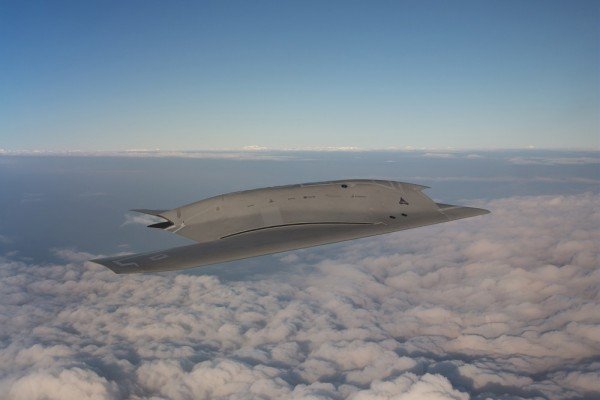
nEUROn UCAV finishes successful test campaign in France

With the completion of its 100th flight in February, the nEUROn UCAV technology demonstrator has completed its test campaign in France.
Throughout this entire campaign, the nEUROn and associated equipment demonstrated exemplary availability and reliability.
In the first phase, the purpose of the tests was to open the flight envelope (including with weapon bay doors open), to test the electro-optical sensor and to evaluate datalink performance.
In the second phase, most flights were dedicated to infrared and electromagnetic signature/detection confrontations against operational systems.
These confrontations, which produced all the expected results, were performed under the authority of the French defense procurement agency DGA. The nEUROn, in full stealth configuration, was operated by Dassault Aviation.
Stealth-related data and feedback will serve as a reference for future aircraft projects.
A new chapter now opens for the nEUROn with evaluations that will take place in Italy, then Sweden.
nEUROn is a European program for an unmanned combat air vehicle (UCAV) technology demonstrator, conducted by Dassault Aviation as prime contractor under the authority of French defense procurement agency DGA. It heralds tomorrow’s defense programs, since it federates expertise from across Europe (France, Italy, Sweden, Spain, Greece and Switzerland).
dassault-aviation

Feb 25, 2015

Pilatus delivers additional PC-21 trainer to Royal Saudi Air Force

Pilatus has shipped another PC-21 expanded envelope trainer aircraft off its final assembly line for the Royal Saudi Air Force (RSAF).
The aircraft represents the 100th turboprop trainer PC-21 to be rolled off the company's final assembly line in Switzerland.
Saudi Arabia ordered 55 PC-21 aircraft in May 2012.
The deal also covered the delivery of 22 Hawk 165 advanced jet trainers.
The PC-21 will also replace RSAF's existing PC-9 trainer fleet, which comprises 47 aircraft that were delivered by BAE as part of a package deal with Hawks to Saudi Arabia in the mid-1980s.
The RSAF took delivery of the initial six aircraft in June 2014. The remaining aircraft are currently in production, while the instructors are preparing for their first student courses.
The PC-21 is currently operated by the air forces of Singapore, Switzerland and the UAE, and has also been ordered by Qatar.
airforce-technology

Oct 1, 2014

First PC-21s head for Qatar

Pilatus has delivered its first two PC-21 trainers to Qatar, with the pair having left its Stans manufacturing site in Switzerland for the Middle East on 29 September.
Registered as QA 353 and 354, the two-seat aircraft are among eight to have been completed so far, under a deal for 24 of the type signed in July 2012.
flightglobal

Aug 17, 2014

Qatar to receive Pilatus PC-21 by year end

The delivery of Swiss trainer aircraft Pilatus to Qatar remains ‘on schedule,’ Swiss Ambassador Martin Aeschbacher has told Gulf Times.
Two years back, the Pilatus aircraft manufacturer had landed the major deal, which included the sale of a fleet of 24 PC-21 trainer planes to Qatar, as well as a package of ground-based training tools, logistical support and maintenance.
gulf-times

Jun 16, 2014

Swedish Gripen Es to be new-build rather than re-manufactured

The Swedish government is set to amend the Gripen E production contract so that the aircraft will be new-build rather than re-manufactured airframes.
The country's parliament is said to have agreed the move to procure newly-built aircraft as opposed to re-manufactured Gripen Cs some weeks ago, and approved the decision by a large majority. The move was prompted by a need to keep the Swedish Air Force's Gripen C fleet at full strength until the service fully transitions over to the Gripen E.
Under the terms of the original production contract awarded in December 2013, Saab was to convert 60 of SwAF's Gripen C platforms into the latest-variant Gripen E. The air force's 25 Gripen Ds would remain in service as lead-in fighter trainers until the full fleet of Gripen Es are delivered by 2026.
Gripen C and Gripen E share little in terms of common structures and systems.
It is not thought that this contract amendment will affect the Gripen E delivery schedule of 2018 through to 2026. Price tag for the 60 aircraft remains unchanged.
Besides maintaining the SwAF's frontline fighter strength, the change in the production contract also resulted in freeing up a larger pool of Gripen C aircraft which can be leased to prospective Gripen E customers while they await their new aircraft - this was something that both Switzerland and Brazil had requested. While the SwAF had agreed to both of these countries borrowing some of its Gripen Cs, not much spare capacity was left for it to agree to too many more such requests.
Sweden is also considering an increase in the numbers of aircraft to be procured to 70. The SwAF had originally requested between 60 and 80, and the recent tensions between Russia and Ukraine have refocused the political agenda to national defence.
janes

Jun 12, 2014

Saudi Arabia gets first six PC-21 trainers

Pilatus has commenced deliveries of its PC-21 trainer to Saudi Arabia, with two batches having left the airframer’s Stans site in Switzerland so far this month.

An initial three of the turboprop-powered type took off from Stans on 2 June for their ferry flights to the Middle East, with these carrying the registrations 905, 906 and 907.
One week later, a second batch – comprised of aircraft 908, 909 and 910 (below) – also departed Switzerland for Riyadh.
Acquired as part of a training package also to include 22 BAE Systems Hawk advanced jet trainers, the six PC-21s transferred are the first examples from what will become a 55-strong fleet by early 2016. This volume will make the Royal Saudi Air Force the operator of the largest fleet of the design, which has also so far been supplied to Singapore (19), Switzerland (8) and the United Arab Emirates (25).

Pilatus in February also performed the first ground tests with a PC-21 for Qatar, which will receive 24 of the type later this year.
flightglobal

Jun 11, 2014

Switzerland choses Hermes UAV to upgrade fleet

Switzerland has chosen Elbit's Hermes 900 HFE as its new UAV. It will replace the ADS 95 Ranger, which the Swiss have operated since 2001.
The Hermes will be "more flexible, has longer endurance in the air and a wider operational range than the system currently in use," according to a Swiss Federal Department of Defense announcement.
Elbit's Hermes was selected over the Israel Aerospace Industries Super Heron.
The changeover will be complete by 2020. The Swiss government announcement was careful to note that the new UAV will be unarmed.
c4isrnet

Jun 4, 2014

Solar plane makes inaugural flight

The Solar Impulse 2 vehicle lifted off from Payerne airfield in Switzerland at just after 03:35 GMT , returning two hours later.
It is a larger, upgraded version of the aircraft that flew across America last year.
It climbed to just over 6,000ft (1,800m), conducting a number of manoeuvres to prove the handling of the aircraft.
Early vibrations were reporter, but overall the mission outcome appeared very positive.
For the first time in history, an aeroplane flyes with no fuel day and night, showing the potential of the clean technologies.
The carbon-fibre aircraft has a huge wingspan, which at 72m is wider than a Boeing 747 jet. The vehicle weighs only 2.3 tonnes.
The tops of the wings are covered by 17,000 solar cells, which drive four brushless electric motors at speeds of up to 140km/h (90mph).
The first Solar Impulse plane set a number of world records, including the longest manned solar-powered flight at 26 hours, the first inter-continental flight in a solar-powered plane, and the greatest distance covered on a piloted solar-powered flight.
bbc.com

May 28, 2014

Scorpion jet pitched for Swiss air force

Textron is bidding to sell its Scorpion jets to the Swiss government at one-seventh the cost of Swedish Gripen fighter planes turned down by voters in Switzerland this month.
Acording Textron president “The Scorpion is ideally suited to Switzerland’s circumstances”, It is cheaper than the Gripen and still meets 90 percent of the tasks at hand”.
Swiss voters on May 18th shot down a deal approved by the government to buy 22 Gripen fighter jets from Saab.
The planes were to replace the Swiss air force’s fleet of 54 F-5.
Scorpion, is not a supersonic fighter and is not intended to be and is designed to be an affordable option for air forces to provide air space surveillance and intelligence.
The Swiss department of defence is not commenting on the Scorpion proposal.
thelocal.ch

May 21, 2014

Swiss voters reject Gripen purchase

Swiss voters have rejected the country's planned purchase of 22 Saab Gripen E in a landmark referendum on 18 May.
In a major blow to Saab, the country voted 53.4% against the proposed purchase of the Gripen E to replace the F-5 Tiger II fighter aircraft.
The Gripen E had been selected by Switzerland in November 2011 to replace the F-5s.
The 54 Tiger II fleet has been in Swiss service since 1978 and is scheduled to be withdrawn from service in 2016. Meanwhile, the other element of the Swiss Air Force's combat fleet, its 32 Boeing F/A-18C/D Hornets, is itself currently scheduled to be withdrawn from service in 2025. With the purchase of the Gripen now rejected, Switzerland urgently needs a solution to maintain the country's air policing capabilities.
A short-term solution could involve upgrading and refurbishing the country's existing Tiger II fleet, which could be maintained in service until at least 2020.
Other options include relaunching the original Tiger replacement programme, in which the Eurofighter Typhoon and Dassault Rafale had also competed. Alternatively, with the purchase of Gripens now ruled out, Switzerland could lease a fleet of the aircraft, as the Czech Republic and Hungary do.
janes

Apr 23, 2014

India Wants Domestic Production of Pilatus Trainers

After contracting 75 basic trainer aircraft from Pilatus in 2012, India wants to buy an additional 106 that would be license-built by a domestic company.
But domestic defense firms find the proposal uneconomical, and state-owned Hindustan Aeronautics Ltd. (HAL) is pushing its own homegrown basic trainer, though the Indian Air Force has already rejected it.
The request for information, described by the defense industry as the first of its kind, asks selected domestic companies if they would participate in the proposed program to build 106 Pilatus PC-7 Mark-II trainers under license in the “Buy and Make (Indian)” category, which restricts contracts to domestic defense companies and requires that at least half of the components and subsystems come from domestic sources.
Domestic companies, in turn, find the “Buy and Make (Indian )” program for Pilatus uneconomical because of the limited order. A chosen domestic company and the Swiss original equipment manufacturer would produce the trainer. However, no domestic partner has so far confirmed talking to Pilatus on the program.
HAL is also developing a homegrown trainer and is trying to block the proposed Pilatus program.
A HAL official said the basic trainer it is developing, the HTT-40, would be more advanced than the PC-7 as it will have weapon-firing capabilities and other advancements. The HTT-40 is expected to fly by 2015.
Last year, the Air Force proposed that HAL license-produce the Pilatus aircraft but HAL rejected the proposal, saying it was working on its own project.
defensenews

Mar 29, 2014

Saab, Pilatus To Promote the PC-21 if Sweden Seeks New Trainer Aircraft

Saab and Pilatus Aircraft will cooperate in bidding the Swiss company’s PC-21 if the Swedish Air Force opt to replace its SK 60 trainer.
Cooperation on the trainer is part of a wider possible tie-up the two companies agreed to when they inked a memorandum of understanding (MoU) in the Swiss capital Bern March 28.
Plans to create an aerospace software development center and a separate aerostructures business in Switzerland are included in an MoU.
Switzerland is holding a referendum in May on whether the country should purchase 22 Gripens to replace a fleet of aging F-5’s.
The Swedish Air Force has been flying the Saab-built SK60 since the 1960s and have for some time been reviewing whether it needs to replace the twin-jet machines.
Pilatus talked about a possible order for PC-21 for Sweden.
The Swedish aerospace company upgraded a number of SK60s following the signing of a contract in September 2009.
Some 67 aircraft were upgraded but only 35 machines are required for current Swedish training requirements.
Last December Saab moved to extend its trainer aircraft interest in a team deal with Boeing to design a new trainer to compete for a US Air Force requirement to replace T-38 jet trainers.
defensenews

Mar 24, 2014

India To Buy More Pilatus PC-7 Mk. 2s

The Indian air force has decided to urgently buy 106 PC-7 Mk. 2 Basic Trainer Aircraft from Pilatus, pulling the plug yet again on state-run Hindustan Aeronautics Limited (HAL), which is also making an aircraft for training junior pilots.
The PC-7 be acquired from the Swiss company under the “Buy & Make (Indian)” category, in accordance with India’s defense procurement policy.
India is already taking delivery of PC-7 Mk. 2 aircraft from Pilatus under a contract for 75 such aircraft signed in 2012.
Pilatus will have to form a joint venture or establish a production arrangement with an Indian company to execute the contract.
A Request for Information (RFI) calls for delivery of aircraft and equipment to begin by 2015-16, with all 106 PC-7 Mk. 2’s to be delivered by 2020-21.
aviationweek

Mar 17, 2014

Swiss voters set to reject Saab fighter jet deal, poll shows

Around 62 percent of swiss voters would reject the proposal to replace Switzerland's fleet of F-5 fighters with the Gripen. The poll, questioned more than 1,000 people.
The Gripens are unpopular in Switzerland,because the deal will require cost cuts in other areas, such as education.
Switzerland's upper and lower houses voted in favor of the purchase of the jets in September, but Swiss interest groups can secure referendums on new laws if they collect a sufficient number of signatures.
The vote on the jet purchase is scheduled for May 18, the same day as a popular vote on whether to adopt the world's highest minimum wage.
reuters

Feb 24, 2014

First Qatari PC-21 enters ground test

Pilatus conducted the first engine ground runs with a PC-21 for export to Qatar.
Aircraft QA 350 is the lead trainer from a 24-unit deal signed in July 2012. This also includes ground-based training systems and associated equipment for use at a new training academy for the Qatar Emiri Air Force, plus maintenance services.
The PC-21's entry into ground testing comes ahead of scheduled deliveries from mid-2014. Training activities with the type are due to commence during 2015. All 24 aircraft are due to be delivered before the end of the same year.
Qatar will become the fifth nation to introduce the new-generation PC-21, following Saudi Arabia, Singapore, Switzerland and the United Arab Emirates.
flightglobal