Translate

Showing posts with label MI-28. Show all posts

Jan 29, 2026

Iran Receives Mi-28 Attack Helicopters from Russia: Tactical Upgrade, Strategic Irrelevance


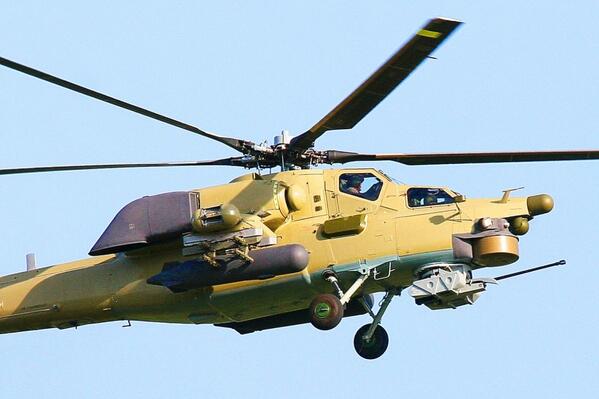
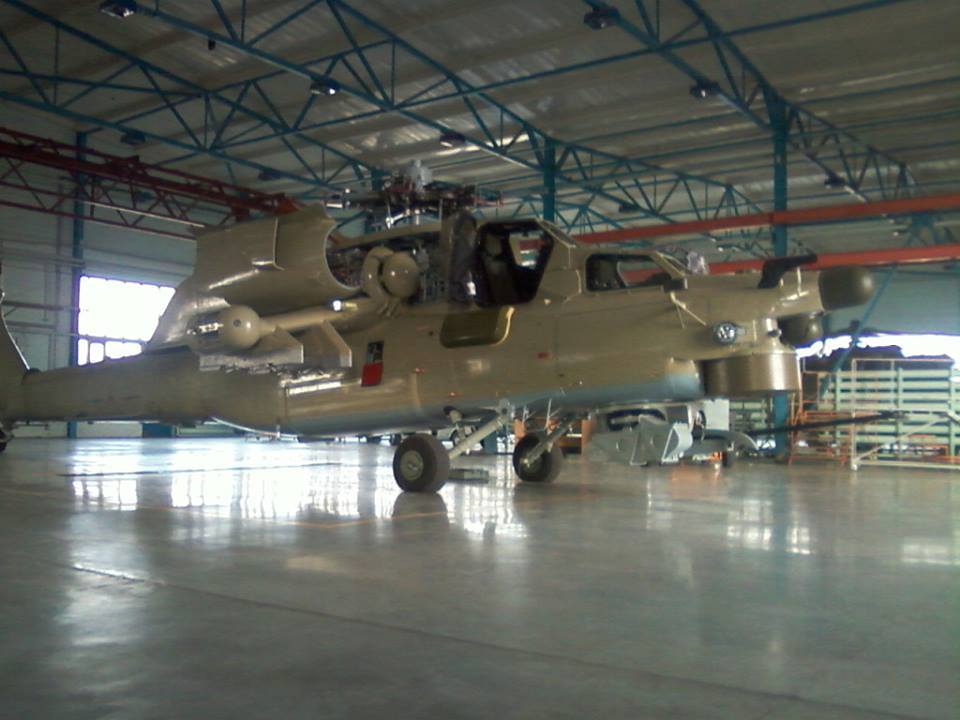
Recent open-source intelligence imagery and multiple defence media reports strongly suggest that Iran has begun receiving Mi-28NE “Havoc” attack helicopters from Russia, marking the first confirmed rotary-wing combat aircraft delivery under the deepening Tehran–Moscow military cooperation framework. Photographs geolocated to Iranian aerospace facilities near Tehran show at least one Mi-28 airframe undergoing inspection, likely during acceptance and evaluation procedures. Additional Russian Il-76 transport activity into Iran further supports the conclusion that initial deliveries are underway, possibly involving a small batch of three to six helicopters.

This development represents a long-overdue modernization step for Iran’s rotary-wing aviation, which remains heavily dependent on aging Cold War-era platforms such as the AH-1J SeaCobra, Mi-17 variants, and legacy utility helicopters acquired before the 1979 revolution. Sanctions, spare parts shortages, and decades of isolation have left Iran’s helicopter fleet technologically outdated and operationally constrained. In this context, the Mi-28 provides Tehran with a modern sensor suite, improved night-fighting capability, better survivability, and significantly enhanced precision strike potential compared to its current inventory.

However, despite the symbolic value and tactical improvements, the strategic implications of this acquisition remain extremely limited. The Mi-28 is a capable battlefield attack helicopter, but it does not alter the regional balance of power. In any confrontation involving the United States or NATO-aligned forces, Iran would face overwhelming air dominance, advanced ISR coverage, electronic warfare superiority, and layered air defence networks. Against such an environment, small numbers of attack helicopters offer negligible deterrent value and limited survivability.

Operational experience from Ukraine has further exposed structural vulnerabilities in Russian attack helicopter doctrine, particularly against modern MANPADS, mobile air defence systems, precision-guided artillery, and networked battlefield sensors. Loss rates of Russian rotary-wing assets have been significant, highlighting that attack helicopters face increasingly hostile operating environments even in medium-intensity conflicts, let alone in high-end engagements involving Western forces.

From a doctrinal perspective, the Mi-28 will likely serve primarily in asymmetric and regional scenarios, including internal security operations, border surveillance, limited expeditionary support to Iranian-aligned militias, and maritime harassment roles in the Persian Gulf. Its deployment would enhance Iran’s capacity to conduct localized power projection, but without providing the strategic depth required to challenge US or allied air superiority.

Moreover, the sustainability of Mi-28 operations inside Iran remains uncertain. Sanctions, logistical bottlenecks, spare parts dependency on Russia, and training pipeline limitations will restrict operational readiness and fleet availability. Without long-term maintenance support and continuous training cycles, Iran risks replicating the low availability rates seen across much of its current combat aviation inventory.

In strategic terms, this acquisition should therefore be viewed as a marginal upgrade rather than a transformational leap. It improves Iran’s tactical options but does not meaningfully strengthen deterrence, nor does it shift the military balance in the Middle East. For Washington and its allies, the Mi-28 delivery represents background noise rather than escalation, reinforcing existing assessments of Iranian military modernization rather than challenging them.

Feb 2, 2015

Iraq receives second batch of Mi-28s

The Iraqi Ministry of Defence (MoD) announced on 1 February that it had taken delivery of a second consignment of Mil Mi-28NE attack helicopters.
It released a video showing two Mi-28s being unloaded from an Antonov An-124.
The MoD confirmed on 30 August 2014 that it had received the first consignment. Although these helicopters have been seen flying over Baghdad since then, it is unclear if they have been used in action as yet.
It was announced in October 2012 that Iraq had ordered over 40 Mi-28NE and Mi-35M helicopters.
janes

Oct 31, 2014

Мi-28 Russian helicopters join service in Iraq

The Iraqi Ministry of Defense assured the entrance of the Mi-28 Russian helicopter (Night Hunter) to the service to support terrorism fighting and Iraqi infantry forces.
This is the first group of helicopters included by the contract concluded with the Russia to provide Iraqi Army with modern fighting helicopters.
abna.ir

Sep 14, 2014

Iraq's First Mi-28 'Havoc' Attack Chopper Has Taken To The Air

Iraq's first Mi-28 Havoc 'Night Hunter' attack chopper has taken flight in Iraq. Three were delivered alongside four new Mi-35 'Hind' attack helicopters from Russia as part of an expedited order placed to help fight the spread of ISIS.
foxtrotalpha

Sep 5, 2014

Iraqi MoD confirms delivery of first Mi-28s

Iraq's Ministry of Defence released a video on 30 August confirming that it has received some of the 15 Mil Mi-28NE Night Hunter attack helicopters it ordered from Russia in 2012.
The helicopters shown did not have their stub wings or rotor blades fitted, suggesting they had been recently delivered. They also lacked the mast-mounted radar 360° millimetre-wave radar, although it is unclear if the Iraqi versions will eventually be fitted with this system.
It was announced in October 2012 that Iraq had ordered over 40 Mi-28NE and Mi-35M helicopters, but the precise numbers were not revealed until Russian helicopter manufacturer Rostvertol released a report earlier this year.
The arrival of the first four of the 28 Mi-35M assault helicopters ordered by Iraq was announced in November 2013. The Iraqi MoD announced in May that a second consignment had arrived.
janes

Jul 25, 2014

Russia Delivering Weapons to Iraq

Russia has begun supplying military helicopters and fighter jets to Iraq, as Iraq’s defense minister visited Moscow to press for equipment to thwart a jihadist offensive.
Deliveries of Mi-35 helicopter gunships and Su-25 fighters that provide close air support for ground troops have begun.
Iraq also has contracts for Mi-28 attack helicopters and mobile Pantsir-S1 surface-to-air and anti-aircraft artillery systems and it's believed that up to 10 Sukhoi fighter jets would be delivered by the end of the summer.
Russia and Iraq in 2012 signed contracts to supply 36 of the Mi-28 attack helicopters and 48 Pantsir units. Later were signed contracts for six Mi-35 helicopters and Su-25 fighters.
Despite the billions of dollars spent on training and equipment by the United States during its eight-year occupation, Iraq’s million-strong army completely folded when insurgents attacked last month.
Within days, the Islamic State jihadist group and allied Sunni factions conquered Iraq’s second city of Mosul and large swathes of the north and west.
The front lines have since stabilised and Baghdad has already received intelligence assistance from Washington and Sukhoi warplanes from Russia and Iran.
defensenews

May 4, 2014

Russia Starts Combat Helicopter Training Flights on Baltic Border

A newly formed Russian army helicopter brigade has begun training flights in the northwest of the country near the borders with the Baltic states of Estonia and Latvia.
The flights involve dozens of Mi-28N Night Hunter and Ka-52 Alligator attack helicopters as well as Mi-8MTV-5 and Mi-26T.
The 15th army aviation brigade, formed in December and stationed at the Ostrov airbase, is fully equipped with new, recently-built helicopters. The brigade currently comprises three helicopter squadrons, with two more to be added in the near future.
Media in the former Soviet Baltic states, as well as Germany, Poland and the United Kingdom, have expressed security concerns about Russia’s decision to station the 15th brigade near NATO’s borders.
Russian Defense Minister earlier announced the beginning of military drills of units from the Southern and Western military districts near the borders with Ukraine and the Baltic states in response to an “unprecedented” increase of NATO military activity near Russia amid the Ukrainian crisis.
The combat drills come as NATO is ramping up its military presence in the region.
NATO Secretary General announced earlier this month that the alliance would intensify air patrols over Eastern Europe and dispatch extra ships to the Baltic and Mediterranean Seas due to the crisis in Ukraine.
The Russian Foreign Ministry said that NATO was attempting to use the Ukrainian crisis as an imaginary threat to unite the alliance’s members and to push for Moscow's isolation
ria.ru

Mar 3, 2014

First images of the new Iraqi Mi-28 Night Hunter attack helicopters

Taken at Rostov on Don plant, the photographs show Baghdad’s new attack choppers in the color scheme chosen by the Iraqi Air Force.
23 Russian attack choppers have been delivered to the Iraqis, the first batch of 10, in September 2013 and the second of 13 examples, in January 2014.
With the delivery of the Mi-28s Iraq has become the third country (with Russia and Kenya) to operate the all-weather, day-night, two-seat anti-armor attack helicopter (whose export version is known as Mi-28NE) destined to replace the Mi-24 Hind in Russian service.
Iraq expects to give its Special Forces the support of around 40 Mi-35 and Mi-28NE attack helicopters from Russia that will be used for border patrol and antiterrorist operations.
theaviationist

Jan 31, 2014

Iraq requests Apache helicopter purchase

Iraq’s continuing military transformation could be advanced further, through a potentially $4.8 billion deal for 24 Boeing AH-64E Apache attack helicopters.
“This proposed sale supports the strategic interests of the United States by providing Iraq with a critical capability to protect itself from terrorist and conventional threats, to enhance the protection of key oil infrastructure and platforms, and to reinforce Iraqi sovereignty,” the US Defense Security Cooperation Agency says. Its message to Congress was disclosed in a notification published on 27 January.
Expected roles for an Iraqi Apache fleet would include flying close-air support and armed reconnaissance and anti-tank warfare missions. Baghdad’s request includes 12 Northrop Grumman APG-78 Longbow fire control radars and 480 Lockheed Martin AGM-114R Hellfire air-to-surface missiles.
An Apache acquisition would come on top of the Iraqi army’s previous purchase of the Mil Mi-28 from Russia. Baghdad has signed a firm order for 12 of the type, and has previously shown interest in acquiring a further 28.
Iraq’s defence spending in the post-Saddam Hussein era has included numerous foreign military sales deals with the USA. These have included orders for Lockheed-built F-16C/D and IQ-model fighters and C-130J tactical transports, Beechcraft King Air 350 transport and reconnaissance aircraft and T-6A trainers, plus Cessna 208s in utility, reconnaissance and light-attack configurations.
flightglobal

Jan 9, 2014

13 Russian Mi-28NE helicopters arrive in Iraq


Thirteen Russian Mi-28NE “Night Hunter” helicopters have arrived in Iraq, the Alsumaria television channel said on Saturday, January 4.
It said the helicopters would be used in the counter-terrorism operation in the Anbar Province in the west of the country. This is the second such shipment to Iraq in recent months. The first one consisted of 15 helicopters.
In the autumn of 2013, the first group of Iraqi pilots and technicians completed their training in Russia. Iraq will receive a total of 40 Mi-28NE and Mi-35 helicopters to be used for guarding the border and fighting terrorists.
voiceofrussia

Dec 29, 2013

Mi-28N Night Hunter helicopter enters into service with the Russian Defence Ministry


The Mi-28N Night Hunter combat helicopter, has officially entered into service with the Russian Defence Ministry. Before officially entering into service, the Mi-28N Night Hunter helicopter was operated by the Russian Armed Forces for several years.
The Ministry of Defence tested it in various conditions and developed a dedicated training and support base. Russian Helicopters has, to date, delivered several dozen Mi-28N Night Hunter helicopters to the Russian Defence Ministry.
The Mi-28N Night Hunter meets all current combat helicopter requirements, and has roused interest among potential customers. The export model is known as the Mi-28NE Night Hunter.
Mi-28N Night Hunter helicopters boast superior flight capabilities, allowing it to perform aerobatic manoeuvres. The Golden Eagles (Berkuty) helicopter aerobatics team have flown Mi-28N Night Hunter helicopters since 2012.
russianhelicopters

Dec 17, 2013

Iraq Expects Russian Weapons Delivery Next Month


The second consignment of Russian weapons and military equipment, to be delivered to Iraq under the deal signed in 2012, will arrive later than previously announced.
Last year, Iraq signed a $4.3 billion deal with Moscow to buy Russian weapons and military equipment, including around 40 Mi-35 and Mi-28NE attack helicopters. Iraq took collection of the first four Mi-35 helicopter gunships this fall.
Iraqi officials said in November that the second shipment is expected by the end of the year.
The reason for the delay is unknown.
Iraq is looking to use the newly bought military materiel to bolster its borders and for use in antiterrorist operations.
The 2012 contract also envisages the purchase of 48 Pantsir-S1 anti-aircraft missile gun systems and Ka-52 single-seat attack helicopters.
ria.ru

Nov 18, 2013

Iraq Takes Collection of First 4 Russian Helicopter Gunships


Iraq took collection of the first four Russian-made Mi-35 helicopter gunships sold to the Middle Eastern nation as part of a multibillion dollar weapons deal.
Iraq expects to receive a consignment of around 40 Mi-35 and Mi-28NE attack helicopters by the end of the year.
Iraq is looking to use the newly bought military materiel to bolster its borders and for use in antiterrorist operations.
Russia is to supply 48 Pantsir-S1 anti-aircraft missile gun systems in addition to the helicopters under anagreement signed in 2012.
Russia has under the framework of that deal also committed to supplying Iraq with Ka-52.
ria.ru

Oct 18, 2013

Iraq Taking Delivery of Russian Mi-28 NE under 2012 Contract

Russia is to supply over 10 fully armed and equipped Mi-28NE Night Hunter attack helicopters to Iraq under an agreement on cooperation in the defense and technology sector signed in 2012.
ria.ru

Aug 12, 2013

Russian Air Force to Get 60 Mi-28UB Helicopters by 2020

The Russian Defense Ministry will procure up to 60 Mi-28UB helicopters to improve the training of pilots for Mi-28N gunships.
ria

Jun 30, 2013

Iraq to get the Russian Night Hunter Helicopters

Russia will supply over 10 Mi-28NE ‘Night Hunter’ attack helicopters to Iraq under a multi-billion dollar agreement. These helicopters are the export version of the Mi-28N, produced by the Russian Helicopter Corporation. Russian deputy general director at Russia’s state arms exporter Rosoboronexport, said the $4.3 billion arms transfer agreement signed between Moscow and Baghdad includes the transfer of attack helicopters, training of aircrews and technicians, as well as the weapons systems typically employed with these helicopters.
defense-update

Oct 13, 2012

Iraq orders Mi-28 attack helicopters


Moscow and Baghdad have reached a major weapons deal for the first time since the fall of Saddam Hussein's regime, with the $4.2 billion-plus pact including the purchase of 30 Mil Mi-28 attack helicopters.

learn more

Oct 10, 2012

Iraq inks $4.3 billion arms deal with Russia, buying 30 Mi-28NEs and Pantsir-S1 systems


Russia and Iraq have signed an arms deal worth $4.2 billion for Mi-28NE attack helicopters and Pantsir-S1 short-range air defense systems.

learn more