Translate

Showing posts with label ICBM. Show all posts

Nov 25, 2022

Russia’s 200-Ton ‘Monster Missile’ RS-28 Sarmat ICBM Enters Serial Production


The RS-28 Sarmat is a Russian silo-based missile system armed with a heavy liquid-propellant orbital intercontinental ballistic missile capable of carrying nuclear warheads.

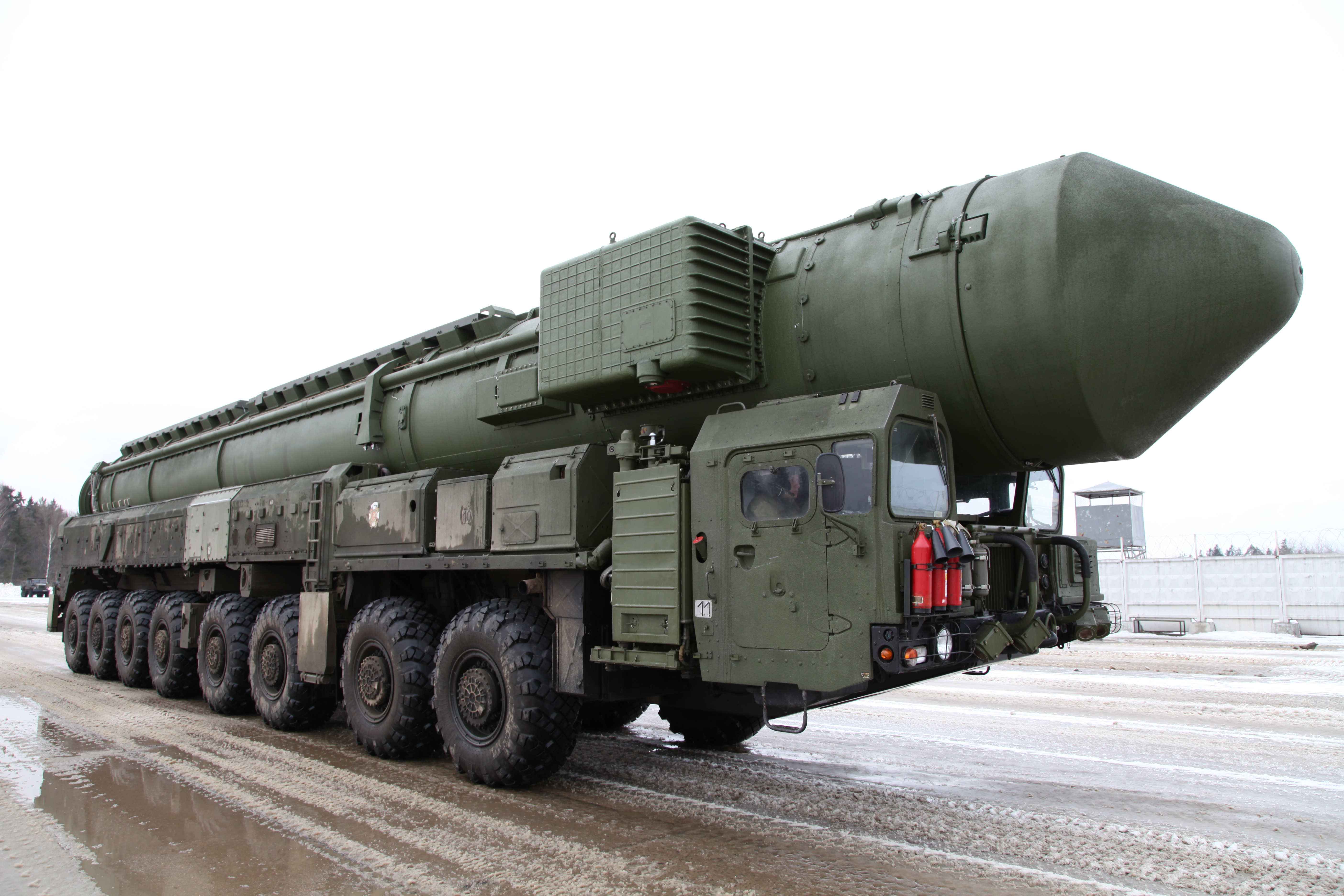
The General Director of the Makeyev State Missile Center, Vladimir Degtyar, said in an interview recently that the serial production of the latest R-28 Sarmat intercontinental ballistic missile has started in Russia.

According to Degtyar, the R-28 Sarmat missile will boost the Russian military’s combat capability over the next 40 to 50 years to ensure the nation’s security. He said this ICBM would become the primary means of the nuclear deterrent and a guarantee of preserving peace in the current geopolitical environment.

This announcement comes at a time when Russia is allegedly reeling through difficult times due to a shortage of missiles in its arsenal. With Ukraine having retaken some of the territories that Moscow occupied in the initial weeks of the operations, there’s a significant need to hold on to other regions in the south.

Last week, the state media reported that Russia had successfully tested the R-28 ICBM silo.

“The flight tests of the Sarmat missile system have been successfully carried out. The Yars road-mobile missile system has also proven its capabilities by launches at the Plesetsk state testing spaceport”, the Defense Ministry said in a statement.

This shows the alacrity with which Russia has developed, tested, and manufactured the monster missile.

The first test of Sarmat was conducted in April 2022, and a month later, in May, the former Roscosmos chairman Dmitry Rogozin, a close aide of Russian President Vladimir Putin, stated that around 48 Satan-2 missiles were in “mass production” and would soon go into combat service.

“Sarmat” (RS-28) will replace “Voevoda” RS- 20V, the most powerful strategic missile in existence. The development of RS-28 Sarmat was started more than a decade ago, in 2011.

The new missile will be able to penetrate enemy missile defense systems and have the ability to travel through both the North and South Poles to deliver multiple reentry vehicles to any location on Earth.

The Sarmat missile system will join the Strategic Missile Forces once the test program is completed. The head missile regiment in the Uzhur missile formation in the Krasnoyarsk Territory is already getting ready to be rearmed with this new missile system.

The induction of this missile in service would further create anxieties in the West about Russian nuclear fear-mongering.

Earlier this year, Russian state television had simulated a nuclear attack on three European capitals, including Paris, Berlin, and London, stating that the Sarmat ICBM with a nuclear warhead would destroy these three cities in less than 200 seconds.

According to Russian media, the ‘most dangerous’ missile on the planet, the RS-28 Sarmat, can deliver a multiple independently targetable reentry vehicle (MIRV) warhead weighing up to 10 tons anywhere in the world.

As per information made public during the Army-2019 exhibition, the Sarmat IICBM’srange is 18,000 kilometers, and the launch weight is more than 200 tons, of which 178 tons is fuel. The missile measures 3 meters in diameter and 35.5 meters in length overall.

eurasiantimes 

Apr 20, 2015

Pentagon: We Can’t Afford to Replace Aging ICBMs, Bombers, Subs

The Defense Department cannot afford to replace its aging nuclear-missile submarines, ICBMs, and long-range strategic bombers unless it gets a funding boost or radical policy changes are made, according to a top Pentagon official.
Even if Congress approves the White House’s 2016 budget for the Pentagon, the Pentagon will find itself $10 billion to $12 short beginning in 2021.
“We don’t have a solution to that problem right now,” Kendall said, asked by a reporter about the plan for funding a replacement for the Navy’s Ohio-class submarines. All more than 30 years old, these “boomers” slip silently around the world’s oceans, waiting for the command to launch their nuclear-tipped ballistic missiles.
The entire U.S. nuclear inventory needs to be upgraded by the 2030s. That includes the submarines, land-based Minuteman intercontinental ballistic missiles and new stealth bomber. Together, the three make up the “nuclear triad,” the cornerstone of America’s deterrent force. The Pentagon also says it needs a new nuclear cruise missile.
defenseone

Nov 1, 2014

Russia Test-Fires Topol-M Intercontinental Ballistic Missile

The Russian Strategic Missile Forces test-fired on Saturday a Topol-M intercontinental ballistic missile from a launch site in northwestern Russia.
The launch was carried out to test Topol-M's technical features. According to the statement, the missile demonstrated its high precision capabilities and overall good performance, hitting a designated target at a test range on Russia's Kamchatka peninsula.
The Defense Ministry said previously that Topol-M and RS-24 ballistic missiles would be the mainstays of the ground-based component of Russia's nuclear triad and would account for no less than 80 percent of the SMF's arsenal by 2016.
ria.ru

Aug 4, 2014

China confirms new generation long range missiles

China has acknowledged the existence of a new intercontinental ballistic missile said to be capable of carrying multiple nuclear warheads as far as the United States.
A military facility in the province was developing Dongfeng-41 (DF-41) missiles.
The DF-41 is designed to have a range of 12,000 kilometers (7,500 miles).
It is “possibly capable of carrying multiple independently targetable re-entry vehicles”, the US Defense Department said in a report in June, referring to a payload of several nuclear warheads.
China’s military is highly secretive, there had not been previously acknowledged the existence of the DF-41.
defencetalk

May 2, 2014

Saudi Arabia displays ballistic missiles for the first time

Saudi Arabia publicly displayed its Dong Feng-3 (DF-3) ballistic missiles for the first time in a 29 April parade.
The parading of the missiles will be seen as the latest Saudi step to publicise its ballistic missile capability.
The DF-3 is a single-stage, liquid-fuel ballistic missile developed by China in the 1960s. It is estimated to have a range of 2,500 km with a 2,000 kg warhead, but suffers from poor accuracy.
It was confirmed in March 1988 that China had transferred an unspecified number of DF-3 missiles with conventional warheads to Saudi Arabia. The estimates of the number of missiles delivered to the kingdom range between 30 and 120.
Other weapons and platforms that were not previously known to have been acquired by Saudi Arabia but which featured in the parade included Oshkosh Mine Resistance Ambush Protected - All Terrain Vehicles (M-ATVs) and M113s that had been upgraded by the Turkish company FNSS into the M901A TOW anti-tank missile launcher variant.
janes

Apr 9, 2014

USA To Shrink 30 B-52 Nuclear-Capable Bombers and Modify Subs to meet New START Obligations


The Pentagon will shrink the number of its nuclear weapon-carrying bomber aircraft and reduce the number of submarine ballistic missile launch tubes as it modifies its force posture to meet the limits of the New START treaty with Russia.
The New START treaty, signed between Washington and Moscow in 2010, sets lower levels for the number of deployed and non-deployed nuclear weapons allowed. Non-deployed status means the delivery system, a bomber, a submarine or an intercontinental ballistic missile (ICBM) launch silo is undergoing maintenance and cannot fire a weapon.
The Air Force will convert 30 B-52 bombers to a conventional-only role, meaning they could not deploy nuclear weapons. That will leave the service with 66 nuclear-capable B-52 and B-2 bombers, 60 of which will be in deployed status.
There are 336 ballistic missile tubes on the Navy’s 14 Ohio-class submarines. Four tubes on each of the Navy’s 14 submarines will be converted, so that they won't be used to launch missiles. The submarine-launched ballistic missile tube limits under New START are 240 deployed and 40 in non-deployed status.
DoD plans to remove warheads from 50 of its 450 ICBM launch silos. The cuts will be distributed across the Air Force’s three ICBM bases in Wyoming, North Dakota and Montana.
Four hundred silos will still have nuclear ICBMs inside. DoD has four additional launch silos that are used for test launches are not impacted by the New START treaty.
The reductions must be made by 2018.
The New START treaty also limits the number of warheads on deployed forces to 1,550.
defensenews

Feb 6, 2014

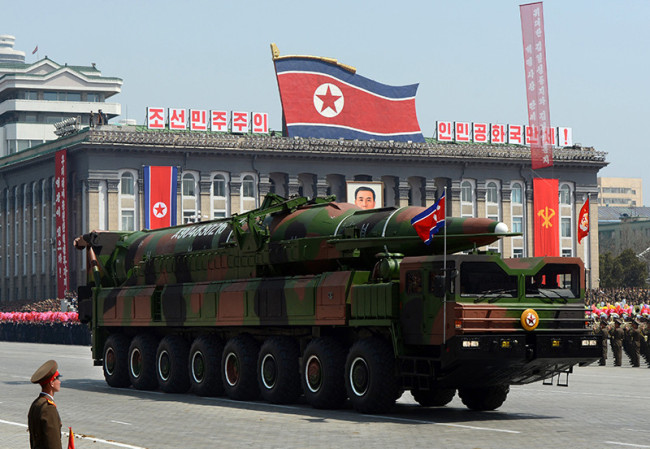
North Korea Developing Mobile Missile


North Korea has taken the initial steps toward fielding a road-mobile intercontinental ballistic missile that could be capable of hitting parts of the U.S., according to U.S. intelligence agencies.
The KN-08 has been been displayed twice in parades, although it remains untested.
North Korea’s missile development, along with concern about Iranian weapons programs, is the principle rationale for the U.S. ground based-missile defense program managed by Boeing, which hasn’t had a successful interception test since December 2008.
The Air Force’s National Air and Space Intelligence Center said in its latest public report last year that the missile, also known as the Hwasong-13, is estimated to have a maximum range of at least 5,500 kilometers (3,420 miles), far enough to reach Alaska but not the Pacific Northwest.
bloomberg

Dec 18, 2013

Russian Missile Forces to Field New Heavy Missile 'Sermat' by 2020


Russia’s Strategic Missile Force will deploy a new heavy intercontinental ballistic missile no later than 2020.
The new silo-based Sarmat ICBM will replace the world’s most powerful nuclear missile, the twenty-five-year-old R-36M2 (SS-18 Satan).
Sarmat is expected to feature advanced countermeasures to enable it to penetrate missile defenses including a complex command and control system and a high degree of maneuverability, he said.
The new system is just one of a number that will totally replace Soviet-era missiles by 2021.
By 2018, Russian nuclear forces will be limited to 1,550 warheads and 700 total deployed strategic nuclear delivery systems including long-range missiles and bombers as part of the New START treaty signed with the United States in 2011.
ria.ru

Oct 31, 2013

Russia Test-Fires Range Of Nuclear-capable Missiles

Russia on Wednesday test-fired a series of short- and long-range nuclear-capable missiles as part of an unannounced check of the readiness of its massive Soviet-era force.
The defense ministry said several ballistic missiles were successfully launched from the Bryansk and Svyatoy Georgy Pobedonosets submarines stationed in the Barents and Okhotsk Seas.
The ground-based strategic forces also fired one Topol and one Voyevod intercontinental ballistic missile from positions in northern and central Russia.
Both missiles hit their assigned targets on the Russian Far East’s Kamchatka Peninsula.
The country’s armed forces also test-fired four Iskander and Tochka-U short-range rockets as well as about 15 S-300 and S-400 air defense missiles that Russia’s produces primarily for export.
Russia is the only country in the world to still fire intercontinental ballistic missiles at specific targets as part of periodic tests.
Most of the launches are performed to either ensure the safety of Russia’s aging arsenal or to test new rockets that could penetrate a missile defense system now gradually being deployed by NATO in Europe.
defensenews

Egypt bids for brand-new Russian SS-25 ballistic missiles

Russian Deputy chief of staff and head of GRU military intelligence, spent the first day of his visit to Cairo, Tuesday, Oct. 29, with Egyptian military chiefs, going through the list of Russian military hardware items they want to buy in their first major arms transaction with Moscow in more than three decades.
Egyp asked Moscow to supply the sort of advanced weapons withheld by the United States, and topped their shopping list with medium-range intercontinental ballistic missiles that cover Iran and most of the Middle East.
They are most likely after the brand-new SS-25 road-mobile ICBM which has a range of 2,000 miles, which the Russians tested earlier this month.
Russia is not entirely comfortable with this demand, having signed a mutual agreement with the US to stop manufacturing medium-range ballistic missiles. And so the sale of SS-25 ICBMs to Egypt could get the Russians in hot water in Washington.
debka.com

Oct 2, 2013

French Air Force’s Nuclear Deterrence Drills with the Mirage 2000N

The French Air Force have conveyed a complex drill whose aim was to test the nuclear capability of the service.
The exercise featured a Mirage 2000N jet carrying ASMP-A missiles and took place on Sept. 23, 2013.
The scenario featured a single Mirage 2000N from 2/4 La Fayette Squadron, based in Avord AB in a mission that lasted 3 hours.
The fighter flew to the operative area at high altitude, joined a C-135FR tanker for in-flight refueling then turned towards the target, low level, using terrain to avoid radar detection and infiltrate the enemy territory.
The ASMP-A missile,without the warhead hit the target as planned.
The ASMP-A missiles are the main French nuclear deterrent since 2009. This is a new generation of ASMP missile with an enhanced, longer range of 500-600 km.
Both Mirage 2000N and Rafale can carry the ASMP-A. Besides that, French nuclear assets include the Le Triomphrant submarines carrying ICBMs .
By Jacek Siminski-theaviationist

Sep 26, 2013

India To Induct Agni-V In 2014

India says it plans to induct the Agni-V ballistic missile into the country’s armed forces by the end of 2014 after the successful launch of the missile last weekend.
The test-firing, the second in two years, was conducted from Wheeler Island off the coast of the eastern state of Odisha. The missile, powered by three-stage solid rocket motors, flew on a predefined path and reached its destination with expected precision.
Jay Menon-aviationweek

Sep 11, 2013

India To Test 5,500-km Agni-V Ballistic Missile On Sunday

The second test of India's 5,500+ km range Agni-V ballistic missile is scheduled for Sunday, Sept 15 from Wheeler Island in the Bay of Bengal. This will be the second test of India's longest range strategic nuclear-capable weapon after its debut test on April 19 last year.
livefistdefence

Jul 17, 2013

China's Sub-Launched Missile Can Hit U.S.

China maintains the fastest-growing fleet of ballistic and cruise missiles on the planet, and soon will deploy a nuclear-tipped, submarine-launched ballistic missile capable of hitting the United States from Chinese waters, according to a new Pentagon report.
Beijing’s new submarine-launched ballistic missile, the JL-2, will for the first time enable Chinese submarines to strike parts of the United States from China’s coastal waters
washingtontimes

Jul 16, 2013

Israel test Jericho ballistic missile

Israel on Friday staged what it said was a planned test of a rocket propulsion system at a military base on the Mediterranean coast.
Israeli media, citing analysts, said the test appeared to be of a version of the Jericho ballistic missile with a range of at least 5,000 kilometers (3,100 miles), easily capable of hitting arch-foe Iran.
defensenews

Jun 20, 2013

Russian ICBMs getting new targeting system to defeat U.S. BMD system

By 2020, all units of Russia’s Strategic Missile Forces (SMF) will be equipped with an advanced targeting system capable of guiding ballistic missiles through US missile defenses.
en.ria

Jun 7, 2013

Russia successfully tests new ballistic missile


A prototype of a new intercontinental ballistic missile (ICBM) has been successfully tested on Thursday, the Russian Defense Ministry said.
The test launch was carried out from a mobile launch pad at the Kapustin Yar testing range in the Astrakhan region. It was intended to check the safety of the launch procedures and equipment and to confirm technical characteristics of the ICBM.
The Russian Strategic Missile Forces currently operates at least 58 silo-based SS-18 Satan ballistic missiles, 160 road-mobile Topol (SS-25 Sickle) missile systems, 50 silo-based and 18 road-mobile Topol-M (SS-27 Sickle B) systems, and 18 RS-24 Yars systems.
rbth.asia

Jun 4, 2013

Russia Plans to Launch 16 ICBMs This Year


Russia's Strategic Missile Forces (SMF) plan to launch 16 intercontinental ballistic missiles (ICBMs) of various types this year.
spacewar

May 5, 2013

French M51 ballistic missile test fails


A French test of an M51 submarine-launched ballistic missile failed on Sunday as it self-destructed off the coast of Brittany, officials said.

spacewar