Translate

Showing posts with label SENTINEL. Show all posts

Mar 17, 2026

Spain Approves €30M for Naval Defense and a Potential Domestic Shield Against Drones and Rockets


The Spanish Council of Ministers has just greenlit a major strategic move to protect its fleet. With a budget of €29.6 million, the government has authorized a framework agreement to supply three advanced ship defense systems over the next six years.

The official reference is brief, but the message is clear: the Spanish Navy (Armada) is prioritizing C-UAS (Counter-Unmanned Aircraft System) and point-defense capabilities to face the "cheap but deadly" threats seen in recent conflicts like the Red Sea.

Focus on National Sovereignty

Everything points towards a "National Product" approach. The Spanish Ministry of Defense has been consistently supporting the domestic industry to ensure technological independence. This framework agreement is likely designed to integrate Spanish-made solutions into the fleet's defensive layers.

Potential National Solutions Under Review

While the specific models have not been officially confirmed, the Spanish defense industry offers several high-tier systems that align with the Navy's requirements:

  • Escribano M&E (Sentinel Series): This company is a key player in remote-controlled weapon stations (RWS). Their Sentinel 30 is already a known quantity for the Navy, providing "hard-kill" capabilities to neutralize drones and surface threats using advanced optronics and ballistic calculation.

  • Indra (Crow System): As a leader in electronic warfare, Indra’s Crow platform is often cited in C-UAS discussions. It offers a comprehensive "soft-kill" approach, using high-precision radars and jamming technology to disrupt drone signals before they reach their target.
  • TRC & Escribano (CERVUS/Guardian): Other domestic developments, such as the CERVUS platform, have already demonstrated effective command-and-control capabilities in countering unmanned aerial threats during military trials, making them strong candidates for naval adaptation.

Why This Investment Matters

The modern naval battlefield has changed. The Armada needs to protect high-value assets, such as the LHD Juan Carlos I or the F-100 frigates, against asymmetric threats. This investment ensures that Spanish vessels are equipped with smart, cost-effective technology to handle "swarm" attacks—where traditional missiles might be over-dimensioned or too expensive to use.

This framework agreement represents a strategic step for the Spanish defense sector, reinforcing the role of local engineering in protecting the nation's interests at sea.

Sep 3, 2016

British Officials Consider Reprieve for Sentinel Fleet

Plans to ax one of the five Sentinel R1 ground surveillance aircraft operated by the British Royal Air Force (RAF) may temporarily be put on hold as officials consider reprieving the jet until a longer-term decision on the fleet's future can be made.
The RAF had been proposing to cut one of the aircraft from the fleet of Raytheon-developed Sentinel aircraft by early October as part of a broader bid to generate cash savings that under new government rules can be ploughed into other equipment budgets rather than being handed back to the Treasury.
One government source said it is now “ likely that the fifth aircraft it will be retained until the end of the financial year” to give time for a decision on longer-term plans for the aircraft.
defensenews

Dec 6, 2015

100th Sortie for RAF Airseeker and Sentinel against ISIS

The Royal Air Force’s newest surveillance aircraft, RC-135 Airseeker, and the RAF Sentinel battlefield surveillance aircraft both reached a major milestone last week as they flew their 100th operational sorties in the fight against ISIL.
raf.mod.uk

Mar 27, 2015

UK To Send Two Sentinel to fight ISIS

UK's Defence Secretary announced that the UK will be sending two Sentinel aircraft to the Middle East to provide wide area surveillance over Iraq of ISIL activity and to track IED laying activity. These aircraft will join our Tornados and Reaper UAV which have conducted 194 strikes over Iraq as of 23 March and have continued to gather vital intelligence alongside Rivet Joint.
The UK continues to be the second largest contributor to the coalition airstrike campaign againts ISIS.
gov.uk

Dec 10, 2014

Canadians, French, U.S. Hunt For Submarine Off Scotland

The U.K. called in assistance to help hunt for a foreign submarine off the west coast of Scotland starting in late November.
Maritime patrol aircraft (MPAs) from France, Canada and the U.S. conducted patrols in conjunction with British surface warships in the search for the submarine in late November and the first week of December, operating out of RAF Lossiemouth in northern Scotland.
The incident began when a periscope was sighted in waters where U.K. and other submarines would normally surface as they head into or out of the Royal Navy’s submarine base at Faslane, home of the U.K.’s ballistic missile submarines.
At the height of the operation, aircraft involved in the hunt included two U.S. Navy P-3 Orions, a single CP-140 Aurora from the Royal Canadian Air Force and a Dassault Atlantique 2 of the French navy. Also involved was one of the U.K.’s Raytheon Sentinel radar-reconnaissance aircraft.
The U.K. defense ministry and the participating air arms have not confirmed they were hunting for a submarine. But a U.K. defense ministry spokesman told Aviation Week that Britain had “requested assistance from allied forces for basing of maritime patrol aircraft at RAF Lossiemouth for a limited period.
Maritime patrol aircraft are occasionally deployed to Scotland, mainly for NATO’s Joint Warrior exercise. Such exercises are usually announced in advance, but November’s deployment was unexpected, with the aircraft and supporting airlifters arriving around Nov. 26. The deployment appeared to end last last week.
The incident comes more than a month after Swedish authorities halted a search for a foreign submarine operating in its territorial waters in the Stockholm archipelago. While the Swedish search was unsuccessful, defense officials said there was no doubt that the country’s waters had been violated by a foreign power.
It is not clear whether the submarine being hunted by the U.K. and other Western nations had entered U.K. territorial waters, or if the maritime patrol aircraft successfully located the sub.
The Sentinel may have been using its radar to try to spot periscope-sized objects on the surface and then cue MPAs onto the target.
On Nov. 28, the U.K. reported it was tracking four Russian warships passing through the Strait of Dover and into the English Channel heading out into the Atlantic. The surface ships included a Ropucha-class landing ship and an Udaloy-class destroyer. These were shadowed by HMS Tyne, a Royal Navy offshore patrol vessel.
The U.K. retired its own fixed-wing maritime patrol capability provided by the Nimrod in 2010, and has been limited to the use of ships and helicopters for the anti-submarine mission.
aviationweek

Oct 29, 2014

UK to upgrade Sentinel R.1s for maritime operations

The United Kingdom is to begin the process of upgrading its fleet of Sentinel R.1 Airborne Stand-Off Radar (ASTOR) surveillance aircraft to conduct maritime operations in mid-2015.
A contract for the development and installation of the maritime-capable software upgrade aboard the Royal Air Force's (RAF's) five aircraft will be signed in spring (Q2) 2015.
This upgrade should enable the Sentinel R.1 to detect surface vessels and potentially submarine periscopes. Additional sensors could be fitted to further boost the platform's maritime surveillance capability.
The Sentinel R.1 was originally slated to be retired in 2015 as a result of budget cuts announced in the Strategic Defence and Security Review (SDSR) in 2010, but an impressive showing in Afghanistan and Libya has prompted the Ministry of Defence (MoD) to delay this until 2018.
janes

Oct 6, 2014

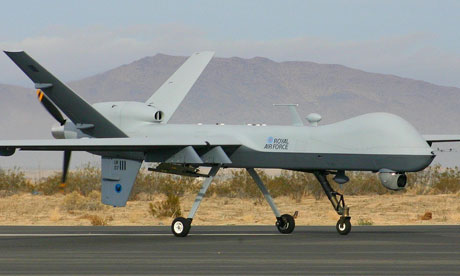
RAF Reaper drones 'bound for Iraq'

Britain’s heavily armed Reaper drones could soon be sent to spy on Isil militants in Iraq according to plans being drawn up by the RAF.
Defence planners are considering sending the remotely-piloted aircraft to the Middle East once they have finished watching over the withdrawal of British troops from Afghanistan.
If the plan is given the go-ahead, the aircraft could be in place around the end of the year.
Britain is currently building up its surveillance planes in Afghanistan to cover the final weeks of the British withdrawal from Helmand. Commanders fearful that the final pull out from Helmand will see British forces at their most vulnerable want as much intelligence as possible to avoid attacks and ambushes.
As well as Reaper drones flying from Kandahar airfield, the RAF has recently sent a Sentinel spy plane that had been in Nigeria searching for schoolgirls kidnapped by Boko Haram. Last week the Army announced it was finally flying its long-awaited Watchkeeper surveillance drone over Afghanistan, just weeks before the pull out from Helmand.
RAF sources said once the withdrawal was complete, the Reapers would need to be packed up and shipped to an airbase in the Middle East, which could take as long as a month.
American drones are flying from bases inside Iraqi territory, but it is not clear which sites the RAF would use.
telegraph

Sep 13, 2013

Boeing Targets Boeing P-8 Against Airbus C-295 for U.K. Sub-Hunter Plane

Boeing is pitching its P-8 maritime-patrol aircraft to the U.K. as Airbus promotes an offshoot of its C-295 turbo-propeller transport plane to meet a British aerial submarine-hunting requirement.
"Looking at the strategic needs of the U.K., the P-8 is a natural fit", said director of business development for the Boeing planeThe U.S. and India are already customers for the maritime surveillance version.
The U.K. has a gap in airborne submarine hunting. It canceled the Nimrod MRA4 program in its 2010 defense review after years of delay and cost overruns. The defense ministry has been assessing alternatives in recent months to address capability shortfalls.
The U.K. has dispatched staff to work with other militaries and help preserve maritime patrol skills under an effort called Project Seedcorn. Some of those personnel are serving as instructors with the U.S. Navy on the P-8.
A British program would probably encompass 8 to 12 aircraft, although the final number would depend on the exact requirement. The P-8 used by the U.S. could be adapted to address unique U.K. needs, as was the case with the Indian aircraft.
Airbus would build its proposal around the C-295 military airlifter in a configuration similar to one already in service with the Chilean military.
The big factor favoring the C-295 is its affordability,with a lower purchase and operations cost. The system would include about six workstations. Introducing the aircraft could happen relatively quickly once a decision to purchase is taken.
Lockheed Martin is another likely contestant. The company has said previously it would promote a maritime patrol system based on its C-130 transport plane. Raytheon Co. (RTN), developer of the British Sentinel R1 ground surveillance plane, also is tracking the maritime patrol program.
The company could upgrade the Sentinel to take on some of the surveillance roles.
The U.K. is still studying how to retain the five Sentinel aircraft in its fleet after it they were earmarked for retirement mid-decade in the last defense review.
bloomberg

Sep 6, 2013

Mystery Flying Wing Drone spotted at Palmdale Air Force Plant 42

Taken from a pilot passing through Palmdale airfield last year, the photo in this post was published by Tyler Rogoway on his Aviationintel.com website.
It shows what appears to be a flying wing type of drone, inside of an aircraft shelter located north of the Northrop Grumman facilities at Air Force Plant 42.
Even if the aircraft, most probably an unmanned one, has a shape seemingly similar to that of the Lockheed Martin RQ-170 Sentinel, it’s actually quite larger than the “Beast of Kandahar” type of unmanned aerial systems, an example of those was captured by Iran in Dec. 2011.
Based on Rogoway’s detailed photo-analysis, the drone sits in 80ft wide shelter. What’s weird is that, although shielded from satellites, and away from the curious eyes of aircraft spotters, the structure hosting the mysterious aircraft is unsealed, a fact that almost completely rules out any possibility the one depicted in the image is a new black project.
Still, it’s really hard to say whether the mysterious drone is a prop, an X-47 mock-up used for testing purposes, a technology demonstrator, a Global Hawk replacement, a small scale unmanned B-2 or a larger Sentinel, or really a new black project (a larger Sentinel).

Image courtesy of Tyler Rogoway/Aviationintel.com

theaviationist

Jul 8, 2013

RAF hopeful of Sentinel role beyond 2014

The future of the RAF’s Sentinel R1 reconnaissance aircraft remains unclear according to service chiefs, despite positive feedback from recent operations in Mali earlier this year.
Speaking at a launch event on 4 July ahead of this weekend’s International Air Show at RAF Waddington, senior service officers said options remained open for the aircraft.
In October 2010, the government’s SDSR announced the Sentinel would be ‘withdrawn once it is no longer required to support operations in Afghanistan’. The main bulk of British forces are due to leave by the close of 2014. However, RAF commanders said any support to Afghan security forces beyond this date would still be classified as a Herrick task.
Additionally, RAF sources said it had not yet begun contemplating winding down the training programmes for pilots, mission commanders and image analysts that is conducted in conjunction with Raytheon at RAF Waddington.
shephardmedia

May 24, 2013

RAF Sentinel back from mission in Mali


An RAF surveillance aircraft has returned back to the UK after nearly four months on operations to return security and stability to Mali.
The Sentinel R1 touched down at its home base at RAF Waddington in Lincolnshire to be welcomed by senior officers who paid tribute to its role supporting French-led military operations against violent extremist groups in the north of the West African country.
raf.mod.uk

Feb 8, 2013

RAF's Sentinel fleet could escape retirement


The UK Ministry of Defence is reviewing its decision to remove the Royal Air Force's Bombardier Global Express-based Sentinel R1 surveillance aircraft from use in 2015, as the capability continues to support military operations in Afghanistan and Mali.

The proposal to retire the synthetic aperture radar- and ground moving target indication sensor-equipped Sentinel fleet and its associated ground exploitation equipment was among a number of controversial announcements contained within the coalition government's Strategic Defence and Security Review (SDSR) of September 2010.
flightglobal

Jan 26, 2013

RAF Sentinel heading to Mali


A British RAF Sentinel R1 spy plane operated by 5(AC) Sqn flew out to join French military operations against al-Qaeda-linked rebels in Mali, raising fears of mission creep as the campaign entered its third week.

telegraph