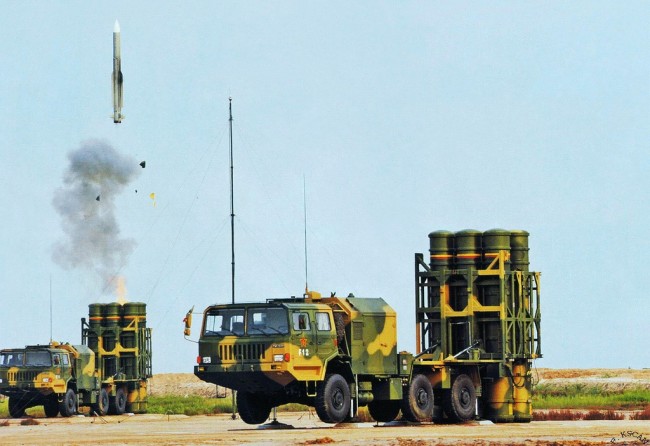
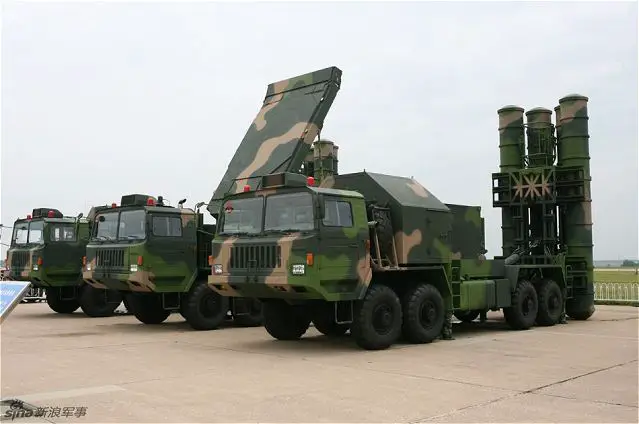
Turkey is still considering purchasing Russia’s S-300 air and missile defense system, according the deputy head of Rosoboronexport— Russia’s state-owned arms exporter.
Turkey is currently looking to spend between $3.4-$4 billion on an air and missile defense system as part of its T-LORAMIDS program. Russia had put in a bid for its Antey-2500 air defense system (the export version of the S-300) for that contract, along with defense companies from Europe, the United States and China..
In September 2013, Turkey shocked many by announcing it had selected the proposal submitted by China (CPMEIC) to jointly develop its HQ-9 system (FT-2000). This raised the hackles of Ankara’s NATO allies, including the United States, who said the HQ-9 system was not interoperable with NATO’s larger, Patriot-based air defense system.
In addition, many NATO allies, including Washington, said that connecting the HQ-9 to NATO’s Patriot systems would leave the latter vulnerable to Chinese espionage. Furthermore, CPMEIC, the maker of the HQ-9, is under U.S. sanctions because of its arms sales to countries like North Korea and Iran.
nationalinterest
Translate
Showing posts with label CPMIEC. Show all posts
May 8, 2015
Sep 9, 2014
Turkey in Talks with Eurosam for Air Defense Deal
Turkey has announced that Ankara opened talks with French-Italian Eurosam Eurosam, maker of the Aster 30, to build a long-range air- and anti-missile system, distancing itself from a Chinese option, after negotiations on a controversial deal with a US-blacklisted Chinese company.
Technical negotiations with China Precision Machinery Import-Export Corp. (CPMIEC) have been dragged into several problematic areas.
In September 2013, Turkey announced CPMIEC would construct the country’s first long-range air and anti-missile defense system.
The Chinese contender defeated a US Patriot air defense system; Russia’s Rosoboronexport S-300; and Italian-French consortium Eurosam, maker of the Aster 30.
Turkish officials said if contract negotiations with CPMIEC fail, talks would be opened with the second-place finisher, Eurosam. Next in line would be the US bidder. The Russian option has been eliminated.
The Turkish government has come under increased pressure from its NATO allies to rethink the decision to work with CPMIEC in the missile defense program.
The Turkish program consists of radar, launcher and interceptor missiles. It has been designed to counter enemy aircraft and missiles.
NATO and US officials have said any Chinese-built system could not be integrated with Turkey’s joint air defense assets with NATO and the United States.
indialive
Technical negotiations with China Precision Machinery Import-Export Corp. (CPMIEC) have been dragged into several problematic areas.
In September 2013, Turkey announced CPMIEC would construct the country’s first long-range air and anti-missile defense system.
The Chinese contender defeated a US Patriot air defense system; Russia’s Rosoboronexport S-300; and Italian-French consortium Eurosam, maker of the Aster 30.
Turkish officials said if contract negotiations with CPMIEC fail, talks would be opened with the second-place finisher, Eurosam. Next in line would be the US bidder. The Russian option has been eliminated.
The Turkish government has come under increased pressure from its NATO allies to rethink the decision to work with CPMIEC in the missile defense program.
The Turkish program consists of radar, launcher and interceptor missiles. It has been designed to counter enemy aircraft and missiles.
NATO and US officials have said any Chinese-built system could not be integrated with Turkey’s joint air defense assets with NATO and the United States.
indialive
May 2, 2014
Turkey Extends Deadline for Disputed Air Defense Bidding
US and European bidders racing to snatch a controversial Turkish contract from their Chinese rival now have until June 30 to submit their renewed proposals, following two three-month extensions instituted by Turkey.
After the previous extension, the bidders had until the end of April to submit bids for Turkey’s first long-range air- and anti-missile defense system, for which it initially selected a Chinese manufacturer.
The bidders comprise a partnership of Raytheon and Lockheed Martin, makers of the Patriot Advanced Capability-3 system, and the European group Eurosam, maker of the Aster 30 missile.
In September, Turkey said it selected China Precision Machinery Import-Export Corp. (CPMIEC) to build the system.
Turkey has been in contract negotiations with CPMIEC, but under increasing pressure from its NATO allies, it also has urged rival US and European bidders to improve their offers.
Turkey said in September that Eurosam’s offer ranked second while the US solution came third. The fourth bidder, the Russian maker of the S-300/400, was eliminated from the contest.
defensenews
After the previous extension, the bidders had until the end of April to submit bids for Turkey’s first long-range air- and anti-missile defense system, for which it initially selected a Chinese manufacturer.
The bidders comprise a partnership of Raytheon and Lockheed Martin, makers of the Patriot Advanced Capability-3 system, and the European group Eurosam, maker of the Aster 30 missile.
In September, Turkey said it selected China Precision Machinery Import-Export Corp. (CPMIEC) to build the system.
Turkey has been in contract negotiations with CPMIEC, but under increasing pressure from its NATO allies, it also has urged rival US and European bidders to improve their offers.
Turkey said in September that Eurosam’s offer ranked second while the US solution came third. The fourth bidder, the Russian maker of the S-300/400, was eliminated from the contest.
defensenews
Mar 11, 2014
Turkey distancing from missile deal with China

Turkey’s defense procurement bureaucracy and industry are increasingly showing signs of weariness over a potential deal with a Chinese arms maker for the construction of the country’s first long-range air and anti-missile system.
Ankara may rethink its September 2013 decision to award the controversial contract to China Precision Machinery Import-Export Corp (CPMIEC).
Turkish companies that would be subcontracted for the air defense system are skeptical about potential corporate consequences because CPMIEC is on a U.S. list of companies that are sanctioned under the Iran, North Korea and Syria Nonproliferation Act, especially Aselsan, designated as the program’s prime local subcontractor.
Industry sources also says several unexpected technical snags had emerged during contract negotiations with CPMIEC.
Turkey has come under strong pressure from its NATO allies since it announced its decision over the T-LORAMIDS. Ankara said it had chosen CPMIEC’s FD-2000 missile-defense system over rival offers from Franco-Italian Eurosam SAMP/T and Raytheon of the United States. It said the decision was based on better price and better terms of technology transfer.
NATO and U.S. officials have said any Chinese-built system could not be integrated with Turkey’s joint air defense assets with NATO and the U.S. and that it may harm Turkey’s relations with the alliance.
hurriyetdailynews
Feb 26, 2014
Allies Intensify Pressure on Turkey Over China Missile Deal
The Turkish government and the country’s largest defense company are under increasing pressure from Turkey’s NATO allies to rethink a September decision to award an air defense contract to a Chinese bidder.
If Turkey finalizes the deal with the Chinese manufacturer, its entire defense cooperation effort with Western counterparts, including defense and non-defense companies, could be jeopardized.
Specifically, officials with Turkish company Aselsan are concerned that its connection to the deal could harm its corporate relations with Western banks.
In September, Turkey selected China Precision Machinery Import-Export Corp. (CPMIEC) to construct the country’s first long-range air and anti-missile defense system. The Turkish government said it opted for the Chinese solution based mainly on deliberations over price and technology transfer.
The Chinese contender defeated a US partnership of Raytheon and Lockheed Martin, offering the Patriot air defense system; Russia’s Rosoboronexport, marketing the S-300; and Italian-French consortium Eurosam, maker of the Aster 30.
Turkish officials said if contract negotiations with CPMIEC fail, talks would be opened with the second-place finisher, Eurosam. Next in line would be the US bidder. The Russian option has been eliminated.
But NATO and US officials have said any Chinese-built system could not be integrated with Turkey’s joint air defense assets with NATO and the United States.
They also have warned that any Turkish company that may act as local subcontractor in the program would face serious US sanctions because CPMIEC is on a US list of companies to be sanctioned under the Iran, North Korea and Syria Nonproliferation Act.
In December, Aselsan, potentially CPMIEC’s main Turkish partner in the contract, became the first casualty of the US sanctions. Bank of America Merrill Lynch, a US investment bank, pulled out of a joint bid to advise Aselsan on its second listing on Istanbul’s stock exchange.
defensenews
If Turkey finalizes the deal with the Chinese manufacturer, its entire defense cooperation effort with Western counterparts, including defense and non-defense companies, could be jeopardized.
Specifically, officials with Turkish company Aselsan are concerned that its connection to the deal could harm its corporate relations with Western banks.
In September, Turkey selected China Precision Machinery Import-Export Corp. (CPMIEC) to construct the country’s first long-range air and anti-missile defense system. The Turkish government said it opted for the Chinese solution based mainly on deliberations over price and technology transfer.
The Chinese contender defeated a US partnership of Raytheon and Lockheed Martin, offering the Patriot air defense system; Russia’s Rosoboronexport, marketing the S-300; and Italian-French consortium Eurosam, maker of the Aster 30.
Turkish officials said if contract negotiations with CPMIEC fail, talks would be opened with the second-place finisher, Eurosam. Next in line would be the US bidder. The Russian option has been eliminated.
But NATO and US officials have said any Chinese-built system could not be integrated with Turkey’s joint air defense assets with NATO and the United States.
They also have warned that any Turkish company that may act as local subcontractor in the program would face serious US sanctions because CPMIEC is on a US list of companies to be sanctioned under the Iran, North Korea and Syria Nonproliferation Act.
In December, Aselsan, potentially CPMIEC’s main Turkish partner in the contract, became the first casualty of the US sanctions. Bank of America Merrill Lynch, a US investment bank, pulled out of a joint bid to advise Aselsan on its second listing on Istanbul’s stock exchange.
defensenews
Dec 16, 2013
US to cut funding on Turkey's Chinese-missile purchase
The U.S. Congress is set to adopt a law next week forbidding Turkey from using American funds to acquire a $4 billion missile system from a Chinese company blacklisted by Washington.
CPMIEC, which makes the HQ-9 missile system, is under U.S. sanctions for selling arms and missile technology to Iran and Syria.
Turkey's move also irritated its allies in NATO, which has said missile systems within the transatlantic military alliance must be compatible with each other.
The annual U.S. defense authorization bill, passed Thursday by the House, contains a clause barring the use of "2014 funds to integrate missile defense systems of the People's Republic of China into U.S. missile defense systems." "Such a system would not be compatible with, and should not be integrated with, missile defense systems of the North Atlantic Treaty Organization," the Senate and House Armed Services Committees said.
Without U.S. subsidies, the cost for Turkey to install the Chinese missiles becomes steeper.
The bill is expected to be approved in the Senate next week, before being signed into law by President Barack Obama.
CPMIEC beat competition from a U.S. partnership of Raytheon and Lockheed Martin, Russia's Rosoboronexport, and Italian-French consortium Eurosam for the multibillion-dollar deal. These companies have until January 31 to submit new bids.
hurriyetdailynews
Nov 13, 2013
Raytheon, Lockheed consider fresh bid for Turkey missile defense
Raytheon and Lockheed Martin are considering ways to sweeten their offer to build a Patriot missile defense system for Turkey after Ankara said it could still back away from a provisional $3.4 billion deal with China.
Turkey announced in September it had chosen China's FD-2000 long-range air and missile defense system against rival offers from Franco/Italian Eurosam SAMP/T and Raytheon.
It said China offered the most competitive terms and would allow co-production in Turkey, but the decision caused alarm in NATO countries worried about China's growing clout.
Secretary of State John Kerry and other U.S. government officials raised concerns after Ankara's choice of the missile defense system built by China Precision Machinery Import and Export Corp, a firm that is under U.S. sanctions for violating the Iran, North Korea and Syria Nonproliferation Act.
Sources familiar with the discussions have said the deal could affect Turkey's plans to buy radar-evading F-35 fighter jets built by Lockheed.
Turkey helped fund development of the F-35 and hopes its participation results in component orders for Turkish firms.
reuters
Turkey announced in September it had chosen China's FD-2000 long-range air and missile defense system against rival offers from Franco/Italian Eurosam SAMP/T and Raytheon.
It said China offered the most competitive terms and would allow co-production in Turkey, but the decision caused alarm in NATO countries worried about China's growing clout.
Secretary of State John Kerry and other U.S. government officials raised concerns after Ankara's choice of the missile defense system built by China Precision Machinery Import and Export Corp, a firm that is under U.S. sanctions for violating the Iran, North Korea and Syria Nonproliferation Act.
Sources familiar with the discussions have said the deal could affect Turkey's plans to buy radar-evading F-35 fighter jets built by Lockheed.
Turkey helped fund development of the F-35 and hopes its participation results in component orders for Turkish firms.
reuters
Etiquetas:
China,
CPMIEC,
F-35,
FD-2000,
JSF,
LOCKHEED MARTIN,
missile,
NATO,
PATRIOT,
Raytheon,
UNITED STATES,
USA
Nov 7, 2013
NATO's top commander questions Turkish missile deal with China
NATO's top military commander urged Turkey on Wednesday to buy a missile defense system that is compatible with other NATO systems
NATO member Turkey said in September it had chosen the FD-2000 missile defense system from China Precision Machinery Import and Export Corp, or CPMIEC, over systems from Russian, U.S. and European firms.
CPMIEC is under U.S. sanctions for violations of the Iran, North Korea and Syria Nonproliferation Act. Turkey later said its decision on the deal was not final.
Turkey has asked the United States to extend the pricing on Raytheon Co's Patriot missile defense system proposal, in a sign that Ankara is keeping its options open in case its talks with CPMIEC fall through.
chicagotribune
NATO member Turkey said in September it had chosen the FD-2000 missile defense system from China Precision Machinery Import and Export Corp, or CPMIEC, over systems from Russian, U.S. and European firms.
CPMIEC is under U.S. sanctions for violations of the Iran, North Korea and Syria Nonproliferation Act. Turkey later said its decision on the deal was not final.
Turkey has asked the United States to extend the pricing on Raytheon Co's Patriot missile defense system proposal, in a sign that Ankara is keeping its options open in case its talks with CPMIEC fall through.
chicagotribune
Oct 28, 2013
Turkey Open To New Bids For Anti-Missile System
Turkey said Saturday it was open to new bids in its plan to acquire its first long-range anti-missile system, should its controversial negotiations with China come to nothing.
Last month, in a move that irritated Turkey’s allies in NATO, particularly the United States, Ankara announced it was entering talks with the China Precision Machinery Export-Import Corporation (CPMIEC) to buy a long-range anti-missile system.
The US said it had “serious concerns” about the deal. Over the past decade the US has hit the Chinese company with a series of sanctions for selling arms and missile technology to Iran and Syria.
CPMIEC, which makes the HQ-9 missile system, beat out competition from a US partnership of Raytheon and Lockheed Martin, Russia’s Rosoboronexport, and Italian-French consortium Eurosam.
Turkish Prime Minister defended the decision to enter into talks with China. “Nobody has the right to intervene in (Turkey’s) independent decisions,” he said.
defensenews
Last month, in a move that irritated Turkey’s allies in NATO, particularly the United States, Ankara announced it was entering talks with the China Precision Machinery Export-Import Corporation (CPMIEC) to buy a long-range anti-missile system.
The US said it had “serious concerns” about the deal. Over the past decade the US has hit the Chinese company with a series of sanctions for selling arms and missile technology to Iran and Syria.
CPMIEC, which makes the HQ-9 missile system, beat out competition from a US partnership of Raytheon and Lockheed Martin, Russia’s Rosoboronexport, and Italian-French consortium Eurosam.
Turkish Prime Minister defended the decision to enter into talks with China. “Nobody has the right to intervene in (Turkey’s) independent decisions,” he said.
defensenews
Oct 25, 2013
US 'Seriously Concerned' About Turkey's Chinese Missile Choice
The United States is “seriously concerned” about NATO ally Turkey’s controversial decision to select a Chinese company for its long-range air and missile defense system.
Ankara’s announcement last month that it was launching discussions with the China Precision Machinery Export-Import Corporation (CPMIEC) for the deal, according to media reports — irritated Turkey’s allies in NATO, particularly the United States.
CPMIEC, which makes the HQ-9 missile system, beat out competition from a US partnership of Raytheon and Lockheed Martin, Russia’s Rosoboronexport, and Italian-French consortium Eurosam.
The Chinese company has been hit by a series of US sanctions over the past decade, accused of selling arms and missile technology to Iran and Pakistan.
NATO said missile systems within the transatlantic military alliance must be compatible with each other.
Turkey launched the tender for 12 missile batteries in 2009. It had previously defended the choice of CPMIEC saying it had offered the best price.
defensenews
Ankara’s announcement last month that it was launching discussions with the China Precision Machinery Export-Import Corporation (CPMIEC) for the deal, according to media reports — irritated Turkey’s allies in NATO, particularly the United States.
CPMIEC, which makes the HQ-9 missile system, beat out competition from a US partnership of Raytheon and Lockheed Martin, Russia’s Rosoboronexport, and Italian-French consortium Eurosam.
The Chinese company has been hit by a series of US sanctions over the past decade, accused of selling arms and missile technology to Iran and Pakistan.
NATO said missile systems within the transatlantic military alliance must be compatible with each other.
Turkey launched the tender for 12 missile batteries in 2009. It had previously defended the choice of CPMIEC saying it had offered the best price.
defensenews
Etiquetas:
China,
CPMIEC,
EUROSAM,
HQ-9,
ITALY,
LOCKHEED MARTIN,
missile,
NATO,
Raytheon,
ROSOBORONEXPORT,
TURKEY,
UNITED STATES,
USA
Oct 3, 2013
Turkey Defends Choice of Chinese Missiles
Turkey on Wednesday defended its decision to enter talks with China to acquire its first long-range anti-missile system, in spite of protests from its ally Washington.
It also made clear that no deal had yet been finalised.
In an official statement last week, Turkey said it has "decided to begin talks with the CPMIEC company of the People's Republic of China for the joint production of the systems and its missiles in Turkey".
China Precision Machinery Export-Import Corp (CPMIEC) beat out competition from a US partnership of Raytheon and Lockheed Martin, Russia's Rosoboronexport, and the Italian-French consortium Eurosamrs in the tender.
The United States reacted with alarm to news that Ankara had chosen the Chinese firm, slapped with US sanctions for delivering arms to Iran and Syria, to build the air defence and anti-missile system.
Turkey wants to build its own long-range air defence and anti-missile architecture to counter both enemy aircraft and missiles.
NATO has also raised concerns over possible compatibility issues between the Chinese-made system and others used within the alliance.
defensenews
It also made clear that no deal had yet been finalised.
In an official statement last week, Turkey said it has "decided to begin talks with the CPMIEC company of the People's Republic of China for the joint production of the systems and its missiles in Turkey".
China Precision Machinery Export-Import Corp (CPMIEC) beat out competition from a US partnership of Raytheon and Lockheed Martin, Russia's Rosoboronexport, and the Italian-French consortium Eurosamrs in the tender.
The United States reacted with alarm to news that Ankara had chosen the Chinese firm, slapped with US sanctions for delivering arms to Iran and Syria, to build the air defence and anti-missile system.
Turkey wants to build its own long-range air defence and anti-missile architecture to counter both enemy aircraft and missiles.
NATO has also raised concerns over possible compatibility issues between the Chinese-made system and others used within the alliance.
defensenews
Etiquetas:
China,
CPMIEC,
FRANCE,
ITALY,
LOCKHEED MARTIN,
missile,
NATO,
Raytheon,
ROSOBORONEXPORT,
RUSSIA,
TURKEY,
UNITED STATES,
USA
Subscribe to:
Posts (Atom)