Translate

Showing posts with label PERUVIAN AIR FORCE. Show all posts

Apr 27, 2026

Peru Considers KC-135 Tanker to Support Future F-16 Fleet — Reports Suggest


As Peru moves closer to fielding the F-16 Block 70, new reports indicate that the Fuerza Aérea del Perú (FAP) could also be evaluating the acquisition of a Boeing KC-135 Stratotanker to support its future fighter fleet.

According to Zona Militar, the tanker option has gained attention following remarks by former FAP commander Enrique Chávez Cateriano, who highlighted the need to align refueling capabilities with the F-16’s boom system.

The logic is clear: integrating a platform like the KC-135 would significantly extend the range and operational flexibility of Peru’s future fighters, while improving interoperability with U.S.-aligned systems.

However, there is no official confirmation of a KC-135 purchase, and current reporting appears to be based on operational considerations rather than a finalized contract.

In short, while the tanker fits naturally into Peru’s modernization plans, it remains a credible option—not a confirmed acquisition.

Apr 21, 2026

Peru May Have Quietly Signed Its F-16 Deal


After more than a decade of evaluations, delays and political twists, Peru’s long-running fighter replacement program may have reached a final point—just not in the way many expected. Multiple defense outlets, including Zona Militar and Pucará Defensa, now suggest that the government has moved forward with the acquisition of the F-16 Block 70, potentially signing a contract away from the public eye.

According to these reports, the deal would cover an initial batch of aircraft—commonly cited as ten single-seat F-16C and two two-seat F-16D variants—forming the first phase of a broader modernization effort for the Peruvian Air Force. The selection itself is not surprising. The F-16 had long emerged as the leading contender, competing against platforms such as the Dassault Rafale and the Saab Gripen E, with geopolitical alignment and operational familiarity often cited as decisive factors.

What makes the situation unusual is the apparent contradiction between these reports and recent public messaging. Only days earlier, officials had indicated that the decision might be postponed, potentially leaving it to the next administration. Yet now, specialized media point to a possible reversal—one that may have culminated in a discreet signing process, reportedly conducted “behind closed doors.”

Crucially, there has been no formal announcement from the Peruvian government, nor confirmation from Lockheed Martin, the manufacturer of the aircraft. Details regarding the total value of the contract, delivery timelines, configuration of the fleet, or potential industrial offsets remain unclear. This lack of transparency has fueled speculation about whether a full contract has indeed been signed, or whether the agreement is still at an advanced but not yet final stage.

Such ambiguity is not entirely unprecedented in defense procurement, particularly in politically sensitive contexts. Large acquisitions can be delayed, reshaped, or quietly advanced depending on internal dynamics, budgetary pressures, and external geopolitical considerations. In Peru’s case, domestic instability and competing priorities may have influenced both the timing and the manner in which the decision has unfolded.

For now, the situation remains in a grey zone. The convergence of reports from multiple specialized outlets suggests that something significant has happened. However, without official confirmation, the status of the deal remains technically unverified.

What seems increasingly clear is that the momentum is firmly behind the F-16. Whether already signed or still pending formalization, Peru appears closer than ever to introducing a new generation of fighter aircraft—marking the most important upgrade of its combat aviation capability in decades.

Feb 1, 2026

Peru Moves Closer to the F-16 Block 70


Peru’s long-running search for a modern multirole fighter appears to be entering a decisive phase. Recent developments surrounding a potential acquisition of the F-16 Block 70/72 point to a growing alignment between Lima and Washington, one that goes beyond aircraft procurement and into the realm of long-term strategic partnership.

The trigger for renewed attention is the formal approval by the United States government of a possible Foreign Military Sale (FMS) to Peru. As part of this notification to the US Congress, Peru requested 12 F-16 Block 70 aircraft (10 single-seat F-16C and 2 dual-seat F-16D) along with engines, AESA radar, weapons integration, training, logistics, and sustainment. The estimated value of the package exceeds USD 3.4 billion, reflecting not just airframes, but a complete capability ecosystem.

An FMS notification is not a signed contract, but it is a critical political and procedural milestone. It confirms that the US government is willing to sell the aircraft, release sensitive technology, and back the programme at a state-to-state level. Without this step, no F-16 deal would be possible at all.

From an operational standpoint, the F-16 Block 70 offers Peru a mature yet future-proof platform. Equipped with the AN/APG-83 AESA radar, modern electronic warfare systems, and full NATO-standard weapons compatibility, the Block 70 is effectively a “new-build Viper” with a projected service life exceeding 8,000 flight hours. For the Fuerza Aérea del Perú (FAP), this would represent a generational leap from its aging Mirage 2000P fleet and long-retired MiG-29s.

The attraction of the F-16 is not limited to performance. The aircraft comes with deep interoperability benefits, particularly with the United States and regional partners already operating the type. Training pipelines, spare parts availability, and upgrade pathways are well established, reducing long-term risk compared to more bespoke solutions.

Strategically, the potential deal signals a clear geopolitical orientation. Choosing the F-16 would anchor Peru firmly within the US security framework in the Americas, reinforcing defence ties at a time when Washington is actively countering Russian and Chinese influence in Latin American defence markets. Fighter aircraft are not neutral purchases; they shape doctrine, training, intelligence sharing, and alignment for decades.

Peru has not yet publicly announced a final decision. Other contenders — notably Saab’s Gripen and Dassault’s Rafale — have been evaluated, and domestic political, budgetary, and industrial considerations remain in play. Financing terms, delivery timelines, and parliamentary approval will ultimately determine whether intent becomes contract.

What can be said with confidence is that the process has moved beyond speculation. An FMS approval places the F-16 Block 70 at the centre of Peru’s fighter replacement effort, not as a theoretical option, but as a politically and technically viable path forward.

If the deal is closed, Peru would join a growing group of air forces opting for advanced yet proven Western fighters, prioritising sustainability and alliance integration over experimentation. For the FAP, it would mark the most significant combat aviation decision since the acquisition of the Mirage 2000 in the 1980s — and one that will define its airpower posture well into the 2040s.

For now, the signal is clear: Peru is not merely shopping for aircraft; it is weighing a strategic realignment, and the F-16 Block 70 sits squarely at the heart of that choice.

Sep 12, 2024

Peru Evaluates Dassault Rafale as Favorite for Air Force Acquisition of 24 Fighter Jets


The Peruvian government has initiated a significant step toward modernizing its Air Force by proposing the acquisition of 24 new fighter jets. Among the options being considered, the Dassault Rafale has emerged as the favorite. This French multi-role fighter, known for its cutting-edge capabilities, is poised to become a central component of Peru's future defense strategy.

A Strategic Decision: Peru's Move Toward Advanced Air Power

In late 2024, Walter Astudillo Chávez, the Peruvian Minister of Defense, announced to the National Defense and Internal Order Commission of Congress that provisions had been made in the 2025 budget for the procurement of new fighter jets. The acquisition is framed as part of a broader plan to enhance the country's military readiness and reinforce its air force capabilities. According to the proposed budget, $2 billion has been allocated for this first phase of the project.

Minister Astudillo emphasized the strategic importance of these new jets, stating that they would provide Peru with a critical level of air deterrence in the region. "Once we acquire these aircraft, we will have a formidable defensive position in South America," he said during a session with Congress. This move reflects a shift in Peru's defense priorities, focusing on strengthening aerial power, particularly after years of underinvestment in air defense capabilities.

The Competitors: Rafale, F-16, and Gripen

Three primary contenders are being considered for the Peruvian Air Force’s (FAP) modernization program: the Dassault Rafale, Lockheed Martin F-16V Block 70, and the SAAB JAS 39 Gripen E. Among these, the Rafale has emerged as the unofficial frontrunner, even though its acquisition cost is relatively high.

The Lockheed Martin F-16 faces certain challenges, primarily related to the unpredictable nature of U.S. foreign policy. Additionally, there have been recent operational issues, such as the unexplained loss of an F-16 donated to Ukraine during an air interdiction mission, raising concerns about its reliability in combat situations. While the F-16 remains a capable and battle-tested fighter, these factors could sway Peru away from its selection.

On the other hand, the Saab Gripen E has garnered interest due to its cost-effective operational capabilities and its association with Embraer and the Brazilian Air Force (FAB). Brazil is set to become a regional hub for the maintenance and upgrading of Gripen fighters, which could offer logistical and operational advantages. However, like the F-16, the Gripen E is an evolution of its original platform, whereas the Rafale is a completely new design, replacing the Mirage 2000, a fighter with which Peru is already familiar.

Why the Dassault Rafale?

The Dassault Rafale stands out for several reasons, and these advantages have positioned it as the likely victor in the Peruvian competition.

First and foremost, the Rafale is the only twin-engine fighter being seriously considered in this phase of the procurement process, which makes it a more robust and capable platform in terms of power and survivability compared to the single-engine F-16 and Gripen E. Its performance in combat situations has been consistently proven, particularly in operations conducted by France in the Middle East and North Africa, where its versatility in both air-to-air and air-to-ground missions has been demonstrated.

Moreover, the Rafale F4, the latest iteration of the fighter, offers state-of-the-art avionics, advanced radar systems, and multi-role capability, which allows it to excel in a variety of mission types, including air superiority, ground support, and reconnaissance. In contrast, the Gripen E is still being developed and integrated into service with the Brazilian Air Force, and the F-16V, while modernized, is a platform with decades of service.

The Rafale’s ability to operate effectively within the NATO framework is another advantage, as it is fully interoperable with NATO systems. This could be particularly beneficial as Peru seeks to modernize its military within the context of broader geopolitical dynamics, aiming to enhance its defense collaboration with Western allies.

A Broader Trend in Latin America

The Dassault Rafale is also gaining momentum across Latin America, as several countries in the region, including Colombia, are seeking to upgrade their aging fighter fleets. In 2021, Colombia selected the Rafale over competitors like the Eurofighter Typhoon, signaling a growing preference for the French aircraft among South American militaries. Although Colombia has not yet finalized the contract, it appears likely that Peru could be the first country in the region to introduce the Rafale into service.

The selection of the Rafale for Peru’s Air Force would represent a significant shift away from the reliance on Russian-made fighters that have historically formed the backbone of the country’s aerial combat capabilities. 


The Peruvian Air Force currently operates MiG-29s and Su-25s purchased from Belarus in the 1990s, as well as Mirage 2000P fighters acquired from France in the 1980s. However, much of this fleet is nearing the end of its operational life, with only a handful of MiG-29s and Su-25s still in service.

Financial Aspects and Offsets

The overall cost of acquiring 24 Rafale jets is estimated at around $3.5 billion, with a significant portion of the funding coming from national debt instruments and sovereign bonds. The initial $2 billion is expected to come from the 2025 national budget, with the remaining balance covered by 2026.

 An essential component of the procurement process is the offset agreement that would accompany the purchase. Peru is looking to secure significant technological and industrial benefits as part of the deal, which would include the transfer of aerospace technology and the development of domestic industrial capabilities in partnership with local private companies. These offsets could play a crucial role in supporting the growth of Peru’s defense industry, creating jobs, and boosting the country’s economy.

The Dassault Rafale offers compelling advantages in this regard, as France has a well-established track record of integrating offset agreements into its defense exports. This could be a deciding factor, as the Peruvian government is keen on securing long-term benefits that go beyond the immediate acquisition of military hardware.

Looking Forward: A Strategic Air Force Modernization

Peru's decision to modernize its air force has been a long time coming, with discussions about upgrading the aging fleet dating back to at least 2013. The final decision will be based on a combination of technical, economic, and offset considerations, with the Dassault Rafale currently leading the pack.

Minister Walter Astudillo Chávez has expressed confidence that this acquisition will allow Peru to "recover its full operational capabilities" and ensure that the Peruvian Air Force can effectively fulfill its constitutional roles in defending the nation. The delivery of the first aircraft is expected by mid-2026, with the full fleet operational by the end of the decade.

In conclusion, while there are other contenders, the Dassault Rafale stands out due to its superior performance, twin-engine reliability, and attractive offset packages. If selected, the Rafale would mark a significant upgrade in Peru’s air combat capabilities and position the country as a regional leader in military aviation.


Jan 22, 2024

Peruvian Air Force Brings DHC-6-300 'Twin Otter' Back into Service


The Maintenance Service of the Peruvian Air Force (SEMAN) of a twin-turboprop light transport aircraft, the DHC-6-300 Twin Otter, to the Peruvian Air Force (FAP). This aircraft, now renamed as DHC-6-300NG, will be part of the 42nd Air Group in Iquitos and will be assigned to the 1st Air Wing in Piura, operating in the northern region of the country.

The aircraft will be used for various missions, including transport and liaison, aeromedical evacuations (MEDEVAC), search and rescue (SAR), and humanitarian aid. The delivery ceremony was attended by the President of the Republic, Dina Boluarte, the Minister of Defense, Jorge Chávez Cresta, and the General of the Air Force, Carlos Chávez Cateriano.

SEMAN's Chief, Major General Víctor García Guguerovich, highlighted the versatility and capabilities of the Twin Otter, especially for operations on unprepared airstrips in emergency situations. It was emphasized that the entire recovery process was carried out with institutional budget, without incurring additional expenses to the state.

President Boluarte praised the work of the military and civilian personnel involved in the repair and maintenance, emphasizing that the aircraft would strengthen the capabilities of the Air Force and contribute to the development and response to various emergencies, including aeromedical transfers.

The aircraft, registered as FAP-312, was originally delivered to the FAP in 1971 and operated in various units before becoming inoperable in 2017 due to a lack of budget allocation. In July 2022, recovery work began at SEMAN, including structural repairs, changes to various components, and the installation of new Pratt & Whitney PT6A-27 engines and multifunction digital displays.

The recovery process will ensure the aircraft's operation for at least another 45,000 flight hours until 2050. Additionally, SEMAN is working on the recovery of another DHC-6-300 (FAP 311), expected to be delivered in May and assigned to the 3rd Air Wing in Arequipa.


Mar 18, 2020

Perú to double number of C-27Js Mi-17s

Peru intends to acquire a range of new fixed- and rotary-wing transport aircraft across its armed forces, in part to bolster the country’s resources to cope with humanitarian relief operations.
The South American country’s shopping list includes additional Leonardo C-27J battlefield transports, heavy transport aircraft – including for in-flight refuelling – more Viking Aircraft DHC-6 Series 400 Twin Otters, plus a substantial number of Mil Mi-17 helicopters.
Peru’s air force already operates four C-27Js and, will buy another two before the end of 2020, with six more to follow over the next three years. In addition, the Peruvian army is considering the twin-turboprop to replace a fleet of three Antonov An-32Bs, all of which are approaching 30 years old.
Peru already operates a substantial fleet of Mi-8/17-series helicopters across the three branches of its armed forces, as well as the country’s national police, and will stick with the Russian-built rotorcraft for future purchases to maintain commonality.
flightglobal

Apr 21, 2015

South Korea, Peru vow to cooperate in KAI T-50

President Park Geun-hye said Monday she agreed with her Peruvian counterpart Ollanta Humala on cooperation in Peru's trainer jet project, a move that could raise the prospect of a South Korean defense firm winning a lucrative deal.
The comments came as Korea Aerospace Industries Ltd., South Korea's sole aircraft manufacturer, is competing with foreign rivals to win a deal worth about US$1 billion for Peru's next-generation light attack aircraft.
KAI has offered its FA-50 supersonic jets.
yonhapnews

Apr 1, 2015

Peruvian Air Force Receives First C-27J Spartan

The official ceremony for the delivery of the first C-27J Spartan to Peru’s Air Force has taken place, in Lima, at Las Palmas base.
This aircraft is part of the contract signed between Alenia Aermacchi and Perú in December 2013.
In December 2014 a second contract was signed for two additional C-27Js bringing to four aircraft the number of these planes ordered by the Peruvian Air Force.
The airplanes’ deliveries will end in 2017 and will be managed by the Air Group n. 8 at the Callao base.
Perú will employ the C-27J as a strategic asset in passenger and cargo transport, humanitarian, fire-fighting, search and rescue and internal security missions.
In addition to Peru the C-27J Spartan has already been ordered by the Air Forces of Italy, Greece, Bulgaria, Lithuania, Romania, Morocco and Slovakia, as well as by the U.S., Mexico, Australia and by an African Country, for a total of 80 airplanes.
aleniaaermacchi

Jan 16, 2015

Peru Orders Two C-27J

The contract, which brings the number of C-27J Spartans ordered by the Peruvian Air Force to four, also includes integrated logistic support and technical assistance. The first two aircraft, ordered in December 2013, will be delivered to FAP in the first few months of 2015, while the second order will be delivered in 2016 and 2017. The aircraft will be operated by 8th Air Group based at Callao, on the country's central coast.
finmeccanica

Dec 3, 2014

Peru receives first deliveries of latest Mi-171Sh helicopters

Russian Helicopters has handed over the first batch of four Mil Mi-171Sh transport utility rotorcraft to Peru for use by its army.
Part of a 24-unit order placed by Peru in December 2013, the helicopters were handed over a month ahead of schedule.
A further four helicopters will be delivered this year, with the remainder following in 2015.
Peru will additionally establish a maintenance facility dedicated to Russian types.
Its three services already operate a combined fleet of 36 Mi-8/17s, alongside 16 Mi-25/35 attack helicopters flown by the air force.
flightglobal

Dec 1, 2014

Peru opts for second batch of C-27Js

Peru has released funds to procure a second batch of two Alenia C-27J Spartan for the Peruvian Air Force.
The second batch of C-27J Spartans will add to the previous two ordered in November 2013.
The first batch is expected to be delivered in March 2015, so it is likely the second batch will arrive around 12 months after that.
The C-27Js will be operated by Transport Squadron 844, which is currently being formed and will operate out of the airbase at Lima-Callao.
janes

Oct 9, 2014

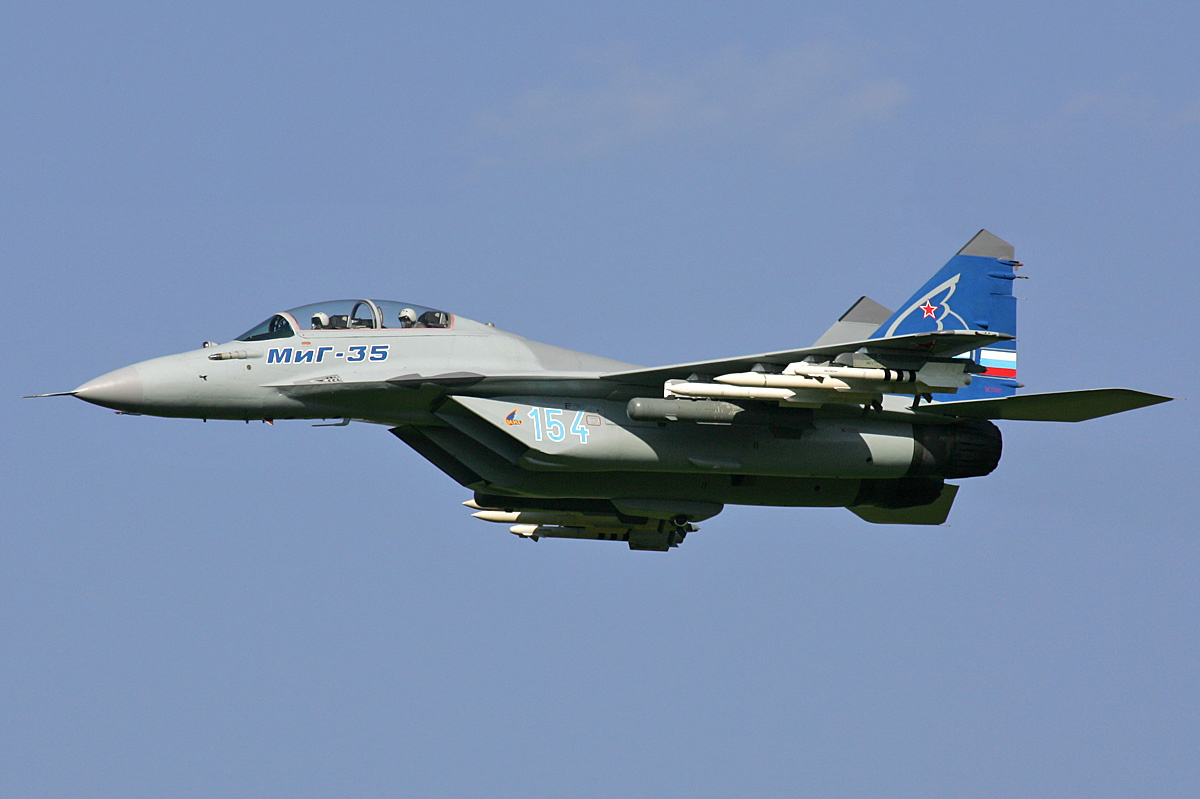
Russia eyes Peruvian MiG-35 sale

Russia's RSK-MiG is seeking to sign a contract with Peru for "more than 10" of the MiG-29-series fighter aircraft's most modern derivative, the MiG-35.
The MiG-35C-9.61 is similar to aircraft that are supposed to be procured by the Russian Air Force - though this order has been delayed to 2016 - and the version that was previously offered to the Indian Air Force for its Medium Multi-Role Combat Aircraft programme.
RSK-MiG's general director, revealed the potential Peruvian deal and said Lima was offered the aircraft a solution to replacing some of its current MiG-29s, many of which are close to 30 years old and are reaching the end of their operational service life.
janes

Jul 27, 2014

Peru orders additional Mi-171Sh helos to combat Shining Path

Peru is to acquire a further eight Mil Mi-17 'Hip' transport and assault helicopters to complement the 24 ordered in late 2013.
The Mi-171Sh-variant helicopters are to be used for counterinsurgency (COIN) operations against the Shining Path insurgent group.
While both the Peruvian Air Force and Army field the Mi-171Sh (three helicopters each), this latest batch will reportedly be operated by the air force.
The first helicopters from this previous order will arrive in Peru in the second half of 2014, with the remainder following in 2015. No timeline was provided for the follow-on order of eight helicopters.
In July 2010 the Peruvian Ministry of Defence (MoD) announced that it was buying six Mi-171Sh and two Mi-35P 'Hind' attack helicopters to augment the seven Mi-24/25 'Hind' and eight Mi-17 helicopters that had been in service since 1983 and 1984 respectively.
Both Mi-35P 'Hind' attack helicopters were delivered in April 2011, with the Mi-171s arriving in two separate batches in May and September of the same year. While the Mi-171s have been shared equally between the air force and the army, both Mi-35s joined the air force.
janes

May 30, 2014

Peru to Get 8 Mi-17 Helicopters in November

Peru's Air Force will receive a delivery of eight new Russian-made helicopters in November, with an additional 16 to come in 2015.
The Mi-171Sh multi-purpose helicopters were sold to Peru in December, and are likely to replace the eight Mi-17 transport helicopters that were sold to Peru in 1984.
The Peruvian government has set aside $11 million to repair and refit the three Mi-171s it bought in 2010, and an additional $2.8 million to overhaul the presidential transport Mi-17-1B.
Russia will build a maintenance and repair center for the helicopters in Peru by 2016. Peru will be able to offer the services of this center to other countries in the region that own Russian helicopters and aircraft like the Su-25 fighter jet.
themoscowtimes

Nov 25, 2013

Peru Orders 2 Alenia Aermacchi C-27Js

Peru has ordered two C-27J tactical transport aircraft from Alenia Aermacchi.
The aircraft has been selected by the Peruvian Air Force after a three-year Peruvian Ministry of Defense selection procedure.
During tests, the aircraft undertook troop and civilian transport, materials and medicine transport, medevac operations, airdrops, search and rescue, humanitarian, homeland security and civil protection missions.
The C-27J has already been ordered by Italy, Greece, Bulgaria, Lithuania, Romania, Morocco, Mexico, the US, Australia and by an undisclosed African country for a total of 74 aircraft. The aircraft has also been selected by Slovakia and the contract is under negotiation.

May 22, 2013

Russia, Peru to Sign MiG-29 Jet Upgrade Deal


Russia and Peru will sign a contract to upgrade Lima’s fleet of Mikoyan MiG-29 Fulcrum fighters by the end of May.

defencetalk

Apr 2, 2013

Peru to Buy 24 Russian Helicopters


Peru’s government will buy 24 Russian Mil Mi-171 (Hip) helicopters worth overall $406.8 million to use them in the fight against drug trafficking and terrorism, local media reported.
La Republica reported that the country’s Defense Ministry has submitted to the Economics Ministry a draft resolution based on a comparative study of Russian helicopters and Eurocopter AS332 Super Pumas and Eurocopter AS532 Cougars.

rian.ru

Mar 27, 2013

Peru mulls replacing aged air force jets


Peru is in talks with Spain and warplane suppliers as part of a low-budget plan to replace aging air force aircraft with second-hand Eurofighters and comparable fighters.
Cost is a major issue for Peruvian President Ollanta Humala, who is looking at competitively priced fighter jets that will fit the national budget.
Peru's cut-price fighter jet competition contrasts with Brazil's multibillion-dollar FX-2 replacement jet fighter program, which has gone on for more than two years without a decision on a final choice.
Peruvian news media said the government would be looking to replace aging fighter jets with Spanish Eurofighters -- or a mixed inventory that could include France's Rafale, Boeing's F/A-18E/F Super Hornet, SAAB's Gripen NG and Russian MiG-35 and Sukhoi Su-30/35.
Industry analysts said Peru was unlikely to buy new aircraft because of cash constraints.
spacemart

Feb 5, 2013

Spain offers Eurofighters to Peru


Spain's government has tendered a proposal to its Peruvian counterpart covering the possible sale of 18 Tranche 1 Eurofighter combat aircraft currently in service with its air force.

Reportedly valued at €45 million ($61 million) per aircraft, the proposal was submitted at the request of the Peruvian defence ministry. If negotiations go forward, the intention would be to transfer all of the fighters to Peru within one year of a contract signature. The airframes have flown an average of around 600h each, sources suggest.

Faced with a looming shortfall in its air defence capabilities, the Peruvian air force has placed requests for information for the Eurofighter Typhoon, as well as for the Boeing F/A-18E/F Super Hornet, Dassault Rafale, RAC MiG-35, Saab Gripen NG and Sukhoi Su-30/35.

flightglobal

Jan 31, 2013

Peru; Spanish MoD offers used Typhoon fighters


Peruvian press reports indicate that the Spanish MoD has offered the Peruvian Air Force (FAP) the sale of used 20 Eurofighter Typhoon combat aircraft Tranche 1 , with approximately 600 flight hours on their airframes.

In the unlikely event of a serious evaluation of the Eurofighter , high cost of maintenance and operation, is that the FAP has reconsidered the use of attack aircraft Su-25 , more appropriate for Army Aviation and / or Naval Aviation and analyze its replacement by means of air superiority to complement the other two types of fighter aircraft in PAF inventory, likely behind the delay in the overhaul of these means of attack.

Defence Market Intelligence