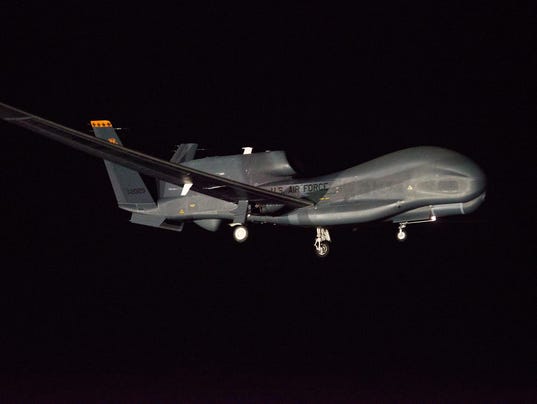
U.S. Ambassador Harry Harris to South Korea said in a tweet Sunday that the Global Hawk high-altitude unmanned aircraft was delivered to South Korea this week, adding that it's a "great day" for the two countries' alliance.
Harris unveiled a picture of a Global Hawk unit parked in a hangar in an unidentified location, with the national flags of the allies hanging on a wall behind. On the body of the aircraft was text reading "the Air Force of the Republic of Korea," in Korean.
yna
Translate
Showing posts with label GLOBAL HAWK. Show all posts
Apr 22, 2020
USA hands over first RQ-4 Global Hawk to ROKAF South Korea
Sep 9, 2018
USAF acknowledged The Crash On An RQ-4 Global Hawk Off the Coast Of Spain Last June
After two months of silence, military U.S. officials have acknowledged the crash and recovery of an Air Force RQ-4 Global Hawk unmanned aerial vehicle from the Atlantic after the massive surveillance drone crashed off the coast of Spain in late June.
The Northrop aircraft was assigned to 348th Reconnaissance Squadron out of Grand Forks Air Force Base, N.D. The Global Hawk went down in the Gulf of Cadiz near the U.S. Navy’s base in Rota, Spain. The crash occurred at about 11 a.m. EDT on June 26.
Navy and Air Force assets were quickly dispatched to help recover the downed Global Hawk, including fleet oiler USNS Arctic (T-AOE-8) as well as a KC-135 refueler from the 100th Air Refueling Wing out of Zaragoza Air Base, Spain. The Global Hawk was taken to Naval Station Rota after the recovery.
The image of the recovered fuselageshows damage to the engine cowling and shorn metal at the rear of the aircraft. The cause of the crash is currently under investigation by the U.S. Air Combat Command.
The crash is the second time in a year the U.S. Air Force has lost a Global Hawk, with a unit cost of $123 million apiece, according to Fiscal Year 2015 figures.
usni
The Northrop aircraft was assigned to 348th Reconnaissance Squadron out of Grand Forks Air Force Base, N.D. The Global Hawk went down in the Gulf of Cadiz near the U.S. Navy’s base in Rota, Spain. The crash occurred at about 11 a.m. EDT on June 26.
Navy and Air Force assets were quickly dispatched to help recover the downed Global Hawk, including fleet oiler USNS Arctic (T-AOE-8) as well as a KC-135 refueler from the 100th Air Refueling Wing out of Zaragoza Air Base, Spain. The Global Hawk was taken to Naval Station Rota after the recovery.
The image of the recovered fuselageshows damage to the engine cowling and shorn metal at the rear of the aircraft. The cause of the crash is currently under investigation by the U.S. Air Combat Command.
The crash is the second time in a year the U.S. Air Force has lost a Global Hawk, with a unit cost of $123 million apiece, according to Fiscal Year 2015 figures.
usni
Jan 3, 2016
First NATO AGS aircraft gets off the ground
The first of five NATO Global Hawk Unmanned Aerial Vehicles (UAVs) conducted a successful first flight in California on Saturday (19 December). Taking off from Palmdale Airbase, NATO Alliance Ground Surveillance (AGS) UAV aircraft successfully soared to 40,000 feet before landing at Edwards Air Force Base 2.5 hours later.
The NATO-owned and operated AGS Core System will enable the Alliance to perform persistent surveillance over wide areas from high-altitude in any weather conditions. The system will give commanders a comprehensive picture of conditions on the ground.
nato
The NATO-owned and operated AGS Core System will enable the Alliance to perform persistent surveillance over wide areas from high-altitude in any weather conditions. The system will give commanders a comprehensive picture of conditions on the ground.
nato
May 18, 2015
Canada Restarts Attempt to Buy Drones
Canada does not have a medium-altitude, long-endurance (MALE) UAV. It uses its CP-140 Aurora maritime patrol aircraft to fulfill the ISR mission against Islamic State extremists in Iraq.
Since 2006, Canada's military has been trying to purchase a fleet of UAVs, but it has faced an uphill battle due to lack of funding.
Air Force officers announced in 2006 that JUSTAS would see the purchase of MALE UAVs, but little has happened on that project.
The Air Force made a pitch to the Canadian government in 2007 for the sole-source purchase of Predator UAVs, built by General Atomics, but that was rejected.
Instead, in 2009 the Canadian military signed a lease arrangement which provided the Heron, made by Israel Aerospace Industries, for operations in Afghanistan. That lease ran from 2009 to 2011.
When the JUSTAS project was active, both MDA and General Atomics indicated they intended to bid.
Northrop Grumman also made an unsolicited offer in 2012 to provide Canada with a fleet of Global Hawks, specifically for Arctic operations, but the Canadian government did not act on that proposal. The Air Force determined that the cost of the Global Hawks was too expensive for the Arctic capability.
defensenews
Since 2006, Canada's military has been trying to purchase a fleet of UAVs, but it has faced an uphill battle due to lack of funding.
Air Force officers announced in 2006 that JUSTAS would see the purchase of MALE UAVs, but little has happened on that project.
The Air Force made a pitch to the Canadian government in 2007 for the sole-source purchase of Predator UAVs, built by General Atomics, but that was rejected.
Instead, in 2009 the Canadian military signed a lease arrangement which provided the Heron, made by Israel Aerospace Industries, for operations in Afghanistan. That lease ran from 2009 to 2011.
When the JUSTAS project was active, both MDA and General Atomics indicated they intended to bid.
Northrop Grumman also made an unsolicited offer in 2012 to provide Canada with a fleet of Global Hawks, specifically for Arctic operations, but the Canadian government did not act on that proposal. The Air Force determined that the cost of the Global Hawks was too expensive for the Arctic capability.
defensenews
Etiquetas:
AFGHANISTAN,
ARCTIC,
CANADA,
CP-140,
DRONE,
GLOBAL HAWK,
HERON,
IRAQ,
ISIS,
ISRAEL,
MALE,
NORTHROP GRUMMAN,
RCAF,
ROYAL CANADIAN AIR FORCE,
Syria,
UAV
May 15, 2015
United States to deploy B-1B bombers and Global Hawk UAVs in Australia
The US plans to station B-1B Lancer bombers and surveillance aircraft in Australia amid rising tensions with Beijing in the South China Sea.
The US plan comes as the Obama administration moves to boost US naval forces and air power in the South China Sea to assert the right of free passage and challenge China's efforts to buttress its maritime territorial claims through the construction of airfields and artificial islands.
US B-52 bombers have previously been temporarily deployed to Darwin, to take part in exercises with the Royal Australian Air Force, in 2012 and in late 2014.
About 1150 US Marines began arriving in Darwin this week for six months training during the Top End's dry season. The marines are the fourth rotation of US troops deployed to the Northern Territory since 2011. The plan is to gradually increase the number of US Marines rotating through Darwin to 2500 troops by 2017.
Disclosed ahead of any statement by the Australian government, the US plan to deploy B-1 bombers and high-altitude remotely piloted Global Hawk surveillance aircraft to Australia comes as part of the US military's broader "pivot" to the Asia-Pacific region.
The US intends to challenge China's claims to sovereignty over large parts of the South China Sea.
airrecognition
The US plan comes as the Obama administration moves to boost US naval forces and air power in the South China Sea to assert the right of free passage and challenge China's efforts to buttress its maritime territorial claims through the construction of airfields and artificial islands.
US B-52 bombers have previously been temporarily deployed to Darwin, to take part in exercises with the Royal Australian Air Force, in 2012 and in late 2014.
About 1150 US Marines began arriving in Darwin this week for six months training during the Top End's dry season. The marines are the fourth rotation of US troops deployed to the Northern Territory since 2011. The plan is to gradually increase the number of US Marines rotating through Darwin to 2500 troops by 2017.
Disclosed ahead of any statement by the Australian government, the US plan to deploy B-1 bombers and high-altitude remotely piloted Global Hawk surveillance aircraft to Australia comes as part of the US military's broader "pivot" to the Asia-Pacific region.
The US intends to challenge China's claims to sovereignty over large parts of the South China Sea.
airrecognition
Etiquetas:
AUSTRALIA,
B-1,
China,
GLOBAL HAWK,
UAV,
UNITED STATES,
US MARINES,
USA,
USMC
Apr 5, 2015
USAF Global Hawks fly reconnaissance missions for South American Countries
The USAF is working to make its RQ-4 Global Hawks available to its allies in Latin America and the Caribbean.
The RQ-4 is useful for finding drug fields and helping plan offensives against rebel groups.
The drones can also map rainforests threatened by illegal logging, survey damage after natural disasters and take part in other missions the Pentagon refers to as “defense support to civil authorities.”
It's not known how frequently Latin American countries have taken advantage of these offers and there aren't examples of actual RQ-4 missions.
medium.com
The RQ-4 is useful for finding drug fields and helping plan offensives against rebel groups.
The drones can also map rainforests threatened by illegal logging, survey damage after natural disasters and take part in other missions the Pentagon refers to as “defense support to civil authorities.”
It's not known how frequently Latin American countries have taken advantage of these offers and there aren't examples of actual RQ-4 missions.
medium.com
Mar 9, 2015
USAF Looks to Global Hawk Upgrades
After multiple attempts to end the Global Hawk Block 30, the US Air Force has now included the high-altitude, long-endurance unmanned system in two straight budget requests, giving a sense of stability to the program — and allowing operators to turn their eyes to future upgrades.
The service had wanted to retire the Global Hawk and funnel that money into keeping the manned U-2 flying. But intense pressure from congressional allies of manufacturer Northrop Grumman kept the Global Hawk alive. Now, it appears set to be the high-altitude option for the future.
In last year's budget, the Air Force sought to retire the U-2 immediately, but Congress again intervened. In this year's budget request, the service instead said it plans to retire the U-2 in 2019, providing a buffer zone during which the Global Hawk can be upgraded.
Northrop announced in February that it had driven flying-hour costs down to $14,876 in 2014. That number was $24,336 in 2013 and $33,598 in 2012. That cost drop occurred as the RQ-4 saw a 40 percent increase in flying hours between 2013 and 2014.
The upgrades needed are a weather radar, a universal payload adapter, which would allow Global Hawk to carry a wider range of electro-optical/infrared sensors, as well as legacy systems such as the U-2's wet film optical bar camera.
The Royal Australian Air Force announced last year it will procure the MQ-4C Triton to meet its maritime surveillance requirement. The Triton, a variation on the RQ-4 being developed for the US Navy, comes equipped with an active, electronically scanned array advanced radar and the ability to go below cloud cover.
Although details are still being finalized, the information released by Australia indicated it plans to purchase seven MQ-4Cs.
defensenews
The service had wanted to retire the Global Hawk and funnel that money into keeping the manned U-2 flying. But intense pressure from congressional allies of manufacturer Northrop Grumman kept the Global Hawk alive. Now, it appears set to be the high-altitude option for the future.
In last year's budget, the Air Force sought to retire the U-2 immediately, but Congress again intervened. In this year's budget request, the service instead said it plans to retire the U-2 in 2019, providing a buffer zone during which the Global Hawk can be upgraded.
Northrop announced in February that it had driven flying-hour costs down to $14,876 in 2014. That number was $24,336 in 2013 and $33,598 in 2012. That cost drop occurred as the RQ-4 saw a 40 percent increase in flying hours between 2013 and 2014.
The upgrades needed are a weather radar, a universal payload adapter, which would allow Global Hawk to carry a wider range of electro-optical/infrared sensors, as well as legacy systems such as the U-2's wet film optical bar camera.
The Royal Australian Air Force announced last year it will procure the MQ-4C Triton to meet its maritime surveillance requirement. The Triton, a variation on the RQ-4 being developed for the US Navy, comes equipped with an active, electronically scanned array advanced radar and the ability to go below cloud cover.
Although details are still being finalized, the information released by Australia indicated it plans to purchase seven MQ-4Cs.
defensenews
Etiquetas:
AUSTRALIA,
GLOBAL HAWK,
MQ-4C,
RAAF,
ROYAL AUSTRALIAN AIR FORCE,
RQ-4,
TRITON,
U-2,
UNITED STATES,
USA,
USAF
Feb 20, 2015
USAF May be Forced to retire U-2 and Global Hawk In 2016 Due to sequestration
The USAF may be forced to retire its U-2 and RQ-4 Global Hawk Block 40 ISR aircraft if sequestration is not eliminated in Fiscal Year 2016 (FY16).
Though the Pentagon has wavered over which programme to retire in the prior two budget cycles, both the U-2 and the RQ-4 are fully funded in the department's FY16 budget request. The document states that the U-2 would be divested in 2019 after sensors for the Global Hawk are upgraded.
The U-2's sensors have a range of about 160 km, while the Global Hawk has a range of about 95 km.
The Global Hawk needs nearly USD2 billion in upgrades over approximately six years so that it can complete all the missions done by the manned U-2. The necessary work consists of upgrades to ground stations, communications and imagery capability, and the Global Hawk's weather radar.
janes
Though the Pentagon has wavered over which programme to retire in the prior two budget cycles, both the U-2 and the RQ-4 are fully funded in the department's FY16 budget request. The document states that the U-2 would be divested in 2019 after sensors for the Global Hawk are upgraded.
The U-2's sensors have a range of about 160 km, while the Global Hawk has a range of about 95 km.
The Global Hawk needs nearly USD2 billion in upgrades over approximately six years so that it can complete all the missions done by the manned U-2. The necessary work consists of upgrades to ground stations, communications and imagery capability, and the Global Hawk's weather radar.
janes
Etiquetas:
GLOBAL HAWK,
RQ-4,
U-2,
UAV,
UNITED STATES,
USA,
USAF
Feb 3, 2015
Northrop Grumman to Start Production on Republic of Korea Global Hawks
Northrop Grumman will begin production of four RQ-4 Global Hawk for the Republic of Korea's Air Force.
The contract announcement follows procurement decisions made by the Japanese and Australian governments to purchase the Global Hawk and the MQ-4C Triton.
globenewswire
The contract announcement follows procurement decisions made by the Japanese and Australian governments to purchase the Global Hawk and the MQ-4C Triton.
globenewswire
Etiquetas:
AUSTRALIA,
GLOBAL HAWK,
Japan,
JASDF,
MQ-4C,
NORTHROP GRUMMAN,
RAAF,
ROKAF,
ROYAL AUSTRALIAN AIR FORCE,
RQ-4,
SOUTH KOREA,
TRITON,
UNITED STATES,
USA
Dec 17, 2014
South Korea signs Global Hawk deal for 2017-2019 delivery
South Korea has signed a USD657.4 million Foreign Military Sales contract for four Northrop Grumman RQ-4B Block 30 Global Hawk unmanned aerial vehicles (UAVs), two spare engines, and two ground control systems, the US Department of Defense announced on 16 December.
Deliveries are to begin by 2017 and will be complete by 2019. South Korea first expressed interest in the Global Hawk in 2005 and made a formal request for aircraft in 2009.
The Block 30 Global Hawk's synthetic aperture radar will be helpful in penetrating the mist that often obscures parts of the Korean peninsula, while the system's endurance of some 35 hours and ability to operate at altitudes of 50,000 to 65,000 ft (15,240 to 19,810 m) will provide Seoul with a persistent intelligence, surveillance, and reconnaissance (ISR) capability.
South Korea has always been heavily dependent on US ISR assets for its security. The Global Hawk purchase is the first step in giving it an independent ISR capability.
janes
Deliveries are to begin by 2017 and will be complete by 2019. South Korea first expressed interest in the Global Hawk in 2005 and made a formal request for aircraft in 2009.
The Block 30 Global Hawk's synthetic aperture radar will be helpful in penetrating the mist that often obscures parts of the Korean peninsula, while the system's endurance of some 35 hours and ability to operate at altitudes of 50,000 to 65,000 ft (15,240 to 19,810 m) will provide Seoul with a persistent intelligence, surveillance, and reconnaissance (ISR) capability.
South Korea has always been heavily dependent on US ISR assets for its security. The Global Hawk purchase is the first step in giving it an independent ISR capability.
janes
Etiquetas:
DRONE,
DSCA,
FMS,
GLOBAL HAWK,
North Korea,
ROKAF,
SOUTH KOREA,
UAV,
UNITED STATES,
USA,
USAF
Nov 28, 2014
Lockheed Offers Unmanned U-2 Concept
U-2 advocates push optionally manned variant as a rival to Global Hawk.
Lockheed Martin has crafted a reduced-cost plan to “optionally man” its U-2, throwing a new possibility into the mix as Congress weighs whether to shift to an Global Hawk unmanned aircraft fleet for high-altitude reconnaissance. With an optionally manned U-2, advocates for the so-called Dragon Lady say the venerable aircraft finally can match the endurance offered by the RQ-4B Global Hawk.
Amy Butler-aviationweek
Lockheed Martin has crafted a reduced-cost plan to “optionally man” its U-2, throwing a new possibility into the mix as Congress weighs whether to shift to an Global Hawk unmanned aircraft fleet for high-altitude reconnaissance. With an optionally manned U-2, advocates for the so-called Dragon Lady say the venerable aircraft finally can match the endurance offered by the RQ-4B Global Hawk.
Amy Butler-aviationweek
Etiquetas:
DRONE,
GLOBAL HAWK,
LOCKHEED MARTIN,
U-2,
UAV,
UNITED STATES,
USA
Nov 21, 2014
Japan selects Global Hawk
Japan’s Ministry of Defense has officially announced the selection of Northrup Grumman’s Global Hawk.
mod.go.jp
mod.go.jp
Oct 5, 2014
Germany wants to revive Euro Hawk
German Defence Minister wants to revive the high-altitude reconnaissance drone Euro Hawk after the government backed away from plans to buy some last year.
Frankfurter Allgemeine Sonntagszeitung said it had learnt from the defence ministry that it wanted "to get the Euro Hawk drone out of the garage" to be able to test a reconnaissance system for it.
The result of a defence assessment is due to be handed to the ministry on Monday.
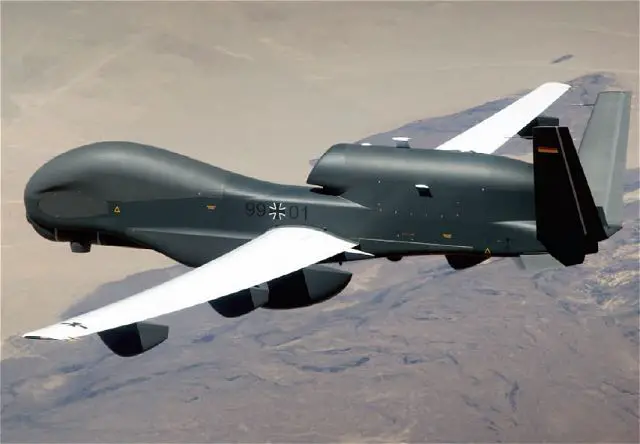
Germany backed away last year from its plan to buy four more Euro Hawk drones, which Northrop Grumman Corp developed with Airbus based on the Global Hawk design.
Meeting the standards required to win aviation approval would cost 500 million to 600 million euros. But Northrop remains in long-running talks with the country about the stalled purchase.
The German armed forces had in recent months tested whether the reconnaissance system could be used on other platforms but had found that they could not be.
It said if tests with the Euro Hawk prototypes proved successful, a carrier would need to be purchased and a new version of the Global Hawk was probably the only system that would be considered. The Euro Hawk is based on the Global Hawk.
German news magazine Spiegel also said the Euro Hawk was under discussion again after consulting firm KPMG recommended in a report due to be presented this week remedying gaps in reconnaissance technology equipment in the armed forces with an 'unmanned' aircraft as a carrier.
reuters
Frankfurter Allgemeine Sonntagszeitung said it had learnt from the defence ministry that it wanted "to get the Euro Hawk drone out of the garage" to be able to test a reconnaissance system for it.
The result of a defence assessment is due to be handed to the ministry on Monday.
Germany backed away last year from its plan to buy four more Euro Hawk drones, which Northrop Grumman Corp developed with Airbus based on the Global Hawk design.
Meeting the standards required to win aviation approval would cost 500 million to 600 million euros. But Northrop remains in long-running talks with the country about the stalled purchase.
The German armed forces had in recent months tested whether the reconnaissance system could be used on other platforms but had found that they could not be.
It said if tests with the Euro Hawk prototypes proved successful, a carrier would need to be purchased and a new version of the Global Hawk was probably the only system that would be considered. The Euro Hawk is based on the Global Hawk.
German news magazine Spiegel also said the Euro Hawk was under discussion again after consulting firm KPMG recommended in a report due to be presented this week remedying gaps in reconnaissance technology equipment in the armed forces with an 'unmanned' aircraft as a carrier.
reuters
Etiquetas:
AIRBUS DEFENCE AND SPACE,
EURO HAWK,
GERMANY,
GLOBAL HAWK,
Luftwaffe,
NORTHROP GRUMMAN
Sep 22, 2014
USAF Air Combat Command chief reluctantly accepts Global Hawk over U-2
While the plan to keep new, unmanned Global Hawks over the aging manned U-2 has support among top Defense Department officials, the top combat general in the Air Force says it is not the best military solution.
The Air Force, in its fiscal 2015 budget proposal calls for retiring the entire U-2 fleet and continuing to buy RQ-4 Global Hawks to handle high-altitude intelligence, surveillance and reconnaissance. The plan reverses previous Air Force attempts to retire the large drones. Officials have said the reversal is possible because Northrop Grumman and Global Hawk crews have been able to reduce the cost of flying the aircraft.
militarytimes
The Air Force, in its fiscal 2015 budget proposal calls for retiring the entire U-2 fleet and continuing to buy RQ-4 Global Hawks to handle high-altitude intelligence, surveillance and reconnaissance. The plan reverses previous Air Force attempts to retire the large drones. Officials have said the reversal is possible because Northrop Grumman and Global Hawk crews have been able to reduce the cost of flying the aircraft.
militarytimes
Jun 11, 2014
Global Hawk needs USD1.9 billion in upgrades before U-2 can retire
The RQ-4 Global Hawk unmanned surveillance aircraft still needs upgrades so that it can complete all the missions done by the manned Lockheed U-2, which the US Air Force (USAF) wants to retire to save money.
The necessary work consists of upgrades to ground stations, communications and imagery capability, and the Global Hawk's weather radar.
According to a USAF spokesman, the entire effort would cost USD1.9 billion over six years.
The service earlier this year reversed course on its 2012 plan to divest its new fleet of Global Hawk Block 30 and is now proposing to retire its U-2 fleet instead.
Just two years ago, the USAF said that the Global Hawk was too costly to fly. At the time, the air service's plan to mothball the UAVs was met with strong resistance in Congress.
This year, the Department of Defense said that it has been able to reduce the cost of flying RQ-4s and that it would prefer to retire the U-2 instead.
janes
The necessary work consists of upgrades to ground stations, communications and imagery capability, and the Global Hawk's weather radar.
According to a USAF spokesman, the entire effort would cost USD1.9 billion over six years.
The service earlier this year reversed course on its 2012 plan to divest its new fleet of Global Hawk Block 30 and is now proposing to retire its U-2 fleet instead.
Just two years ago, the USAF said that the Global Hawk was too costly to fly. At the time, the air service's plan to mothball the UAVs was met with strong resistance in Congress.
This year, the Department of Defense said that it has been able to reduce the cost of flying RQ-4s and that it would prefer to retire the U-2 instead.
janes
Jun 5, 2014
U.S. Global Hawks Operate in U.K. and Japan
The U.S. Air Force’s fleet of RQ-4B Global Hawks has been busy in recent days, touching down in Japan and participating in NATO exercises over the U.K. for the first time.
A 40-man strong Global Hawk detachment arrived at Misawa Air Base in Japan on May 24. However, the Air Force did not release how many Global Hawk air vehicles are currently operating out of Misawa. The unit will operate out of the northern Japanese base until October.
Meanwhile on the other globe, the United Kingdom (UK) Ministry of Defence (MOD) released a statement saying that Global Hawks had operated over Britain for the first time on May 29 during a NATO exercise called Unified Vision 2014.
According to the MOD, the Global Hawk flights were aimed at assisting in the development of the NATO Alliance Ground Surveillance (AGS) system. The AGS will comprise of five modified Block 40 Global Hawks equipped with a ground-surveillance radar.
usni
A 40-man strong Global Hawk detachment arrived at Misawa Air Base in Japan on May 24. However, the Air Force did not release how many Global Hawk air vehicles are currently operating out of Misawa. The unit will operate out of the northern Japanese base until October.
Meanwhile on the other globe, the United Kingdom (UK) Ministry of Defence (MOD) released a statement saying that Global Hawks had operated over Britain for the first time on May 29 during a NATO exercise called Unified Vision 2014.
According to the MOD, the Global Hawk flights were aimed at assisting in the development of the NATO Alliance Ground Surveillance (AGS) system. The AGS will comprise of five modified Block 40 Global Hawks equipped with a ground-surveillance radar.
usni
Etiquetas:
DRONE,
GLOBAL HAWK,
Japan,
NATO,
UAV,
UK,
UNITED KINGDOM,
UNITED STATES,
USA,
USAF
May 20, 2014
USAF assisting search for missing girls in Nigeria
The Air Force is flying manned MC-12W Liberty and unmanned RQ-4 Global Hawk surveillance sorties over Nigeria to assist in locating more than 200 girls kidnapped by militants.
The Nigerian government requested the flights.
On April 15, the militant group Boko Haram kidnapped the girls from their school. The group said it is open to exchanging the students for the release of terrorists imprisoned in Nigeria.
The Defense Department has sent more than 10 personnel to the country to help with the search. The troops are trained in intelligence, communications and logistics.
The Defense Department would not release the number of sorties or the specific origin of the flights “due to operational security concerns.
The department is not sharing the intelligence directly with the Nigerian government.
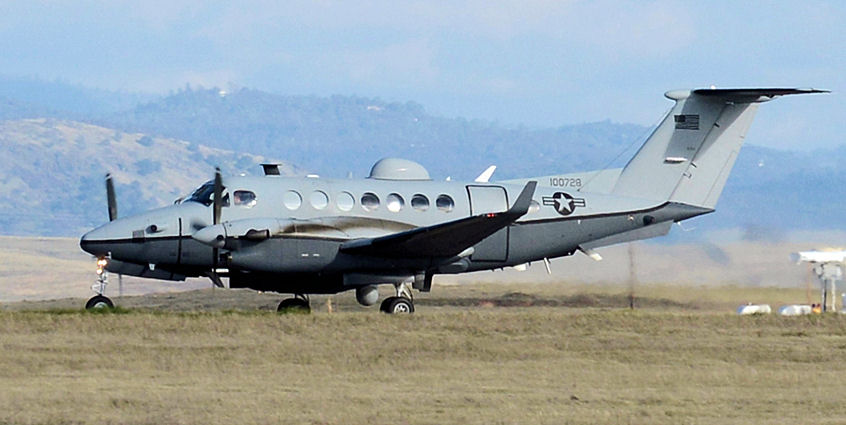
The MC-12W Liberty manned aircraft is a modified Hawker Beechcraft Super King Air 350 outfitted with sensors and cameras. The aircraft has seen extensive use in Afghanistan. The RQ-4 Global Hawk is the Air Force’s largest remotely piloted aircraft, and has been deployed to provide high-altitude surveillance. Global Hawks have deployed to the Middle East and flown “treaty verification” missions in the Middle East.
airforcetimes
The Nigerian government requested the flights.
On April 15, the militant group Boko Haram kidnapped the girls from their school. The group said it is open to exchanging the students for the release of terrorists imprisoned in Nigeria.
The Defense Department has sent more than 10 personnel to the country to help with the search. The troops are trained in intelligence, communications and logistics.
The Defense Department would not release the number of sorties or the specific origin of the flights “due to operational security concerns.
The department is not sharing the intelligence directly with the Nigerian government.
The MC-12W Liberty manned aircraft is a modified Hawker Beechcraft Super King Air 350 outfitted with sensors and cameras. The aircraft has seen extensive use in Afghanistan. The RQ-4 Global Hawk is the Air Force’s largest remotely piloted aircraft, and has been deployed to provide high-altitude surveillance. Global Hawks have deployed to the Middle East and flown “treaty verification” missions in the Middle East.
airforcetimes
Etiquetas:
BEECHCRAFT,
Boko Haram,
DRONE,
GLOBAL HAWK,
HAWKER,
KING AIR,
MC-12,
NIGERIA,
RQ-4,
UAV,
UNITED STATES,
USA,
USAF
Apr 17, 2014
N. Korea's Drones Prompt Seoul To Seek Radars
In the wake of suspected infiltration by unmanned aircraft presumed to be made in North Korea, Seoul has laid out plans to buy low-altitude radars to help detect enemy drones.
In recent weeks, three crashed UAVs were discovered near the border areas, including on an island just south of the sea border between the two countries.
Painted sky-blue, the planes were less than 2 meters in length and width and were equipped with Japanese Nikon digital cameras to take pictures of key military installations, as well as the presidential office in central Seoul.
Receiving a barrage of criticism for its air security loophole, the South Korean military said it is considering buying Israel’s RPS-42 Tactical Air Surveillance Radar System.
The system is fitted with an active electronically scanned array radar built by RADA Electronic Industries, and it can detect aerial objects within a radius of 30 kilometers. The radar is also known to detect a 2-meter-long object within 10 kilometers.
The South Korean military operates TPS-840K missile control and ground surveillance radars, but these are not known for being able to detect a non-metal object less than 2 meters wide.
The military also is considering modifying UK-made multipurpose radars for UAV detection. Twenty-four Blighter electronic scanning radars, developed by Plextek, are being operated in South Korea.
Blighter is a long-range ground surveillance radar suited to detecting moving vehicles and people.
In the latest test, the radar detected a UAV 10 kilometers away and a helicopter-borne camera 1.5 kilometers away.
The military asked Plextek to modify the radar enough to spot a UAV that is less than 2 meters.
On top of the radar, the military is pushing to acquire more thermal observation devices and multipurpose telescopes.
A laser weapon system that can destroy an approaching UAV is being considered for integration with the low-altitude radar. A candidate is a system made by Germany’s Rheinmetall Defence.
In bids to bolster the air security in the South, Seoul and Washington plan to define threats of North Korean drones and come up with countermeasures as part of their joint military operational plans.
The military made locally built UAVs public on April 8 amid criticism for failing to counter North Korea’s UAV threats.
One of them is the Remoeye-006, developed by Uconsystem. It is 1.72 meters long, 2.72 meters wide and weighs 6.5 kilograms.
The Remoeye-006 can conduct missions at day and night with infrared cameras and relay data in real time. It can fly up to 12 hours at a maximum speed of 75 kilometers per hour.
South Korea also operates the RQ-101 Songgolmae UAV built by Korea Aerospace Industries. Its camera can swivel around to offer panoramic pictures covering up to 20 kilometers during the day and 10 kilometers at night. It is 5 meters long and 6.2 meters wide and can fly at a maximum speed of 150 kilometers per hour.
South Korea is introducing medium- and high-altitude UAVs in coming years. Last month, the Defense Ministry announced it would buy four Global Hawks from Northrop Grumman million with the first delivery by 2018.
North Korea is believed to have about 300 reconnaissance drones and about 10 Russian-made Shmel UAVs carrying bombs.
Drones called Banghyeon are said to have been remodeled Chinese-made D-4 UAVs. Each drone’s fuselage is estimated to be 3.6 meters long with a wingspan of 4.8 meters. The UAV is believed to fly at a maximum speed of 160 kilometers per hour.
The Shmel is a short-range UAV that the North is believed to have procured in the 1990s. With a range of 60 kilometers, it can fly at a maximum speed of 150 kilometers per hour.
defensenews
In recent weeks, three crashed UAVs were discovered near the border areas, including on an island just south of the sea border between the two countries.
Painted sky-blue, the planes were less than 2 meters in length and width and were equipped with Japanese Nikon digital cameras to take pictures of key military installations, as well as the presidential office in central Seoul.
Receiving a barrage of criticism for its air security loophole, the South Korean military said it is considering buying Israel’s RPS-42 Tactical Air Surveillance Radar System.
The system is fitted with an active electronically scanned array radar built by RADA Electronic Industries, and it can detect aerial objects within a radius of 30 kilometers. The radar is also known to detect a 2-meter-long object within 10 kilometers.
The South Korean military operates TPS-840K missile control and ground surveillance radars, but these are not known for being able to detect a non-metal object less than 2 meters wide.
The military also is considering modifying UK-made multipurpose radars for UAV detection. Twenty-four Blighter electronic scanning radars, developed by Plextek, are being operated in South Korea.
Blighter is a long-range ground surveillance radar suited to detecting moving vehicles and people.
In the latest test, the radar detected a UAV 10 kilometers away and a helicopter-borne camera 1.5 kilometers away.
The military asked Plextek to modify the radar enough to spot a UAV that is less than 2 meters.
On top of the radar, the military is pushing to acquire more thermal observation devices and multipurpose telescopes.
A laser weapon system that can destroy an approaching UAV is being considered for integration with the low-altitude radar. A candidate is a system made by Germany’s Rheinmetall Defence.
In bids to bolster the air security in the South, Seoul and Washington plan to define threats of North Korean drones and come up with countermeasures as part of their joint military operational plans.
The military made locally built UAVs public on April 8 amid criticism for failing to counter North Korea’s UAV threats.
One of them is the Remoeye-006, developed by Uconsystem. It is 1.72 meters long, 2.72 meters wide and weighs 6.5 kilograms.
The Remoeye-006 can conduct missions at day and night with infrared cameras and relay data in real time. It can fly up to 12 hours at a maximum speed of 75 kilometers per hour.
South Korea also operates the RQ-101 Songgolmae UAV built by Korea Aerospace Industries. Its camera can swivel around to offer panoramic pictures covering up to 20 kilometers during the day and 10 kilometers at night. It is 5 meters long and 6.2 meters wide and can fly at a maximum speed of 150 kilometers per hour.
South Korea is introducing medium- and high-altitude UAVs in coming years. Last month, the Defense Ministry announced it would buy four Global Hawks from Northrop Grumman million with the first delivery by 2018.
North Korea is believed to have about 300 reconnaissance drones and about 10 Russian-made Shmel UAVs carrying bombs.
Drones called Banghyeon are said to have been remodeled Chinese-made D-4 UAVs. Each drone’s fuselage is estimated to be 3.6 meters long with a wingspan of 4.8 meters. The UAV is believed to fly at a maximum speed of 160 kilometers per hour.
The Shmel is a short-range UAV that the North is believed to have procured in the 1990s. With a range of 60 kilometers, it can fly at a maximum speed of 150 kilometers per hour.
defensenews
Etiquetas:
DRONE,
ELBIT,
GLOBAL HAWK,
ISRAEL,
North Korea,
NORTHROP GRUMMAN,
SOUTH KOREA,
UAV
Mar 31, 2014
Scrapping U-2 Won't Save As Much As Touted
Retiring all of its U-2 spy planes and replacing them with Global Hawk UAVs won’t save as much money as the US Air Force had said it would, since the unmanned systems will need upgrades to handle the mission, according to experts and service data.
To upgrade Northrop Grumman’s Block 30 Global Hawk, the Air Force intends to invest about $1.77 billion over the next 10 years. About $500 million of that is marked for a universal payload adapter that would allow U-2 sensors to be attached to the RQ-4 Global Hawk.
The Pentagon’s fiscal 2015 budget proposal submitted this month recommends retiring the U-2 fleet, which the Air Force has said will save about $2.2 billion. Subtract the $1.77 billion needed to upgrade the Global Hawk, and the savings drop to only $430 million.
The two aircraft perform a similar high-altitude ISR mission. But as recently as February, service leaders argued that the Global Hawk does not meet the full capabilities of the U-2 at a higher cost, and that politics was behind the push to keep the Global Hawk.
defensenews
To upgrade Northrop Grumman’s Block 30 Global Hawk, the Air Force intends to invest about $1.77 billion over the next 10 years. About $500 million of that is marked for a universal payload adapter that would allow U-2 sensors to be attached to the RQ-4 Global Hawk.
The Pentagon’s fiscal 2015 budget proposal submitted this month recommends retiring the U-2 fleet, which the Air Force has said will save about $2.2 billion. Subtract the $1.77 billion needed to upgrade the Global Hawk, and the savings drop to only $430 million.
The two aircraft perform a similar high-altitude ISR mission. But as recently as February, service leaders argued that the Global Hawk does not meet the full capabilities of the U-2 at a higher cost, and that politics was behind the push to keep the Global Hawk.
defensenews
Mar 24, 2014
South Korea to Award Tanker, Fighter Contracts by End of Year
The Republic of Korea Air Force expects to make a selection and sign a contract on its new tanker before the end of the year.
The service will also announce its next-generation fighter selection next month.
The F-X program will replace South Korea’s aging F-4 and F-5 fighter fleet. It is widely believed that Seoul has settled on Lockheed Martin’s F-35 Joint Strike Fighter.
The selection will also help kick off the KF-X program, South Korea’s development program of an indigenous fighter design. The two programs are directly linked.
The Korean air force opened its doors for bidding on its KC-X tanker program in October. Korean is looking for something with cargo capacity as well as both boom and drogue refueling capabilities.
Three platforms have been entered into the competition: The Airbus A330, Boeing’s KC-46A platform and an offering from Israeli Aerospace Industries of modified, previously owned Boeing 767s.
Other modernization priorities are also moving along. Korea will introduce it’s first C-130J transport next month, while it expects to see movement on its purchase of four Global Hawk unmanned systems.
defensenews
The service will also announce its next-generation fighter selection next month.
The F-X program will replace South Korea’s aging F-4 and F-5 fighter fleet. It is widely believed that Seoul has settled on Lockheed Martin’s F-35 Joint Strike Fighter.
The selection will also help kick off the KF-X program, South Korea’s development program of an indigenous fighter design. The two programs are directly linked.
The Korean air force opened its doors for bidding on its KC-X tanker program in October. Korean is looking for something with cargo capacity as well as both boom and drogue refueling capabilities.
Three platforms have been entered into the competition: The Airbus A330, Boeing’s KC-46A platform and an offering from Israeli Aerospace Industries of modified, previously owned Boeing 767s.
Other modernization priorities are also moving along. Korea will introduce it’s first C-130J transport next month, while it expects to see movement on its purchase of four Global Hawk unmanned systems.
defensenews
Etiquetas:
A330 MRTT,
AIRBUS DEFENCE AND SPACE,
C-130J,
F-35,
GLOBAL HAWK,
ISRAEL,
JSF,
KC-46,
KF-X,
LOCKHEED MARTIN,
ROKAF,
SOUTH KOREA,
UNITED STATES,
USA
Subscribe to:
Posts (Atom)