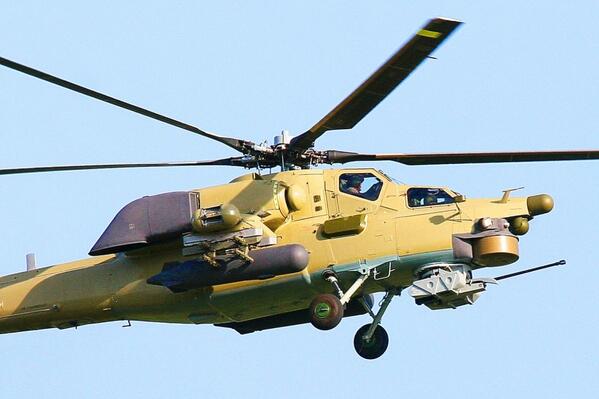
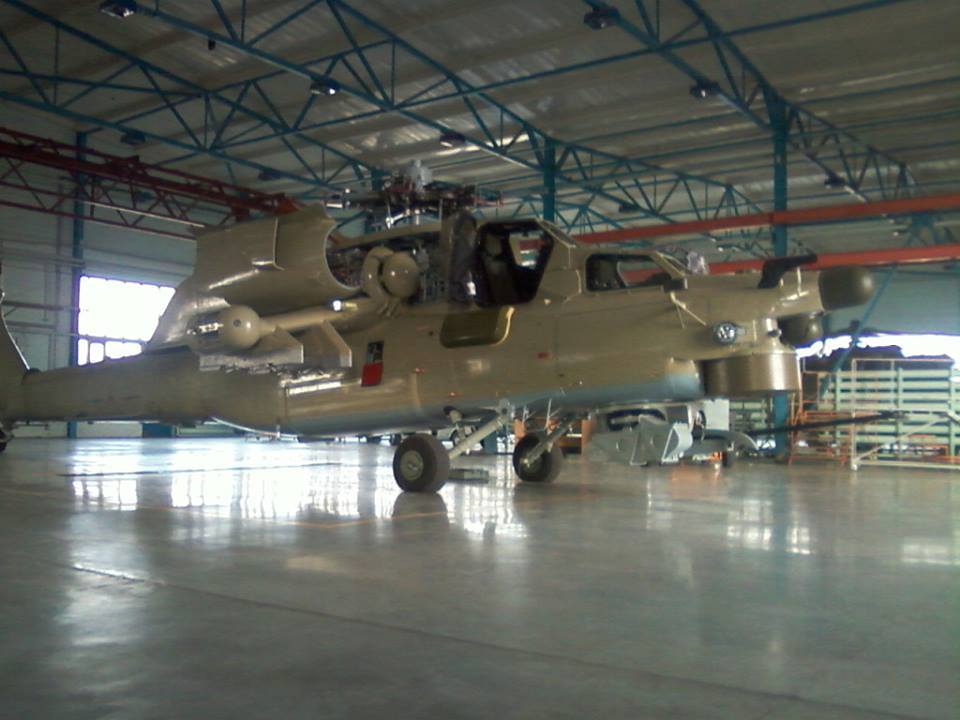
Recent open-source intelligence imagery and multiple defence media reports strongly suggest that Iran has begun receiving Mi-28NE “Havoc” attack helicopters from Russia, marking the first confirmed rotary-wing combat aircraft delivery under the deepening Tehran–Moscow military cooperation framework. Photographs geolocated to Iranian aerospace facilities near Tehran show at least one Mi-28 airframe undergoing inspection, likely during acceptance and evaluation procedures. Additional Russian Il-76 transport activity into Iran further supports the conclusion that initial deliveries are underway, possibly involving a small batch of three to six helicopters.
This development represents a long-overdue modernization step for Iran’s rotary-wing aviation, which remains heavily dependent on aging Cold War-era platforms such as the AH-1J SeaCobra, Mi-17 variants, and legacy utility helicopters acquired before the 1979 revolution. Sanctions, spare parts shortages, and decades of isolation have left Iran’s helicopter fleet technologically outdated and operationally constrained. In this context, the Mi-28 provides Tehran with a modern sensor suite, improved night-fighting capability, better survivability, and significantly enhanced precision strike potential compared to its current inventory.
However, despite the symbolic value and tactical improvements, the strategic implications of this acquisition remain extremely limited. The Mi-28 is a capable battlefield attack helicopter, but it does not alter the regional balance of power. In any confrontation involving the United States or NATO-aligned forces, Iran would face overwhelming air dominance, advanced ISR coverage, electronic warfare superiority, and layered air defence networks. Against such an environment, small numbers of attack helicopters offer negligible deterrent value and limited survivability.
Operational experience from Ukraine has further exposed structural vulnerabilities in Russian attack helicopter doctrine, particularly against modern MANPADS, mobile air defence systems, precision-guided artillery, and networked battlefield sensors. Loss rates of Russian rotary-wing assets have been significant, highlighting that attack helicopters face increasingly hostile operating environments even in medium-intensity conflicts, let alone in high-end engagements involving Western forces.
From a doctrinal perspective, the Mi-28 will likely serve primarily in asymmetric and regional scenarios, including internal security operations, border surveillance, limited expeditionary support to Iranian-aligned militias, and maritime harassment roles in the Persian Gulf. Its deployment would enhance Iran’s capacity to conduct localized power projection, but without providing the strategic depth required to challenge US or allied air superiority.
Moreover, the sustainability of Mi-28 operations inside Iran remains uncertain. Sanctions, logistical bottlenecks, spare parts dependency on Russia, and training pipeline limitations will restrict operational readiness and fleet availability. Without long-term maintenance support and continuous training cycles, Iran risks replicating the low availability rates seen across much of its current combat aviation inventory.
In strategic terms, this acquisition should therefore be viewed as a marginal upgrade rather than a transformational leap. It improves Iran’s tactical options but does not meaningfully strengthen deterrence, nor does it shift the military balance in the Middle East. For Washington and its allies, the Mi-28 delivery represents background noise rather than escalation, reinforcing existing assessments of Iranian military modernization rather than challenging them.