Translate

Showing posts with label HERCULES. Show all posts

Apr 13, 2026

A400M Gains Momentum as a Potential Choice for the Chilean Air Force


The Airbus A400M Atlas is increasingly being positioned as a strong candidate to replace the aging Lockheed C-130 Hercules fleet of the Chilean Air Force. While no formal procurement process has been launched, recent developments suggest that the European airlifter is gaining visibility in Santiago.

A key moment came during FIDAE 2026, where an aircraft from the Spanish Air and Space Force was deployed as part of the event. Such presence is rarely incidental. In export campaigns, live demonstrations play a central role in showcasing operational capability to potential customers.


Chile faces a familiar challenge. Its C-130H fleet, partly acquired second-hand, is aging and increasingly difficult to sustain. Some airframes are approaching or exceeding five decades of service, creating pressure to identify a modern replacement capable of maintaining reliable airlift capacity across the country’s vast and demanding geography.

In this context, the A400M offers a compelling profile. It combines tactical and strategic transport capabilities, with higher payload, longer range and greater speed than legacy platforms. Its ability to operate from semi-prepared runways and in extreme climates aligns well with Chile’s operational requirements, including long-distance deployments and Antarctic support missions.

Spain’s role is also relevant. As one of the main operators of the A400M, the Spanish Air and Space Force provides a practical example of the aircraft in service within a NATO framework. The presence of a Spanish aircraft in Chile highlights not only operational maturity, but also Europe’s broader effort to promote the platform in international markets.

However, the path to a decision remains open. The A400M faces strong competition from platforms such as the Embraer C-390 Millennium and the latest variants of the Hercules. Cost, fleet size and long-term sustainment will all weigh heavily in any future Chilean decision.

For now, there is no official confirmation of a procurement program. But the signals are clear. Airbus is actively campaigning, Chile has a growing need, and the A400M is positioning itself as a serious option.

Feb 26, 2026

Spare parts worth €17 million disappear from the Aeronautica Militare; investigation reaches senior officers


Italy is investigating the disappearance of military aeronautical materiel valued at approximately €17 million, originating from a Aeronautica Militare depot in Brindisi. What began as an administrative issue has rapidly escalated into a judicial case, involving both civilian and military prosecutors.

According to the ongoing investigation, around 2,500 aeronautical components appear to have left the logistics system without clear justification. These were not generic items, but critical avionics equipment and modules associated with the Tornado, the AMX, and the C-130 Hercules.

One of the most striking aspects of the case is that the AMX has already been withdrawn from service in Italy. The Aeronautica Militare officially retired the type in 2024, reinforcing the hypothesis that part of the material declared “out of use” may have been diverted by exploiting its formal removal from inventory, without any real operational requirement to justify its disappearance.


The AMX, however, has not vanished entirely from the operational landscape. While Italy has retired the aircraft, the type remains in active service with the Força Aérea Brasileira. This helps explain why certain spare parts and avionics modules continue to hold real value on the international market, particularly for fleets that still depend on certified inventories.

These are systems that, even within ageing fleets, retain high operational and logistical value—especially for countries that continue to operate these platforms or are managing a transition away from them.

At the core of the case is not only the physical loss of material, but the breakdown of traceability. One of the main hypotheses is that part of the equipment was administratively reclassified as non-operational or obsolete, allowing it to be removed from official inventories before actually disappearing.

In a military environment—where every component has a serial number, a history, and a documented chain of custody—this aspect is particularly sensitive.

The investigation reportedly involves around a dozen individuals, including logistics officials, senior officers, and personnel linked to external companies involved in maintenance or materiel management.

There are, for now, no convictions or definitive conclusions. However, the mere fact that generals are under investigation gives a clear indication of the seriousness of the affair.

The international trail

Some reports suggest that part of the components may have left Italy, with South America—including Brazil—emerging as a possible destination. This is not idle speculation: a secondary market for certified military spare parts does exist. It is opaque, highly specialised, and involves significant sums, particularly when original production lines have long been shut down.

The case raises uncomfortable questions about the real inviolability of logistics control systems, what happens to critical materiel as fleets age, and to what extent the spare parts market can become a risk vector.

At a time when Europe is openly discussing strategic autonomy, industrial sustainment, and military resilience, the disappearance of certified equipment from within an allied air force is more than a one-off scandal.

This case sits at the intersection of logistics, industrial control, and institutional responsibility. Its outcome will help shape how military assets are managed—and protected—during periods of transition and sustained budgetary pressure.

Feb 3, 2026

Singapore Bolsters Airlift Fleet with Legacy Ex Spanish Air Force C-130 Hercules Acquisitions


The Republic of Singapore Air Force (RSAF) has begun taking delivery of legacy Lockheed-Martin C-130H Hercules aircraft to replace its ageing C-130B fleet, a move confirmed by RSAF Chief Maj. Gen. Kelvin Fan ahead of the Singapore Airshow. According to Fan, the decision follows a thorough evaluation of airlift capabilities, confirming that the C-130 platform remains the most suitable choice for Singapore’s operational needs for the next 15 to 20 years.

While the official announcement did not specify the number of aircraft acquired or their origins, open-source tracking indicates that at least three C-130Hs have arrived in Singapore since mid-December. These include a standard C-130H (US registration N974BA), a KC-130H tanker (N973BA), and a stretched C-130H-30 variant (N977BA). Observers from Breaking Defense confirmed the arrival of the final aircraft on January 30.

The aircraft now entering RSAF service are known to be former Ejército del Aire C-130H Hercules. Spain retired its remaining C-130Hs from active service in the early 2020s following the introduction of the Airbus A400M Atlas. After withdrawal, several airframes were placed in storage, remaining preserved but inactive for a period before being sold on the secondary market. These aircraft were subsequently acquired by Blue Aerospace, a Florida-based company specialising in the resale of surplus military airframes, which handled their storage, maintenance, and preparation for onward transfer.


Flight data reveals that the aircraft previously belonged to Blue Aerospace, which is currently advertising a mix of standard C-130Hs, C-130H-30s, and KC-130Hs for sale. The company has highlighted the relatively good material condition of these aircraft, reflecting their late-service upgrades under Spanish operation and the limited fatigue accumulated prior to retirement. Blue Aerospace did not respond to media requests for comment at the time of publication.

The acquisition represents a pragmatic approach by the RSAF. Operating a fleet of older C-130Bs had become increasingly challenging, with airframes approaching the end of their service lives and maintenance costs rising. By sourcing well-maintained, second-hand C-130Hs, Singapore ensures continuity of tactical airlift, medevac, and logistical operations while avoiding the cost and lead times associated with new-build aircraft.

This is not the first time Singapore has leveraged legacy Western airframes to sustain its operational capacity. Previous RSAF C-130 acquisitions have similarly relied on second-hand aircraft, subsequently upgraded with local avionics, mission systems, and structural refurbishment to extend service life and improve interoperability.

Notably, the incoming aircraft include a KC-130H tanker variant. While Singapore does not routinely operate the C-130 as a dedicated aerial refuelling platform, the presence of a tanker-configured airframe provides additional flexibility for specialised missions or potential future role adaptation.

Overall, the transfer of ex-Spanish Air Force C-130Hs—via storage and resale by Blue Aerospace—highlights a broader global trend. As air forces modernise, surplus but structurally sound aircraft continue to offer cost-effective, low-risk solutions for nations seeking to maintain essential capabilities. For Singapore, these Hercules are set to remain a backbone of airlift operations well into the 2030s.

Jan 22, 2026

Mexico Selects the C-130J Super Hercules: A Major Step in Latin American Airlift Modernisation


Mexico has officially become the first Latin American country to acquire the C-130J Super Hercules, marking a significant milestone in the modernisation of its tactical airlift capability. The Fuerza Aérea Mexicana (FAM) confirmed the procurement of at least one C-130J-30, with indications that additional aircraft could follow as part of a broader fleet renewal programme. 

The decision places Mexico among a growing group of global operators transitioning from older Hercules variants to the latest-generation J-model, which offers improvements in payload, efficiency, avionics, and mission flexibility.

Replacing an Ageing Transport Fleet

The FAM has operated various C-130 variants for more than five decades, relying on them for disaster relief, troop transport, humanitarian aid, and logistical support across Mexico’s vast territory. However, much of this fleet is now approaching the limits of its economical service life.

By selecting the C-130J-30, the stretched version of the platform, Mexico is prioritising:

  • Greater payload and cargo volume
  • Improved range and endurance
  • Reduced operating costs
  • Modern digital avionics and flight systems

This approach allows the FAM to retain logistical and training continuity while significantly improving operational output, avoiding the steep learning curve associated with transitioning to a completely new aircraft family. 

Mexico’s competition reportedly included Embraer’s C-390 Millennium, a modern jet-powered transport that has gained traction in several air forces. However, continuity, infrastructure compatibility, and long-standing operational familiarity appear to have favoured the Hercules.


Operational Significance for Mexico

The acquisition strengthens Mexico’s ability to conduct:

  • Rapid disaster response operations
  • Humanitarian assistance missions
  • Military logistics and troop deployment
  • Internal security and counter-narcotics support

Given Mexico’s frequent exposure to earthquakes, hurricanes, floods, and wildfires, airlift remains a core national security capability rather than a purely military asset. The C-130J’s performance in short, unprepared runways and adverse weather conditions is especially relevant for operations in remote or damaged infrastructure zones.

The arrival of a US Air Force C-130J at Toluca International Airport in January 2026 triggered intense political debate inside Mexico, amid heightened sensitivities over US-Mexico security cooperation. The Mexican government clarified that the aircraft was involved in joint training activities, not operational deployment, under previously approved bilateral agreements. 

This episode highlights how airlift platforms have become politically symbolic, especially amid regional security tensions and debates over sovereignty. Against this backdrop, Mexico’s independent procurement of its own C-130J fleet reinforces national autonomy in strategic mobility, reducing reliance on foreign logistical support.

Regional and Strategic Implications

Mexico now becomes Latin America’s reference operator for the C-130J, potentially influencing future procurement decisions across the region. Several air forces are currently seeking to replace legacy transport fleets, and Mexico’s operational experience could shape upcoming competitions.

The move also reflects a broader trend across the Americas:

  • Increased focus on disaster-response readiness
  • Greater emphasis on interoperabilitywith US and NATO-standard systems
  • Rising importance of strategic mobility for internal security operations

Mexico’s choice of the C-130J is best understood as a strategic continuity decision, prioritising reliability, familiarity, and operational readiness over technological disruption.

While alternatives such as the C-390 offer attractive performance metrics, the Hercules remains a benchmark for tactical airlift resilience, particularly in complex terrain and disaster relief scenarios. For Mexico, whose airlift fleet must operate across deserts, jungles, mountains, and disaster zones, this conservative approach appears operationally sound.

Rather than a revolutionary upgrade, this acquisition represents a calculated evolution, ensuring that Mexican air mobility remains robust, flexible, and politically sovereign well into the 2030s.

Aug 15, 2024

First C-130J Aircraft Delivered to Royal New Zealand Air Force


Lockheed Martin delivered the first of five C-130J-30 Super Hercules tactical airlifters to the New Zealand Ministry of Defence (MOD) and New Zealand Defence Force (NZDF) on August 8, 2024, during a ceremony at their facility in Marietta, Georgia. This delivery marks the beginning of New Zealand's $NZ1.5 billion (approximately $902.3 million USD) program to replace its aging C-130H(NZ) fleet, which has been operational since the 1960s.

The newly delivered aircraft, designated NZ7011, first took flight in April 2024 and is part of a contract signed in 2020 under the US foreign military sales program. The Royal New Zealand Air Force (RNZAF) will operate the new C-130Js under the supervision of 40 Squadron at RNZAF Base Auckland. These aircraft are set to take over the roles previously held by the older C-130H fleet across New Zealand and the Indo-Pacific region.

The C-130J Super Hercules is a modern, versatile aircraft designed for a wide range of missions, including humanitarian aid, disaster relief, and military operations in collaboration with allies. Lockheed Martin's vice president and general manager of Air Mobility & Maritime Missions, Rod McLean, emphasized the new fleet's enhanced capabilities, noting that they offer New Zealand increased alignment with allies, greater operational reach, and proven performance in demanding tactical airlift operations.

The C-130J is a powerful and advanced aircraft, measuring 97.9 feet in length, with a wingspan of 132.7 feet, and a cargo bay length of 41 feet. It can carry up to 90 people or payloads weighing up to 42,000 pounds. Powered by four Rolls-Royce AE 2100 turboprop engines, each delivering 4,637 horsepower, the aircraft can reach a maximum speed of 362 knots, with a range of 1,800 nautical miles and an operational altitude of up to 40,386 feet.

In addition to the aircraft, the program includes corresponding flight simulators and supporting capabilities, with the construction of associated training platforms initiated in Montreal, Canada, in 2023. Lockheed Martin also accepted a $38-million contract in 2022 to deliver another simulator to train future C-130J aircrew, ensuring comprehensive training and readiness for the RNZAF’s new fleet.

The RNZAF’s C-130J fleet will continue to support New Zealand’s global missions, from humanitarian assistance to military operations, enhancing the country's defense capabilities and its role in international security.

Jul 28, 2024

Turkey Negotiates with United Kingdom for 12 Ex-RAF C-130J Hercules and Plans to Expand A400M Fleet


Ankara is set to bolster its air force once again, this time by focusing on military transport aircraft. Reports from United Kingdom suggest that Ankara plans to acquire 12 of the 14 C-130J Hercules aircraft retired by the British Royal Air Force (RAF), though this information has not yet been officially confirmed.

These rumors have intensified over the past month, but both London and Lockheed Martin have maintained confidentiality about the identity of the potential buyer. Both Turkey and Greece have entered negotiations to acquire these aircraft. The proposed deal includes one "short" C-130J (known as C5 in the UK) and 13 "stretched" C-130J-30s (C4), marking the second batch of surplus Hercules that the Ministry of Defence has sold recently.

In 2015, eight C5 aircraft were retired and sold to Bangladesh (five), Bahrain (two), and the U.S. Navy (one). Since the late 1990s, the RAF has operated the C-130J/C-130J-30 Hercules, replacing its older fleet of C-130K models to enhance its tactical airlift capabilities.

Meanwhile, Turkey is also negotiating to acquire six A-400M transport aircraft. The Turkish Air Force currently operates 10 A-400M aircraft and is in talks with Airbus to increase this number to 16.


Jan 2, 2024

Saudi Arabia Plans Acquisition of 33 C-390 Millennium Aircraft to Replace Aging C-130 Hercules Fleet


In a milestone that signals a new chapter in bilateral cooperation between Saudi Arabia and Brazil in defense and security, Saudi Arabia's SAMI Investment Fund has initiated negotiations to acquire up to 33 Embraer C-390 Millennium transport aircraft. This ambitious project will also encompass establishing comprehensive personnel training and maintenance capacity for Embraer aircraft throughout the Gulf Cooperation Council (GCC) region.

The agreement, formalized through a Memorandum of Understanding (MoU) between SAMI, Saudi Arabia's defense and security enterprise, and Embraer, the Brazilian aviation giant, aims to expand both companies' operational presence in the Kingdom of Saudi Arabia. The primary focus will be to promote the capabilities of the C-390 Millennium aircraft and provide support to the kingdom's Ministry of Defense.

A key aspect of the agreement is the establishment of comprehensive maintenance capacity for Embraer aircraft within the Kingdom. This not only ensures the optimal performance of the C-390 Millennium fleet but also supports Saudi Arabia's endeavors towards defense self-sufficiency, aligning with Saudi Vision 2030.

Engineer Walid A. Abukhaled, CEO of SAMI, emphasized the significance of the agreement, stating: "It is another significant step in SAMI's efforts to support Saudi Vision 2030 in strengthening the Kingdom's defense self-sufficiency and contributing to localizing 50% of defense spending in the Kingdom by 2030."

Moreover, the agreement entails exploring the possibility of establishing a regional Maintenance, Repair, and Overhaul (MRO) center, as well as an exclusive Final Assembly Line (FAL) for the Embraer C-390 Millennium. This initiative not only solidifies Embraer's presence in the region but also serves as a platform for integrating specific mission systems for Saudi aircraft and potential clients in the region.

The strategic timing of this agreement is notable as Saudi Arabia assesses the replacement of its older fleet of 33 C-130H Hercules aircraft, with the Embraer C-390 Millennium emerging as a potential candidate for this replacement. This step could mark a significant milestone for the C-390 program, which has been gaining momentum in the international market.

The collaboration between SAMI and Embraer not only strengthens ties between Saudi Arabia and Brazil in the aerospace industry but also aims to bolster Saudi Arabia's self-reliance and defensive capability in line with its long-term strategic objectives.


Oct 22, 2023

Philippine Air Force Strengths with Purchase of Three C-130J-30 Transports"


The procurement process for these aircraft started in 2021 as an integral part of the Second Horizon of the Armed Forces of the Philippines (AFP) Modernization Program. The contract for these three advanced aircraft is estimated to be valued at $391 million, symbolizing the Philippines' unwavering commitment to fortifying its defense capabilities.

As per statements from the Department of National Defense, the initial C-130J is slated for delivery in July 2026, followed by the second in October of the same year. The third and final aircraft is anticipated to arrive in January 2027.

One of the standout attributes of the C-130J-30 is its capacious cargo hold, which, in conjunction with the reliability of the current C-130 fleet, will afford the Philippine Air Force (PAF) significantly enhanced operational flexibility. This advancement will empower the PAF to respond more effectively to the exigencies of AFP's tactical missions, encompassing disaster relief, humanitarian aid, and military operations.

The PAF maintains a diverse fleet of C-130s, playing a pivotal role in the country's capacity to provide support during humanitarian crises and military campaigns. The inclusion of the C-130J-30 aircraft constitutes a substantial leap forward in advancing the Philippines' defense capabilities and underscores the nation's commitment to upholding a credible defense stance.

The acquisition of these Lockheed Martin C-130J-30 "Super Hercules" aircraft serves as not only a testament to the Philippines' dedication to national security but also a substantial stride in bolstering its tactical and transport capabilities. The delivery of these aircraft is poised to be a transformative milestone for the Philippine Air Force, ensuring that the nation is well-prepared to effectively manage both routine operations and emergency response scenarios.

Related:

Four A-29s have arrived in Philippines

U.S. Approves Sale of AH-64E Apache, AH-1Z Viper Attack Helicopters to Philippines

Philippines Air Air Force likely to buy JAS-39 Grippen


Mar 11, 2022

NEWS 2022 March, 11

US Army Sends Two Army Patriot missile batteries to Poland Amid Ukraine War


The Pentagon is sending two Patriot surface-to-air missile batteries to Poland to counter potential threats to U.S. and NATO forces in the alliance’s territory.

Roughly 4,700 soldiers from the 82nd Airborne Division were dispatched to Poland last month to bolster NATO’s deterrence posture as Russian forces invaded Ukraine. Poland’s border has been a conduit through which man-portable anti-tank and anti-aircraft weapons have traveled to Ukrainians fending off the Russian military.

The Patriot systems will come from the Rhine Ordnance Barracks in Germany. Russia has fired more than 600 missiles into Ukraine, and the Patriot system could also guard against a stray shot if the war creeps closer to Polish borders.

armytimes 

Philippines receives 2 T129 helos from Turkey


The first T129B attack helicopters arrived in the Philippines , six months later than originally expected.

Two Airbus A400M airlifters of the Turkish Air Force touched down at Clark Air Base outside the Philippine capital Manila , carrying two T129Bs along with logistics support equipment.

The Philippines has six helicopters on order under a $269 million government-to-government contract with Turkey that was signed in July 2020. 

The helicopters are manufactured by Turkish Aerospace Industries and is based on the AgustaWestland A129 Mangusta design. The new helos will be assigned to the Philippine Air Force’s 15th Strike Wing. 

The T129Bs will complement a pair of used Bell AH-1S HueyCobra attack helicopters acquired from Jordan, along with armed light observation and transport helicopters in the Philippine Air Force’s inventory.

The Philippines has also been recapitalizing its transport helicopter fleet with S-70i Black Hawks built under license by Poland’s PZL Mielec to  complement the Air Force’s fleet of Bell UH-1 Huey utility/transport helicopters.

defensenews

US National Guard gets funds to  get 20 more C-130J transport aircraft


Sixteen of the added C-130Js would go to the Air National Guard to modernize two operational wings. The remaining four would go to the Reserve.

The Air National Guard is now in the midst of a multiyear effort to upgrade its mobility fleet and replace its three-decade-old C-130H Hercules planes with modern C-130Js.

In November 2020, the Air Force announced it had selected Air National Guard bases in Kentucky, West Virginia, Texas and Georgia to receive 24 C-130Js to replace their aging “H” models. 

The budget deal also would considerably increase spending on C-130 modifications including upgrading older C-130s with eight-blade propellers and engine enhancements to make C-130Hs more efficient as well as to provide more thrust during takeoff and while climbing.

defensenews

Turkey revives insterest in developing developing domestic new generation combat aircraft


War between Russia and Ukraine, two Turkey’s partners, has given an unexpected jolt to the country’s quest for new fighter jets and its domestic program to make new-generation aircraft.

The war has practically killed all potential Turkish-Russian deals in strategic weapons systems.

Since the start of the Russian invasion of Ukraine, Turkey has maintained a delicate balance with Russia and Ukraine.

Turkey faced suspension from the U.S.-led multinational program that builds the F-35 Joint Strike Fighter, as it insisted on becoming the first NATO ally to deploy on its soil the Russian-made S-400 air defense system. Meanwhile, Turkey supplies armed drones to Ukraine.

The U.S. suspension of Turkey’s partnership in the F-35 program has left the country with limited options, given its fleet of F-16s will be phased out in the early 2030s. A Turkish request to acquire a new fleet of F-16 Block 70 aircraft will likely face opposition from U.S. lawmakers. In the past, Turkish President Recep Tayyip Erdoğan indicated his government’s interest in Russian aircraft in place of the F-35.

One stopgap option for Turkey is to buy scores of the Eurofighter Typhoon and, in return, bargain for European know-how for its own fighter program, the TF-X.

defensenews


Dec 12, 2021

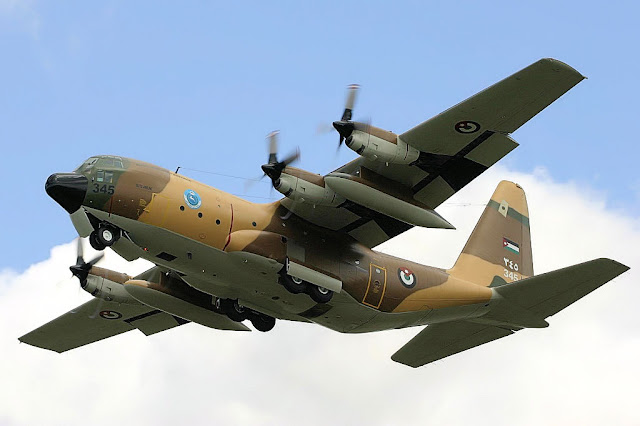
Three USAF C-130 Aircraft Have Been Transferred to Royal Jordanian Air Force.

The Royal Jordanian Air Force (RJAF), U.S. Air Force (USAF), and the U.S. Embassy in Jordan celebrated the transfer of three C-130 transport aircraft from USAF to RJAF.  
RJAF has received two of the C-130 aircraft since September, with the third scheduled for delivery in January. The C-130 Ramp-to-Ramp (R2R) transfer program is the first USAF program to transfer fully active and functional assets to key security partners.
The three aircraft have received recent equipment updates and upgraded interoperable avionics and are being integrated now into the RJAF fleet. 
RJAF has been flying C-130s for over 50 years. The C-130 fleet supports the Jordanian Armed Forces through airdropping equipment, paratroopers, and cargo, non-military roles including support for disaster relief, humanitarian missions, and medical evacuation missions.  Last year, within days of the tragic explosion in Beirut, Jordanian C-130s were in the air delivering essential supplies to assist the Lebanese people. The RJAF Airlift Wing often deploy C-130s and Jordanian troops in support of UN and coalition operations in Africa and other regions. In follow up to the C-130 transfer, the USAF Mobile Training Team will provide basic and advanced training of Jordanian aircrew and maintenance crews, in line with the U.S. vision to provide a total package approach to capacity building for key security partners. 

Jun 22, 2019

Bangladesh to receive additional surplus UK C-130J airlifters


The sale of additional UK-surplus Lockheed Martin C-130J Hercules transport aircraft to Bangladesh has been confirmed by a support contract announced by Marshall Aerospace and Defence Group (ADG) on 20 June.
The Asian nation is to receive an undisclosed number of aircraft to add to the two already confirmed via a previous support contract for Marshall ADG. With the UK Royal Air Force (RAF) looking to divest itself of nine 'short-bodied' C-130Js (designated C5 in UK service), all but four aircraft have already been earmarked for customers.
The acquisition of the C-130Js will enable the Bangladeshi Air Force to retire the four C-130Bs that it has fielded since 2001 (these were acquired secondhand from the United States), at the same time as augmenting its three Antonov An-32 'Cline' and three L-410UVP-200 transport aircraft that date from 1989 and 2015 respectively.
Gareth Jennings - janes

Nov 16, 2018

ROYAL BAHRAINI AIR FORCE RECEIVES FIRST HERCULES C-130J

Marshall Aerospace and Defence Group has delivered the first Royal Bahraini Air Force C-130J aircraft.
The Bahrain Defence Force recently purchased two Royal Air Force C-130J aircraft from the UK Ministry of Defence and contracted Marshall Aerospace and Defence Group to carry out depth maintenance, ensure entry into service and provide elements of an initial operational capability set up.
After completing a depth maintenance inspection in Cambridge, United Kingdom, which included some minor modifications and a full aircraft repaint, #702 was delivered to the customer. It is anticipated that the aircraft could attend the prestigious Bahrain Air Show on the 14th November 2018.
marshalladg

Sep 28, 2018

Germany to buy six C-130 Hercules

Germany’s armed forces will spend almost 970 million euros ($1.14 billion) buying six C-130 Hercules transport aircraft, which in contrast to the A400M from Airbus can land on smaller, more rocky landing strips.
The budget committee of the Bundestag lower house of parliament gave the green light for the procurement of the machines from U.S.
The package includes the procurement of spare parts, maintenance of the aircraft in the first three years and the initial training of technical and aviation personnel.
The C-130 Hercules will stationed in Evreux in Normandy where France already operates the same type of aircraft.
Germany sharply curtailed military spending after the end of the Cold War, but began boosting spending again after Russia’s annexation of the Crimea region of Ukraine in 2014.
A report this year found missing spare parts and quality defects mean less than half of Germany’s submarines, warplanes and some other key weapons are ready for use.
reuters

Oct 29, 2017

First French C-130J rolls out

The first of four Lockheed Martin C-130J Hercules transport aircraft for the French Air Force was rolled out from the Marietta production facility in Georgia on 20 October.
The aircraft was rolled out in front of the cameras for the first time after being painted in national colours and markings.
France has ordered two C-130J-30- and two KC-130J-variant aircraft for a combined USD170 million, that includes configuration changes to the former. The contracts are expected to be complete by 30 August 2020.
The French Air Force is purchasing four C/KC-130J aircraft to supplement its ageing Transall C-160s, and to compensate for delays to the Airbus Defence and Space A400M transport aircraft and the low availability of its current fleet of C-130Hs.
The rollout of the first aircraft came just two days after the deputy chiefs of defence staff of France and Germany agreed details of the countries joint C-130J squadron. Under the agreement, a joint air transport squadron consisting of four French and six German C-130Js based at the French airbase in Évreux, Normandy, will be set up, with initial operational capability scheduled for 2021 and full operational capability due in 2024.
janes

Oct 22, 2016

Germany may buy as many as six C-130Js

Germany has signalled its intention to acquire as many as six Lockheed Martin C-130J tactical transports as its frustrations deepen with the underperforming Airbus Defence & Space A400M.
As part of a memorandum of understanding with France, signed by the defence ministers from both countries, the Hercules would be part of a “common air transport squadron” to be created by 2021.
“According to current demand forecasts, four to six German aircraft in the common transport squadron are planned,” says the country’s defence ministry, which would station the C-130J fleet in France.
flightglobal

Nov 15, 2015

France requests extra C-130s from US

The DSCA announced on November 10 that the State Department had approved a possible Foreign Military Sale (FMS) to France of four C-130 Hercules transport aircraft for an estimated cost of USD650 million.
The sale includes two C-130J transport and two KC-130J tanker/transport aircraft.
The French air force is requesting the four aircraft to supplement its fast aging C160 Transall fleet, delays to the Airbus A400M transport aircraft and the low availability of its current fleet of 14 C-130H fleet, which have an average age of 27.
janes

Jul 6, 2015

UK to begin testing national A400M capabilities shortly

The UK Royal Air Force (RAF) is to begin safety testing of a number of country-specific capabilities for its A400M Atlas transport aircraft at the end of July, the government disclosed on 2 July.
Several dedicated national capabilities, such as UK parachutes and aerial delivery systems, that need to be cleared from a safety perspective will undergo testing at the end of July and continue through until March 2018, to clear their release to service.
The RAF is to roll out its A400M capabilities in a series of tranches, with Tranche 1 comprising basic strategic airlift (2015); Tranche 2 involving non-permissive operations and inter-theatre operations (from 2016), as well as deployable intra-theatre capability (from 2017); Tranche 3 will involve tactical transport, including airdrops (from late 2017); and Tranche 4 involving advanced capabilities and full support to the Airborne Assault Task Force (from 2018 to 2022).
The UK has so far received two of its 22 aircraft, with a further four undergoing pre-delivery trials at the company's final assembly line (FAL) in Seville, Spain. Initial operating capability (IOC) was due to be declared in March, but delays to initial deliveries had pushed this date back to September.
The RAF's 206 Squadron is currently testing the first A400Ms to arrive at RAF Brize Norton, with crews to be trained by 24 Squadron. Once trained, these personnel will be assigned to the first operational A400M unit: 70 Squadron. A second operational unit is due to be stood up in 2018.
Deliveries of all 22 A400M aircraft to the RAF are set to conclude in 2022, to coincide with the retirement of the Lockheed Martin C-130J Hercules.
janes

May 12, 2015

UK Set To Start C-130J Upgrade Flight Tests

A Royal Air Force C-130J Hercules is set to take to the air in the next few days to recommence trials of a major upgrade to the aircraft that is so late it has already been rolled into a subsequent improvement program.
Fitted out with an extensive suite of software and hardware improvements known as Block 7, the British C-130J kit installation trials aircraft is set to undertake months of operational test and evaluation work ahead of being further modified by prime contractor Lockheed Martin with additional capabilities known as Block 8.1.
A Ministry of Defence spokesman said British flight trials on the Block 8.1 improvements are set to be completed in 2019.
The updates are crucial to the British and other C-130J fleet operators around the world as they provide additional capabilities for special operations forces and others.
The modifications will also allow operators to meet the latest civil air traffic management regulations. Without the update, C-130J aircraft will not be able to effectively operate in prescribed airspaces.
All seven members of the users group — Australia, Canada, Denmark, Italy, Norway, the UK and the US — are contributing to the development, evaluation and trial kit installation phases of the program.
Britain operates 24 C-130Js but is scheduled to run that fleet down starting next year as the Royal Air Force begins operations of the first of 22 Airbus A400M airlifters it has on order.
Two aircraft have been delivered to the RAF with a third scheduled to be handed over soon. A further six machines are expected to be delivered by the end of this year.
As things stand, the British are scheduled to take the C-130J out of service by 2022, although there is a debate within the military as to whether seven or eight of the fleet are kept on for special forces duties.
defensenews

May 8, 2015

Sweden will replace C-130H with either KC-390 or A400M

The Swedish air force is likely to field a replacement for its aged Lockheed Martin C-130H tactical transports at some point during the next decade, with potential candidates including the Embraer KC-390 and Airbus A400M.
Sweden Air Force will mark the 50th anniversary of its introduction of the Hercules, with its active fleet now including five transports and one KC-130H tanker. Two other aircraft have already been retired and are in storage in the UK, and the service could in time decide to reduce its operational fleet to only four examples.
Sweden’s recently published defence bill for the 2016-2020 period identifies the need to address the C-130H replacement issue only post-2021. The nation’s air force has already shown interest in Embraer’s developmental KC-390 transport and tanker. Sweden could also investigate the potential acquisition of the A400M. Several of the latter model are likely to become available early next decade, as Germany and Spain have said they will not be able to fully field their on-order fleets.
flightglobal

Apr 27, 2015

Chile takes delivery of first of two stop-gap C-130s

The Chilean Air Force (FACh) took delivery of a Lockheed Martin KC-130R Hercules in mid-April.
The KC-130R is a former USMC aircraft offered by the US Defense Security Cooperation Agency as an Excess Defense Article (EDA) in September 2012 at the symbolic price of USD700,000.
A second KC-130R was offered in August 2013 and is also expected to be delivered in 2015. When both KC-130Rs are delivered they will increase Group No 10's active fleet to five, since there are currently two C-130Hs and one C-130B in service.
The FACh has sought to augment its currently depleted C-130 Hercules fleet as a stop-gap measure since procurement of a new medium transport aircraft has been shelved for some years.
janes