Translate

Showing posts with label RQ-4. Show all posts

Mar 14, 2022

NEWS 2022 March, 14

Germany to buy up to 35 Lockheed F-35 fighter jets to replace its Tornados


Germany will purchase F-35 fighter jetsto replace its ageing Tornado aircraft, according to two government sources, with one of the sources saying Berlin aims to buy up to 35 units.

The Tornado is the only German jet capable of carrying U.S. nuclear bombs, stored in Germany, Berlin is planning to phase it out between 2025 and 2030.

The decision could also upset, concerned a deal could undermine the development of a joint Franco-German fighter jet that is supposed to be ready in the 2040s, the FCAS programme.

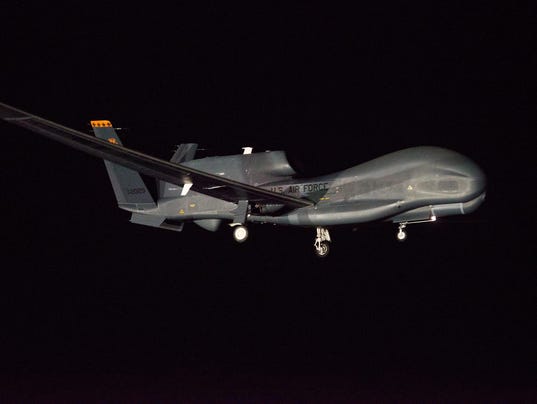
First RQ-4B for JASDF arrives in Japan


The delivery comes nearly a year after Northrop Grumman flew Japan’s first RQ-4B in April 2021.

Japan is buying three examples of the RQ-4 Block 30(I) UAV. A Foreign Military Sales programme deal for the ISR aircraft was approved by the US Department of State in 2015.

Other customers for the RQ-4 are NATO and South Korea.

The US Air Force (USAF), NATO and South Korea are also customers for the RQ-4. The US Navy and Royal Australian Air Force are customers for the MQ-4 Triton, which is designed for the maritime patrol mission.

flightglobal

Apr 22, 2020

USA hands over first RQ-4 Global Hawk to ROKAF South Korea

U.S. Ambassador Harry Harris to South Korea said in a tweet Sunday that the Global Hawk high-altitude unmanned aircraft was delivered to South Korea this week, adding that it's a "great day" for the two countries' alliance.
Harris unveiled a picture of a Global Hawk unit parked in a hangar in an unidentified location, with the national flags of the allies hanging on a wall behind. On the body of the aircraft was text reading "the Air Force of the Republic of Korea," in Korean.
yna

USAF Ends Continuous Bomber Presence in Guam

USAF announced April 17 it will no longer base strategic bombers outside of the continental United States, marking an end to the service’s 16-year continuous bomber presence at Andersen Air Force Base, Guam.
But before the last bomber left the island, USAF reminded the world of its combat power with an impressive “elephant walk” that included five B-52 strategic bombers, six KC-135 tankers, an MH-60S Knighthawk helicopter, an RQ-4 Global Hawk, and a U.S. Navy MQ-4C Triton.
airforcemag

Sep 9, 2018

USAF acknowledged The Crash On An RQ-4 Global Hawk Off the Coast Of Spain Last June

After two months of silence, military U.S. officials have acknowledged the crash and recovery of an Air Force RQ-4 Global Hawk unmanned aerial vehicle from the Atlantic after the massive surveillance drone crashed off the coast of Spain in late June.
The Northrop aircraft was assigned to 348th Reconnaissance Squadron out of Grand Forks Air Force Base, N.D. The Global Hawk went down in the Gulf of Cadiz near the U.S. Navy’s base in Rota, Spain. The crash occurred at about 11 a.m. EDT on June 26.
Navy and Air Force assets were quickly dispatched to help recover the downed Global Hawk, including fleet oiler USNS Arctic (T-AOE-8) as well as a KC-135 refueler from the 100th Air Refueling Wing out of Zaragoza Air Base, Spain. The Global Hawk was taken to Naval Station Rota after the recovery.
The image of the recovered fuselageshows damage to the engine cowling and shorn metal at the rear of the aircraft. The cause of the crash is currently under investigation by the U.S. Air Combat Command.
The crash is the second time in a year the U.S. Air Force has lost a Global Hawk, with a unit cost of $123 million apiece, according to Fiscal Year 2015 figures.
usni

Oct 22, 2017

RoKAF to setup RQ-4 unit in December


The Republic of Korea Air Force (RoKAF) will set up an airborne intelligence, surveillance and reconnaissance (ISR) unit in December for its RQ-4 assets.
Officials told lawmakers during an annual audit session that the new unit will stand up on Dec. 1.
The first two of four RQ-4s will arrive next year with delivery completed by 2019.
alert5

Apr 5, 2015

USAF Global Hawks fly reconnaissance missions for South American Countries

The USAF is working to make its RQ-4 Global Hawks available to its allies in Latin America and the Caribbean.
The RQ-4 is useful for finding drug fields and helping plan offensives against rebel groups.
The drones can also map rainforests threatened by illegal logging, survey damage after natural disasters and take part in other missions the Pentagon refers to as “defense support to civil authorities.”
It's not known how frequently Latin American countries have taken advantage of these offers and there aren't examples of actual RQ-4 missions.
medium.com

Mar 9, 2015

USAF Looks to Global Hawk Upgrades

After multiple attempts to end the Global Hawk Block 30, the US Air Force has now included the high-altitude, long-endurance unmanned system in two straight budget requests, giving a sense of stability to the program — and allowing operators to turn their eyes to future upgrades.
The service had wanted to retire the Global Hawk and funnel that money into keeping the manned U-2 flying. But intense pressure from congressional allies of manufacturer Northrop Grumman kept the Global Hawk alive. Now, it appears set to be the high-altitude option for the future.
In last year's budget, the Air Force sought to retire the U-2 immediately, but Congress again intervened. In this year's budget request, the service instead said it plans to retire the U-2 in 2019, providing a buffer zone during which the Global Hawk can be upgraded.
Northrop announced in February that it had driven flying-hour costs down to $14,876 in 2014. That number was $24,336 in 2013 and $33,598 in 2012. That cost drop occurred as the RQ-4 saw a 40 percent increase in flying hours between 2013 and 2014.
The upgrades needed are a weather radar, a universal payload adapter, which would allow Global Hawk to carry a wider range of electro-optical/infrared sensors, as well as legacy systems such as the U-2's wet film optical bar camera.
The Royal Australian Air Force announced last year it will procure the MQ-4C Triton to meet its maritime surveillance requirement. The Triton, a variation on the RQ-4 being developed for the US Navy, comes equipped with an active, electronically scanned array advanced radar and the ability to go below cloud cover.
Although details are still being finalized, the information released by Australia indicated it plans to purchase seven MQ-4Cs.
defensenews

Feb 20, 2015

USAF May be Forced to retire U-2 and Global Hawk In 2016 Due to sequestration

The USAF may be forced to retire its U-2 and RQ-4 Global Hawk Block 40 ISR aircraft if sequestration is not eliminated in Fiscal Year 2016 (FY16).
Though the Pentagon has wavered over which programme to retire in the prior two budget cycles, both the U-2 and the RQ-4 are fully funded in the department's FY16 budget request. The document states that the U-2 would be divested in 2019 after sensors for the Global Hawk are upgraded.
The U-2's sensors have a range of about 160 km, while the Global Hawk has a range of about 95 km.
The Global Hawk needs nearly USD2 billion in upgrades over approximately six years so that it can complete all the missions done by the manned U-2. The necessary work consists of upgrades to ground stations, communications and imagery capability, and the Global Hawk's weather radar.
janes

Feb 3, 2015

USAF will try to cut A-10 fleet again

The plan mirrors what the Air Force submitted last year. Under that plan, active-duty units would be cut at Moody Air Force Base, Georgia; Nellis Air Force Base, Nevada; and Eglin Air Force Base, Florida. Air National Guard and Air Force Reserve units in Idaho, Maryland, Michigan, Indiana, Missouri and Arizona would receive replacement aircraft, either F-15s or F-16s.
Several key lawmakers have already promised to block any plans to retire the Warthog, even before the Air Force submitted its budget plans.
The Air Force, in its fiscal 2016 budget proposal, is also looking at cutting other aircraft. The plan would reduce the service's F-15C/D fleet by 31 aircraft over five years, 10 in fiscal 2016. The fleet is more than 27 years old. The remaining aircraft would undergo radar and avionics upgrades, along with other service-life extension upgrades.
The service would retain the U-2 Dragon Lady. Last year, the Air Force tried to retire the aging aircraft, but was blocked by Congress. The plan also sustains RQ-4 Global Hawks, including the Block 30 variant the service tried to mothball in previous budget plans.
airforcetimes

Northrop Grumman to Start Production on Republic of Korea Global Hawks

Northrop Grumman will begin production of four RQ-4 Global Hawk for the Republic of Korea's Air Force.
The contract announcement follows procurement decisions made by the Japanese and Australian governments to purchase the Global Hawk and the MQ-4C Triton.
globenewswire

Jun 11, 2014

Global Hawk needs USD1.9 billion in upgrades before U-2 can retire

The RQ-4 Global Hawk unmanned surveillance aircraft still needs upgrades so that it can complete all the missions done by the manned Lockheed U-2, which the US Air Force (USAF) wants to retire to save money.
The necessary work consists of upgrades to ground stations, communications and imagery capability, and the Global Hawk's weather radar.
According to a USAF spokesman, the entire effort would cost USD1.9 billion over six years.
The service earlier this year reversed course on its 2012 plan to divest its new fleet of Global Hawk Block 30 and is now proposing to retire its U-2 fleet instead.
Just two years ago, the USAF said that the Global Hawk was too costly to fly. At the time, the air service's plan to mothball the UAVs was met with strong resistance in Congress.
This year, the Department of Defense said that it has been able to reduce the cost of flying RQ-4s and that it would prefer to retire the U-2 instead.
janes

May 20, 2014

USAF assisting search for missing girls in Nigeria

The Air Force is flying manned MC-12W Liberty and unmanned RQ-4 Global Hawk surveillance sorties over Nigeria to assist in locating more than 200 girls kidnapped by militants.
The Nigerian government requested the flights.
On April 15, the militant group Boko Haram kidnapped the girls from their school. The group said it is open to exchanging the students for the release of terrorists imprisoned in Nigeria.
The Defense Department has sent more than 10 personnel to the country to help with the search. The troops are trained in intelligence, communications and logistics.
The Defense Department would not release the number of sorties or the specific origin of the flights “due to operational security concerns.
The department is not sharing the intelligence directly with the Nigerian government.
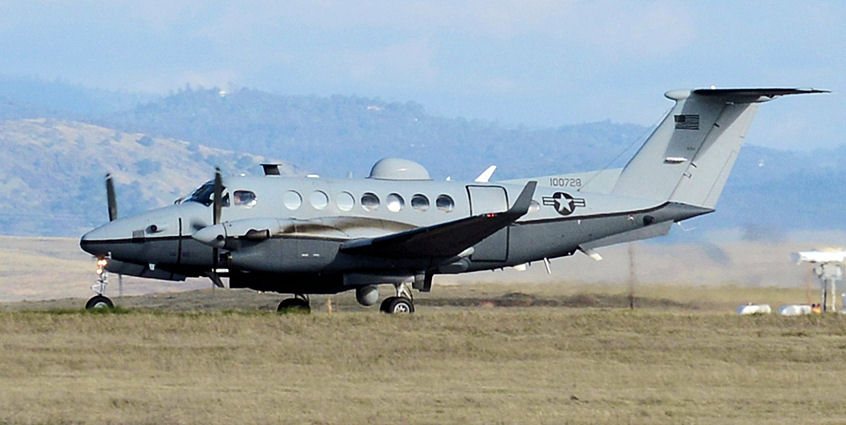
The MC-12W Liberty manned aircraft is a modified Hawker Beechcraft Super King Air 350 outfitted with sensors and cameras. The aircraft has seen extensive use in Afghanistan. The RQ-4 Global Hawk is the Air Force’s largest remotely piloted aircraft, and has been deployed to provide high-altitude surveillance. Global Hawks have deployed to the Middle East and flown “treaty verification” missions in the Middle East.
airforcetimes

Mar 31, 2014

Scrapping U-2 Won't Save As Much As Touted

Retiring all of its U-2 spy planes and replacing them with Global Hawk UAVs won’t save as much money as the US Air Force had said it would, since the unmanned systems will need upgrades to handle the mission, according to experts and service data.
To upgrade Northrop Grumman’s Block 30 Global Hawk, the Air Force intends to invest about $1.77 billion over the next 10 years. About $500 million of that is marked for a universal payload adapter that would allow U-2 sensors to be attached to the RQ-4 Global Hawk.
The Pentagon’s fiscal 2015 budget proposal submitted this month recommends retiring the U-2 fleet, which the Air Force has said will save about $2.2 billion. Subtract the $1.77 billion needed to upgrade the Global Hawk, and the savings drop to only $430 million.
The two aircraft perform a similar high-altitude ISR mission. But as recently as February, service leaders argued that the Global Hawk does not meet the full capabilities of the U-2 at a higher cost, and that politics was behind the push to keep the Global Hawk.
defensenews

Dec 16, 2013

Japan to buy 17 V-22s and 3 RQ-4s under new five-year Mid-Term Defense Program


Japan's new five-year Mid-Term Defense Program includes outlays for 17 new Osprey tiltrotor aircraft and three Global Hawk surveillance drones to help it respond to China's growing presence in the East China Sea.
The government plans to use the new aircraft to heighten its capabilities to protect remote islands and to monitor China's activities in waters and airspace near the disputed Senkaku Islands.
Further spending will include 28 F-35 Lightning fighter jets for the Air Self-Defense Force, as well as four new early-warning aircraft and three new air-refueling and transportation aircraft.
Since the government put the Senkaku Islands under state ownership in September 2012, Chinese government's vessels have repeatedly intruded into Japanese territorial waters around the islands, heightening tensions between the two countries.
ajw.asahi.com

Dec 9, 2013

Secret New UAS Shows Stealth, Efficiency Advances

A large, classified unmanned aircraft developed by Northrop Grumman is now flying—and it demonstrates a major advance in combining stealth and aerodynamic efficiency. The secret unmanned aerial system (UAS), designed for intelligence, surveillance and reconnaissance (ISR) missions, is scheduled to enter production for the U.S. Air Force and could be operational by 2015.
Funded through the Air Force’s classified budget, the program to build this new UAS, dubbed the RQ-180, was awarded to Northrop Grumman after a competition that included Boeing and Lockheed Martin. The aircraft will conduct the penetrating ISR mission that has been left unaddressed, and under wide debate, since retirement of the Lockheed SR-71 in 1998.
Neither the Air Force nor Northrop Grumman would speak about the classified airplane.
The RQ-180 carries radio-frequency sensors such as active, electronically scanned array (AESA) radar and passive electronic surveillance measures.
This aircraft’s design is key for the shift of Air Force ISR assets away from “permissive” environments—such as Iraq and Afghanistan, where Northrop Grumman’s non-stealthy Global Hawk and General Atomics’ Reaper operate—and toward operations in “contested” or “denied” airspace. The new UAS underpins the Air Force’s determination to retire a version of the RQ-4B Global Hawk after 2014, despite congressional resistance. The RQ-180 eclipses the smaller, less stealthy and shorter-range RQ-170 Sentinel.
If the previous patterns for secret ISR aircraft operations are followed, the new UAV will be jointly controlled by the Air Force and the CIA, with the program managed by the Air Force’s Rapid Capabilities Office and flight operations sustained by the Air Force. This arrangement has been used for the RQ-170, which is operated by the Air Force’s 30th Reconnaissance Sqdn., according to a fact sheet the Air Force released after one of the aircraft turned up in Iran.
Northrop Grumman’s financial reports point to a possible award of a secret UAS contract in 2008, when the company disclosed a $2 billion increase in the backlog in its Integrated Systems division. This is the operating unit responsible for building the B-2 bomber, Global Hawk and Fire Scout UAS and X-47B unmanned combat air system (UCAS) demonstrator. This year, Northrop Grumman financial reports acknowledged that an unnamed aircraft program entered low-rate initial production, the Pentagon term for low-volume deliveries that begin as testing nears completion and before the program is approved for full production.
Beyond the financial disclosures, publicly available overhead imagery shows new shelters and hangars sized for an aircraft with a 130-ft.-plus wing span at Northrop’s Palmdale, Calif., plant and at Area 51, the Air Force’s secure flight-test center at Groom Lake, Nev.
The company also pushed for a substantial expansion of its Palmdale production facilities in 2010, perhaps to support work on the RQ-180 (AW&ST Nov. 22, 2010, p. 28).
aviationweek

Nov 22, 2013

RQ-4 Block 40 Global Hawk deploys to war for first time

An RQ-4 Block 40 Global Hawk took off from Grand Forks Air Force Base, N.D., and flew into war for the first time Sept. 19, 2013 being the first time this specific model has been deployed into war.
The RQ-4 Global Hawk is a high-altitude, long-endurance unmanned aircraft system with an integrated sensor suite that provides intelligence, surveillance and reconnaissance, or ISR, capability worldwide.
Global Hawks are produced in four distinct blocks or models: Block 10, 20, 30 and 40. Block 40 uses the Radar Technology Insertion Program, an active electronically scanned array radar.
On Sept. 5, the RQ-4 achieved 100,000 flight hours.
af.mil

Nov 12, 2013

USAF places order for additional RQ-4 Global Hawk UAVs

Northrop Grumman has received an advance procurement contract from the(USAF) in preparation for production of additional RQ-4 Global Hawk unmanned aircraft.
The contract covers advance procurement of long lead items for three Block 30 UAS, including three enhanced integrated sensor suites, three airborne signals intelligence payload (ASIP) and two ASIP retrofit kits for installation on previously acquired drones.
The remotely piloted UAV has been used by USAF during wars in Iraq, Afghanistan and Libya, in addition to supporting intelligence gathering and reconnaissance efforts after the earthquakes in Haiti and Japan.
Global Hawk is also being used by NASA for scientific and environmental research projects.
airforce-technology

Sep 16, 2013

US Air Force to buy additional RQ-4 Global Hawk Block 30s

The US Air Force has issued a pre-solicitation notice to purchase additional Northrop Grumman RQ-4 Global Hawk Block 30 unmanned air vehicles (UAV), despite the potential retirement of the existing fleet.
The Air Force released a pre-solicitation notice on 12 September, notifying the public of its intent to buy Lot 12 aircraft.
The Block 30, initially purchased to augment and eventually replace the Lockheed Martin U-2 as a high-altitude intelligence, surveillance and reconnaissance (ISR) aircraft, has come under fire for reliability and sensor problems. A low rate of mission readiness coupled with the high cost of operation has led the USAF to repeatedly attempt to cancel the programme, saying that the U-2 and a classified platform could fulfill Global Hawk's mission. The sensors Global Hawk carries, the Enhanced Imagery Sensor Suite (EISS) and Airborne Signals Intelligence Payload (ASIP), received mixed reviews.
flightglobal

Sep 6, 2013

Japan faces hurdles in plan to deploy drones

Legal restrictions and safety precautions are threatening to stand in the way of Japan's plan to bolster its surveillance capabilities.
The Defense Ministry requested 200 million yen ($2 million) for research in the fiscal 2014 budget, with an eye on introducing at least one unmanned surveillance aircraft in fiscal 2015.
The candidate being considered is the RQ-4 Global Hawk, built by Northrop Grumman of the United States. It can fly for more than 28 hours at an altitude of 18 kilometers.
asahi