Translate

Showing posts with label GENERAL ATOMICS. Show all posts

Aug 21, 2024

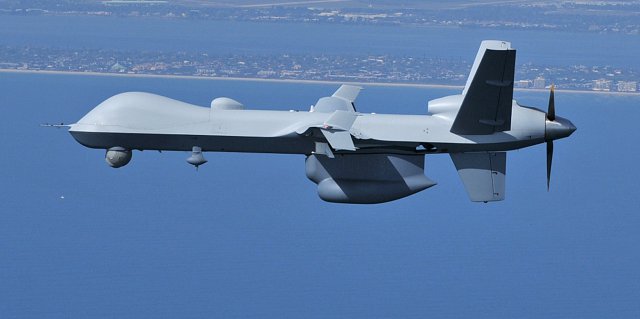
Japan acquires two additional MQ-9B SeaGuardian drones to enhance maritime surveillance

The Japan Coast Guard (JCG) has expanded its fleet of uncrewed aerial vehicles (UAVs) by ordering two additional SeaGuardian drones from General Atomics Aeronautical Systems, Inc. (GA-ASI), with delivery expected in 2025. These UAVs will be equipped with the advanced Optix+ software suite, which utilizes sensor fusion to collect and analyze data from the drones’ sensors and other sources, providing a comprehensive operational overview.

This latest acquisition builds on the JCG’s earlier agreements with GA-ASI. Since April 2022, the JCG has operated SeaGuardians under a Company-Owned, Contractor-Operated (COCO) arrangement, conducting extensive Maritime Wide Area Search (MWAS) operations over the Sea of Japan and the Pacific Ocean from the Hachinohe Air Base. The success of these missions prompted the JCG to further enhance its capabilities, adding two more SeaGuardians in May 2023, which were notably utilized during the G7 Summit in Hiroshima and in search and rescue efforts after the Noto Peninsula Earthquake.

The new SeaGuardians will be based at Kitakyushu Airport in Fukuoka Prefecture, marking a transition from Hachinohe Air Base as the JCG’s lease concludes in March 2025. Sojitz Corporation, which is responsible for delivering and supporting these UAVs, emphasized its ongoing commitment to bolstering Japan’s maritime safety and security.

These UAVs come equipped with Raytheon’s SeaVue radar, advanced electro-optical and infrared sensors, and Automatic Identification Systems (AIS), enhancing the JCG’s maritime patrol and rescue missions. Sojitz Corporation, a longtime supplier to the JCG, will continue providing support through delivery and maintenance of these UAVs.

Jul 16, 2018

The Netherlands plan to sign Reaper drone deal this week

The Netherlands plans to sign an agreement to buy four unmanned Reaper drones this week.
A Letter of Agreement for the surveillance drones could have been signed at the Farnborough International Airshow.
The deal for the MQ-9 Reaper drones, made by California-based General Atomics, was first approved by the U.S. State Department back in 2015.
The Dutch government said the intent to purchase was announced in 2016 as part of the Medium Altitude Long Endurance Unmanned Aerial Vehicle program. The deal was opposed by some Dutch lawmakers on July 5.
reuters

Dec 24, 2015

Final Two RQ-1 Predators Delivered to Italian Air Force

General Atomics announced that the Italian Air Force (ItAF) has accepted delivery of two RQ-1 Predator RPA systems, marking final deliveries of GA-ASI's Predator A product line, completing over two decades of delivering Predator A capabilities to the United States and other allied countries.
The Italian Air Force is a leader in the utilization of Predator and MQ-9 RPA to support a wide range of Intelligence, Surveillance, and Reconnaissance (ISR) missions in Italy, over the Mediterranean, and in support of NATO operations. Italy is the first country in Europe to have achieved an RPA airworthiness certification.
ga-asi.com

Jul 16, 2014

Pentagon Delays Navy’s Carrier Drone Program

The Pentagon has delayed the carrier-launched drone program amid ongoing reviews of the program’s requirements.
A planned competition among defense companies has been put on hold as the Pentagon examines plans for the drone and responds to criticism from lawmakers that the initial requirements have been too narrowly configured.
A formal Request For Proposal, or RFP, which had been planned for release by the Navy later this month, has been delayed by a few weeks.
The Navy plans to deliver a carrier-based drone by 2020, called the Unmanned Carrier Launched Airborne Surveillance and Strike, or UCLASS, system.
Criticism of the requirements has come, in large measure, from analysts, defense officials and lawmakers.
Through the engineering of stealth platforms such as the B-2 bomber, the Air Force has extensive experience designing low-observable or stealth aircraft.
Analysts have questioned whether the platform can adapt over time or whether features like stealth and electronic attack need to be engineered into the original design at from the start.
In particular, low-observable or stealth specifications are needed to help the UCLASS evade increasingly sophisticated enemy air defenses and a broadly scoped payload or weapons delivery capability is needed to maximize its effectiveness for future engagements.
Furthermore, the UCLASS drone will need to overcome what the Pentagon refers to as anti-access/area-denial, or A2/AD threats, meaning adversaries with increasingly sophisticated long-range missiles and air defenses, among other things.
One source explained if the UCLASS is configured to carry the extra fuel needed for longer-endurance missions, then it will need to be built with a larger vertical signature and therefore have a less-stealthy design. For this reason, advocates for more expansive requirements have favored planning for more aerial refueling of the drone in order to ensure that it is engineered with a stealthy, low-observable design.
While not willing to comment publically on plans for stealth or low-observability for UCLASS, Navy program officials have maintained that the program’s requirements do call for a weaponized strike platform as well as an ISR vehicle. However, the weapons capability is something that is described as incremental, meaning it will be engineered into the platform over time, Navy officials explained.
Critics however, have questioned whether this is possible and favored building an original design at the beginning of the program with stealth and weaponry factored into the construction and engineering.
Last summer, the Navy awarded four contracts valued at $15 million for preliminary design review for the UCLASS to Boeing, General Atomics Aeronautical Systems, Lockheed Martin and Northrop Grumman.
dodbuzz

Mar 4, 2014

Turkey mulls unarmed Reaper drones from US

Turkey’s defense could request U.S. congressional approval for the sale of an unarmed version of MQ-9 Reaper drones, after its appeal for an armed version failed.
Turkey has long been unsuccessful in its quest to secure Washington’s approval for the sale of the drone’s armed version.
hurriyetdailynews

Feb 17, 2014

Heron, Reaper and Hermes 900 Compete for Canada’s Arctic mission

The Israel Aerospace Industries (IAI) Heron unmanned air system (UAS), General Atomics Reaper and Elbit Systems’ Hermes 900 are among three platforms eyed for a Canadian tender to supply an advanced system for operation in the Arctic.
General Atomics’ Guardian is a marinized verstion of the MQ-9 Reaper, designed for maritime and border patrol missions. Canada’s military wants its next unmanned aircraft system to be cap­able of dropping search-and-rescue sup­plies in the Arctic and in other areas as it looks to expand UAS roles into activities formerly conducted by manned platforms.
Head of the Royal Canadian Air Force, explained that UAS could carry some equipment, whether it is weapons or other equipment, to be able, when it is patrolling the Arctic, to carry a search-and-rescue package to drop any time.
The Air Force did not respond to questions about whether it would be willing to fund research and testing into adding equipment transport capability to UAS. But a National Defense Department source said the Air Force hopes industry will provide solutions to Canada’s project to purchase the UAS, known as the Canadian Forces Joint UAV Surveillance and Target Acquisition System (JUSTAS). Adding additional weight for every mission of an unmanned mission is unlikely as the extra weight will reduce the volume of fuel carried on board, dramatically reducing mission endurance, increasing system’s wear (due to excessive takeoff and landing) and increasing the risk of losing aircraft.
The Air Force’s quest for leading-edge UAS technology has raised some concerns. John McKay, the defense critic for the opposition Liberal Party in the House of Commons, said he is worried that adding such a capability would further delay JUSTAS, which has already fallen years behind schedule.
defense-update

Jan 21, 2014

Morocco to acquire surplus French Harfangs UAV

The Royal Moroccan Air Force is evaluating the purchase of additional Israel Aerospace Industries Heron 1/Harfang unmanned air systems via France.
A version of the medium-altitude, long-endurance Heron adapted for the French air force, the Harfang is used to perform strategic reconnaissance and tracking missions.
According to foreign sources a Moroccan purchase of three Harfang UAS has been made, with Israeli approval, and additional aircraft could follow. The ties between Morocco and Israel are good, despite the fact that diplomatic relations between the nations were cut in 2000.
It is not clear what payloads will be carried by the UAS Morocco has purchased, but these are likely to be Israeli-produced.
The French air force recently fielded its first two of a planned 12 General Atomics Aeronautical Systems Reaper UAVs, with the aircraft now supporting its military intervention in Mali.
flightglobal

Dec 21, 2013

France to use unarmed U.S.-made drones to hunt al Qaeda in Mali


France will deploy its first U.S.-made unarmed surveillance drones to West Africa by the end of the year, as it seeks to "eliminate all traces of al Qaeda".
France's military intervention in Mali in January exposed its shortage of surveillance drones suitable for modern warfare, forcing it to rely on the United States to provide French commanders with intelligence from drones based in neighboring Niger.
Paris said in June it would buy 12 Reaper reconnaissance drones built by privately owned U.S. firm General Atomics to eventually replace its EADS-made Harfang drones.
Niger gave permission in January for U.S. surveillance drones to be stationed on its territory to improve intelligence on al Qaeda-linked Islamist fighters in the region.
France intervened in Mali at the start of the year as Islamist forces, who seized control of the north in the confusion following a military coup in March 2012, pushed towards the capital Bamako.
reuters

Sep 11, 2013

RAF officials see post-Afghanistan role for Reaper

An expected end to UK combat involvement in Afghanistan before the end of 2014 is unlikely to mean the end for its General Atomics Reaper remotely piloted air systems , according to Royal Air Force assistant chief of the air staff.
The Ministry of Defence has yet to decide on the exact composition of RAF's Reaper force beyond combat operations in Afghanistan.
Current RAF projections suggest that around one-third of the service's combat aircraft inventory will be unmanned by the 2030s.
flightglobal

Aug 16, 2013

US Navy Moves Ahead To Develop Unmanned Carrier Aircraft

The US Navy has awarded four development contracts to develop designs to compete for the Unmanned Carrier Launched Airborne Surveillance and Strike (UCLASS) Air Vehicle.
The contracts went to the Boeing Co., General Atomics Aeronautical Systems, Inc., Lockheed Martin Corp. and Northrop Grumman Systems Corp.
According to the contract announcements, the preliminary design review assessment is to support UCLASS, a system “to enhance aircraft carrier/air wing operations by providing a responsive, world-wide presence via an organic, sea-based unmanned aerial system, with persistent intelligence, surveillance, reconnaissance, and targeting, and strike capabilities.”
defensenews

Jun 28, 2013

GENERAL ATOMICS to Develop Predator B Variant to Meet NATO/European Airworthiness Standards

General Atomics announced that it is undertaking an Independent Research and Development (IRAD) effort to develop a variant of its Predator® B RPA that is fully compliant with the airworthiness requirements of the U.S. Air Force and anticipated NATO foreign customers, as well as offers enhanced capabilities for integration into domestic and international airspace.
It is envisioned that the system solution will be a multi-nation, certifiable, exportable configuration built upon the company’s Block 5 Predator B aircraft capabilities and Advanced Cockpit Ground Control Station (GCS) layout.
media.ga.com