Translate

Showing posts with label KONGSBERG JOINT STRIKE MISSILE. Show all posts

Nov 10, 2023

Spain Authorizes 580 Million Euro Deal for Patriot and NSM Missiles

Spain's Council of Ministers, in its meeting on November 7, has given the green light to two missile purchase programs, amounting to a combined total of €580 million. This significant decision is a crucial component of Spain's broader initiative for the rearmament of its Armed Forces, a strategic move influenced by the insights gained from the conflict in Ukraine. The two programs in question involve the acquisition of Patriot missiles and Naval Strike Missiles (NSM), with a substantial budget allocation of €400 million for Patriots and €180 million for NSMs.

Patriot Missile Program:


The procurement of state-of-the-art Patriot missiles is deemed imperative for ensuring the continued effectiveness of the missile defense system. The goal is to replace outdated components, guaranteeing the security of Spain's national airspace and upholding commitments made within the NATO alliance. The estimated value of the Patriot missile framework agreement is €400 million. This advanced missile system, configured in the 3+ setup, is designed to intercept and neutralize ballistic missiles, showcasing enhanced precision and capabilities at distances exceeding 100 kilometers.

The Spanish Ministry of Defense, in its pursuit of modernization, authorized the acquisition of Patriot missiles from the United States in early October, specifying the 3+ configuration. The comprehensive program involves the upgrade of launchers in the Army to the 3+ configuration, along with the procurement of the latest Patriot Advanced Capability-3 (PAC-3MSE) missiles. All launchers, both upgraded and new, are set to be integrated into the heavy-duty Iveco vehicles currently in service across the Armed Forces. These new missiles, although smaller in size, boast advanced onboard technology significantly enhancing their precision compared to earlier versions. Their primary mission is to intercept and bring down ballistic missiles at distances well beyond 100 kilometers.

Spain initially acquired its first Patriot battery from Germany in 2004, followed a decade later by the purchase of two additional second-hand batteries from Germany to fulfill commitments made during the NATO summit in 2014. The Army received these acquisitions, including the Central Control and Information (ICC) station, vehicle carriers, communication equipment, and logistical elements, in June 2015. One of the three batteries is permanently deployed in NATO's Active Fence mission in Turkey, safeguarding the city of Adana against potential ballistic missile threats from neighboring Syria.

NSM Missile Program:


The Spanish Navy has opted for the NSM, developed by Kongsberg Defence & Aerospace, to replace the aging Harpoon missile system. The NSM is slated to be equipped on F-100 frigates after their mid-life upgrade and on the upcoming F-110 class frigates and S80 submarines. The collaboration between the Spanish shipbuilder Navantia and Kongsberg aims to foster joint efforts in integrating NSMs into both current and future naval units.

The NSM, with a remarkable range exceeding 185 kilometers, is set to replace the Harpoon missiles currently in service with the Spanish Navy. The retirement of the Harpoon missiles is anticipated around 2030, aligning with current plans. Notably, the NSM has garnered recent interest from other European countries such as the United Kingdom, the Netherlands, and Poland. In late 2022, the Spanish Government granted the Ministry of Defense the authority to enter into a contract valued at €125 million for the acquisition of NSMs. However, specific details regarding the quantity of missiles and associated equipment included in the order have not been disclosed as of now.

The NSM's multifaceted capabilities make it a versatile addition to the Spanish Navy's arsenal. With a range that far exceeds its predecessor, the NSM not only serves as an anti-ship missile but also provides the capability for selective and precise attacks on land targets. Equipped with a military-grade GPS navigation system and a laser altimeter, the NSM employs Terrain Reference Navigation (TRN) to identify targets, using the same image recognition system employed against naval targets. Its cutting-edge technology, including a sophisticated infrared image recognition system and a high-explosive warhead encased in a titanium shell, ensures accurate target discrimination and minimizes collateral damage.

In conclusion, Spain's recent approval of these missile acquisition programs underscores its commitment to modernizing and fortifying its defense capabilities. This strategic move reflects a proactive response to evolving geopolitical challenges and aims to position Spain as a technologically advanced and capable force on the global stage.

Related:

Spain reinforces its air defense with new Patriot missile batteries PATRIOT Configuration-3+ Modernized

Italian Fincantieri Wins $795M Contract for US Navy FFG(X) Frigate Program, beating Spanish Navantia F-110

Spain could build 3 AWD destroyers and 6 corvettes for Australia due to cost overruns in its current frigate manufacturing program

Nov 1, 2017

Indonesia selects NASAMS air defence system

KONGSBERG has signed a contract worth 77 MUSD with the Ministry of Defence of Indonesia to supply a NASAMS air defence system.
The contract comprise delivery of a complete NASAMS system with command posts, radars, launchers, radios and integration, and training and logistics support. AMRAAM missiles will be provided in a separate government-to-government agreement between Indonesia and the United States.
Several nations have chosen NASAMS, including Norway, Finland, The Netherlands, USA, Spain, Oman and now Indonesia.
kongsberg

Nov 15, 2015

F-35's Joint Strike Missile Completes Flight Test

The Joint Strike Missile designed for the F-35 fighter jet successfully completed a flight test last week.
The missile was launched from an F-16 based out of Edwards Air Force Base, California, over the Utah Test and Training Range, according to a Nov. 11 statement from Norwegian defense company Kongsberg, which develops the JSM jointly with Raytheon. The successful test validated the maturity of the JSM, according to the release.
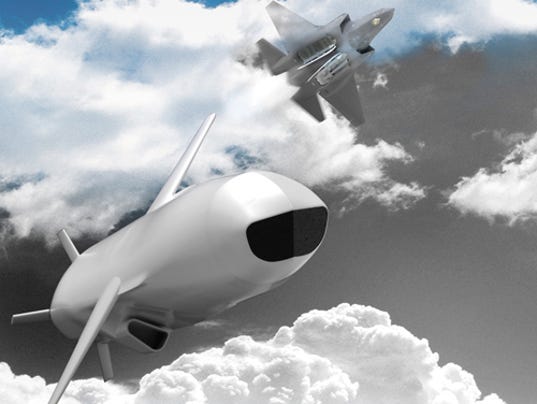
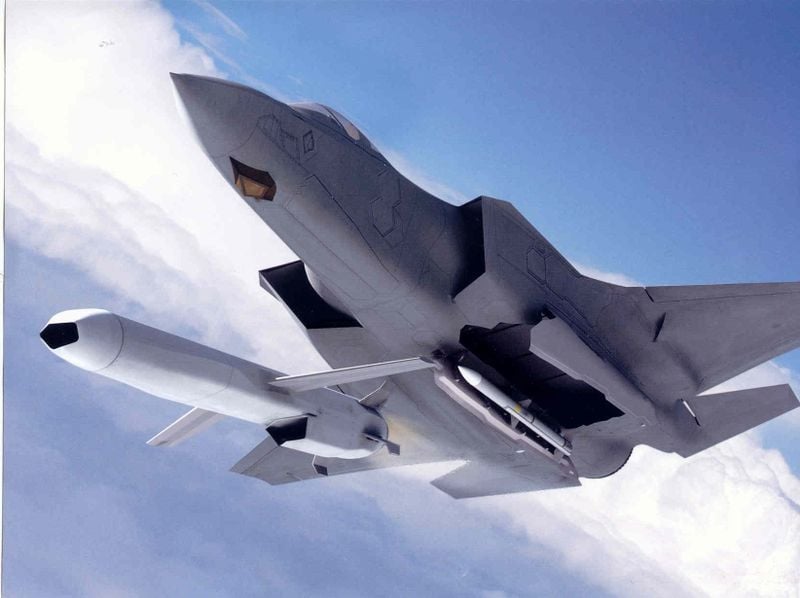
The medium-range, anti-ship and land-attack JSM is specifically designed to fit inside the Air Force conventional take-off and landing F-35’s weapons bay, but can also be modified to fit the Navy and Marine Corps variants. Norway is buying 52 F-35s, which will integrate the JSM.
Marking a crucial step forward for the international program, Norwegian F-35 pilots are about to begin training alongside their US and Australian counterparts at Luke Air Force Base, Arizona. Two Norwegian F-35s touched down at Luke on Tuesday, and later that day a Norwegian pilot flew the plane for the first time, according to a Lockheed Martin statement.
defensenews

Feb 27, 2015

Norway, Australia To Join on Konsberg JSM Naval Missile

Australia has entered into a co-operative agreement with Norway to develop an advanced maritime strike missile for the F-35A.
Norway's Kongsberg Defence Aerospace is developing the Joint Strike Missile (JSM) to meet its maritime strike requirements.
The co-operative agreement will ensure the weapon will be ready in time for Australia's F-35A final operating capability (FOC) in 2023.
BAE Systems Australia is working with Kongsberg Defence Aerospace to integrate an independent sensor on the JSM to detect and identify hostile radars.
defensenews

Jul 29, 2014

USS Coronado Littoral Combat Ship to Conduct Test of Konsberg Norwegian Missile

The littoral combat ship USS Coronado will get a chance at an historic LCS first this fall when it launches a surface-to-surface missile in tests off Southern California.
The US Navy confirmed this week that the Coronado is scheduled to test-launch the Kongsberg Naval Strike Missile (NSM) off Point Mugu, California, where the Naval Air Warfare Center maintains an extensively-instrumented missile range.
The test will follow a successful NSM launch July 10 from the Norwegian frigate Fridtjof Nansen during Rim of the Pacific (RIMPAC) exercises near Hawaii. The frigate fired a single NSM at the decommissioned amphibious ship Ogden and scored a direct hit.
The NSM is a 13-foot-long weapon already in service aboard Norwegian warships and with Polish defense forces in a land-based, truck-mounted version. A helicopter-launched version is under development, and the company recently announced it was working on a smaller, submarine-launched variant.
Kongsberg has been aggressively targeting the US Navy as a potential NSM customer. The LCS, although planned to carry the non-line-of-sight missile, has been without a missile system since the US Army cancelled NLOS development in early 2011. The Navy recently decided to begin development work to adapt the proven Hellfire missile to naval use for the LCS.
The NSM, in the 500-pound class of missile, is significantly larger than the Hellfire, in the 100-pound class. The smaller missile could essentially be a placeholder until a more effective weapon can be identified.
In addition to Kongsberg, other missile makers, including Raytheon and Lockheed Martin, have been working on potential weapons to arm the LCS. Lockheed makes the Hellfire, while Raytheon’s small Griffin missile was briefly considered, then dropped, as an interim weapon aboard LCS.
defensenews

Jul 23, 2014

Australia seeks participation in Kongsberg's JSM

Australia is seeking expanded engagement in Norway's air-launched anti-ship Kongsberg Joint Strike Missile (JSM) programme.
The collaboration project is framed around both countries' participation in the Lockheed Martin F-35. The JSM has been conceived as a precision-strike missile specifically designed for the internal carriage in F-35A and F-35C variants of the aircraft.
Although Australian industry has previously participated in the JSM programme, new rounds of discussions between the two countries are focused on potentially expanding collaboration with a focus on the missile's integration onto the F-35.
janes

Jul 20, 2014

Norway’s Joint Strike Missile Tempts Aussies; Raytheon Likes It Too

It’s a remarkable story, really. A fairly tiny country, Norway, decides to place a $1.3 billion bet on developing one of the world’s most capable missiles to be fired from what will probably become the world’s most popular fighter, the F-35.
The missile, known as the Joint Strike Missile, may become a standard weapon for the Joint Strike Fighter. Australia expressed interest in buying them at a meeting last month.
Also, the Norwegians have pitched the weapon, built by Kongsberg Defence & Aerospace, to Japan and South Korea and will probably try to sell it to everyone who buys an F-35.
The JSM is the first weapon specifically designed to fit inside the F-35’s stealthy weapons bays (although the missile does not fit the Marine’s F-35B version of the aircraft because it has an adumbrated bay thanks to its vertical lift capabilities).
It’s got impressive stand-off range, a very small profile, the ability to hide using nap-of-the-earth flight and by using topographical data in its guidance system, and it can evade destruction in its final approach to the target through sharp maneuvers, the Norwegians say.
One of the giant American primes clearly believes the missile has promise. Raytheon and Kongsberg announced that they will team to compete for the ”Offensive Anti-Surface Warfare” (shortened to the incredibly awkward OASuW) program for which the US Navy has placed more than $1 billion in the budget over the next five years. The program, which must get a new name, will replace the old Harpoon anti-ship missile.
breakingdefense

Mar 15, 2013

Joint Strike Missile makes F-35 debut


Kongsberg's developmental Joint Strike Missile (JSM) has been attached to a Lockheed Martin F-35 for the first time at the airframer's Fort Worth, Texas facility.

Installed on 27 February as part of a "fit check" using one of the stealthy fighter's external weapons pylons, the munition will undergo a further test later this year to verify that it is also able to be carried within the F-35's internal weapons bay.

Lockheed will conduct similar external trials on all three variants of the fighter, while internal fit checks of the JSM will be confined to the conventional take-off and landing F-35A ordered by Norway.

flightglobal

Dec 3, 2012

Norway pushes for further assurances over JSM integration on F-35


Norway's deputy defence minister is to meet with officials from Lockheed Martin and the F-35s Joint Program Office in the first week of December, as Oslo seeks further assurances over the integration of the Kongsberg Joint Strike Missile (JSM) on to the stealthy fighter.

flightglobal