Translate

Showing posts with label MBDA. Show all posts

Sep 8, 2026

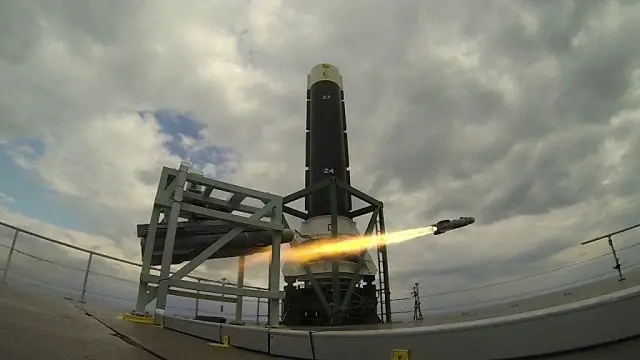
La Armada recupera la defensa de punto con el SIMBAD RC


La Armada Española ha firmado con MBDA un acuerdo marco para el suministro de tres sistemas de defensa antimisil SIMBAD RC, incorporando una capacidad especialmente relevante: la defensa de punto mediante misiles de muy corto alcance, de la que actualmente carece la Flota. El contrato, valorado en unos 30 millones de euros y con una duración de diez años, supone la recuperación de una capa de protección cercana para los buques de la Armada.

El SIMBAD RC emplea el misil Mistral y está diseñado para proporcionar autodefensa frente a diferentes amenazas aéreas, entre ellas misiles antibuque, aeronaves, helicópteros y drones. El sistema puede actuar como defensa principal de un buque que no disponga de sistemas antiaéreos más complejos, pero también como una última capa complementaria a las defensas de mayor alcance. Está operado remotamente desde el interior del buque y puede funcionar con un único operador.

La importancia del programa está precisamente en esa capacidad de defensa cercana. Los principales escoltas de la Armada disponen de sistemas de defensa aérea de mayor alcance, pero no existía hasta ahora una solución misilística específica de defensa de punto para proteger directamente al buque frente a una amenaza que consiga atravesar las capas exteriores de su defensa. El SIMBAD RC viene a cubrir ese vacío, algo especialmente relevante en un escenario en el que los misiles antibuque y los sistemas aéreos no tripulados han aumentado su protagonismo.

La primera fase contempla tres sistemas. La información publicada por Naval News apunta a su instalación inicial en dos fragatas de la clase Santa María (F-80) y en el buque de proyección estratégica Juan Carlos I, aunque la comunicación oficial de MBDA se limita por ahora a señalar que los sistemas serán integrados en unidades navales operativas.


El momento de la adquisición tampoco es casual desde el punto de vista operativo. La proliferación de drones, municiones merodeadoras y otras amenazas de bajo coste está obligando a las marinas a reforzar sus defensas de última línea. En el caso de un buque de guerra, disponer de un misil como el Mistral 3 permite añadir una respuesta rápida contra objetivos que hayan penetrado las defensas exteriores o que, por sus características, no justifiquen el empleo de un sistema de mayor alcance.

El SIMBAD RC no sustituirá a los sistemas de defensa aérea de los grandes escoltas. Su función es diferente: crear una última barrera alrededor del buque. MBDA define precisamente el sistema como una solución capaz de proporcionar defensa propia o actuar como una capa interior complementaria a los sistemas principales.

La incorporación del SIMBAD RC también resulta significativa por lo que representa para la evolución de la Armada. El programa llevaba años sobre la mesa: ya en 2019 se estudió la integración de una solución basada en el Mistral en diferentes buques de alto valor estratégico. Siete años después, aquella necesidad se convierte finalmente en una capacidad contratada.

Además, esta podría ser solo la primera fase. Naval News señala que existen negociaciones con Navantia para extender posteriormente el sistema a otras unidades de superficie, incluyendo futuros buques de asalto anfibio y corbetas europeas. De confirmarse, el SIMBAD RC podría terminar convirtiéndose en una capacidad mucho más extendida dentro de la Flota.

Con esta adquisición, la Armada no solo incorpora tres nuevos sistemas antimisil. Recupera una capacidad de defensa de punto cercana que hasta ahora no tenía, precisamente en un momento en el que proteger un buque frente a drones y misiles antibuque exige disponer de varias capas de defensa. El SIMBAD RC aporta esa última línea de protección basada en el Mistral y permite cerrar una de las brechas existentes en la defensa de los buques españoles.

Apr 13, 2015

Turkey Receives Last Upgraded F-16

The Turkish Air Force received the last of a batch of F-16 fighter jets which underwent a comprehensive upgrade program.
The upgrade program substantially boosts Turkey's air combat power.
In 2011, the Turkish and US governments signed a letter of offer and acceptance (LOA) for the modernization of 117 Turkish Air Force F-16s to a common avionics configuration.
The upgrade created a common avionics configuration for the service's fleet of F-16 Block 40 and 50 aircraft. Systems integrated on Turkey's upgraded F-16s include:

  • The AN/APG-69(V)9 radar installed on new F-16 Advanced Block 50/52 aircraft
  • Color cockpit displays
  • The Modular Mission Computer and new avionics processors
  • The Joint Helmet-Mounted Cueing System (JHMCS)
  • The Link 16 datalink
  • New identification-friend-or-foe (IFF) transponders
  • AN/AVS-9 night-vision goggles
  • Upgraded navigation systems; and BAE Systems' AN/ALQ-178(V)5+ electronic-warfare (EW) system, mounted internally, with radar-warning and jamming capabilities for aircraft self-protection

The aircraft were also modified to accept new missile systems of unspecified types; some potential candidates include the AIM-9X Sidewinder, AIM-120 AMRAAM, and MBDA Meteor.
The deal was conducted under the US Foreign Military Sales (FMS) program, with Lockheed Martin as principle contractor, although the actual modification of the aircraft was performed by TAI.
defensenews

Feb 23, 2015

Typhoon Set For PE3 Upgrade, integrating Brimstone Missile

The Typhoon combat jet will receive a £165 million makeover with a new package of enhancements that will include integration of the Brimstone 2 missile, representatives of the four-nation program announced on the opening day of the IDEX defense show on Sunday.
The single largest part of the package is the £72 million deal with BAE Systems to complete integration of MBDA's air-to-ground Brimstone 2, which has already won plaudits for its ability to strike small fast-moving targets with low collateral damage during missions in Afghanistan, Libya and now Iraq.
The weapon is already installed on Royal Air Force and Royal Saudi Air Force Tornado strike jets, but with the jet due to be taken out of service no later than 2019, Brimstone's combination of lethality and low collateral damage would have been lost on piloted aircraft without the integration order.
The deal for what is known as Phase 3 Capability Enhancement (PE3) also includes software tweaks to the aircraft to enhance the capabilities of the Storm Shadow, Paveway IV, Meteor and ASRAAM missile either already integrated on the jet or in the process of being married to the airframe.
Typhoon jets have recently become operational with new capabilities in what is known as the Phase 1 Enhancement Package. Phase 2 enhancement work is already underway adding improvements like the Storm Shadow and Meteor missiles.
Completion of PE3 is scheduled for 2017.
Bahrain, Kuwait, Qatar and the United Arab Emirates are all in the hunt for combat jets in competitions that have attracted the attention of fighter makers from the US and Europe scrambling for work to maintain production lines threatened by the looming presence of Lockheed Martin's F-35.
The Typhoon has already been sold to regional export customers Oman and Saudi Arabia.
Qatar could be the first to declare its hand on selection of a new fighter. A second industry executive said a decision could come sometime in the third quarter of this year.
defensenews

Feb 4, 2015

Saudi Arabia bought MBDA's Meteor air-to-air missiles for its Typhoon fighter aircraft

The Kingdom of Saudi Arabia and MBDA have signed the first export contract of the Meteor active radar guided beyond-visual-range air-to-air missile (BVRAAM).
The Meteor missiles will be fitted on the 24 Eurofighter Typhoon already delivered to the Royal Saudi Air Force.
airrecognition

Dec 12, 2014

Succes of First Storm Shadow Missile Release From an Eurofighter Typhoon

Alenia Aermacchi and Eurofighter partners have successfully conducted the first release of a Storm Shadow missile from a Eurofighter Typhoon.
The trials took place in November and saw the missile being released from the aircraft and tracked by radar up to impact.
Another Eurofighter partner, BAE Systems, has completed the first trial installation of a Storm Shadow missile onto a RAF Typhoon with support from weapons provider MBDA.
Storm Shadow, already in service with the Italian Air Force and Royal Air Force Tornados, is a conventionally armed, stealthy, long-range stand-off precision weapon designed to neutralise high value targets.
The new weapons system will add the capability to strike in day or night in all-weather conditions, well-defended infrastructure targets such as port facilities, control centres, bunkers, missile sites, airfields and bridges that would otherwise require several aircraft and missions. This is a new addition to the Eurofighter Typhoon’s potent simultaneous multi-/swing-role capabilities.
Powered by a turbo-jet engine, with a range in excess of 250 km, the Storm Shadow missile weighs approximately 1.300kg and is just over 5 metres long. It will be available to operators when the Eurofighter Typhoon Phase 2 Enhancements become operational.
The first tests on Storm Shadow integration for the Eurofighter began in December 2013 with development aircraft IPA2 operated by Alenia Aermacchi.
The recent inert drop-tests and store release trials will now be followed by work on the instrumented missiles for the Environmental Data Gathering tests known as Phase 3. eurofighter

Jul 20, 2014

RAF Tornados to get Brimstone 2 missiles in 2015

MBDA has started production of its Brimstone 2 air-to-ground missile and expects the type will enter service in 2015 on Royal Air Force Tornado GR4s.
Brimstone 2 has more range and accuracy, and a more-lethal warhead, than the original Brimstone. The weapons have semi-active laser guidance and millimeter wave radar, which allows them to strike moving targets.
The RAF’s Eurofighter Typhoons are also scheduled to receive the munition, but not until much later in the decade.
flightglobal

Jul 7, 2014

Japan's Mitsubishi eyes F-35 missile deal with Europe's MBDA

Japan's Mitsubishi Electric has agreed to take the first step towards a partnership with European missile maker MBDA to develop a medium-range air-to-air missile for the F-35 stealth fighter.
The preliminary deal marks an extension of Prime Minister Shinzo Abe's bid to launch Japan's military suppliers into the global arms market through international tie-ups, and thereby bring down costs for Japan's defense procurement.
If successful, it would represent the first time Japanese-built components had been used on a missile sold overseas, one of a string of potential international arms deals to emerge since Abe's government moved in April to end a more than four decade-old ban on military exports.
Mitsubishi Electric, is the prime supplier of air-to-air missiles to Japan's Self Defense Forces.
reuters

Jun 11, 2014

Eurofighter Studying Missiles To Give Typhoon Maritime Attack Capability

Eurofighter is looking at giving the Typhoon a maritime attack capability and is investigating at least three missiles to meet potential requirements for export.
At least two of Typhoon’s current export targets are requesting a maritime attack capability. The Boeing Harpoon and MBDA’s Marte and Sea Brimstone missiles were being considered as possibilities for the European multi-role combat jet.
Qatar and Malaysia are known to have stipulated a maritime-strike capability for their next purchase of combat jets.
A decision on a new fighter purchase could be made soon by Qatar. Dassault Aviation’s Rafale, which is capable of carrying the Exocet, and the Boeing F/A-18 Super Hornet provide the main opposition.
Harpoon is already integrated on the Super Hornet.
Malaysia is caught up with budget issues and is more likely to lease jets than purchase them outright. Saab’s Gripen and the Super Hornet are both contenders along with the Typhoon.
The British are already looking at integrating the standard Dual Mode Brimstone missile on to Typhoon.
MBDA has done air and land launches of a maritime version of a weapon it’s see’s as providing a solution to the threat posed by swarms of fast attack craft in the littoral.
defensenews

Apr 29, 2014

Brazilian Navy signs Exocet missile contract

The Brazilian Navy has signed a contract with Brazilian Aerospace Avibras to develop a new version of the Exocet AM39 B2 air-to-surface missile produced by European missile house MBDA.
The weapon is to be used on the Eurocopter EC725 that is being produced for the Brazilian Navy by Helibrás in Sao Paulo.
The AM39 will have about 50% domestic content with a Brazilian motor.
janes

Apr 23, 2014

Typhoon starts windtunnel tests with conformal fuel tanks

The Eurofighter Typhoon’s proposed conformal fuel tank (CFT) configuration has entered windtunnel testing in the UK.
BAE is currently assessing the aerodynamic characteristics of carrying two fuselage-mounted conformal fuel tanks on the Typhoon aircraft.
A new configuration item for the Tranche 3 production standard Typhoon, the conformal structures would free up under-wing pylons frequently used to carry external fuel tanks, but recently employed in testing to carry the MBDA Storm Shadow and Taurus Systems KEPD 350 cruise missiles. All Tranche 3 aircraft are being manufactured with the required structural and fuel system modifications to carry the CFTs.
The four-nation Eurofighter consortium exhibited a full-size model of the Typhoon with the conformal tanks fitted at the Dubai air show last November, with the adaptation having been on offer to the United Arab Emirates, which subsequently halted talks linked to a potential Typhoon acquisition.
flightglobal

Mar 29, 2014

UK, France Ink Deal To Produce Helo Anti-Surface Missile

Britain and France have signed a deal with MBDA to demonstrate and produce a helicopter-mounted anti-surface missile.
The weapon, known in Britain as the Future Anti-Surface Guided Weapon (Heavy) or FASGW(H) for short, is the first major collaborative production deal to emerge from the Anglo-French defense treaty signed in 2010.
Contracts to develop a second missile type, the FASGW (Lite), and a deal with AgustaWestland to integrate both weapons on the new AW159 Wildcat helicopter destined for the Royal Navy, are expected in the second quarter of the year.
The two nations finally approved a deal to go ahead with the FASGW(H) program at the Anglo-French summit, which took place Jan 31.
Delays in French approval threatened to jeopardize the Anglo-French Defence Treaty before Paris signaled last year it would go ahead with the program.
FASGW(H) will be capable of destroying targets from fast inshore attack craft to large vessels, such as corvettes.
defensenews

Mar 24, 2014

Poland speeds up missile defense plan amid Ukraine crisis

Poland has decided to speed up its tender for a missile defense system, in a sign of Warsaw's disquiet over the tension between neighboring Ukraine and Russia.
Poland had planned to determine the supplier of its missile defence system in 2015, but the crisis in Ukraine and concerns about Russia's annexation of Crimea have prompted officials to speed up the timetable.
There are four bidders: France's Thales, in a consortium with European group MBDA and the Polish state defence group; the Israeli government; Raytheon of the United States; and the MEADS consortium led by Lockheed Martin.
The decision to accelerate the process is partly caused by Russia's military intervention in Ukraine's Crimea Peninsula.
The first phase of the Polish system is to comprise eight sets of mid-range interceptor rockets, which may later be supplemented by short-range ones. Poland has already passed legislation to secure funding for the shield.
The planned system is separate from elements of a U.S. missile shield to be deployed in Poland by 2018.

Nov 28, 2013

Eurofighter flies with Storm Shadow missiles


MBDA’s Storm Shadow cruise missile has been flown with a Eurofighter Typhoon for the first time. Two of the roughly 1.3t weapons were carried by the combat aircraft, using hardpoints usually occupied by external fuel tanks.
flightglobal

Nov 3, 2013

France Selling Exocet Block 3 for Two Vietnamese SIGMA 9814

The European Union defense MBDA will provide VL MICA air defense missile systems on ships and Latest generation anti-ship missiles Excocet Block 3 for 2 Vietnam missile corvette's SIGMA 9814.
CEO of MBDA, said in a hearing before members of the National Assembly Defense Committee said that France, now, waiting MBDA signed three major contracts for defense foreign customers, including Saudi Arabia, Malaysia and a new customer of the French defense industry is Vietnam.
According to Bouvier, MBDA will be joining equipped air defense system on the vessels VL MICA and advanced anti-ship missiles, Exocet Block 3 for 2 stealth corvette SIGMA 9814 by Dutch Shipyard DSNS created for Vietnam. The agreement near future is highly MBDA, help them put a ticket on the market procurement of modern military equipment in Vietnam in the coming years.
defense-studies

Jul 24, 2013

Airbus Military steps up C295 MPA offer to UK

The UK's lack of a dedicated maritime patrol aircraft (MPA) fleet is continuing to draw the attention of companies eyeing a potential need to acquire successors for the Royal Air Force's Nimrod MR2s, the last of which were retired from use in March 2010.
Industry sources say a UK air ISTAR [intelligence, surveillance, target acquisition and reconnaissance] optimisation study is set to soon enter a second phase, following an analysis of initial engagement between potential bidders and the Ministry of Defence. If progressed, this could lead to the latter seeking to establish a funding line by April 2014 to conduct work leading to a possible future purchase.

Several senior RAF officers were given a tour of a Portuguese air force Airbus Military C295 multimission aircraft at the 20-21 July Royal International Air Tattoo. Operated by the service's 502 Sqn from Montijo air base, the adapted transport was on static display in its MPA configuration, which includes onboard operator workstations, an electro-optical infrared camera and a maritime search radar.
Portugal operates 12 C295s, with five equipped with the pallet-based MPA fit at any one time. This configuration includes fuselage-mounted side-looking airborne radar sensors, used for tasks including pollution detection. with a 200-mile [range] radar which can track up to 1,000 targets,.


Airbus Military has already discussed potential co-operation with local equipment suppliers for a potential UK competition. The company, which he says "has a slick solution, with some winning ideas", displayed a model of a torpedo-equipped C295 in RAF markings in its chalet at RIAT.


The manufacturer has already cleared a similar combination for the Chilean navy, and recently performed airborne separation tests using MBDA's Marte Mk2 anti-ship missile.


flightglobal

Jul 11, 2013

European Missile R&D Partnership Extended

Missile research in France and the U.K. is organized around the Materials and Components for Missiles Innovation and Technology Partnership (MCM ITP). Founded in 2007 and slated to run six years, the 89 partners—industry, small and medium-sized businesses, laboratories and universities—work under the umbrella of MBDA, the Anglo-French-Italian missile group, with an annual budget of €14 million ($18.7 million) shared equally by France and the U.K.
aviationweek

Jul 8, 2013

First qualification firing of MdCN missile carried out

On 1st July 2013, the French DGA successfully carried out the first qualification firing of the naval cruise missile (MdCN or Missile de Croisière Naval). The firing took place at the DGA’s Biscarrosse missile test centre (situated in the department of Landes in South West France) and, was representative of a firing from a frigate.
The firing scenario was especially demanding as, in addition to meeting range objectives, it also served to validate the missile’s performance with regard to its autonomous terminal navigation using infrared target recognition.
MdCN will eventually equip the French Navy’s multi-mission frigates (FREMM) and its Barracuda submarines.
mbda-systems

Jul 1, 2013

Gripen on target with Meteor missile firings

MBDA's Meteor beyond visual-range air-to-air missile is on target to enter use with the Swedish air force from 2014, following a dual firing performed using a Saab Gripen test aircraft.
Conducted over the Vidsel range in late June, the test event involved releasing two production-configuration weapons against remote targets. The firings "demonstrated separation from the aircraft and the [data] link function between the aircraft and missile, as well as the missile's ability to lock in on the target", says Saab.
Sweden's Gripen C/Ds will be the first European fighters to fly with the Meteor, with the weapon also to be fielded with French air force and navy Dassault Rafales and Eurofighters from the air forces of Germany, Italy, Spain and the UK. All six partner nations are now under contract to acquire production rounds, with Germany having cleared its delayed acquisition process in late May.
A Gripen test aircraft had previously been used during MBDA's development firing campaign for the Meteor.
flightglobal

Jun 19, 2013

MBDA’S BRIMSTONE Simultaneously Destroys Multiple Attack Craft In Salvo Firing

MBDA’s combat proven, UK developed, Brimstone missile carried out the world’s first surface to surface salvo engagement of multiple Fast In-shore Attack Craft (FIAC) threats with a single button push. The success of the trial has shown Brimstone’s unrivalled ability to swiftly strike numerous individual vessels without the need to laboriously designate each target, thereby demonstrating its prowess as a fire and forget maritime surface attack weapon.
navyrecognition

May 17, 2013

Rafale to expand Meteor missile testing


Fresh separation trials involving the Dassault Rafale and MBDA's Meteor beyond visual-range air-to-air missile are due to be performed in late May, as the type edges closer towards eventual service introduction with the French armed forces.
To be performed from the Cazaux flight test centre of France's DGA defence procurement agency over water using instrumented rounds without warheads, the releases will follow two such tests performed from the site in October 2012. Two more of the weapons are also due to be released from the Rafale before the end of 2013, according to a DGA programme official.

flightglobal