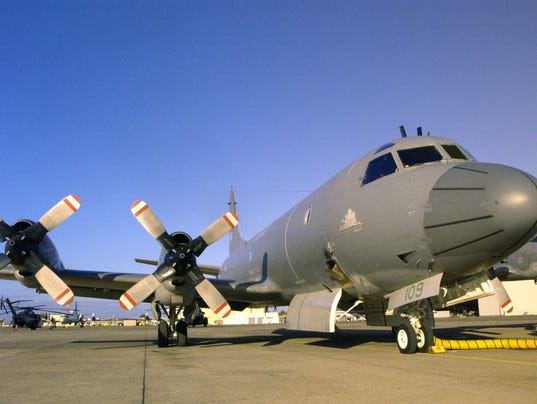
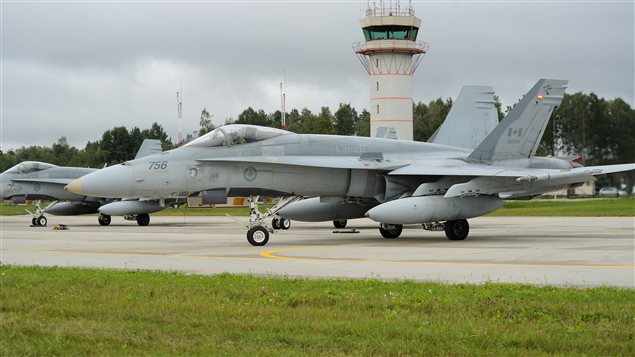
Canada has requested an additional seven surplus F/A-18 A/B Hornets from Australia.
In February, Ottawa requested seven examples for use in non-flying activities such as software testing, static training, and spares, says Australia’s Department of Defence.
The deal is subject to US export controls. If approved, it will bring to 25 the number of former RAAF Hornets sold to Ottawa. Should export approvals be received, negotiations would determine delivery timings.
In December 2017, Canberra confirmed that it will sell Ottawa 18 F/A-18 A/B Hornets for an undisclosed sum.
The first two “classic” Hornets will be delivered to Canada in 2019, at which point the Royal Australian Air Force’s transition to the Lockheed Martin F-35 will be well underway.
The Royal Canadian Air Force requires airframes to fill a capability gap during a pending process to obtain 88 new combat aircraft to replace its 85 Boeing CF-18 A/B fighters.
In February 2018, Ottawa announced that five bidders – Boeing, Dassault, Eurofighter, Lockheed Martin, and Saab – are eligible to replace the CF-18s.
Canada’s previous Harper government had selected the F-35 to replace the CF-18 fleet in 2009, but in 2015 the incoming Trudeau government cancelled this. Initially, the RCAF announced plans to buy 24 F/A-18E/Fs as an interim solution, then select a permanent CF-18 replacement in the early 2020s.
The Boeing deal fell through, however, amid Boeing’s (ultimately unsuccessful) trade complaint with the US Commerce Department against Canadian aircraft manufacturer Bombardier over allegedly unfair pricing on a sale of CSeries aircraft to Delta Air Lines. The Canadian government reacted strongly against Boeing, cancelling the interim fighter deal.
The RAAF operates 55 single seat F/A-18As and 16 two-seat F/A-18Bs that were acquired in the 1980s. This fleet will be retired by 2022 in favour of the F-35A, of which Canberra has committed to 72 examples.
flightglobal
Translate
Showing posts with label RCAF. Show all posts
Jul 7, 2018
Dec 6, 2017
Canada Scraps Plan To Buy 18 New Brand Superhornets, Plans To Buy 2nd Hand Hornet from Australia
Canada is scrapping a plan to buy 18 Boeing Co (BA.N) Super Hornet fighter jets amid a deepening dispute with the U.S. aerospace company, three sources familiar with the matter said on Tuesday.
Instead, the Liberal government will announce next week it intends to acquire a used fleet of older Australia F-18 jets, the same kind of plane Canada currently operates, said the sources, who asked not to be identified because of the sensitivity of the situation.
The move underlines Ottawa’s anger at a decision by Boeing to launch a trade challenge against Canadian planemaker Bombardier Inc (BBDb.TO), which the U.S. giant accuses of dumping airliners on the American market.
It also casts into question the future of Boeing’s military sales in Canada. Boeing says its commercial and defense operations in Canada support more than 17,000 Canadian jobs.
Canada and Mexico are locked into increasingly acrimonious negotiations with the United States over the NAFTA trade pact, which President Donald Trump says has not done enough to protect U.S. jobs.
reuters
Etiquetas:
AUSTRALIA,
CANADA,
F-18 HORNET,
RAAF,
RCAF,
ROYAL AUSTRALIAN AIR FORCE,
ROYAL CANADIAN AIR FORCE,
SUPER HORNET,
SUPERHORNET,
UNITED STATES,
USA
Feb 27, 2016
Canada To Deploy 4 CF-188 Hornets to Romania in March
Starting in March 2016, about 100 Royal Canadian Air Force (RCAF) personnel mainly from Canadian Forces Base (CFB) Bagotville, Quebec, and four CF-188 Hornet fighter aircraft will conduct bilateral training with the Romanian Air Force in Constanta, Romania, for about a month.
Exercise Resilient Resolve is being conducted to foster relations between the RCAF and the Romanian Air Force while exchanging best practices. While not part of Canadian Armed Forces Operation Reassurance, this exercise continues to build on the strong relationship between Canada and Romania.
The CF-188 aircraft will deploy from Kuwait, where they were based during their employment on Operation Impact. As part of the Operation Impact mission transition, the CF-188 Hornets, associated aircrew, and support personnel are departing Kuwait in a phased approach in the coming weeks.
rcaf-arc
Etiquetas:
CANADA,
CF-188,
F-18 HORNET,
RCAF,
Romania,
Romanian Air Force,
ROYAL CANADIAN AIR FORCE
Jun 9, 2015
Canada Finally Advances Search Plane Bid
After more than 10 years of delay, Canada is moving forward with its purchase of new search-and-rescue aircraft in a competition that could attract bids from European and US aerospace firms.
Lockheed Martin, Alenia and Airbus are expected to respond to the request for bids for the CAN 3.1 billion dollar (US $2.9 billion) program.
defensenews
Lockheed Martin, Alenia and Airbus are expected to respond to the request for bids for the CAN 3.1 billion dollar (US $2.9 billion) program.
defensenews
Etiquetas:
AIRBUS DEFENCE AND SPACE,
ALENIA,
CANADA,
LOCKHEED MARTIN,
RCAF,
ROYAL CANADIAN AIR FORCE
Jun 6, 2015
Canada looks at Ex-US presidential helicopters for SAR Mission
Lost hikers or stranded fishermen could find themselves being rescued by helicopters once designed to transport U.S. presidents.
The Canada's Department of National Defence had been insistent that the presidential helicopters, purchased in 2011 for spare parts for Canada’s current search-and-rescue choppers, would never be used as actual aircraft.
But in an about-face, the military and DND now acknowledge they are looking at doing just that.
Defence sources say senior officers inside the Royal Canadian Air Force have successfully argued that since the $3-billion helicopters, known as the VH-71, were airworthy, it didn’t make sense to strip them down for parts. They are pushing for the aircraft to be added to the RCAF flight line.
When Barack Obama came to the presidency, he balked at the high cost of the VH-71 helicopter program, which had been started under former president George W. Bush. Around $3 billion had already been spent and the program was expected to more than double in price.
As a result, the U.S. government shut down the program.
The VH-71s are similar to the search-and-rescue Cormorant helicopters currently used by the RCAF.
The nine new helicopters, as well as more than 800,000 spare parts, were purchased by DND for about $164 million. Seven of the choppers are airworthy.
Defence sources say the RCAF is considering using the helicopters to bolster the search-and-rescue fleet in the coming years since it will have to remove some Cormorants from service as they go through what is known as a mid-life upgrade.
A fleet of 21 helicopters would allow for better coverage, particularly in the Arctic.
Canada embarked on the presidential helicopter deal with the aim of trying to cut down on the excessive amount of time the Cormorants spent on the ground because of a lack of parts.
calgaryherald
Etiquetas:
CANADA,
CH-148,
MARINE ONE,
RCAF,
ROYAL CANADIAN AIR FORCE,
UNITED STATES,
USA,
VH-71
May 18, 2015
Canada Restarts Attempt to Buy Drones
Canada does not have a medium-altitude, long-endurance (MALE) UAV. It uses its CP-140 Aurora maritime patrol aircraft to fulfill the ISR mission against Islamic State extremists in Iraq.
Since 2006, Canada's military has been trying to purchase a fleet of UAVs, but it has faced an uphill battle due to lack of funding.
Air Force officers announced in 2006 that JUSTAS would see the purchase of MALE UAVs, but little has happened on that project.
The Air Force made a pitch to the Canadian government in 2007 for the sole-source purchase of Predator UAVs, built by General Atomics, but that was rejected.
Instead, in 2009 the Canadian military signed a lease arrangement which provided the Heron, made by Israel Aerospace Industries, for operations in Afghanistan. That lease ran from 2009 to 2011.
When the JUSTAS project was active, both MDA and General Atomics indicated they intended to bid.
Northrop Grumman also made an unsolicited offer in 2012 to provide Canada with a fleet of Global Hawks, specifically for Arctic operations, but the Canadian government did not act on that proposal. The Air Force determined that the cost of the Global Hawks was too expensive for the Arctic capability.
defensenews
Etiquetas:
AFGHANISTAN,
ARCTIC,
CANADA,
CP-140,
DRONE,
GLOBAL HAWK,
HERON,
IRAQ,
ISIS,
ISRAEL,
MALE,
NORTHROP GRUMMAN,
RCAF,
ROYAL CANADIAN AIR FORCE,
Syria,
UAV
Apr 9, 2015
Canada conducts first airstrike in Syria With Two CF-188
Canada conducted its first airstrike in Syria on Wednesday, after its government voted last week to expand its mission against the Islamic State in Iraq and Syria and extend it for another year.
The strike was conducted by two Canadian CF-18 Hornets, using precision guided munitions, against an ISIS garrison near Ar Raqqah. A total of 10 coalition aircraft, including six from the U.S., were involved in the strike, according to Canada's Department of National Defence.
Canada began conducting airstrikes in Iraq in October and began training peshmerga fighters in September.
Although the United Kingdom, France, Belgium, Denmark and the Netherlands are also conducting airstrikes in Iraq, Canada is the only NATO member other than the U.S. to conduct strikes in Syria.
Canada has conducted three previous surveillance sorties over Syria, but Wednesday's airstrike was its first in the nation.
Canada is also supporting coalition air assets in the region with aerial refueling, as well as intelligence, surveillance and reconnaissance missions.
Approximately 600 Canadian forces are taking part is its mission against ISIS, including 69 special operations forces inside Iraq.
thehill
Etiquetas:
CANADA,
CF-188,
F-18 HORNET,
IRAQ,
ISIS,
NATO,
RCAF,
ROYAL CANADIAN AIR FORCE,
Syria,
UNITED STATES,
USA,
USAF
Mar 25, 2015
Canada Govenmment Motion allows Canadian Fighters to Bomb Syria to Fight ISIS
The new plan also allows for warplanes to enter Syria uninvited and strike ISIS targets. The extension will not require additional troops and no Canadian special forces will be deployed in Syria.
The government won’t ask the Assad regime for permission before conducting airstrikes against ISIS.
nationalpost
The government won’t ask the Assad regime for permission before conducting airstrikes against ISIS.
nationalpost
Mar 7, 2015
Canada upgrades CP-140 Aurora ISR
Canada is upgrading its Lockheed CP-140 Aurora maritime patrol aircraft with a ViaSat satellite communications system.
The upgrade will enable data streaming from Aurora aircraft over the ViaSat satellite network.
The project was completed from project start to first light in less than 90 days.
c4isrnet
The upgrade will enable data streaming from Aurora aircraft over the ViaSat satellite network.
The project was completed from project start to first light in less than 90 days.
c4isrnet
Etiquetas:
CANADA,
CP-140,
P-3 ORION,
RCAF,
ROYAL CANADIAN AIR FORCE
Feb 21, 2015
Canadian jets destroyed Islamic State bomb factory
The military says Canadian CF-18 fighter jets conducted a single attack in Iraq last week, leading a coalition strike that destroyed a factory making improved explosive devices last Friday.
Since the Canadian mission began last fall, CF-18s have flown 328 missions.
A Canadian Polaris tanker aircraft has flown 82 sorties and delivered more than two million kilograms of fuel to coalition aircraft and CP-140 Aurora has flown another 91 missions, bringing the total number of Canadian sorties to 501.
Canada has also deployed up 69 special forces advisers in northern Iraq, who took along vehicles and other specialized equipment.
ctvnews.ca
Jan 6, 2015
RCAF receives first Aurora with new satellite comms system
MP Aerospace delivered the first of three CP-140M Aurora aircraft fitted with an Interim Beyond Line of Sight (IBLOS) satellite communications system to the Royal Canadian Air Force (RCAF) on December 15, 2014.
The prototype CP-140M Aurora aircraft will provide an improved Intelligence, Surveillance and Reconnaissance (ISR) capability in support of Canada’s military requirements internationally. Working with Department of National Defence personnel, IMP Aerospace provided the installation design and modification of the IBLOS system in Halifax, Nova Scotia.
The system enables secure, high-speed data streaming from the aircraft via satellite in areas which are remote from familiar ground stations.
airforce.forces.gc.ca
Etiquetas:
CANADA,
CP-140,
P-3 ORION,
RCAF,
ROYAL CANADIAN AIR FORCE
Dec 21, 2014
Canada Confirms Buy Of Additional C-17
Canada's Defence Minister has formally announced that the air force will get a fifth C-17 heavy-lift transport plane.
The federal cabinet recently signed off on the proposal, which the military has been pushing for, calling it a uniquely time-sensitive opportunity because Boeing aircraft, the U.S. manufacturer, has closed the assembly line.
The big jets are currently being used to ferry supplies to not only the country's CF-18 air task force, operating out of Kuwait, but they're also carrying weapons from allies to Kurdish fighters in northern Iraq.
cbc.ca
Etiquetas:
BOEING,
C-17 Globemaster,
CANADA,
CC-117,
RCAF,
UNITED STATES,
USA
Dec 10, 2014
Canadians, French, U.S. Hunt For Submarine Off Scotland
The U.K. called in assistance to help hunt for a foreign submarine off the west coast of Scotland starting in late November.
Maritime patrol aircraft (MPAs) from France, Canada and the U.S. conducted patrols in conjunction with British surface warships in the search for the submarine in late November and the first week of December, operating out of RAF Lossiemouth in northern Scotland.
The incident began when a periscope was sighted in waters where U.K. and other submarines would normally surface as they head into or out of the Royal Navy’s submarine base at Faslane, home of the U.K.’s ballistic missile submarines.
At the height of the operation, aircraft involved in the hunt included two U.S. Navy P-3 Orions, a single CP-140 Aurora from the Royal Canadian Air Force and a Dassault Atlantique 2 of the French navy. Also involved was one of the U.K.’s Raytheon Sentinel radar-reconnaissance aircraft.
The U.K. defense ministry and the participating air arms have not confirmed they were hunting for a submarine. But a U.K. defense ministry spokesman told Aviation Week that Britain had “requested assistance from allied forces for basing of maritime patrol aircraft at RAF Lossiemouth for a limited period.
Maritime patrol aircraft are occasionally deployed to Scotland, mainly for NATO’s Joint Warrior exercise. Such exercises are usually announced in advance, but November’s deployment was unexpected, with the aircraft and supporting airlifters arriving around Nov. 26. The deployment appeared to end last last week.
The incident comes more than a month after Swedish authorities halted a search for a foreign submarine operating in its territorial waters in the Stockholm archipelago. While the Swedish search was unsuccessful, defense officials said there was no doubt that the country’s waters had been violated by a foreign power.
It is not clear whether the submarine being hunted by the U.K. and other Western nations had entered U.K. territorial waters, or if the maritime patrol aircraft successfully located the sub.
The Sentinel may have been using its radar to try to spot periscope-sized objects on the surface and then cue MPAs onto the target.
On Nov. 28, the U.K. reported it was tracking four Russian warships passing through the Strait of Dover and into the English Channel heading out into the Atlantic. The surface ships included a Ropucha-class landing ship and an Udaloy-class destroyer. These were shadowed by HMS Tyne, a Royal Navy offshore patrol vessel.
The U.K. retired its own fixed-wing maritime patrol capability provided by the Nimrod in 2010, and has been limited to the use of ships and helicopters for the anti-submarine mission.
aviationweek
Etiquetas:
BREGUET ATLANTIQUE,
CANADA,
CP-140,
FRANCE,
P-3 ORION,
RAF,
RCAF,
ROYAL CANADIAN AIR FORCE,
RUSSIA,
RUSSIAN NAVY,
SENTINEL,
UK,
UNITED KINGDOM,
US NAVY,
USA
Dec 8, 2014
Russian Jets Run Off By NATO Fighter Planes Over Baltic — Three Reported Incidents In Single Day
Russian jets flying over the Baltic Sea dangerously close to the border of NATO ally Latvia were intercepted and run off by NATO fighter planes in three separate incidents reported by Latvia’s military Sunday. The encounters were just the latest in what has been a record number of confrontations in the skies between Russian and NATO aircraft this year.
The appearance of Russian jets over the Baltic follows closely after Norway released a video last week of a Russian fighter jet cutting off a Norwegian military plane in mid-air, avoiding a disastrous collision by just 60 feet. The Norwegian military did not reveal when the frightening near-miss took place.
In the first incident, reported Sunday evening Latvian time, NATO F-16 jets stationed in the Baltic as part of the NATO policing mission there took off to intercept a squadron of six Russian jets skirting Latvian air space.
The Russian jets included four Tu-95 bombers and two Tu-22 bombers similar to the Tu-22 pictured above.
In the second Sunday incident reported by the Latvian military about two hours after the first, Canadian Hornet fighter jets took off to catch up to four more Russian aircraft.
The Russian jets this time included three Tupelov Tu-134 jets — which double as commercial airliners and military planes — of the type pictured below.
The final showdown in the skies Sunday between Russian jets and NATO fighters took place sometime after 10 p.m. Latvian time, when NATO planes intercepted two more Tu-134 jets an another AN-72.
All of the incidents took place over neutral waters in the Baltic Sea. The Baltics have been the site of dozens of aerial encounters between Russian jets and NATO fighters throughout 2014, in what military and political experts see as a return to Cold War tensions.
inquisitr
Nov 10, 2014
Canadian CF-18s intercept Russian IL-20 over Lithuania
Two RCAF CF-18 Hornet pilots on a routine training mission over Lithuania Saturday were redirected because the Russians were coming.
And soon, the Russians were right over top of them.
Canadian fighter jets intercepted a Russian spy plane inside NATO air space, military sources said Saturday in nearby Lithuania.
The CF-18 Hornets were part conducting a routine training mission and were “re-tasked airborne in response to a non-NATO aircraft off the Baltic coast” early Saturday afternoon. The CF-18s intercepted and visually identified a Russian Federation Air Force (RFAF) Ilyushin Il-20 COOT A Lithuanian airspace and over international waters.
They got photographic proof, too.
From there the RCAF jets “shadowed the Il-20 for approximately five minutes before being ordered to return to base by NATO controllers”.
That type of plane is used by the Russian Air Force for electronic warfare and as a surveillance platform”.
The Royal Canadian Air Force is also currently flying CF-18s over the skies of Iraq as well as part of the targeting of ISIL targets.
torontosun
Etiquetas:
CANADA,
CF-188,
F-18 HORNET,
IL-20,
LITHUANIA,
RCAF,
RUSSIA,
RUSSIAN AIR FORCE
Nov 8, 2014
Canada to buy four F-35s, Pentagon suggests
A leaked Pentagon briefing says Canada has signalled to Washington that it wants to buy at least four F-35 stealth fighters in the current fiscal year which means a possible delivery date of either 2016 or 2017.
The U.S. said it would agree to the switch as long as the long-delayed development of the fighters remains on track and that no other allies asked for a similar consideration.
The presentation by U.S. Lt.-Gen. Chris Bogdan -- head of the F-35 program at the Pentagon -- also said the U.S. project office has begun the process of notifying Congress.
Canada signalled the government's intention to buy the F-35 in 2010, but a series of production delays and uncertainty over the price tag made the program a political lightning rod.
When it first proposed the program, the government intended to buy 65 jets. The briefing gives no hint at a timetable for potential follow-on purchases.
Since early summer, the federal cabinet has been studying a series of reports looking at alternatives to the F-35 and the expected industrial benefits. A decision had been expected earlier in the fall.
ctvnews
Etiquetas:
CANADA,
F-35,
PENTAGON,
RCAF,
ROYAL CANADIAN AIR FORCE,
UNITED STATES,
USA
Nov 1, 2014
Canadian CF-18s complete first operational flights in Iraq
Canadian warplanes have flown their first operational flights, but have yet to carry out strike missions against Islamic State targets.
Six CF-18 jet fighters, two CP-140 Aurora surveillance planes and a CC-150 refuelling jet are operating out of undisclosed airfields in Kuwait and will launch bombing missions against the forces of the Islamic State of Iraq and Syria (ISIS) soon.
The jets will be bombing military targets, such as command centres, vehicles and artillery, most of which is U.S-made hardware that ISIS fighters seized from fleeing Iraqi army forces earlier this summer.
Chinese missile reports a major concern
A number of fresh reports are circulating that coalition jets could face an increased anti-aircraft threat as Islamic State fighters are now apparently armed with sophisticated shoulder-launched missiles.
U.S. officials, speaking on background to the New York Times earlier this week, described the appearance of the Chinese-made FN-6 heat-seeking missiles as "game changers." It is believed the weapons were originally provided to moderate Syrian rebels by Qatar and possibly Saudi Arabia, according to the report.
The missiles are a major threat to low-flying aircraft, such as attack helicopters. ISIS reportedly shot down an Iraqi Army Apache gunship using the weapons.
Prior to the beginning of the campaign, Canadian military commanders acknowledged the anti-aircraft threat, but noted that both the CF-18s and the Auroras can fly higher than the effective range of the missiles, known as Manpads.
A bigger concern, according to defence experts, is that ISIS fighters might get their hands on an SA-24, the latest generation of Russia-made anti-aircraft weapons. The Iraqi government recently acquired such a system and those missiles have a longer range and the ability to manoeuvre in a more nimble fashion to avoid the counter-measures of its target.
Canadian terms is 6 months, for now
The Canadian contribution to the air campaign is mandated to last six months, but is likely to be extended.
The operations are being carried out under a blanket of secrecy as western bases, embassies and institutions throughout the Gulf region remains on heightened security alert for possible retaliation by Islamic State supporters.
cbc.ca
Oct 29, 2014
Peruvian Navy to acquire Super Seasprite helos from Canada
Peru has awarded General Dynamics Canada a contract to upgrade four Kaman SH-2G Super Seasprite helicopters - formerly in service in the Royal New Zealand Air Force (RNZAF) - with integrated mission systems and to overhaul a fifth prior to delivery to the Peruvian Navy.
The upgrades will offer "enhanced surveillance and search-and-rescue capabilities" by leveraging technology developed by GD Canada for the Royal Canadian Air Force's (RCAF's) Sikorsky CH-148 Cyclone anti-submarine warfare (ASW), surveillance, and search-and-rescue helicopter. The RCAF is replacing its ageing Sikorsky SH-3 Sea Kings with Sikorsky CH-148 Cyclones.
The contract was signed on 9 October.
The SH-2G acquisition marks an important boost for the Peruvian Navy's embarked ASW capabilities, which currently consists of only two Sikorsky SH-3D and two AB 212ASW helicopters, all four with more than 30 years in service.
These incoming SH-2Gs had been in service with the RNZAF since 2001 before being acquired by General Dynamics Air Canada.
Meanwhile, the RNZAF Super Seasprite fleet is being replaced by eight former Australian SH-2G(I), the first of which performed its maiden flight last April.
janes
Etiquetas:
AUSTRALIA,
CANADA,
CH-148,
CYCLONE,
KAMAN,
NEW ZEALAND,
PERU,
PERUVIAN NAVY,
RAN,
RCAF,
ROYAL AUSTRALIAN NAVY,
ROYAL NEW ZEALAND NAVY,
SH-2 SEASPRITE
Oct 8, 2014
Canadian CF-188 will operate out of a Kuwait to strike ISIS
Canadian warplanes that are to bomb targets in Iraq held by the Islamic State of Iraq & Al-Sham (ISIS) will operate from an airfield in Kuwait.
However, it will be at least one week and perhaps not until near the end of October before six Canadian CF-18 Hornets from CFB Cold Lake are launched from Kuwait, only 400 kilometres from territory held by ISIS.
nationalpost
However, it will be at least one week and perhaps not until near the end of October before six Canadian CF-18 Hornets from CFB Cold Lake are launched from Kuwait, only 400 kilometres from territory held by ISIS.
nationalpost
Etiquetas:
CANADA,
CF-188,
F-18 HORNET,
IRAQ,
ISIS,
KUWAIT,
RCAF,
ROYAL CANADIAN AIR FORCE
Oct 1, 2014
Life extension might be needed for Canadian CF-18 Hornets
Canadians will likely be on the hook for millions of dollars to keep the country’s aged CF18 fighter jets flying into the next decade because of delays in finding a replacement aircraft, secret documents show.
The CF18s were purchased in the early 1980s with the idea they would be retired in 2003. Instead, $2.6 billion was spent on upgrades starting in 2001 to keep them flying until 2020.
nationalpost.com
The CF18s were purchased in the early 1980s with the idea they would be retired in 2003. Instead, $2.6 billion was spent on upgrades starting in 2001 to keep them flying until 2020.
nationalpost.com
Etiquetas:
CANADA,
CF-18,
F-18 HORNET,
RCAF,
ROYAL CANADIAN AIR FORCE
Subscribe to:
Posts (Atom)