Translate

Showing posts with label NUCLEAR WEAPON. Show all posts

Oct 30, 2023

US Unveils Plans for the Development of an Enhanced B61 Nuclear Gravity Bomb


The U.S. Department of Defense made a significant announcement on Friday, revealing its commitment to develop an advanced iteration of the B61 nuclear gravity bomb.

This new bomb, designated as the B61-13, is poised to possess a yield similar to that of the B61-7, effectively phasing out some of the older gravity bombs within the military's arsenal. Notably, the B61-7 boasts a higher yield than its predecessor, the B61-12, which recently joined the military's arsenal.

The decision to embark on this project aligns with the evolving security landscape, consistent with the 2022 Nuclear Posture Review. The review underscored the necessity to modernize the nation's nuclear forces to serve as a formidable deterrent against its primary nuclear-armed rivals, China and Russia.

The B61-13 is designed to incorporate the same modern safety, security, and accuracy features that have been integrated into the B61-12. This upgrade is expected to expand the commander's options for targeting "harder and large-area military targets." Simultaneously, it will pave the way for the retirement of older bombs like the B61-7 and B83-1.

It is anticipated that this new bomb will leverage warheads from the B61-7 units of the 1980s and 1990s, transplanted into casings and tail kits akin to those of the B61-12.

The introduction of the B61-13 could potentially serve as a compromise, aimed at resolving a longstanding disagreement between Democrats and Republicans concerning the fate of the four-decade-old B83-1 bomb.

Former President Barack Obama wanted to terminate the 1.2-megaton B83-1, which is the sole remaining megaton bomb in the nation's nuclear arsenal, capable of exploding with 80 times the force of the 1945 Hiroshima bomb. However, his successor, former President Donald Trump, reversed this decision.

President Joe Biden has since renewed efforts to retire the B83-1, but key Republican lawmakers argue that this bomb is essential for targeting deeply buried and hardened targets.

The maximum yield of the B61-7 and, consequently, the new variant, is 360 kilotons, as opposed to the B61-12's maximum yield of 50 kilotons.

The B61-13 development is sawn as a concession to the congressional hardliners, offering them a limited number of high-yield bombs while also introducing a more precise tail kit.

Republican senators on the Senate Armed Services Committee, expressed their support for the new B61 variant. However, they emphasized that the B61-13 is only a modest step in the right direction, calling for a more comprehensive transformation of the nation's deterrent posture to address the evolving threat posed by the arms race between China and Russia.

The Department of Defense clarified that the creation of the B61-13 will not result in an overall increase in the size of the military's stockpile. The U.S. plans to offset the production of B61-12s by reducing their number to match the quantity of B61-13s manufactured.

Related:

Germany asking Washington if would let Eurofighter to carry nuclear weapons

B61-12 Nuclear Bomb Integration On NATO Aircraft To Start In 2015

USAF Ready To Put B-52 Bombers 24 Hour Ready Alert


Jun 24, 2018

Germany asking Washington if would let Eurofighter to carry nuclear weapons

Germany is pressing Washington to clarify whether it would let the Eurofighter Typhoon carry nuclear bombs as part of shared Western defences, an issue that could help decide whether Berlin orders more of the jets.
Although not a nuclear power, Germany hosts some U.S. nuclear warheads under NATO’s nuclear-sharing policy and operates a number of Tornado warplanes that can deliver them. New jets will need to be certified by Washington to carry out nuclear missions, a process which can take years.
Germany’s defence ministry sent a letter to the U.S. Defense Department in April asking whether certification of the European jets was possible, how much it would cost, and how long it would take, the sources told Reuters on condition of anonymity.
Top U.S. Air Force and Pentagon officials are working to respond to the German query.
uk.reuters

Oct 22, 2017

USAF Ready To Put B-52 Bombers 24 Hour Ready Alert

BARKSDALE AIR FORCE BASE,
La. —  The U.S. Air Force is preparing to put nuclear-armed bombers back on 24-hour ready alert, a status not seen since the Cold War ended in 1991.
That means the long-dormant concrete pads at the ends of this base’s 11,000-foot runway — dubbed the “Christmas tree” for their angular markings — could once again find several B-52s parked on them, laden with nuclear weapons and set to take off at a moment’s notice.
“This is yet one more step in ensuring that we’re prepared,” Gen. David Goldfein, Air Force chief of staff, said in an interview during his six-day tour of Barksdale and other U.S. Air Force bases that support the nuclear mission. “I look at it more as not planning for any specific event, but more for the reality of the global situation we find ourselves in and how we ensure we’re prepared going forward.”
http://www.defenseone.com/threats/2017/10/exclusive-us-preparing-put-nuclear-bombers-back-24-hour-alert/141957/

Feb 12, 2016

U.S. Pacific Air Forces chooses Tinian Island as divert airfield

The famous World War II island where a B-29 named Enola Gay and its pilot, Col. Paul Tibbets Jr., came together Aug. 6, 1945, to lead a mission that would deploy a uranium bomb known as "Little Boy" over Hiroshima, Japan, is soon to be back in use.
Tinian Island, just north of Guam, has been selected as a preferred alternative divert and exercise training island.
The plan will also improve and support the Tinian airport, which would be able to take up to 12 tanker aircraft and support personnel.
airforcetimes

Apr 20, 2015

Pentagon: We Can’t Afford to Replace Aging ICBMs, Bombers, Subs

The Defense Department cannot afford to replace its aging nuclear-missile submarines, ICBMs, and long-range strategic bombers unless it gets a funding boost or radical policy changes are made, according to a top Pentagon official.
Even if Congress approves the White House’s 2016 budget for the Pentagon, the Pentagon will find itself $10 billion to $12 short beginning in 2021.
“We don’t have a solution to that problem right now,” Kendall said, asked by a reporter about the plan for funding a replacement for the Navy’s Ohio-class submarines. All more than 30 years old, these “boomers” slip silently around the world’s oceans, waiting for the command to launch their nuclear-tipped ballistic missiles.
The entire U.S. nuclear inventory needs to be upgraded by the 2030s. That includes the submarines, land-based Minuteman intercontinental ballistic missiles and new stealth bomber. Together, the three make up the “nuclear triad,” the cornerstone of America’s deterrent force. The Pentagon also says it needs a new nuclear cruise missile.
defenseone

Apr 14, 2015

Russia lifts ban on S-300 missile system delivery to Iran

Russia has lifted a ban on supplying Iran with a sophisticated air defence missile system.
Delivery of the S-300s was cancelled in 2010 after the UN imposed sanctions on Iran over its nuclear programme.
But the Russian president gave the go-ahead after Tehran struck an interim deal with world powers to curb nuclear activities in exchange for sanctions relief.
The US and Israel have criticised the news.
When it was cancelled, Iran filed a lawsuit seeking billions of dollars in damages.
The S-300 is a surface-to-air missile system that can be used against multiple targets including jets, or to shoot down other missiles.
It is not clear when the system would be delivered. Russia has stopped producing the model specified under the original contract and has instead offered an upgrade.
bbc

Mar 23, 2015

Russia threatens to aim nuclear missiles at Denmark ships if it joins NATO shield

Russia threatened to aim nuclear missiles at Danish warships if Denmark joins NATO's missile defense system, in comments Copenhagen called unacceptable and NATO said would not contribute to peace.
Denmark said in August it would contribute radar capacity on some of its warships to the missile shield, which the Western alliance says is designed to protect members from missile launches from countries like Iran.
Moscow opposes the system, arguing that it could reduce the effectiveness of its own nuclear arsenal, leading to a new Cold War-style arms race.
No missiles are to be placed on Danish soil under the NATO program, but they could be deployed some day in Greenland.
Denmark's foreign minister said Russia's comments were unacceptable.
reuters

Feb 8, 2015

USAF wants to replace UH-1N Hueys with Black Hawks

UH-1N Hueys, used to protect nuclear missile sites, would be replaced with upgraded Army Black Hawks under the fiscal 2016 budget plan
The service's budget request states that the Air Force would purchase Army UH-60A Black Hawks and upgrades them to the UH-60L through existing government contracts. The upgrades include more powerful engines and an automatic flight control system.
gannett-cdn

Feb 2, 2015

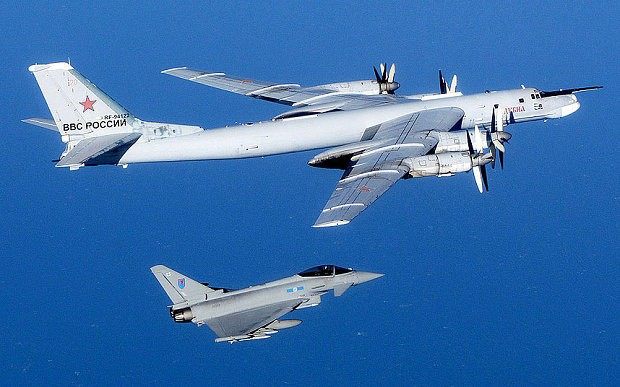
Russian TU-95 intercepted by RAF Typhoons was carrying a nuclear missile designed to destroy Trident submarines

Tensions between Russia and the UK have heightened after it was revealed that the Russian bomber intercepted by RAF fighter jets was carrying a nuclear missile designed to destroy Trident submarines.
The TU-95 aircraft were spotted on long range radar flying down from Scotland towards the English Channel, where they were close to entering British airspace.
The ‘seek and find’ nuclear warhead missile which can destroy the British Vanguard submarines which form the country’s nuclear deterrent.
The Prime Minister and Defence Secretary were informed of the development after a Norwegian listening post intercepted conversations from the Russian bomber’s cockpit which confirmed the bomber’s nuclear payload.
The missile was not armed, but it is shows the Russians taking the next provocative step in their increasingly chilly relations with the West.
The Russian Ambassador to the UK was summoned by the Foreign Office to account for the incident on Friday, which many say was deliberately planned to coincide with the Alexander Litvinenko inquiry where the two murder suspects are Russians, protected by the Kremlin from extradition to face trial.
breitbart

Dec 1, 2014

France Studies Nuclear Missile Replacement

France has launched studies for an airborne nuclear-tipped missile dubbed ASN4G to replace the current weapon, with the focus on stealth and hypersonic technology on the next-generation atomic arms.
The Air Force flies the Dassault Mirage 2000N and Rafale F3 fighters armed with the air-sol moyenne portée-améliorée (ASMP-A) nuclear missile. These are the airborne systems in addition to the four ballistic nuclear missile submarines.
ASN4G is understood to refer to air-sol nucléaire fourth-generation.
Work began in the summer on the ASMP-A, intended to allow the air-breathing missile to defeat future air defense systems out to 2035.
A stealth study and one on hypersonic speed are underway for the successor to the ASMP-A. The hypersonic weapon might be capable of Mach 7 or 8, he said.
The work on the stealth or hypersonic missile technology will influence development of the future aircraft. For instance, if a hypersonic missile were capable of flying at Mach 7 and were 20 meters long, the aircraft would need to be a large plane, such an Airbus A400M, rather than a fighter such as the Rafale.

Nov 1, 2014

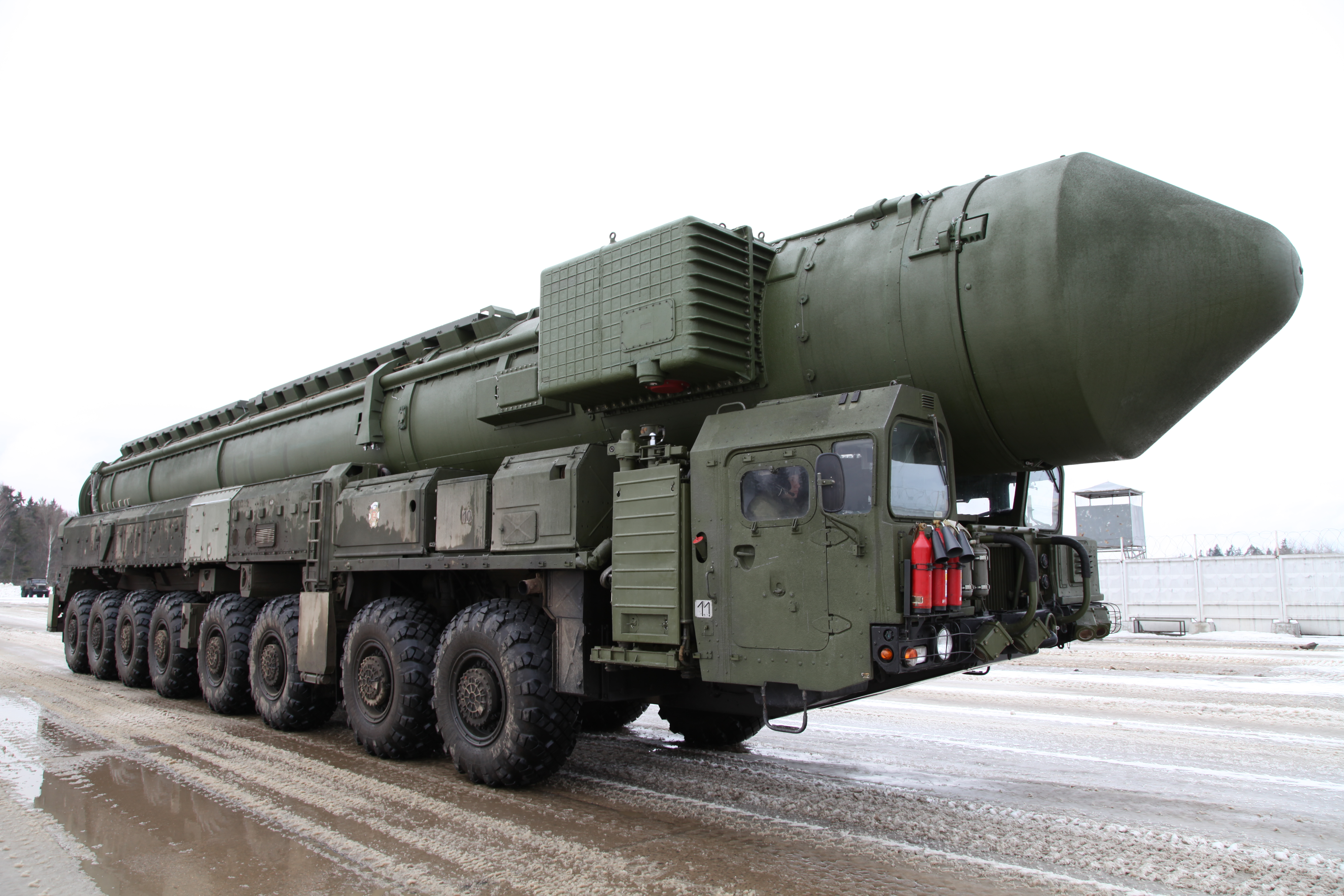
Russia Test-Fires Topol-M Intercontinental Ballistic Missile

The Russian Strategic Missile Forces test-fired on Saturday a Topol-M intercontinental ballistic missile from a launch site in northwestern Russia.
The launch was carried out to test Topol-M's technical features. According to the statement, the missile demonstrated its high precision capabilities and overall good performance, hitting a designated target at a test range on Russia's Kamchatka peninsula.
The Defense Ministry said previously that Topol-M and RS-24 ballistic missiles would be the mainstays of the ground-based component of Russia's nuclear triad and would account for no less than 80 percent of the SMF's arsenal by 2016.
ria.ru

Sep 23, 2014

Pakistan advancing in sea based Nuclear Weapons

Pakistan is advancing toward a sea-based missile capability and expanding its interest in tactical nuclear warheads.
The development of nuclear missiles that could be fired from a ship or submarine would give Pakistan “second-strike” capability if a catastrophic nuclear exchange destroyed all land-based weapons. But the acceleration of Pakistan’s nuclear and missile programs is renewing international concern about the vulnerability of those weapons in a country that is home to more than two dozen Islamist extremist groups.
washingtonpost

Aug 14, 2014

Indian Air Force conducts Akash missile’s user trial

The Indian Air Force (IAF) has fired Akash nuclear capable supersonic missile from the launch complex III of Integrated Test Range (ITR) at Chandipur, Odhisa, India.
airforce-technology

Aug 13, 2014

USAF to increase nuclear manning levels

The US Air Force (USAF) is to boost manning levels at Air Force Global Strike Command (AFGSC) missile and bomber wings as part of a wider push to improve the operational effectiveness and morale of its nuclear forces.
The increase, announced on 7 August, will see "hundreds" of additional airmen assigned across five nuclear bases, beginning this year.
janes

Aug 4, 2014

China confirms new generation long range missiles

China has acknowledged the existence of a new intercontinental ballistic missile said to be capable of carrying multiple nuclear warheads as far as the United States.
A military facility in the province was developing Dongfeng-41 (DF-41) missiles.
The DF-41 is designed to have a range of 12,000 kilometers (7,500 miles).
It is “possibly capable of carrying multiple independently targetable re-entry vehicles”, the US Defense Department said in a report in June, referring to a payload of several nuclear warheads.
China’s military is highly secretive, there had not been previously acknowledged the existence of the DF-41.
defencetalk

Aug 1, 2014

USAF Defends Shielding Nuclear Force From Service Cutbacks

Air Force brass on Wednesday defended their decision to spare nuclear-arms personnel from the force cutbacks happening in other parts of the service.
The Air Force announced in June that it had decided to retain 4,000 airmen working in the nuclear mission who would otherwise have faced possible involuntary separation from the service. In explaining the decision, Air Force Secretary Deborah Lee James said it was necessary to have "full manning in our nuclear positions" because of the "vital importance of this mission." Earlier this spring, the secretary told that due to budget constraints the service intended to reduce its active-duty force by 16,700 personnel in the next fiscal year.
The Air Force this year has publicly shown more concern for its strategic deterrence mission, after a number of scandals highlighted low morale and a lack of professionalism by some airmen assigned to maintain, operate and protect the service's arsenal of strategic nuclear-tipped missiles.
nti.org

May 13, 2014

Russia TU-95 bomber fired 6 cruise missiles at "targets simulating key military assets of a hypothetical adversary

Russia will quadruple its arsenal of long-range precision delivery platforms in the next seven years to strengthen the country's strategic deterrent.
Submarines, fighter jets and strategic bombers are all included as high-precision weapon platforms, and their total number would quadruple.
The weapons systems include both diesel- and nuclear-powered submarines, as well as a range of aircraft including the Su-35 Flanker fighter, Su-34 Fullback fighter-bomber, Tu-50 (PAK FA) fifth-generation fighter and the Tu-160 Blackjack and Tu-95MS Bear strategic bombers.
The plans were announced while reporting on the results of the drills carried out earlier on Thursday by Russia's nuclear triad.
During the exercise, the Russian military test-launched a Topol (SS-25 Sickle) intercontinental ballistic missile.
Two Delta-class nuclear-powered strategic submarines from Russia’s Northern and Pacific Fleets also test fired ballistic missiles in the exercises.
A Russian Tu-95 “Bear” strategic bomber launched six cruise missiles against ground targets.
ria

Apr 9, 2014

USA To Shrink 30 B-52 Nuclear-Capable Bombers and Modify Subs to meet New START Obligations


The Pentagon will shrink the number of its nuclear weapon-carrying bomber aircraft and reduce the number of submarine ballistic missile launch tubes as it modifies its force posture to meet the limits of the New START treaty with Russia.
The New START treaty, signed between Washington and Moscow in 2010, sets lower levels for the number of deployed and non-deployed nuclear weapons allowed. Non-deployed status means the delivery system, a bomber, a submarine or an intercontinental ballistic missile (ICBM) launch silo is undergoing maintenance and cannot fire a weapon.
The Air Force will convert 30 B-52 bombers to a conventional-only role, meaning they could not deploy nuclear weapons. That will leave the service with 66 nuclear-capable B-52 and B-2 bombers, 60 of which will be in deployed status.
There are 336 ballistic missile tubes on the Navy’s 14 Ohio-class submarines. Four tubes on each of the Navy’s 14 submarines will be converted, so that they won't be used to launch missiles. The submarine-launched ballistic missile tube limits under New START are 240 deployed and 40 in non-deployed status.
DoD plans to remove warheads from 50 of its 450 ICBM launch silos. The cuts will be distributed across the Air Force’s three ICBM bases in Wyoming, North Dakota and Montana.
Four hundred silos will still have nuclear ICBMs inside. DoD has four additional launch silos that are used for test launches are not impacted by the New START treaty.
The reductions must be made by 2018.
The New START treaty also limits the number of warheads on deployed forces to 1,550.
defensenews

Mar 16, 2014

B61-12 Nuclear Bomb Integration On NATO Aircraft To Start In 2015

The US Air Force budget request for Fiscal Year 2015 shows that integration of the B61-12 on NATO F-16 and Tornado aircraft will start in 2015 for completion in 2017 and 2018.
The integration marks the beginning of a significant enhancement of the military capability of NATO’s nuclear posture in Europe and comes only three years after NATO in 2012 said its current nuclear posture meets its security requirements.
The integration will take place on Belgian, Dutch, and Turkish F-16A/B and on German and Italian PA-200 Tornado fighter-bombers. It is unknown if US and NATO F-16s happen simultaneously or US aircraft are first, but the process will last four years between 2015 and 2018. Integration of German and Italian Tornados will take a little over two years.
The B61-12 will also be integrated on USAF F-15E, F-16C/D, and B-2A aircraft, and later on the F-35A Lightning II. The US Air Force plans to equip all F-35s in Europe with nuclear capability by 2024.
In addition to the US Air Force, the nuclear-capable F-35A will be supplied to the Dutch, Italian, Turkish, and possibly Belgian air forces.
From the mid-2020s, the B61-12 will also be integrated on the next-generation heavy bomber (LRS-B) planned by the US Air Force.
Integration of US nuclear weapons onto aircraft of non-nuclear weapon states that have signed the nuclear Non-Proliferation Treaty and promised “not to receive the transfer from any transferor whatsoever of nuclear weapons or other nuclear explosive devices or of control over such weapons or explosive devices directly, or indirectly,” is, to say the least, problematic.
The arrangement of equipping non-nuclear NATO allies with the capability and role to deliver US nuclear weapons was in place before the NPT entered into effect and was accepted by the NPT regime during the Cold War. But for NATO to continue this arrangement contradicts the non-proliferation standards that the member countries are trying to promote in the post-Cold War world.
How scattering enhanced nuclear bombs across Europe in five non-nuclear countries will enable “bold reductions” in US and Russian non-strategic nuclear weapons in Europe and help create the conditions for a world without nuclear weapons is another question.
fas.org

Feb 6, 2014

China Will Deploy Subs that Could Nuke Alaska or Hawaii This Year

China is set to deploy submarines sometime this year armed with nuclear tipped missiles capable of striking Alaska or Hawaii.
The People’s Liberation Army Navy (PLAN) Jin-class nuclear ballistic missile submarine is set to begin patrols in 2014 — armed with the PLAN’s new Ju Lang 2 (JL2).
With a range in excess of 4000 [nautical miles], the JL-2 submarine launched ballistic missile (SLBM), will enable the JIN to strike Hawaii and Alaska and possibly western portions of CONUS from East Asian waters.
The Jin, or Type 94, submarines are a developmental leap over the older Type 92 Xia-class submarines armed with the much less capable JL-1 SLBM.
The Jins — 11,000 tons fully submerged — will be the PLAN’s first bid to create a credible sea-based nuclear deterrent to operate with China’s land based nuclear ballistic missiles.
The missile has been under development by the Chinese for more than a decade.
If China plans for five or six of the Jin-class submarines, it’s likely to mimic the nuclear deterrent ability of smaller Western nations like the U.K. and France.
As part of creating a deterrent patrol, the PLAN has accelerated submarine operations.
It’s unclear when this year the first patrol will occur.
usni.org