Translate

Showing posts with label PENTAGON. Show all posts

Feb 12, 2026

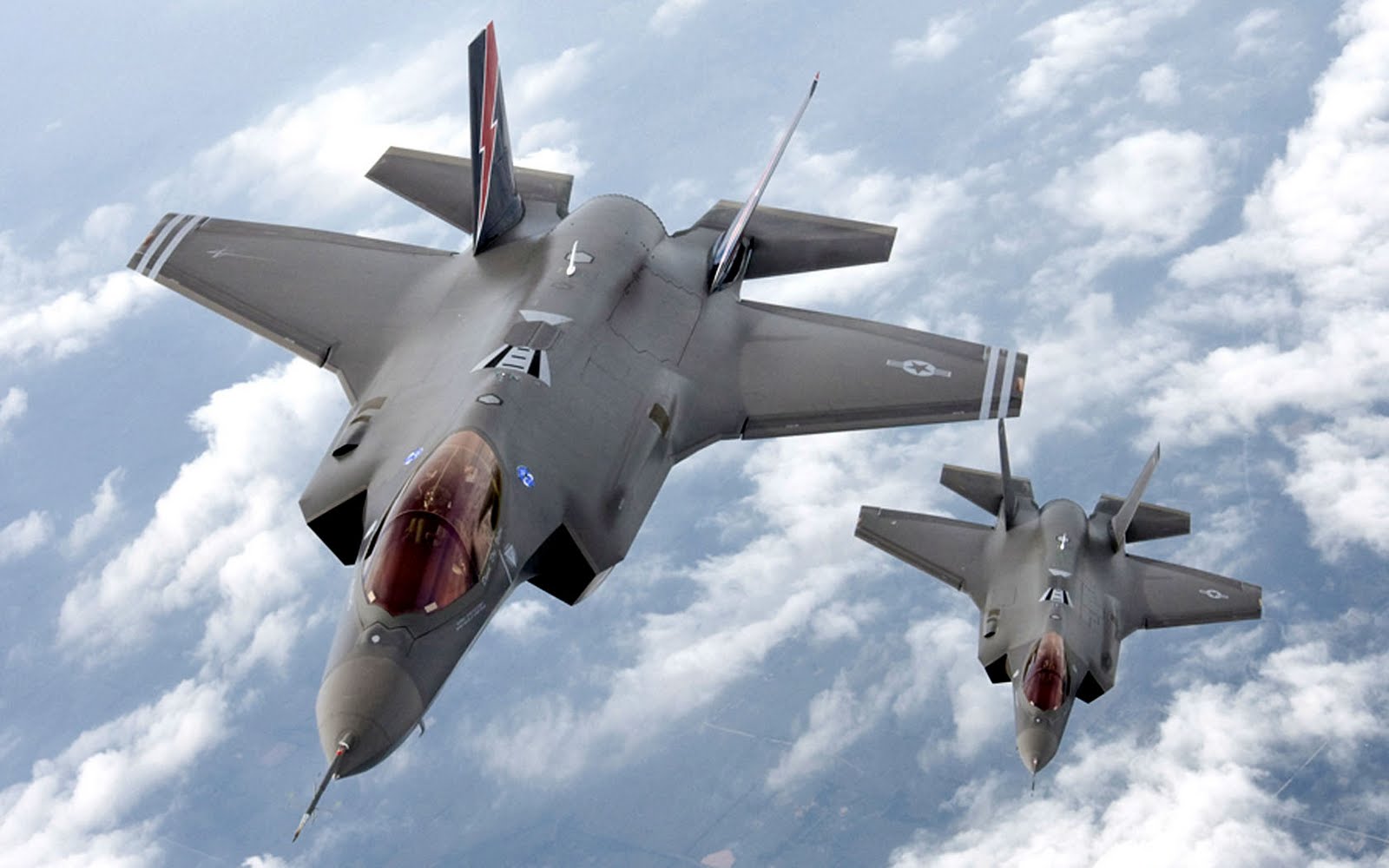
Reports suggest some F‑35A jets built since mid‑2025 may be delivered without their radars installed


Several defense-focused outlets have reported that F‑35A aircraft built since mid‑2025 may have been delivered to the U.S. Air Force without their radars installed, due to delays in developing the next-generation AN/APG‑85 radar under the Block 4 modernization program. In some cases, ballast weights have reportedly been placed in the nose to maintain balance during flight.

According to these reports, the affected aircraft are US-service jets configured for the future AN/APG‑85, not export models equipped with the existing AN/APG‑81 radar. While neither the USAF nor the F‑35 Joint Program Office has officially confirmed radar-less deliveries, statements note that the aircraft are built to accommodate the advanced radar once it becomes available.

Radar-less jets have reportedly flown or been accepted into inventory using added nose ballast and relying on networked data sharing from radar-equipped wingmen. This configuration is technically feasible for training and support flights, though it would significantly limit independent combat capability in high-intensity scenarios.


Delays in APG‑85 development and Block 4 updates are well documented, with known integration challenges compared to original schedules and multiple defense news and industry sources have reported technical incompatibilities between the APG‑81 and the new radar, providing context for why interim deliveries might occur.

However, no official confirmation from the Pentagon, USAF, Lockheed Martin, or Northrop Grumman exists that radar-less aircraft are being accepted as standard.

The most likely scenario is that these aircraft are delivered with radar installation deferred, not permanently removed. This mirrors past F‑35 practices, where aircraft were sometimes accepted with incomplete mission systems pending later retrofits.

F‑35s may indeed be arriving at U.S. units without their next-gen radars, but the jets are not “blind” in operational terms—they are placeholders awaiting full sensor integration, capable of limited networked operations until the AN/APG‑85 is installed.

Jan 13, 2026

Reports Question Use of U.S. Aircraft Resembling Civilian Platforms in Recent Operation


Recent media reports have raised questions about the use of aircraft markings by U.S. military forces during a recent operation, sparking debate over compliance with international law and long-established rules governing aerial warfare. While investigations are still ongoing and no official conclusions have been reached, the allegations have drawn attention within defence and aviation circles due to their potential implications.

According to reporting by international media outlets, U.S. forces are accused of having operated a military aircraft painted or configured in a way resembling a civilian platform during an operation targeting a suspected illicit maritime activity. Critics argue that such practices, if confirmed, could blur the distinction between military and civilian assets — a key principle of the Law of Armed Conflict (LOAC).
It is important to stress that no formal determination of wrongdoing has been made, and U.S. authorities have not acknowledged any violation. The Pentagon has historically maintained that U.S. air operations adhere strictly to international legal frameworks.

Under international humanitarian law, particularly the Geneva Conventions and customary LOAC, combatants are required to clearly distinguish military assets from civilian ones. This principle serves several purposes:
Protecting civilian aircraft and crews
Preventing misidentification during combat operations
Preserving trust in civil aviation systems
Military aircraft may employ camouflage, low-visibility markings, or deception techniques, but masquerading as civilian aircraft is widely considered unlawful if intended to gain a military advantage.

Modern military aviation increasingly operates in grey zones — counter-narcotics missions, intelligence gathering, and special operations — where aircraft may be unarmed, lightly marked, or modified for discretion. This has led to legal and ethical debates over where the line is drawn between operational security and prohibited deception.
Some analysts note that intelligence and surveillance aircraft often operate with minimal markings for safety or diplomatic reasons, particularly in permissive or semi-permissive environments. However, the intent and context of their use remain decisive factors in determining legality.

As of now, U.S. defence officials have not publicly confirmed the specific details of the operation in question. Historically, the Pentagon has emphasized that all U.S. aviation missions are reviewed through legal oversight channels before execution.
Nevertheless, the case has reignited broader scrutiny over how modern air forces adapt traditional laws of war to emerging operational realities — especially in missions that fall outside conventional battlefield scenarios.

Regardless of the outcome, the controversy highlights several enduring challenges:
The legal complexity of modern air operations
Increased transparency driven by open-source intelligence and media scrutiny
The importance of maintaining clear separation between civilian and military aviation
For air forces worldwide, these debates reinforce the need for careful balance between operational effectiveness and strict adherence to international norms — particularly as air power continues to operate in increasingly contested legal and political environments.

At this stage, the allegations surrounding U.S. aircraft markings remain unproven and under discussion, but they underscore the evolving challenges faced by military aviation in the 21st century. As investigations progress, the case may serve as a reference point in future debates over airpower, deception, and the limits imposed by international law.

Apr 28, 2020

Pentagon releases videos of encounters between UFOs and Navy pilots


After verifying the authenticity of the footage years ago, the Pentagon has finally released three videos of separate encounters between Navy pilots and unidentified flying objects.
The videos — two were taken in January 2015, while the third dates back to November 2004 — were released “in order to clear up any misconceptions by the public on whether or not the footage that has been circulating was real, or whether or not there is more to the videos,” Pentagon spokesperson Sue Gough said.

Mar 18, 2020

PRODUCTION OF US MILITARY PLANES KEEPS ON DESPITE COVID 19

The Pentagon has started a daily dialogue with its top vendors as it attempts to measure and mitigate the impact of the COVID-19 crisis on the defense industry. Meanwhile, Boeing and Lockheed Martin said production on major acquisition systems like the KC-46 tanker and F-35 strike fighter will continue.
Boeing has directed all staff who can telecommute during the pandemic to do so; however, production and fabrication on the KC-46, F-15, F/A-18, and T-7 continue, with enhanced hygiene on the production line.
Similarly, production of the F-35 will continue despite temporary line stoppages in Italy and Japan, and the Pentagon is staying in regular contact with its top vendors.
Italy’s F-35 Final Assembly and Check-Out (FACO) facility closed March 16 and 17 for a “deep cleaning,” according to a source familiar with the program, but production of parts and other line activities will resume on March 18. Japan’s F-35 FACO in Nagoya also was closed March 9-13, but is back up and running again, sources said. One reported that Nagoya, run by Mitsubishi Heavy Industries, was already well ahead of its production goals so there should be “no impact” from the temporary stand-down.
Lockheed is not anticipating “any significant impact on the supply chain” from its worldwide vendors, according to a source familiar with the program.
airforcemag

Apr 20, 2019

Pentagon eyes F-35 sales to Spain amid tensions with Turkey in F-35 deal: U.S. official

The United States is considering expanding sales of Lockheed Martin Corp-made F-35 fighter jets to five new nations including Romania, Greece and Poland as European allies bulk up their defenses in the face of a strengthening Russia, a Pentagon official told Congress on Thursday.
In written testimony submitted to the U.S. House of Representatives and seen by Reuters, Vice Admiral Mathias Winter - the head of the Pentagon’s F-35 office - said that “future potential Foreign Military Sales customers include Singapore, Greece, Romania, Spain and Poland.”
News of the new customers coincides with U.S. tension with F-35 development partner Turkey over Ankara’s plans to buy a Russian missile defense system.
Foreign military sales like those of the F-35 are considered government-to-government deals where the Pentagon acts as an intermediary between the defense contractor and a foreign government.
Other U.S. allies have been eyeing a purchase of the stealthy jet including Finland, Switzerland and the United Arab Emirates.
reuters

Jul 9, 2017

Pentagon seeks increased P-8 ties with Norway, UK

The United States, United Kingdom and Norway have agreed in principal to create a trilateral coalition built around the P-8 maritime aircraft — though exactly what that means remains unclear.
The Pentagon announced June 29 that the three countries had established a “statement of intent to lay out guiding principles for a trilateral partnership with P-8A aircraft.” In addition, the announcement said the nations are working on a “framework for further cooperation in areas such as readiness, enhancing defense capability, and interoperability.”
defensenews


May 28, 2016

Pentagon says China aircraft intercept violated 2015 agreement

The Pentagon has concluded that an intercept of a U.S. military aircraft by Chinese fighter jets last week over the South China Sea violated an agreement the two governments signed last year, a U.S. defense official said on Thursday.
The Pentagon findings contradict what the Chinese Defense Ministry said earlier in the day.
Last year, the United States and China announced an agreement establishing rules of behavior to govern air-to-air encounters and creating a military hotline.
reuters

Feb 12, 2016

Pentagon Kills Its Killer Drone Fleet

The U.S. military spent billions developing an armed drone that could take off from an aircraft carrier. But now, the Pentagon says it doesn’t want that kind of flying robot at all.
The Defense Department’s budget proposal for 2017, released on Feb. 9, terminates an on-again, off-again program dating back to the late 1990s that aimed to develop a bomb-hauling robotic jet capable of launching from and landing on the U.S. Navy’s aircraft carriers.
The decision to cancel the so-called Unmanned Carrier Launched Airborne Surveillance and Strike is reflected in the Defense Department’s 2017 budget proposal, released on Feb. 9. The proposal shows a combined $818 million in funding for the UCLASS killer drone program in 2015 and 2016 and, abruptly, no money at all in 2017.
Instead, there’s a new budget line for 2017—a meager $89 million for a so-called “Carrier Based Aerial Refueling System.” In other words: Goodbye, drone death from above. Hello, flying robot gas stations.
thedailybeast

Feb 7, 2016

Pentagon: A-10 will stay until 2022

Defense Secretary Ash Carter today announced what has been anticipated for month: the A-10 will not be retired.
In a speech previewing next week’s budget release, Carter also highlighted new technologies his department is developing in order to meet what he called a “major inflection point” that takes “the long view” for the department.
airforcetimes

Jan 9, 2016

Chabelley Airfield in Djibouti The small airstrip that is the future of America’s way of war

The Pentagon is quietly building up a small airstrip in a remote region of east Africa as part of its war against Islamic militants. More importantly, the airfield is a complex microcosm of how Washington runs military operations overseas — and how America’s way of war will probably look for the foreseeable future.
Chabelley Airfield is less than 10 miles from the capital of the small African nation of Djibouti. The small airport is the hub for America’s drone operations in the nearby hotspots of Somalia and Yemen.
But in spite of all of this, Chabelley isn’t what it might otherwise seem – at least not officially. You see, the site is not technically an American base.
“Chebelley [as the Pentagon likes to spell it] was categorized by the U.S. Global Defense Posture Report to Congress as an enduring Cooperative Security Location based upon the U.S. strategic interests in maintaining access for the foreseeable future.”
In plain English, Washington does not own the site, sometimes referred to by the acronym CSL. In contrast to the big American bases in Europe and Asia during the Cold War, the Pentagon has favored cutting deals with countries for access to existing runways and ports in its fight against militants around the globe something that make sense in an era of shrinking budgets
reuters

Jun 20, 2015

Pentagon Building Cruise Missile Shield To Defend US Cities From Russia

The Pentagon is quietly working to set up an elaborate network of defenses to protect American cities from a barrage of Russian cruise missiles.
The plan calls for buying radars that would enable National Guard F-16 fighter jets to spot and shoot down fast and low-flying missiles. Top generals want to network those radars with sensor-laden aerostat balloons hovering over U.S. cities and with coastal warships equipped with sensors and interceptor missiles of their own.
One of those generals is Adm. William Gortney, who leads U.S. Northern Command, or NORTHCOM, and North American Aerospace Defense Command, or NORAD. Earlier this year, Gortney submitted an “urgent need” request to put AESA radars on the F-16s that patrol the airspace around Washington. Such a request allows a project to circumvent the normal procurement process.
While no one will talk openly about the Pentagon’s overall cruise missile defense plans, much of which remain classified, senior military officials have provided clues in speeches, congressional hearings and other public forums over the past year. The statements reveal the Pentagon’s concern about advanced cruise missiles being developed by Russia.
defenseone

Jun 1, 2015

Pentagon eyes three-year block buy of F-35s from fiscal 2018

The Pentagon said Friday it would talk to U.S. lawmakers about approving a three-year block buy of Lockheed Martin Corp F-35 fighter jets beginning in fiscal 2018 that would include U.S. purchases and international buyers.
Such a deal would not constitute a formal "multi-year buy," but would still require congressional approval.
A block buy of more than 400 jets would allow for "double-digit" cost savings from larger economies of scale when orders reach around 150 planes a year.
The Pentagon's chief arms buyer, said the $391 billion F-35 program was meeting or exceeding performance and cost milestones set during a 2011 restructuring of the program.
It remained on track for a key milestone this summer when the U.S. Marine Corps expects to declare an initial squadron of jets ready for combat use, followed by the Air Force in 2016.

May 29, 2015

US surveillance on China's artificial islands reportedly shows military artillery

U.S. surveillance images reportedly show that China has positioned weaponry on at least one of the artificial islands it is developing in the South China Sea, apparently confirming suspicions that Beijing has been building up the area for military use.
The Wall Street Journal, citing U.S. officials, reported that images taken about a month ago showed two Chinese motorized artillery pieces on one of the artificial reefs. Although the weaponry would not pose a threat to U.S. planes or ships, it could potentially reach neighboring islands.
The Journal reported that in recent weeks the artillery has disappeared from view, though it was not clear how of why. U.S. officials said they believed the equipment had either been removed or purposely obscured by the Chinese.
The American officials said that the artillery, is within striking range of an island claimed by Vietnam, which that country's government has armed with various weaponry for some time.
A Chinese Embassy spokesman maintained the development of the artificial lands was primarily civilian.
“It needs to be emphasized that the Nansha Islands is China’s territory, and China has every right to deploy on relevant islands and reefs necessary facilities for military defense,” spokesman for the Chinese embassy, told the Journal.
On Wednesday, US Defense Secretary Ash Carter strongly defended American military flights over the artificial lands in the South China Sea and called for a “lasting halt” to China’s land reclamation projects.
The Pentagon said in a recent report that the construction could be used for military airstrips, naval ports or to host surveillance systems.
foxnews

May 27, 2015

Pentagon firming F-35 Block 4 configuration

As the Pentagon decides what new combat capabilities to “bake” into the Block 4 configuration of the F-35, there is concern about planned upgrades sliding beyond Block 3F, and about the overall price tag as those modifications are rolled out in the early 2020s.
The air force expects its first squadron of 12 to 14 A-model F-35s in the baseline Block 3i configuration to be ready for combat in a limited capacity by August 2016. But each aircraft will need to be modified to achieve “full warfighting capability” with the full suite of armaments and improvements provided in the subsequent Block 3F and Block 4 upgrades.
The F-35 joint programme office is currently defining exactly what will be included in Block 4 ahead of a Pentagon requirements review later this year. Once approved, the configuration will be the baseline for future Block 4 increments as they are rolled out every two years or so.
The general’s two main concerns are “sliding things from 3F into Block 4” and affordability.
The Marine Corps is in the final stages of F-35B operational testing aboard the amphibious assault ship USS Wasp as it works to achieve initial operational capability in the Block 2B configuration in July. Those aircraft along with the early air force Block 3i jets will be capable of conducting limited air-interdiction and close-air-support operations with basic guided bombs and air-to-air missiles.
Block 3F adds all of the weapons qualified during the system development and demonstration phase including the Boeing Small Diameter Bomb I, Raytheon AIM-120D Advanced Medium-Range Air-to-Air Missile, AIM-9X Sidewinder and General Dynamics 25mm gun. Other weapons being considered for Block 4 include Raytheon’s Small Diameter Bomb II and Kongsberg’s Joint Strike Missile, among others. Block 4 might also include integration with the B61-12 guided nuclear bomb being developed by the US Air Force, National Nuclear Security Administration and Boeing.

The first air force squadron will stand up at Hill Air Force Base in Utah starting with the first aircraft delivery this September. That base is followed by Eielson AFB, Alaska, in July 2019 and then Burlington Air National Guard Base, Vermont, in July 2020.
If all goes according to plan, Royal Air Force Lakenheath in the United Kingdom will receive its first US F-35s in 2021.
Production of the F-35 is expected to scale up significantly over the next five years, growing from 123 aircraft now to more than 650 operated by the US and six other international programme partners by 2020.
flightglobal

Apr 20, 2015

Pentagon: We Can’t Afford to Replace Aging ICBMs, Bombers, Subs

The Defense Department cannot afford to replace its aging nuclear-missile submarines, ICBMs, and long-range strategic bombers unless it gets a funding boost or radical policy changes are made, according to a top Pentagon official.
Even if Congress approves the White House’s 2016 budget for the Pentagon, the Pentagon will find itself $10 billion to $12 short beginning in 2021.
“We don’t have a solution to that problem right now,” Kendall said, asked by a reporter about the plan for funding a replacement for the Navy’s Ohio-class submarines. All more than 30 years old, these “boomers” slip silently around the world’s oceans, waiting for the command to launch their nuclear-tipped ballistic missiles.
The entire U.S. nuclear inventory needs to be upgraded by the 2030s. That includes the submarines, land-based Minuteman intercontinental ballistic missiles and new stealth bomber. Together, the three make up the “nuclear triad,” the cornerstone of America’s deterrent force. The Pentagon also says it needs a new nuclear cruise missile.
defenseone

Feb 23, 2015

Patriot Missile to get an upgrade

Raytheon, which makes the Patriot, recently announced a significant upgrade to the Patriot radar, which the company says will allow it to have a 360-degree view of the battlefield and also see them at greater distances..
Development of the Patriot surface-to-air missile system dates to the late 1960s, when it was designed to protect Europe from an air assault by the Soviet Union. While originally intended to take out enemy aircraft, it was upgraded in the 1980s to defend against other missiles.
In addition to the U.S., the system is used by 12 other countries, including Germany, Japan, Israel, Saudi Arabia, Kuwait, Taiwan, Spain, Korea and the United Arab Emirates.
On Thursday, Raytheon announced that the U.S. government authorized it to sell its radar sensor upgrade, called the Active Electronically Scanned Array, to foreign partners. But it’s not yet clear whether they will be installed in the systems now in use by the U.S. military.
washingtonpost

Pentagon: No near-term F-35 sales in Gulf region

The United States expects no near-term sales in the Gulf region for the F-35 warplane, saying current fourth-generation military aircraft with new upgrades are capable of handling the threats the region faces, the Pentagon said on Sunday.
Pentagon said the threats confronting the region can be dealt with adequately with current fleets such as United Arab Emirates' 80 Block 60 F-16s. The country had requested these to be upgraded to Block 61, which would carry stand-off weaponry, and had also requested an additional 30 Block 61 aircraft.
French firm Dassault Aviation sold 24 Rafale fighter jets to Egypt this month, triggering industry sources to say other regional governments might also consider the aircraft. A senior French source told Reuters last week that Qatar was in the final stage of negotiations regarding 36 Rafale jets.
The UAE has also been assessing Eurofighter's Typhoon, built by Britain, Germany, Italy and Spain.
reuters

Jan 3, 2015

Pentagon denies attempted Special Operations raid in Syria to Rescue Jordanian F-16 Pilot

U.S. military officials on Friday denied reports that the U.S.-led military coalition overseeing operations in Iraq and Syria launched a Special Operations raid in the Islamic State’s stronghold, following a burst of claims from activists in the region.
Media reports raising the possibility of an attempted raid in Raqqa surfaced after a group known as “Raqqa is Being Slaughtered Silently” detailed what it described as two failed approaches by coalition aircraft. The organization said in an English-language report that the city “witnessed an unusually intense aerial campaign” by coalition fighter jets on Thursday, and that helicopters “attempted to make an airborne-landing operation to free and rescue western hostages captured by ISIS in the eastern Raqqa countryside,” using one of the acronyms for the Islamic State militant group.
“The mission failed when the helicopters were met by ISIS fighters who directly opened fire at them forcing them to take off,” the activist group said.
One of the activists, said in an interview from Turkey that eyewitnesses about 15 miles east of Raqqa heard intense aerial drone activity Thursday night. The sky was lit up brightly with gunfire and illuminated with flares, and two helicopters attempted to land around 11:30 p.m., the activist said.
washingtonpost

Nov 8, 2014

Canada to buy four F-35s, Pentagon suggests

A leaked Pentagon briefing says Canada has signalled to Washington that it wants to buy at least four F-35 stealth fighters in the current fiscal year which means a possible delivery date of either 2016 or 2017.
The U.S. said it would agree to the switch as long as the long-delayed development of the fighters remains on track and that no other allies asked for a similar consideration.
The presentation by U.S. Lt.-Gen. Chris Bogdan -- head of the F-35 program at the Pentagon -- also said the U.S. project office has begun the process of notifying Congress.
Canada signalled the government's intention to buy the F-35 in 2010, but a series of production delays and uncertainty over the price tag made the program a political lightning rod.
When it first proposed the program, the government intended to buy 65 jets. The briefing gives no hint at a timetable for potential follow-on purchases.
Since early summer, the federal cabinet has been studying a series of reports looking at alternatives to the F-35 and the expected industrial benefits. A decision had been expected earlier in the fall.
ctvnews

Oct 30, 2014

Pentagon Acquisition Chief Doubts UMSC’s July F-35 IOC Target

It is growing more and more likely that July 1, 2015, will not mark the initial operational capability (IOC) declaration for the F-35B desired by the U.S. Marine Corps.
Despite years of Pentagon officials fervently holding firm to the milestone, Pentagon procurement chief Frank Kendall is opening the door to a delay.
In May 2013, the Pentagon outlined the F-35 IOC plans for the Air Force, Navy and Marines.
Marine IOC includes the first squadron, VMFA-121, with 10-16 F-35Bs and enough trained pilots and maintenance officials to deploy for war. The first F-35B unit is slated for its initial deployment in 2017 to Marine Corps Air Station Iwakuni, Japan.
The Marines have maintained the most aggressive schedule among F-35 customers because of concern for its aging F-18s and AV-8Bs; F-35B development was prioritized over that of the Air Force and Navy variants earlier in the program to satisfy the Marines’ pressing need.
The service initially will use the fighter’s 2B software package, which is limited in capability, to conduct basic close air support and interdiction activities. Weapons included in the initial package are the AIM-120C7 Advanced Medium-Range Air-to-Air Missile, Joint Direct Attack Munition and GBU-12 laser-guided bomb.
The likeliest culprit for missing the IOC date next summer is the time required to modify enough F-35Bs to the proper configuration.
Amy Butler-aviationweek