Translate

Showing posts with label ISR. Show all posts

Dec 30, 2025

Spain Launches Feasibility Study for New Airborne SIGINT Aircraft


There are capabilities that make headlines, and others that quietly define real military power. Airborne Signals Intelligence (SIGINT) firmly belongs to the second category. After more than a decade without a dedicated platform, Spain has finally taken a first —and long overdue— step to recover this strategic capability.
The Spanish Ministry of Defence has allocated €16 million for a feasibility study focused on the design of a future airborne signals interception aircraft, with Airbus Defence and Space and Indra selected to carry out the work. While this is not yet a procurement decision, it is the clearest signal so far that Spain intends to return to the electromagnetic battlespace with its own national assets.

Since the retirement of the Boeing 707 “Reina del Espectro” and the Falcon 20 electronic warfare aircraft, the Spanish Air and Space Force has operated without an organic airborne SIGINT platform. In practical terms, this meant relying on allied capabilities for missions that are increasingly central to modern operations.
The future aircraft is expected to detect, track, classify, and identify targets of interest to the Spanish Armed Forces, operating across radar emissions, communications, and data links. In an era where sensors, networks, and electronic attack shape the battlefield as much as fighters and missiles, this is not a luxury capability—it is a foundational one.

The industrial pairing makes sense. Airbus provides experience in military aircraft integration and missionized platforms, while Indra brings national expertise in SIGINT, ELINT, electronic warfare, and sensor fusion. Together, they cover both the airframe and the brain of the system.
The study will analyze possible platforms, sensor suites, mission systems, and integration concepts. A medium-sized jet aircraft is widely considered the most realistic option, balancing endurance, payload, and operational flexibility without the complexity of larger platforms.

Although no numbers have been officially confirmed, Spain is expected to field a limited fleet—likely two or three aircraft—sufficient to ensure availability while managing maintenance and training cycles. This would align with similar SIGINT fleets operated by European allies.
If the study progresses into a full programme and receives political approval, Spain could restore its airborne SIGINT capability sometime in the early-to-mid 2030s. Quietly, but decisively.

This move should be seen less as an ambition and more as a correction. Modern air forces cannot afford to operate blind in the electromagnetic spectrum, particularly within NATO, where interoperability depends as much on shared data as on shared platforms.
Spain’s future SIGINT aircraft will not lead flypasts or dominate defence exhibitions—but it will listen, analyze, and understand. And in today’s operational environment, that may be one of the most valuable capabilities an air force can possess.

Oct 6, 2018

Canada cleared to buy 3 King Air 350ER ISR aircraft

The State Department has made a determination approving a possible Foreign Military Sale to Canada of three (3) King Air 350ER (extended range) aircraft with customer unique post-modifications for Intelligence, Surveillance and Reconnaissance (ISR) operations for an estimated cost of $300 million. The Defense Security Cooperation Agency delivered the required certification notifying Congress of this possible sale on October 3, 2018.
The Government of Canada has requested to buy three (3) King Air 350ER (extended range) aircraft with customer unique post-modifications for Intelligence, Surveillance and Reconnaissance (ISR) operations; three (3) WESCAM MX-15D Electro-Optical & Infrared Imaging Sensors; three (3) AN/AAR-47B(V)2 Missile and Laser Warning System (MWS); three (3) AN/ALE-47 Countermeasure Dispenser Systems (CMDS); three (3) VORTEX® Dual RF Ku LOS Transceivers; three (3) COMSEC Modules (KGV-135A); two (2) APM-424(V)5 Transponder Test Sets; five (5) KIV-77 Mode 4/5 crypto applique computers for IFF; three (3) AN/APX-119 IFF Digital Civil and Military Transponders; six (6) ARC-210 Multi-mode Voice and Data Transceivers; three (3) KG-250X NSA-Certified Type 1 Inline Network Encryptors (INE); technical data; mission equipment, communication and navigation equipment, special tools and test equipment, ground support equipment, airframe and engine spare parts, publications, MWO/ECPs, technical assistance, repair and return, training; and transportation of aircraft, and other related elements of logistics and program support. Total estimated program cost is $300 million.
dsca

May 14, 2014

Predator to be retired by USAF in favour of Reaper

A symbol of America’s presence in Iraq and Afghanistan, would probably be a UAV stalking across the sky.
But with severe budget constraints, the US Air Force is looking to cut the number of UAV combat air patrols from 65 to 55. That number could drop further if sequestration funded levels are not raised in 2016, as is likely.
That doesn’t mean the service is abandoning its UAV program, but the future looks much more secure for the Reaper than the Predator.
The USAF need to double down efforts to develop unmanned aerial aircraft that can operate in contested environments. The Predators and the Reapers have been terrific, but they cannot operate well in a contested environment. In Afghanistan, no one was able to shoot them down or interfere with their operation.
The Air Force has purchased a total of 259 Predators, but crashes and retirements have left the service with a current fleet size of 154 platforms, which the service plans to retire between fiscal 2015 and 2017. Those plans are dependent on congressional decisions, but there has been no groundswell against divesting the MQ-1s, likely because they would be replaced with an all-Reaper fleet.
The MQ-9 Reapers offer better payload capabilities and range, particularly if they are equipped with a major re-winging program that extends the operational capability of the Reaper by about 10 hours. The standard Reaper is configured for 30 hours for the ISR model and roughly 23 hours if armed with Hellfire missiles. General Atomics, the developer of the MQ-1 and MQ-9, said the extended-range model would increase those times to 42 hours for ISR and 35 hours with the Hellfire.
In other words, the Predators are falling victim to their faster, stronger brothers. That leaves the Air Force to find a home for over 100 outdated, unwanted, but still functional surveillance drones.
defensenews

Feb 28, 2014

Lockheed Martin starts campaign to save U-2S fleet


With the US Air Force's U-2S fleet facing a threatened early retirement in 2015, Lockheed Martin has finally gone on the defensive to save one of its landmark programmes from replacement by the Northrop Grumman RQ-4 Block 30 Global Hawk.
Lockheed’s U-2 programme director, says the U-2S is the only high-altitude intelligence, surveillance and reconnaissance (ISR) aircraft that can perform the mission based on the USAF’s requirements.
Although the fleet is often confused, the 32 active U-2S "Senior Year" aircraft and TU-2S trainers operated by the USAF today bear little resemblance to the original reconnaissance fleet delivered to the US Central Intelligence Agency in the late 1950s.
Current U-2 fleet was between 1982 and 1989, and were subsequently upgraded with a new engine. USAF has been upgrading U-2Ssince 1993. Up to 10 aircraft in the U-2S fleet were upgraded in 2013 with a new communications gateway payload.
flightglobal

Dec 13, 2013

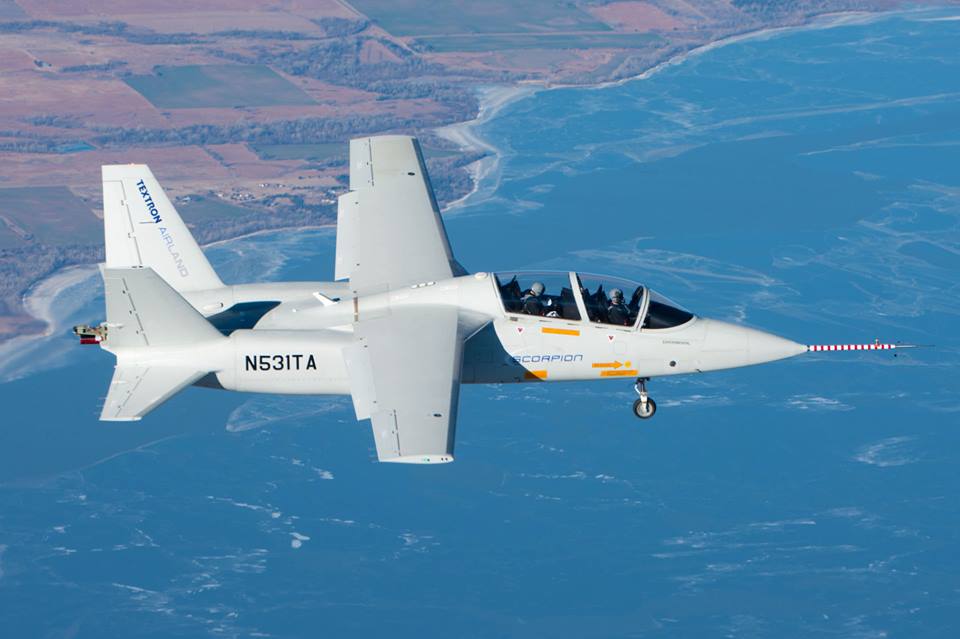
Cessna’s Scorpion low cost tactical jet makes first flight

Textron has announced that Cessna Aircraft Scorpion Intelligence, Surveillance and Reconnaissance (ISR)/Strike aircraft has conducted its maiden flight.
The aircraft took off from McConnell Air Force Base in Wichita, Kansas and flew for 1.4 hours. It’s expected to be a highly capable aircraft for the ISR and homeland security mission set.”
Announced in September and developed in 24 months, the Scorpion has a cruising speed of up to 450 knots, a ferry range of 2,400 NM (nautical miles) and carries a payload of 3,000 lbs internal stores as well as underwing PGMs (Precision Guided Munitions).
David Cenciotti-theaviationist

Sep 25, 2013

US military to fund Niger DA42 upgrade

The US Navy intends to pay for an upgrade to Niger’s two Diamond Aircraft DA42 surveillance aircraft.
One aircraft will be outfitted with an L-3 Wescam MX-15 electro-optical/infrared sensor with a range-finding laser, plus data transmission and encryption capabilities and new operator display screens. The second aircraft will gain satellite communications equipment and radios.
The US military has been actively upgrading intelligence, surveillance and reconnaissance (ISR) equipment for Sahel-region governments, ostensibly to allow for operations against Al Qaeda in the Islamic Maghreb (AQIM).
At least two US-owned General Atomics Aeronautical Systems MQ-9 Reaper unmanned aircraft are based in Niamey, Niger’s capital, to conduct ISR operations over Mali. As the border between Mali and Niger is essentially porous, operations are thought to be conducted over Niger in addition to other area nations.
flightglobal

Sep 17, 2013

TEXTRON UNVEILS ‘SCORPION’ TACTICAL JET

Textron unveiled a prototype intelligence, surveillance and reconnaissance/strike aircraft named “Scorpion” at the Air Force Association Air &Space Conference.
The Scorpion is a clean-sheet, all-composite design with a tandem cockpit, retractable sensor mounts, an internal weapons bay and wing-mounted hard points for external stores. It is powered by twin turbofans producing 8,000 pounds of thrust. Among specifications the companies list are a mtow of 21,250 pounds, maximum speed of 450 ktas and 45,000-foot service ceiling.
scorpionjet

Aug 16, 2013

Jordan Asks for Assistance in Securing Syrian Border

With no end in sight to the violence in Syria, which has already sent a half-million refugees into Jordan, authorities here appealed to the United States on Wednesday for surveillance airplanes and intelligence help to secure a border that is favored by arms smugglers.
nytimes

Jun 26, 2013

Will Congress Let USAF Abandon the Global Hawk?

June is the start of the rainy season in the South Pacific, six months of storms that come in fast and unpredictable. And when the wind starts blowing, that takes its toll on U.S. intelligence-gathering far off in North Korea.
A substantial amount of the intel of the North Korea comes from the three massive Global Hawk unmanned surveillance planes based at Andersen Air Force Base in Guam. Because of special flight restrictions, the Global Hawks can’t fly over thunderstorms, nor, without a way to see the clouds ahead, can they go around them. So whenever a hint of bad weather arose on the route Global Hawk was assigned last year from Guam, the missions were canceled. Last year, the UAVs were grounded for an entire month.
This susceptibility to South Pacific cyclones is adding new energy to the political hurricane raging in Washington over the future of the expensive UAVs.

Aran Roston-defensenews

Jun 19, 2013

France to embark on Atlantique 2 upgrade

Thales and Dassault Aviation expect to begin work in the coming weeks on a long-planned upgrade to France’s Atlantique 2 (ATL 2) maritime patrol aircraft. The patroller is supporting combat missions in Mali, providing intelligence, surveillance and reconnaissance (ISR) and close-air support with Paveway II laser-guided bombs.
France modified a number of ATL 2 aircraft earlier this year to deliver GBU-12 bombs using target designators onboard French Harfang UAVs, on fighter aircraft and on the ground. In April, the French Defense Ministry listed ATL 2 modernization as a top priority in the nation’s new defense and security strategy, ahead of a forthcoming multiyear spending plan expected to be issued this summer.
Amy Svitak-aviationweek

Feb 6, 2013

India Considers Advanced Hawkeye For AEW&C Need


Northrop Grumman is at the Aero India show highlighting capabilities in intelligence, surveillance and reconnaissance (ISR) including airborne early warning and control (AEW&C) systems and the E-2D Advanced Hawkeye for maritime reconnaissance and unmanned aerial vehicles

ainonline

Dec 6, 2012

Does the USAF have a secret ISR/Strike jet in development at Groom Lake?


Is there a stealthy intelligence, surveillance and reconnaissance (ISR)/strike aircraft secretly under development at the US Air Force's facility in Groom Lake, Nevada?

It's hard to say for sure-- (...), but there have been rumors flying around about some sort of secret stealth ISR/Strike aircraft being built by Northrop Grumman,Lockheed or Boeing that's being tested at Groom Lake.

Dave Majumda flightglobal/blogs