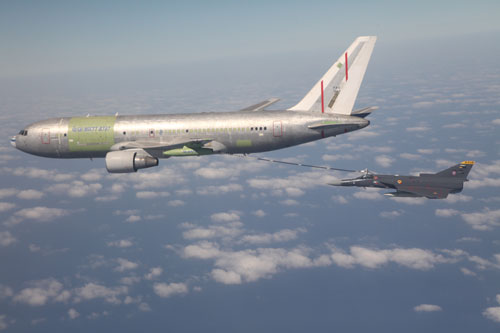
While Israel Aerospace Industries (IAI) aspires to be the vendor in one of Israel's biggest defense procurement programs in the next few years, for fuel tanker aircraft for the Israel Air Force, US aerospace giant Boeing is liable to put a serious obstacle in its way: sources inform "Globes" that Boeing will not grant IAI permits to convert its planes to tanker configuration. Such a restriction means that IAI is liable to find itself out of the running for supplying the Israel Air Force's new tankers, as its proposal is based on buying used Boeing 767 aircraft on the open market and converting them for airborne refueling of combat planes.
Boeing has a clear interest in ousting IAI from the procurement program that has been taking shape at the Ministry of Defense and in the Air Force for a long time, since it is considered the leading candidate for winning the order, estimated to be worth hundreds of millions of dollars.
en.globes.co.il
Translate
Showing posts with label IAI. Show all posts
Aug 7, 2018
May 31, 2018
Germany near to lease five Heron TP, To Be based in Israel, only for Intel missions
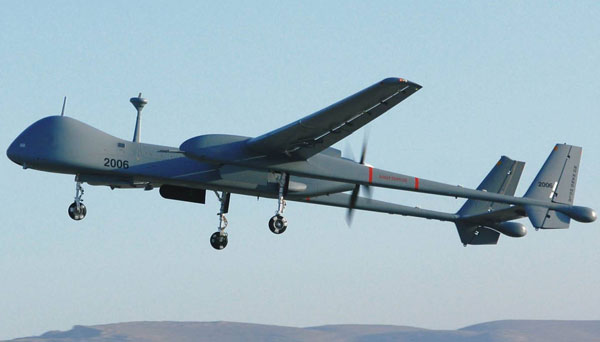
Germany — Government leaders are close to winning parliamentary approval for the country’s first weapons-capable drone, pitching a plan this week to lease the aircraft now and negotiate for the missiles later.
The plan is to lease five aircraft from manufacturer Israel Aerospace Industries, managed by Airbus under a contract to be finalized in June. The fleet would be stationed in Israel and, lacking missiles, simply provide intelligence for German forces.
The deal with industry includes having the aircraft available for deployment into a conflict zone within two years of contract signing.
The Heron TP is something of a trial balloon for Germany in the field of armed drones. An envisioned joint European drone project — with Germany, France, Italy at the core — is widely expected to produce a strike-capable unmanned aircraft by roughly the middle of the next decade. Still, officials are making a distinction in the so-called “Eurodrone” program, arguing that the base configuration will include a reconnaissance capability only, to be augmented by weapons if national policy permits it.
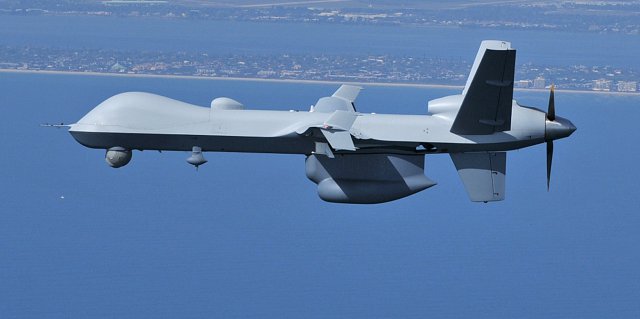
General Atomics last year fought, but lost in court, the Berlin government’s decision to effectively sole-source the drone deal to Israel without giving the U.S. company a chance to bid.
defensenews
The plan is to lease five aircraft from manufacturer Israel Aerospace Industries, managed by Airbus under a contract to be finalized in June. The fleet would be stationed in Israel and, lacking missiles, simply provide intelligence for German forces.
The deal with industry includes having the aircraft available for deployment into a conflict zone within two years of contract signing.
The Heron TP is something of a trial balloon for Germany in the field of armed drones. An envisioned joint European drone project — with Germany, France, Italy at the core — is widely expected to produce a strike-capable unmanned aircraft by roughly the middle of the next decade. Still, officials are making a distinction in the so-called “Eurodrone” program, arguing that the base configuration will include a reconnaissance capability only, to be augmented by weapons if national policy permits it.
General Atomics last year fought, but lost in court, the Berlin government’s decision to effectively sole-source the drone deal to Israel without giving the U.S. company a chance to bid.
defensenews
Etiquetas:
AIRBUS DEFENCE AND SPACE,
BUNDESWEHR,
GERMANY,
IAI,
ISRAEL
Nov 14, 2015
Argentina to sign for AESA-equipped Kfir fighters
Argentina is expected to sign a contract on 10 November covering the purchase of 14 Kfir Block 60 fighters. The nation's air force opted to acquire upgraded examples of the Israel Aerospace Industries-produced combat aircraft, which have been non-operational for two decades.
IAI had been offering a Block 60 version of the roughly 40-year-old Kfir design, powered by a GE Aviation J79 engine. The company says the powerplant will be supplied in a "zero-hour" condition after a complete overhaul, with replacement required after 1,600 flight hours.
The upgraded fighter also will be fitted with an Elta Systems EL/M-2032 active electronically scanned array (AESA) radar, and use open architecture avionics that will allow the customer to instal other systems. Elta says the sensor provides an all aspect, "look-down shoot-down" performance, and will support simultaneous air-to-air and strike missions, with the ability to track up to 64 targets.
flightglobal
IAI had been offering a Block 60 version of the roughly 40-year-old Kfir design, powered by a GE Aviation J79 engine. The company says the powerplant will be supplied in a "zero-hour" condition after a complete overhaul, with replacement required after 1,600 flight hours.
The upgraded fighter also will be fitted with an Elta Systems EL/M-2032 active electronically scanned array (AESA) radar, and use open architecture avionics that will allow the customer to instal other systems. Elta says the sensor provides an all aspect, "look-down shoot-down" performance, and will support simultaneous air-to-air and strike missions, with the ability to track up to 64 targets.
flightglobal
Etiquetas:
AESA RADAR,
ARGENTINA,
ARGENTINA AIR FORCE,
IAI,
ISRAEL,
KFIR,
KFIR BLOCK 60
Jun 25, 2015
Israel offers surplus F-16 to Croatia
Israel is offering Croatia surplus F-16A/Bs upgraded to the ACE configuration, as replacements for its Mikoyan MiG-21 fighters.
The Israeli air force is phasing out its F-16A/B-model trainers, ahead of deliveries of the new-generation Lockheed F-35A, which are expected to begin in 2017.
The F-16 ACE upgrade provides an Elta Systems EL/M-2032 fire control radar with synthetic aperture radar mapping modes. The aircraft also can be equipped with a variety of new weapons and sensors.
If a buyer is found for the ex-Israeli air force fighters, they could receive advanced weapons, including Rafael’s Python 5 air-to-air missile.
Croatia earlier this year confirmed plans to replace its MiG-21. Second-hand F-16s are being offered by the USA, while Sweden is promoting upgraded Saab Gripen C/Ds.
flightglobal
The Israeli air force is phasing out its F-16A/B-model trainers, ahead of deliveries of the new-generation Lockheed F-35A, which are expected to begin in 2017.
The F-16 ACE upgrade provides an Elta Systems EL/M-2032 fire control radar with synthetic aperture radar mapping modes. The aircraft also can be equipped with a variety of new weapons and sensors.
If a buyer is found for the ex-Israeli air force fighters, they could receive advanced weapons, including Rafael’s Python 5 air-to-air missile.
Croatia earlier this year confirmed plans to replace its MiG-21. Second-hand F-16s are being offered by the USA, while Sweden is promoting upgraded Saab Gripen C/Ds.
flightglobal
Etiquetas:
CROATIA,
CROATIA AIR FORCE,
F-16,
GRIPEN,
IAI,
ISRAEL,
ISRAEL AIR FORCE
Apr 14, 2015
South Korea opens bidding for aerial tanker project
South Korea on Tuesday announced the start of the official bidding for a refueling aerial tanker , with three foreign major defense firms among the candidates: Airbus Defense and Space, Boeing Israel Aerospace Industries (IAI) of Israel.
After wrapping up the evaluation by next month, the agency is scheduled to choose the winner and make a contact in June.
Two tankers are then to be put into service in 2018 and the remaining two in the following year. The delayed process of selecting a successful bidder for about a year has forced the military to postpone its original target of 2017.
The A300-based Multi-Role Tanker Transport (MRTT) tanker by Airbus is known for meeting both air-to-air refueling and air transport demands required by the South Korean Air Force. Some 10 countries have decided to adopt 60 platforms, which have been fully developed and already been in service.
Boeing's KC-46 tanker that features high combat readiness is expected to provide South Korea with interoperability with the U.S. Air Force, according to its officials, adding that the size is suitable for the refueling mission, which reduces infrastructure and operations costs in the long run.
As a renovated version of the B767-300ER plane, the IAI's MRTT is feted for its cost effectiveness, with the company vowing to transfer relevant high technology to South Korea.
yonhapnews
After wrapping up the evaluation by next month, the agency is scheduled to choose the winner and make a contact in June.
Two tankers are then to be put into service in 2018 and the remaining two in the following year. The delayed process of selecting a successful bidder for about a year has forced the military to postpone its original target of 2017.
The A300-based Multi-Role Tanker Transport (MRTT) tanker by Airbus is known for meeting both air-to-air refueling and air transport demands required by the South Korean Air Force. Some 10 countries have decided to adopt 60 platforms, which have been fully developed and already been in service.
Boeing's KC-46 tanker that features high combat readiness is expected to provide South Korea with interoperability with the U.S. Air Force, according to its officials, adding that the size is suitable for the refueling mission, which reduces infrastructure and operations costs in the long run.
As a renovated version of the B767-300ER plane, the IAI's MRTT is feted for its cost effectiveness, with the company vowing to transfer relevant high technology to South Korea.
yonhapnews
Etiquetas:
A330 MRTT,
AIRBUS DEFENCE AND SPACE,
B-767,
BOEING,
IAI,
ISRAEL,
KC-46,
ROKAF,
SOUTH KOREA,
UNITED STATES,
USA
Feb 10, 2015
Israel Aerospace Industries Introduces Business Jet-Based Maritime Patrol Aircraft
Israel Aerospace Industries (IAI) introduced the new generation ELI-3360 Maritime Patrol Aircraft (MPA), based on a modified Bombardier Global 5000 business-jet platform.
The system incorporates the advanced ELTA ELM-2022 Maritime Patrol Radar, an electro-optical sensor, the ELL-8385 ESM/ELINT system, and a comprehensive communications suite comprising radios, broadband SATCOM and data-links as well as advanced Electronic Warfare (EW) and self-protection Suite.
jewishbusinessnews
The system incorporates the advanced ELTA ELM-2022 Maritime Patrol Radar, an electro-optical sensor, the ELL-8385 ESM/ELINT system, and a comprehensive communications suite comprising radios, broadband SATCOM and data-links as well as advanced Electronic Warfare (EW) and self-protection Suite.
jewishbusinessnews
Jan 25, 2015
Colombian Air Force grounds IAI-built Kfir aircraft fleet
The Colombian Air Force (FAC) has reportedly grounded its entire fleet of IAI Kfir C-10.
The move is a precautionary measure against the risks of their operation after one aircraft crashed while performing approach manoeuvres near the Air Combat Command Base No. 1 in Colombia last month.
A preliminary investigation has indicated that the aircraft suffered a 'flameout,' forcing its pilot to follow protocols for ejection in the wake of low altitude, low speed and minimal chance of re-igniting the engine under such conditions.
The investigation has also ruled out the bird air strike hazard (BASH) as well as ingestion of birds by the general electric J79-GE J1EQD turbojet engine.
Meanwhile, the FAC is apparently planning to ship the power plant to IAI's Lahav division for inspection, due to the lack of clarity about the causes of the flameout.
According to the publication, the Colombian Ministry of National Defence (MND) is also planning to look out for a new company to provide the necessary maintenance of the aircraft, and also solve the ongoing problem caused by its engines.
The move is apparently driven by the dissatisfaction of the FAC high command and primarily the concerns of the pilots flying the aircraft, which have been maintained by the Israeli companies.
To date, the J79-GE J1EQD engines are believed to have caused four accidents involving three TC12 two-seaters, and one C10 single-seater aircraft.
IAI's Lahav division has been performing maintenance and repair of the Colombian Kfir engines since their introduction into service.
The Colombian Air Force is expected to have 24 Kfir C-10 aircraft in its inventory.
airforce-technology
The move is a precautionary measure against the risks of their operation after one aircraft crashed while performing approach manoeuvres near the Air Combat Command Base No. 1 in Colombia last month.
A preliminary investigation has indicated that the aircraft suffered a 'flameout,' forcing its pilot to follow protocols for ejection in the wake of low altitude, low speed and minimal chance of re-igniting the engine under such conditions.
The investigation has also ruled out the bird air strike hazard (BASH) as well as ingestion of birds by the general electric J79-GE J1EQD turbojet engine.
Meanwhile, the FAC is apparently planning to ship the power plant to IAI's Lahav division for inspection, due to the lack of clarity about the causes of the flameout.
According to the publication, the Colombian Ministry of National Defence (MND) is also planning to look out for a new company to provide the necessary maintenance of the aircraft, and also solve the ongoing problem caused by its engines.
The move is apparently driven by the dissatisfaction of the FAC high command and primarily the concerns of the pilots flying the aircraft, which have been maintained by the Israeli companies.
To date, the J79-GE J1EQD engines are believed to have caused four accidents involving three TC12 two-seaters, and one C10 single-seater aircraft.
IAI's Lahav division has been performing maintenance and repair of the Colombian Kfir engines since their introduction into service.
The Colombian Air Force is expected to have 24 Kfir C-10 aircraft in its inventory.
airforce-technology
Etiquetas:
COLOMBIA,
FUERZA AEREA COLOMBIANA,
IAI,
ISRAEL,
KFIR
Jan 22, 2015
Brazil to Acquire 3 KC-767 From IAI
The Brazilian air force and Israel Aerospace Industries (IAI) have renewed contract negotiations over Brazil's acquisition of three Boeing 767-300ERs that will be converted into tankers.
Attempts to finalise the terms of the deal – which was agreed in mid-2014 – were delayed by general elections held in Brazil last October.
An initial contract with IAI was signed last year, but the exact details of the conversion plan were not concluded.
Once operational, the converted 767s will reinstate a jet-based in-flight refuelling capability to the Brazilian air force that lapsed when it retired its four Boeing KC-137s. The replacement assets will be equipped with underwing hose-and-drogue refuelling pods.
flightglobal
Attempts to finalise the terms of the deal – which was agreed in mid-2014 – were delayed by general elections held in Brazil last October.
An initial contract with IAI was signed last year, but the exact details of the conversion plan were not concluded.
Once operational, the converted 767s will reinstate a jet-based in-flight refuelling capability to the Brazilian air force that lapsed when it retired its four Boeing KC-137s. The replacement assets will be equipped with underwing hose-and-drogue refuelling pods.
flightglobal
Jul 17, 2014
Israel Readies First US Co-Production Order for Iron Dome
Israel fielded its seventh Iron Dome intercepting battery under fire last week in an operational debut that destroyed five Gaza-launched rockets headed for Tel Aviv.
The July 10 interception over Tel Aviv by Israel’s Iron Dome battery averted strategic tailwind for Hamas, which claimed credit for the attack that could have triggered a full-scale Israeli invasion of Gaza.
That critical interception and 100 others scored by Iron Dome since the July 7 start of Operation Protective Edge highlights the “strategic significance” of active defenses in Israel’s battle against more than 10,000 Gaza-based rockets threatening nearly three quarters of the country.
As of press time on July 11, no Israelis had been killed in more than 400 Gaza-launched rocket attacks. In contrast, Israeli air, land and sea-based strikes against more than 1,100 targets throughout the strip killed nearly 100 uninvolved Palestinians, most of them women and children.
As Rafael works on the eighth battery in parallel to fast-tracked production of intercepting missiles, it is preparing to receive the first Defense Ministry procurement contract for US-based builds in support of Iron Dome.
The firm recently finalized an agreement making Raytheon its US partner in co-production of major components for the Iron Dome’s Tamir intercepting missile.
The US firm will supply components through various subcontractors.
US investment in Iron Dome was nearly $900 million.
defensenews
The July 10 interception over Tel Aviv by Israel’s Iron Dome battery averted strategic tailwind for Hamas, which claimed credit for the attack that could have triggered a full-scale Israeli invasion of Gaza.
That critical interception and 100 others scored by Iron Dome since the July 7 start of Operation Protective Edge highlights the “strategic significance” of active defenses in Israel’s battle against more than 10,000 Gaza-based rockets threatening nearly three quarters of the country.
As of press time on July 11, no Israelis had been killed in more than 400 Gaza-launched rocket attacks. In contrast, Israeli air, land and sea-based strikes against more than 1,100 targets throughout the strip killed nearly 100 uninvolved Palestinians, most of them women and children.
As Rafael works on the eighth battery in parallel to fast-tracked production of intercepting missiles, it is preparing to receive the first Defense Ministry procurement contract for US-based builds in support of Iron Dome.
The firm recently finalized an agreement making Raytheon its US partner in co-production of major components for the Iron Dome’s Tamir intercepting missile.
The US firm will supply components through various subcontractors.
US investment in Iron Dome was nearly $900 million.
defensenews
Jun 22, 2014
IAI to offer converted tankers to South Korea
Israel Aerospace Industries (IAI) is to offer the Korea an aerial refuelling solution based on its converted Boeing 767-300ER Multi-Mission Tanker Transport (MMTT) tanker.
In offering its MMTT, IAI joins Airbus Defence and Space and Boeing which are offering South Korea their A330-200 MultiRole Tanker Transport (MRTT) and KC-46A Pegasus platforms respectively.
As well as being cheaper to procure, IAI's pre-owned solution need not give anything away to its new-build rivals in terms of either through-life support costs or reliability.
To date, Colombia and Brazil have signed up for IAI's B767 MMTT conversions, with one 767-200 and two 767-300 aircraft respectively. Besides South Korea, IAI is also looking at offering nations a pooled tanker capability, similar in scope to the three Boeing C-17 Globemaster III transport aircraft operated by NATO's Strategic Airlift Capability.
janes
In offering its MMTT, IAI joins Airbus Defence and Space and Boeing which are offering South Korea their A330-200 MultiRole Tanker Transport (MRTT) and KC-46A Pegasus platforms respectively.
As well as being cheaper to procure, IAI's pre-owned solution need not give anything away to its new-build rivals in terms of either through-life support costs or reliability.
To date, Colombia and Brazil have signed up for IAI's B767 MMTT conversions, with one 767-200 and two 767-300 aircraft respectively. Besides South Korea, IAI is also looking at offering nations a pooled tanker capability, similar in scope to the three Boeing C-17 Globemaster III transport aircraft operated by NATO's Strategic Airlift Capability.
janes
May 28, 2014
Brazil to add third converted 767 tanker
Brazil is to sign a revised contract soon to add a third converted Boeing 767-300 tanker to its air force inventory.
In March 2013, the Brazilian air force selected Israel Aerospace Industries for the conversion of two commercial Boeing 767-300ERs, with options for an additional two. These will replace the service’s four retired KC-137s, which had been in use since 1986.
The modified 767s will be configured with under-wing hose-and-drogue refuelling pods to support Brazilian air force fighters.
IAI is offering the Boeing 767 in a flexible configuration comprising hose-and-drogue pods, a boom, or both. It has already delivered one modified example to the Colombian air force, nicknamed “Jupiter”.
flightglobal
In March 2013, the Brazilian air force selected Israel Aerospace Industries for the conversion of two commercial Boeing 767-300ERs, with options for an additional two. These will replace the service’s four retired KC-137s, which had been in use since 1986.
The modified 767s will be configured with under-wing hose-and-drogue refuelling pods to support Brazilian air force fighters.
IAI is offering the Boeing 767 in a flexible configuration comprising hose-and-drogue pods, a boom, or both. It has already delivered one modified example to the Colombian air force, nicknamed “Jupiter”.
flightglobal
May 23, 2014
Airbus seeks deal to supply Germany with Israel drones
Airbus signed a deal on Wednesday with Israel Aerospace Industries to team up on a bid for a bridging contract to supply the German armed forces with military drones until 2020.
The armed forces currently use an IAI Heron 1, which is made by the Israeli firm and operated by Airbus Defence & Space. However, Germany's contract with the two companies is due to expire in 2015.
Airbus Defence & Space said on Wednesday it had struck a deal with Israel Aerospace Industries to make an offer to supply Germany with an upgraded drone, the Heron TP, after 2015 to allow the country to keep its surveillance capabilities until the arrival of a European drone.
The German government would have the choice of either a purchase option or a lease for the system, Airbus said.
European aerospace companies on Monday put forward proposals for a medium-altitude long endurance (MALE) drone program that would have to be agreed by governments in the region, before potential production for 2020.
Apr 10, 2014
IAI mulls pooled tanker solution
Israel Aerospace Industries (IAI) is looking at options for offering nations a pooled aerial refuelling capability based on the Boeing 767-300 Multi-Mission Tanker Transport (MMTT) tanker conversion work of its Bedek division.
The group was looking at new ways of providing aerial refuelling capabilities to nations that might not choose to field their own dedicated tanker fleet.
An IAI converted B767-300 MMTT would cost about a quarter of an A330-200 MRTT or KC-46A to procure.
With more than 45 years' experience of aerial refuelling conversion work, having converted KC-97 tankers for the Israel Air Force in 1969, IAI remains the only company to offer a tanker solution based on converted pre-owned aircraft.
To date, Colombia and Brazil have signed up for IAI's B767 MMTT conversions, with one 767-200 and two 767-300 aircraft respectively.
janes
The group was looking at new ways of providing aerial refuelling capabilities to nations that might not choose to field their own dedicated tanker fleet.
An IAI converted B767-300 MMTT would cost about a quarter of an A330-200 MRTT or KC-46A to procure.
With more than 45 years' experience of aerial refuelling conversion work, having converted KC-97 tankers for the Israel Air Force in 1969, IAI remains the only company to offer a tanker solution based on converted pre-owned aircraft.
To date, Colombia and Brazil have signed up for IAI's B767 MMTT conversions, with one 767-200 and two 767-300 aircraft respectively.
janes
Mar 25, 2014
IAI courts buyers for AEW-equipped C295
Israel Aerospace Industries is in different stages of negotiations with four countries that have shown interest in the Airbus Defence & Space C295 medium transport, fitted with an airborne early warning and control system suite supplied by its Elta Systems subsidiary.
Airbus has previously flown one of its C295 development aircraft with an aerodynamic model of an AEW rotodome installed.
Elta is offering a mission system including a radar, command, control and communications equipment and electronic intelligence sensors.
An Israeli source says the proposed AEW version of the C295 is an attractive option for air forces that already use the European design for transport applications. The current interest includes some nations that currently use the twin-turboprop, the source reveals.
Airbus says an AEW version of the C295 would have a mission endurance of up to 9h, and be capable of operating at an altitude of up to 26,000ft (7,930m).
flightglobal
Airbus has previously flown one of its C295 development aircraft with an aerodynamic model of an AEW rotodome installed.
Elta is offering a mission system including a radar, command, control and communications equipment and electronic intelligence sensors.
An Israeli source says the proposed AEW version of the C295 is an attractive option for air forces that already use the European design for transport applications. The current interest includes some nations that currently use the twin-turboprop, the source reveals.
Airbus says an AEW version of the C295 would have a mission endurance of up to 9h, and be capable of operating at an altitude of up to 26,000ft (7,930m).
flightglobal
Etiquetas:
AIRBUS DEFENCE AND SPACE,
C-295,
C-295 AEW,
IAI,
ISRAEL
Feb 17, 2014
Heron, Reaper and Hermes 900 Compete for Canada’s Arctic mission
The Israel Aerospace Industries (IAI) Heron unmanned air system (UAS), General Atomics Reaper and Elbit Systems’ Hermes 900 are among three platforms eyed for a Canadian tender to supply an advanced system for operation in the Arctic.
General Atomics’ Guardian is a marinized verstion of the MQ-9 Reaper, designed for maritime and border patrol missions. Canada’s military wants its next unmanned aircraft system to be capable of dropping search-and-rescue supplies in the Arctic and in other areas as it looks to expand UAS roles into activities formerly conducted by manned platforms.
Head of the Royal Canadian Air Force, explained that UAS could carry some equipment, whether it is weapons or other equipment, to be able, when it is patrolling the Arctic, to carry a search-and-rescue package to drop any time.
The Air Force did not respond to questions about whether it would be willing to fund research and testing into adding equipment transport capability to UAS. But a National Defense Department source said the Air Force hopes industry will provide solutions to Canada’s project to purchase the UAS, known as the Canadian Forces Joint UAV Surveillance and Target Acquisition System (JUSTAS). Adding additional weight for every mission of an unmanned mission is unlikely as the extra weight will reduce the volume of fuel carried on board, dramatically reducing mission endurance, increasing system’s wear (due to excessive takeoff and landing) and increasing the risk of losing aircraft.
The Air Force’s quest for leading-edge UAS technology has raised some concerns. John McKay, the defense critic for the opposition Liberal Party in the House of Commons, said he is worried that adding such a capability would further delay JUSTAS, which has already fallen years behind schedule.
defense-update
General Atomics’ Guardian is a marinized verstion of the MQ-9 Reaper, designed for maritime and border patrol missions. Canada’s military wants its next unmanned aircraft system to be capable of dropping search-and-rescue supplies in the Arctic and in other areas as it looks to expand UAS roles into activities formerly conducted by manned platforms.
Head of the Royal Canadian Air Force, explained that UAS could carry some equipment, whether it is weapons or other equipment, to be able, when it is patrolling the Arctic, to carry a search-and-rescue package to drop any time.
The Air Force did not respond to questions about whether it would be willing to fund research and testing into adding equipment transport capability to UAS. But a National Defense Department source said the Air Force hopes industry will provide solutions to Canada’s project to purchase the UAS, known as the Canadian Forces Joint UAV Surveillance and Target Acquisition System (JUSTAS). Adding additional weight for every mission of an unmanned mission is unlikely as the extra weight will reduce the volume of fuel carried on board, dramatically reducing mission endurance, increasing system’s wear (due to excessive takeoff and landing) and increasing the risk of losing aircraft.
The Air Force’s quest for leading-edge UAS technology has raised some concerns. John McKay, the defense critic for the opposition Liberal Party in the House of Commons, said he is worried that adding such a capability would further delay JUSTAS, which has already fallen years behind schedule.
defense-update
Etiquetas:
CANADA,
GENERAL ATOMICS,
HERMES 900,
HERON,
IAI,
ISRAEL,
MQ-9,
REAPER,
ROYAL CANADIAN AIR FORCE,
UAS,
UAV
Feb 14, 2014
Israel bans IAI, Elbit from selling UAVs to Poland
Israel has withdrawn the export licenses to Poland for two large Israeli defense companies - Elbit Systems Ltd. and Israel Aerospace Industries. Following the extraordinary decision, the two companies are banned from operating in Poland and selling unmanned aerial vehicles (UAV) there.
The decision was taken because of a quarrel between the companies in the affair of UAV exports to the Polish Army, which resulted in the resignation of Poland's Minister of Defense two months ago. He was forced to resign for internal reasons, but the competition between Elbit Systems and IAI for the sale of UAV's to the Polish Army, which got out of control, was a contributing factor. A high point in the competition occurred when IAI questioned Minister's preference for Elbit Systems' Hermes 450 UAV. Complaints by IAI and other correspondence reached the Polish media, causing a storm that shook Poland's defense establishment.
Now, neither IAI nor Elbit Systems may sell UAVs and peripheral systems in Poland until further notice. This is happening when the Polish Army is undertaking an extensive procurement plan, which could have been good business for the Israeli companies.
globes
The decision was taken because of a quarrel between the companies in the affair of UAV exports to the Polish Army, which resulted in the resignation of Poland's Minister of Defense two months ago. He was forced to resign for internal reasons, but the competition between Elbit Systems and IAI for the sale of UAV's to the Polish Army, which got out of control, was a contributing factor. A high point in the competition occurred when IAI questioned Minister's preference for Elbit Systems' Hermes 450 UAV. Complaints by IAI and other correspondence reached the Polish media, causing a storm that shook Poland's defense establishment.
Now, neither IAI nor Elbit Systems may sell UAVs and peripheral systems in Poland until further notice. This is happening when the Polish Army is undertaking an extensive procurement plan, which could have been good business for the Israeli companies.
globes
Feb 11, 2014
IAI to unveil Super Heron HF
Israel Aerospace Industries will formally unveil the latest version of its Heron unmanned air vehicle at the Singapore air show on 11 February. Named the Super Heron HF, this differs from earlier examples of the medium-altitude, long-endurance type through the integration of a heavy-fuel engine.
The engine enhancement, which has required the company to slightly redesign the aircraft’s rear fuselage, has been made to meet demand from operators to reduce their reliance on using traditional aviation gasoline to power UAVs. The new version is also equipped with winglets to boost performance.
First flight trials of an aircraft in the new configuration were performed in Israel late last year.
flightglobal
The engine enhancement, which has required the company to slightly redesign the aircraft’s rear fuselage, has been made to meet demand from operators to reduce their reliance on using traditional aviation gasoline to power UAVs. The new version is also equipped with winglets to boost performance.
First flight trials of an aircraft in the new configuration were performed in Israel late last year.
flightglobal
Feb 7, 2014
India, Israel to Build Anti-Missile System
India and Israel will jointly build an integrated anti-missile system to be deployed against Chinese nuclear and conventional missiles.
The new program,has been approved by the Indian Defence Ministry, with a contract expected to be signed in the next six months.
The proposed missile defense program will see participation by Rafael and Israel Aircraft Industries.
The system will integrate the homegrown Prithvi air defense system, which is ready for induction next year, with the mobile detection radar being built by BEL in partnership with IAI.
defensenews
The new program,has been approved by the Indian Defence Ministry, with a contract expected to be signed in the next six months.
The proposed missile defense program will see participation by Rafael and Israel Aircraft Industries.
The system will integrate the homegrown Prithvi air defense system, which is ready for induction next year, with the mobile detection radar being built by BEL in partnership with IAI.
defensenews
Russian Air Force Receives Israeli Designed UAV
The Russian Air Force has received six ‘Outpost’ (Searcher-II) UAV’s.
The platoon will be based in in Kamchatka and will perform tactical reconnaissance sorties in the region.
The ‘Outpost’ UAV has been produced by UZGA at its Nizhny Tagil factory, under license from Israeli IAI.
i-hls.com
The platoon will be based in in Kamchatka and will perform tactical reconnaissance sorties in the region.
The ‘Outpost’ UAV has been produced by UZGA at its Nizhny Tagil factory, under license from Israeli IAI.
i-hls.com
Etiquetas:
IAI,
IAI SEARCHER,
ISRAEL,
OUTPOST,
RUSSIA,
RUSSIAN AIR FORCE,
UAV
Jan 23, 2014
IAI begins Arrow 3 production
The new Arrow 3 anti-ballistic missile system is a demonstration of Israeli defense industries' prowess. In a world still thrilled with the impressive interception capabilities of Iron Dome, Israel Aerospace Industries Ltd. (IAI) and the Ministry of Defense are trying to do the same thing, but completely differently: to intercept ballistic missiles long before they enter Israeli airspace by neutralizing them in outer space.
20 years ago, Israel unveiled its technological capabilities in response to the missile threat against the home front, making it a global pioneer in missile defense. In 2000, the Arrow system was declared operational, and it seems that as the missile threat expands and grows stronger.
The latest test of the Arrow 3 was successfully completed in early January, giving the green light to complete the system which will add the upper layer to Israel's missile defense. For a decade, the IDF and IAI have been developing the Arrow 3, with generous financial aid from the US.
The IDF campaigned against steep cuts in the defense budget, which included several attempts to add the Arrow to the long list of strategically critical projects that were delayed or frozen for years. A few weeks ago, the IDF proved once again that the best spin is only that: the Arrow program has continued on schedule, with no slowdowns, no cuts, and a lot of determination.
A critical test of the new missile will be carried out in a few weeks. In this test, for the first time, the missile's operators will have to intercept a target missile that will simulate an incoming Iranian Shahab ballistic missile.
Although so far the Arrow 3 has only succeeded in intercepting threats to its R&D funding, the Ministry of Defense and IAI engineers are so convinced that the missile will work that they have decided not to waste precious time and to begin production.
Few interception tests are planned anyway, and if the tests that will be carried out indicate a gap between planned and actual performance, minor software updates should be able to correct them. An announcement that the Arrow 3 is operational is due is 2015.
The Arrow 3 is an evolutionary development of the Arrow 2. The next generation of the Arrow was developed with an eye to the latest threats in the missile arena: the program planner's guiding principle was that if Israel were to face nuclear-tipped missiles, it was best to intercept them as far away as possible. In addition to the environmental importance of intercepting unconventionally armed missiles above the atmosphere, the Arrow 3 gives the ground crew the time needed to fire an interceptor against an incoming missile and to fire a second interceptor if the first one misses.
Under these circumstances, the Arrow 2 will be the second interceptor. Batteries are already deployed at Ein Shemer and Palmachim.
globes.co.il
20 years ago, Israel unveiled its technological capabilities in response to the missile threat against the home front, making it a global pioneer in missile defense. In 2000, the Arrow system was declared operational, and it seems that as the missile threat expands and grows stronger.
The latest test of the Arrow 3 was successfully completed in early January, giving the green light to complete the system which will add the upper layer to Israel's missile defense. For a decade, the IDF and IAI have been developing the Arrow 3, with generous financial aid from the US.
The IDF campaigned against steep cuts in the defense budget, which included several attempts to add the Arrow to the long list of strategically critical projects that were delayed or frozen for years. A few weeks ago, the IDF proved once again that the best spin is only that: the Arrow program has continued on schedule, with no slowdowns, no cuts, and a lot of determination.
A critical test of the new missile will be carried out in a few weeks. In this test, for the first time, the missile's operators will have to intercept a target missile that will simulate an incoming Iranian Shahab ballistic missile.
Although so far the Arrow 3 has only succeeded in intercepting threats to its R&D funding, the Ministry of Defense and IAI engineers are so convinced that the missile will work that they have decided not to waste precious time and to begin production.
Few interception tests are planned anyway, and if the tests that will be carried out indicate a gap between planned and actual performance, minor software updates should be able to correct them. An announcement that the Arrow 3 is operational is due is 2015.
The Arrow 3 is an evolutionary development of the Arrow 2. The next generation of the Arrow was developed with an eye to the latest threats in the missile arena: the program planner's guiding principle was that if Israel were to face nuclear-tipped missiles, it was best to intercept them as far away as possible. In addition to the environmental importance of intercepting unconventionally armed missiles above the atmosphere, the Arrow 3 gives the ground crew the time needed to fire an interceptor against an incoming missile and to fire a second interceptor if the first one misses.
Under these circumstances, the Arrow 2 will be the second interceptor. Batteries are already deployed at Ein Shemer and Palmachim.
globes.co.il
Subscribe to:
Posts (Atom)