Translate

Showing posts with label CP-140. Show all posts

Dec 1, 2023

Canada Acquires 16 P-8A Poseidon Aircraft for Royal Canadian Air Force


Canada has finalized a government-to-government agreement with the United States government for the acquisition of up to 16 P-8A Poseidon aircraft for the Royal Canadian Air Force (RCAF). Fourteen multi-mission aircraft will be procured, with options for up to an additional two.


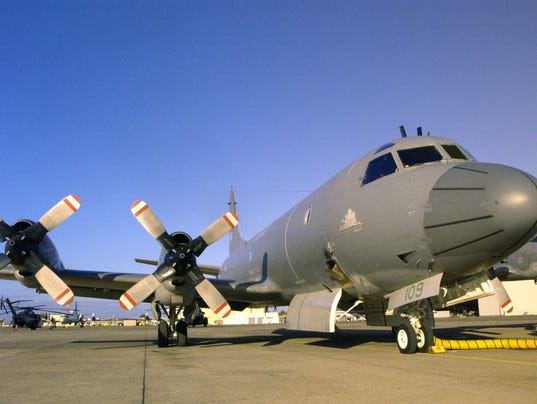
The P-8A will replace Canada’s current maritime patrol aircraft, the CP-140 Aurora, which has been in service for more than 40 years. As it ages, the CP-140 aircraft is becoming increasingly difficult to support, expensive to sustain, and less operationally relevant.

The P-8A is already operated by the United States, the United Kingdom, Australia, and New Zealand. Germany has eight units on order.

The estimated investment for this project is $10.4 billion CAD; it includes up to $5.9 billion USD for the P-8A, associated equipment, training devices and sustainment set-up. The balance will cover additional investments in simulators, infrastructure and weapons.

With this acquisition of this platform Canada hopes to defend Canadian interests in maritime approaches and the Arctic.

The first P-8A should be delivered in 2026, and with an average of one aircraft delivered per month, all of the aircraft could be delivered as early as fall 2027. We anticipate full operational capability by 2033.

Boeing plans to integrate Canadian companies into the manufacturing, development, and maintenance processes, with an expected creation of 3,000 jobs, resulting in an annual impact of $358 on the Canadian GDP.


May 18, 2015

Canada Restarts Attempt to Buy Drones

Canada does not have a medium-altitude, long-endurance (MALE) UAV. It uses its CP-140 Aurora maritime patrol aircraft to fulfill the ISR mission against Islamic State extremists in Iraq.
Since 2006, Canada's military has been trying to purchase a fleet of UAVs, but it has faced an uphill battle due to lack of funding.
Air Force officers announced in 2006 that JUSTAS would see the purchase of MALE UAVs, but little has happened on that project.
The Air Force made a pitch to the Canadian government in 2007 for the sole-source purchase of Predator UAVs, built by General Atomics, but that was rejected.
Instead, in 2009 the Canadian military signed a lease arrangement which provided the Heron, made by Israel Aerospace Industries, for operations in Afghanistan. That lease ran from 2009 to 2011.
When the JUSTAS project was active, both MDA and General Atomics indicated they intended to bid.
Northrop Grumman also made an unsolicited offer in 2012 to provide Canada with a fleet of Global Hawks, specifically for Arctic operations, but the Canadian government did not act on that proposal. The Air Force determined that the cost of the Global Hawks was too expensive for the Arctic capability.
defensenews

Mar 7, 2015

Canada upgrades CP-140 Aurora ISR

Canada is upgrading its Lockheed CP-140 Aurora maritime patrol aircraft with a ViaSat satellite communications system.
The upgrade will enable data streaming from Aurora aircraft over the ViaSat satellite network.
The project was completed from project start to first light in less than 90 days.
c4isrnet

Feb 21, 2015

Canadian jets destroyed Islamic State bomb factory

The military says Canadian CF-18 fighter jets conducted a single attack in Iraq last week, leading a coalition strike that destroyed a factory making improved explosive devices last Friday.
Since the Canadian mission began last fall, CF-18s have flown 328 missions.
A Canadian Polaris tanker aircraft has flown 82 sorties and delivered more than two million kilograms of fuel to coalition aircraft and CP-140 Aurora has flown another 91 missions, bringing the total number of Canadian sorties to 501.
Canada has also deployed up 69 special forces advisers in northern Iraq, who took along vehicles and other specialized equipment.
ctvnews.ca

Jan 6, 2015

RCAF receives first Aurora with new satellite comms system

MP Aerospace delivered the first of three CP-140M Aurora aircraft fitted with an Interim Beyond Line of Sight (IBLOS) satellite communications system to the Royal Canadian Air Force (RCAF) on December 15, 2014.
The prototype CP-140M Aurora aircraft will provide an improved Intelligence, Surveillance and Reconnaissance (ISR) capability in support of Canada’s military requirements internationally. Working with Department of National Defence personnel, IMP Aerospace provided the installation design and modification of the IBLOS system in Halifax, Nova Scotia.
The system enables secure, high-speed data streaming from the aircraft via satellite in areas which are remote from familiar ground stations.
airforce.forces.gc.ca

Dec 10, 2014

Canadians, French, U.S. Hunt For Submarine Off Scotland

The U.K. called in assistance to help hunt for a foreign submarine off the west coast of Scotland starting in late November.
Maritime patrol aircraft (MPAs) from France, Canada and the U.S. conducted patrols in conjunction with British surface warships in the search for the submarine in late November and the first week of December, operating out of RAF Lossiemouth in northern Scotland.
The incident began when a periscope was sighted in waters where U.K. and other submarines would normally surface as they head into or out of the Royal Navy’s submarine base at Faslane, home of the U.K.’s ballistic missile submarines.
At the height of the operation, aircraft involved in the hunt included two U.S. Navy P-3 Orions, a single CP-140 Aurora from the Royal Canadian Air Force and a Dassault Atlantique 2 of the French navy. Also involved was one of the U.K.’s Raytheon Sentinel radar-reconnaissance aircraft.
The U.K. defense ministry and the participating air arms have not confirmed they were hunting for a submarine. But a U.K. defense ministry spokesman told Aviation Week that Britain had “requested assistance from allied forces for basing of maritime patrol aircraft at RAF Lossiemouth for a limited period.
Maritime patrol aircraft are occasionally deployed to Scotland, mainly for NATO’s Joint Warrior exercise. Such exercises are usually announced in advance, but November’s deployment was unexpected, with the aircraft and supporting airlifters arriving around Nov. 26. The deployment appeared to end last last week.
The incident comes more than a month after Swedish authorities halted a search for a foreign submarine operating in its territorial waters in the Stockholm archipelago. While the Swedish search was unsuccessful, defense officials said there was no doubt that the country’s waters had been violated by a foreign power.
It is not clear whether the submarine being hunted by the U.K. and other Western nations had entered U.K. territorial waters, or if the maritime patrol aircraft successfully located the sub.
The Sentinel may have been using its radar to try to spot periscope-sized objects on the surface and then cue MPAs onto the target.
On Nov. 28, the U.K. reported it was tracking four Russian warships passing through the Strait of Dover and into the English Channel heading out into the Atlantic. The surface ships included a Ropucha-class landing ship and an Udaloy-class destroyer. These were shadowed by HMS Tyne, a Royal Navy offshore patrol vessel.
The U.K. retired its own fixed-wing maritime patrol capability provided by the Nimrod in 2010, and has been limited to the use of ships and helicopters for the anti-submarine mission.
aviationweek

Oct 23, 2014

Canada’s CF-188 Hornets depart for Operation Impact to fight ISIS

Operation Impact is the Canadian Armed Forces’ contribution to coalition assistance to security forces in Iraq who are fighting against ISIL.
The Hornets will transit through 3 Wing Bagotville, Quebec, before flying to Kuwait to participate in Operation Impact.
Canadian contribution to coalition operations against ISIL includes six CF-188 Hornet, one CC-150T Polaris air-to-air refueller and two CP-140M Aurora long-range patrol aircraft to provide reconnaissance capabilities and approximately 600 personnel. Seventy members of the Canadian Armed Forces are already working with American forces in an advisory and assistance role by providing strategic and tactical advice to Iraqi security forces.
rcaf-arc

Oct 13, 2014

Canada Brings '6-pack Strategy' to Air Campaign Against Islamic State in Iraq

Canadian lawmakers have approved sending up to six CF-18 fighter aircraft to participate in airstrikes in Iraq, along with one CC-150 aerial refueling tanker, two CP-14 Aurora surveillance aircraft and one airlift aircraft, according to the Canadian prime minister’s office.
The motion approved this week by the House of Commons authorizes up to 69 soldiers with the Canadian army to advise and assist Iraqi security forces with a “non-combat role.”
Currently, Canadian airstrikes will only take place in Iraq.
Canada’s participation with airstrikes in Iraq will free up U.S. aircraft for use in Syria. Historically, Canada has deployed six aircraft to support joint operations.
defensenews