Translate

Showing posts with label FALKLANDS. Show all posts

Jan 6, 2016

The Rise And Fall Of The Argentine Air Force

There was a time when the Fuerza Aérea Argentina (Argentine Air Force) was considered to be one of the best Air Forces in Latin America, if not the world. Created into its own independent entity out of the Argentine Army in 1945, the Argentine Air Force began a massive modernization program which saw them becoming the first country in South America to operate jet aircraft.
This occurred when they took delivery of British made Gloster Meteors in 1947. As well as operating a formidable bomber force that was made up of Avro Lincolns and Lancasters, all of which were also acquired from Britain.
In later years, Argentina went as far as attempting to develop their own indigenous jet aircraft with the aid of former Luftwaffe personnel and other German engineers. A program which resulted in the creation of the FMA IAe 33Pulqui II, making Argentina the first country in Latin America to develop its own jet aircraft and 6th in the world to do so. Even though the Pulqui never entered service (the Government had decided to purchase F-86 Sabers from the U.S. Instead.) , it still showed just what the Argentine Air Force was truly capable of and as the years passed, they continued to build up its fleet by adding newer and more advanced aircraft to its already impressive line up.
But that all changed in the 1980’s, the Falklands War in 1982. Where in an attempt to shift attention away from their troubled economy, the Military Junta which ruled the Latin American country at the time, invaded the British Territories of East and West Falklands.
Thinking that the British government (who had supplied Argentina with a number of military equipment in the years before the invasion) would be unable, if not unwilling, to commit military forces to retake the islands.
The resulting conflict saw the Argentine Air Force sustain heavy losses, losing dozens of fighters, helicopters, cargo aircraft, and even two Canberra Bombers, the majority of which were shot down by Royal Navy and Royal Air Force Harrier jets.
Many had believed to be no match for Argentina’s fleet of supersonic Mirage jet fighters.
By contrast, the Argentine Air Force could only boast of one air to air kill when 2 IA-58 counter-insurgency aircraft shot down a scout helicopter during the battle of Goose Green. Even though both the air force and navy had gained some successes during the conflict, it still was not enough to secure a victory for Argentina as the British were able to retake the islands just after two months since the war began. It also did not help that a number of aircraft and equipment had been captured and shipped back to Britain after the Argentine surrender.
The years following the war saw the Argentine military as a whole and especially the Argentine Air Force , took a sharp decline as the country’s economy worsened and traditional arms suppliers placed arms embargos on their former client.
This saw the Latin American nation unable to procure new assets. After some of these embargoes were lifted in the 1990s and Argentina was able to acquire upgraded A-4s from the United States, the military still continued their steady decline throughout the decade and into the 2000s.
Today, the Argentine Air Force is nothing more than a shadow of its former self. 2015 saw the Argentine Air Force retiring their remaining Mirage and Dagger Fighters, as their airframes had reached a point where they were no longer safe to fly.
Leaving only their remaining fleet of A-4AR “Fighthawks” and IA-63 advanced jet trainers to fill the gap left by these aircraft. Both of which are unsuited for air to air combat and are largely outmatched by aircraft used by their neighbors Chile and Brazil. Even more so, a shortage of spare parts could also see their A-4 fleet being grounded in the near future.
Recent attempts to acquire new aircraft such as the Chinese JF-17, the Swedish Saab Gripen (which is made with British components) and even secondhand Kifr jets from Israel have all failed due to either technological, political, or economic restrictions suffered by the Argentine government.
Problems in the air force also extend to their fleet of C-130 transport aircraft, as their airframes are starting to show their age. These aircraft provide a vital component of the air force, as they are used to not only supply Argentina’s arctic bases, but also assist in supplying their peace keeping contingents in Haiti and Cyprus. Though these aircraft have undergone major upgrades, and Argentina has shown interest in acquiring new aircraft to replace the C-130s, it is unknown whether if they would be able to keep their current fleet flying for long, or even if they will have a transport wing as the economic situation in the country worsens.
It is believed that in the years to come, the Argentine Air Force will cease to exist as a major military component of the Argentine Armed Forces and with an economy in shambles and embargoes still in place due to the Falklands war, it is still unknown whether if the Argentine Air Force will ever fully recover. It is possible that what was once Latin America’s most formidable air forces, maybe flying into the sunset for the last time.
defensionem

Apr 8, 2015

Document Showing Secret Technical Aspects of RAF Mount Pleasant in Falkands Leaked

MoD workers are accused of handing Argentina an “invasion handbook” for the Southern Atlantic archipelago after forgetting to encrypt a secret document, and putting it online.
The document details every technical aspect of the Royal Air Force’s (RAF) main military facility on the islands.
The Ministry of Defense removed the data from the website after being alerted by the Sunday Express.
The Mount Pleasant Aerodrome Manual, which states it is supposed to be password protected, is intended for RAF pilots and security-screened civilian contractors who need to land at the base, just 30 miles from Port Stanley.
However, the Sunday Express discovered it was openly available to anyone who clicked its link on the homepage of the “British forces overseas: Falkland Islands and Ascension Island” website.
Details revealed include the exact make-up of runways and thickness of concrete, enabling attacking bombers to know precisely which bombs to use for maximum effect, as well as full operating procedures of how the runways are used at any given time, making it easy for an airstrikes to cause maximum disruption by targeting specific sections.
It also boasts the exact GPS coordinate of every facility, color maps illustrating the hardtop covers of the RAF’s Typhoon fighters and advice as to the best approach in different weather conditions – not to mention the name and personal phone number of every senior officer at the base.
The gaffe is particularly embarrassing as it comes just 10 days after Defense Secretary confirmed a review of the islands’ defenses with a £280m boost to be invested in ten years, conceding the dispute with Argentina remained “a live threat”.
mercopress

Mar 25, 2015

UK Seeks To Update Falklands Air Defense

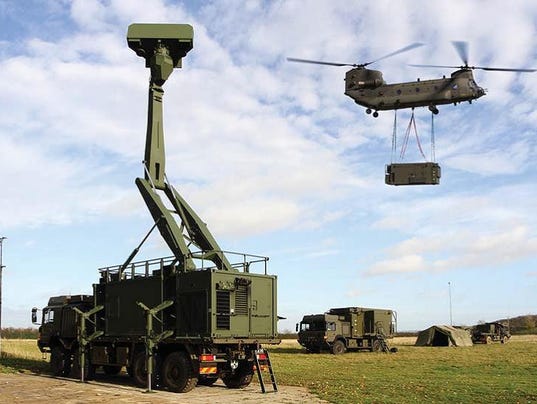
Britain is to invest US $268.7 million over the next 10 years strengthening its military presence on the Falkland Islands and has already started looking for a contractor to build a key element of a ground-based air defense (GBAD) system.
Defence Secretary outlined plans to deploy helicopters and upgrade port facilities along with the GBAD system to boost Britain's military on the islands.
Two Chinook support helicopters will be operational by the middle of next year along with communications capabilities for the British headquarters at Mount Pleasant airfield.
A number of projects to replace some of the aging infrastructure are also included in the long-term capability plans, including the refurbishment of Mare Harbour.
The introduction of the Chinooks is a significant capability which will provide reactive, 24/7 tactical mobility, in order to allow a swift and decisive response to any emerging incidents.
The announcement follows a review of the islands' defenses conducted by the MoD over the last 18 months or so.
The British defend the island with a force including four Typhoon jets, an offshore patrol vessel, a ground based air defense system and infantry.
There are about 1,200 soldiers, sailors and airmen based on the Falklands.
Even before the announcement, Britain had already taken a significant step toward updating its air defenses on the Falklands by kick-starting a competition to supply a key element of a new ground-based system.
With an aging Air Force, Argentina poses no threat to the islands. The Argentineans, though, have been trying, so far without success, to modernize a force that consists of Mirage III, Super Entendard and Nesher combat jets.
The Buenos Aires government has always denied media reports that it was in talks to buy or lease Sukhoi Su-24 jets from Russia in a beef-for-fighters barter.
defensenews

Jan 12, 2015

UK Bolsters Falkland Defenses to Counter Argentine Air Ambitions

British military capability planners are eyeing a major improvement to ground-based air defenses in the Falkland Islands amid continuing signs that Argentina is looking to update its Air Force with modern strike aircraft.
Argentina and the UK fought a short but bloody war over the British territory in 1982. The dispute received new life recently by Argentinean President Cristina Kirchener's launching a diplomatic war of words in an effort to eject the British.
Now it has emerged that the British have been planning to replace the aging ground-based system on the Falklands with a package including a battle management command, control, communications, computers and intelligence (BMC4I) system, a new missile and a radar.
As recently as December, unconfirmed reports emerged that Buenos Aires was in talks with the Russians over the possible lease of a squadron's worth of Sukhoi Su-24 Fencer attack jets in a move that would threaten Britain's control of the skies locally.
The reports drew a response from the UK Defence Ministry that it would adjust defense capabilities to the appropriate level to address any threats to the disputed islands, which the Argentinians refer to as the Islas Malvinas.
Britain has maintained forces on the island since the war. The force includes four Typhoon jets, Rapier missiles, naval assets and around 1,200 troops.
Last year, the British spent £63 million (US $95 million) for defense of the Falklands.
It is not possible to say when the Falklands system would enter service, as the project, which is fully funded, is in only its assessment phase.
The British effort to bolster its air defense capabilities on the South Atlantic islands comes as Argentina continues efforts to find a way of updating an Air Force that is pretty much flying the same aircraft as it did when it attacked the Falklands.
The financially hard-pressed Argentineans have made several attempts to buy second-hand combat jets, such as the Mirage 2000, without success.
Recently, Buenos Aires signaled interest in acquiring Saab Gripen NG fighters from a production line being set up in Brazil.
That came to nothing after the UK government warned they would block any sale by refusing to approve the export of the substantial amount of British technology used in the fighter.
Although media reports that the Argentineans are looking at the Su-24 have been denied by Buenos Aires, analysts in the UK said an eventual purchase of a credible combat jet could alter the balance of power in the South Atlantic.
defensenews

Dec 29, 2014

Russia Plans To Offer Argentina Long-Range SU-24 Fighter Bombers, Falklands Defence Under Review After Military Deal between Russia and Argentina

The Argentinian
fighter jet deal involves a lease/lend of 12 Sukhoi Su-24 supersonic, all-weather attack aircraft. They are old but NATO still regards the code-named “Fencer” as a “super-fighter” with an impressive 2,000-mile range and ability to deploy laser-guided missiles.
The aircraft, which Moscow will swap for beef and wheat, would be able to mount air patrols over Port Stanley.
UK Ministry of Defence officials fear Buenos Aires would take delivery of the planes well before the deployment in 2020 of the Navy’s 65,000-tonne aircraft carrier HMS Queen Elizabeth and its F-35B fighters, leaving a “real window of vulnerability”.
Defence cuts have left the Falklands with just four RAF Typhoon fighters, Rapier surface-to-air missiles and fewer than 1,200 troops, supported by a naval warship that visits throughout the year.
The deal involves a lease/lend of 12 Sukhoi Su-24 supersonic, all-weather attack aircraft.
Russia has been increasing its links with Argentina since 2010, when it provided two Mi17.
Buenos Aires needs to replace its decrepit fighter fleet but its attempts over the past two years have failed so far.
In October, Argentina Defence Minister announced the purchase of 24 Saab Gripen fighters, which were to be provided by Brazil, which has just purchased 36, but United Kingdom squashed the deal as some of the jet’s parts are made in the UK Tensions over the islands resurfaced after exploratory seabed drilling revealed the promise of an oil bonanza.
express.co

Nov 9, 2014

Argentina Buying Gripens? UK Say 'No Way'

Argentina’s Defense Minister Agustin Rossi surprised just about everybody when he announced on Oct. 21 that his government intended to buy 24 Saab Gripen E fighters to re-equip his nation’s ancient Air Force.
But Rossi’s request appeared to ignore a likely insurmountable hurdle to the sale: Britain, its longtime foe, has a near veto on the export of the combat jet as a result of the substantial number of UK systems in the jet. More than 30 percent of the new version of the Gripen being developed by Saab is supplied by British industry.
Selex ES’ key active electronically scanned array radar, landing gear, ejection seat, electronic system and other sub-systems would all be hit by a British block on military exports to Argentina.
British business secretary Vince Cable invoked the ban on the sale of all military and dual-use technology for use by Argentina in 2012. That export license is still in place and will likely remain given the impasse between the two nations over resolving the sovereignty of the Falkland Islands.
The Argentinean defense minister made the purchase of the aircraft dependent on his country participating in the Gripen E program signed by Saab and the Brazilian government, which will see South America’s biggest nation buy at least 36 fighters.
The deal involves an assembly line set up by Embraer in Brazil, joint development of a two-seat version of the Gripen and an export drive to other South American air forces.
Ironically, the UK government supported the Gripen sale to Brazil due to the high level of British material in the aircraft.
Doug Barrie, the senior air analyst at the International Institute for Strategic Studies in London said that while it would be feasible to replace UK systems on the Gripen, the practicalities are something different.
“Argentina is not flush with money, and the reality is that replacing such key systems as the UK supplies would come with significantly high requalification costs,” he said.
Sources with knowledge of the South American fighter market said Saab has been approached several times over the past few years by the Argentineans over a possible Gripen deal only to be quietly rebuffed by the Swedish company.
Rossi’s announcement during a roll-out ceremony of Embraer’s KC-390 airlifter in Brazil caused alarm in Britain, which is in a long-running dispute with Argentina over who owns the Falkland Islands, which Argentina calls the Malivinas Islands.
The issue came up in the UK Parliament last week and the House of Commons defense committee tried to quiz armed forces chiefs on Nov. 5 about the implications for the defense of the islands from a Gripen sale to Argentina.
Argentina has been trying to replace the aging fleet of Dassault combat aircraft for some time. Most recently, second-hand Spanish Air Force Mirage F1s were being considered, but that deal has yet to materialize. hasn’t yet come to anything.
c4isrnet

Oct 2, 2013

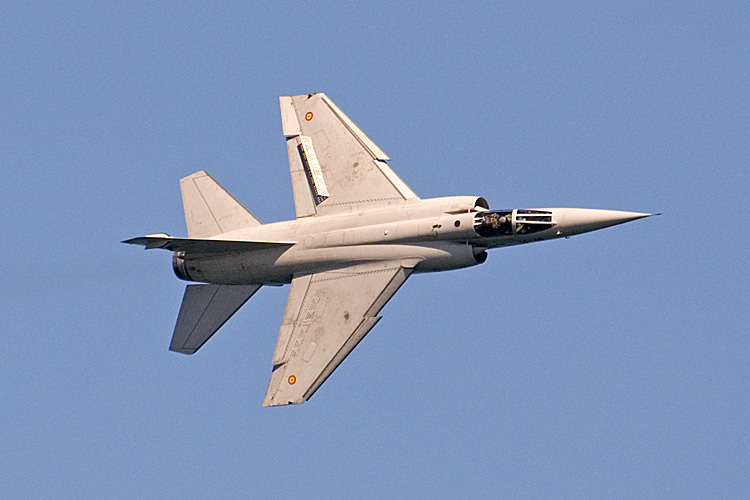
Argentina buys 16 Mirage F 1 from Spain; half have air-refuelling capacity

Argentina has confirmed the purchase of 16 second hand Mirage F-1 decommissioned from the Spanish Air force in an operation valued at 170 million Euros. The expenditure is contemplated in the 2014 budget bill approved in the Lower House and which awaits debate in the Senate.
The Mirages were decommissioned by the Spanish Air Force at the airbase of Los Llanos in Albacete during a ceremony last June. They had been refurbished in the nineties with improved avionics and firing capacity.
Apparently the Mirage F-1 has a last generation laser inertial system which ensures autonomous navigation of great precision with a GPS and a computer that optimizes besides navigation, the targeting system.
They have a maximum speed of 1.320 kilometres and flight autonomy of 500 miles and of the 16 eight have air fuelling capacity from a Hercules C130, according to the Spanish Air Force.
The Spanish air force is replacing its ageing Mirage with Euro-fighter Typhoons.
The Argentine air force currently has an estimated 25 Mirage 5 and Mirage III with over thirty years in service, some of them fought in the South Atlantic conflict with Britain in 1982 when Argentina invaded the Falkland Islands. However according to Argentine sources the aircraft are virtually out of use because of lack of spares and an adequate maintenance.
So far besides the budget confirmation there is no further news, or even when the F-1 will be arriving in Argentina, most probably for the Tandil air base Likewise pilots and technical teams will have to be trained for the incorporations.
mercopress

More info in miragec14

El Ejército del Aire comenzará a negociar esta semana la venta de los Mirage F1M a la Fuerza Aérea Argentina

Argentina comprará nuevos aviones Mirage F1 a España

El Ejército del Aire busca comprador para 19 aviones F-1 antes del 1 de enero

Se hace oficial la compra de Mirage F1 del Ejército de Aire por Argentina /Official:Argentina buys Spanish Mirage F-1

Falklands alert as Argentina strikes £145million deal for 20 Mirage F1 warplanes ex-Spanish Air Force

Argentina may buy Spanish F1Ms to threat the Falkland Islands

Los Mirage F1 del Ejército del Aire ¿de la Base Aérea de Albacete a las Malvinas?

ESPAÑA, CERCA DE VENDER A ARGENTINA LOS MIRAGE F-1 QUE SE 'JUBILAN' EN ALBACETE

¿Los Mirage F-1M mas cerca de Argentina?De nuevo se rumorea que la Fuerza Aérea Argentina va a adquirir 12 Mirage F1

Aug 8, 2013

Falklands alert as Argentina strikes £145million deal for 20 Mirage F1 warplanes ex-Spanish Air Force

Argentina has launched a new round of sabre-rattling against Britain by buying a squadron of warplanes to be based within striking distance of the Falklands, the Sunday People has revealed.
President Cristina de Kirchner – who wants the UK to hand over the disputed islands – personally agreed the £145million deal to buy 20 second-hand Mirage F1 jets from Spain.
The 1,453mph aircraft carry a fearsome array of weaponry including smart bombs.
Argentina’s move could force the Ministry of Defence to bolster Britain’s presence in the south Atlantic, even though its budget is to be slashed by £875million in 2015.
Senior officers believe Argentina could now begin a campaign of ­“pester patrols” – flights towards the Falklands to test RAF responses.
mirror

Aug 5, 2013

Argentina may buy Spanish F1Ms to threat the Falkland Islands

SPAIN is selling a fleet of Mirage fighter jets to Argentina in a £10million deal that fuels suspicions over relations between the nations who are both opposed to British territorial possessions.
President Cristina Fernandez approved the deal, which will give Argentina the capability to attack the Falklands with laser-guided bombs. The 20 aircraft sold to the Argentine military are at Spain’s Albacete air base and will be shipped to Tandil air base south of Buenos Aires.
express.co.uk + miragec14

Jul 8, 2013

UK gets sixth Voyager, as type nears debut on Falklands route

AirTanker has introduced its sixth Airbus A330 Voyager tanker/transport for the UK, and secured a key approval before using the type to deliver personnel and equipment to the Falkland Islands from later this year.
Modified as a KC3-model three-point tanker, aircraft ZZ335 touched down at the Royal Air Force's Brize Norton air base in Oxfordshire in late June. It joins four other Voyagers for use by the service's 10 Sqn, plus another which is retained on the UK civilian register for air transport tasks only.
flightglobal

Jul 3, 2013

RAF A330 Voyagar AirTanker Receives Clearance For Extended Operations

AirTanker, the company that owns and operates the U.K. Royal Air Force’s (RAF) fleet of Airbus A330 Voyager multi-role tanker transport aircraft, has received its 180-min. Extended Operations (Etops) clearance from the U.K. Civil Aviation Authority on June 28, and it means that the company’s civil-registered aircraft can conduct long-range, over-water operations.
The clearance is also part of the company’s preparations to begin operations to the Falkland Islands via Ascension Island starting in fall 2013, ending the RAF’s reliance on third-party charter operators flying the route.
AirTanker is now awaiting a military Etops certification from the U.K. Military Aviation Authority (MAA) that it hopes to receive by the end of the year.
aviationweek

Jan 27, 2013

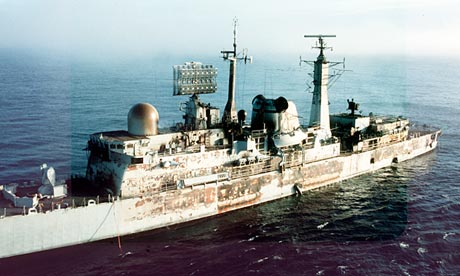
Argentine destroyer ARA Trinidad that led war against Britain sinks, a symbol of decay for once-proud navy


Argentina’s defense chief expressed shame Wednesday after a Navy destroyer sank at its moorings, putting on display the declining fortunes of a once-proud fleet.

The ARA Trinidad led Argentina’s 1982 sea war against Britain, but has long been mothballed and used for spare parts to sustain what’s left of Argentina’s Navy.

A Navy statement said that a pipe burst, flooding the ship below decks. Defense Minister Arturo Puricelli denied that cuts to the fleet’s maintenance budget were to blame. He said negligence or “sabotage” were possible and demanded a complete investigation.

washingtonpost

Jan 25, 2013

‘France should back Britain in event of Falklands fight’

FRANCE should be called upon to back Britain if ever there is a repeat of the Falklands conflict, a Bolton MP has said.

And his comments have been backed by Jean Stroud-Mort, from Bromley Cross, who was widowed after her husband, John Stroud, was killed in the Falklands, aged 20.

The Royal Air Force is currently providing logistical support to France in its ground campaign against Muslim rebels in Mali.

theboltonnews

Dec 29, 2012

Thatcher urged to steal French-made Exocet missiles during Falklands war


One of Britain's most senior law officers at the time of the Falklands conflict, the attorney general, Sir Michael Havers, urged the prime minister to steal deadly French Exocet missiles to stop them ending up in the hands of the enemy.

alert5

guardian.co

Oct 13, 2010

Presidenta argentina acusa a Royal Navy de piratería/ Royal Navy are pirates, says Argentina's president

La presidenta de Argentina, Cristina Fernandez de Kirchner, ha criticado mediante su cuenta de Twitter, los planes del Reino Unido para realizar maniobras militares en la zona de Malvinas, y anunció que su gobierno emitirá una queja ante Naciones Unidas por la "Militarización del Atlántico Sur".
El comentario fue luego eliminado, pero fue comentado de manera entusiasmada en su mayoría por miles de usuarios.
Este hecho amenaza con incrementar la tensión en la zona, en la que empresas británicas están iniciando la exploración de bolsas de petróleo y gas. La pasada semana, en el primer incidente de este tipo en cuatro años, un patrullero argentino acusó a un pesquero con base en Malvinas, dentro de las aguas jurisdiccionales de Malvinas, de pesca ilegal, obligándolo a retirarse.
Reino Unido informó a Argentina de que maniobras con misiles son habituales cada seis meses, y que se han realizado durante 28 años.
Kirchner anunció que la reclamación de Argentina por las Malvinas sería permanente, aunque descartó el uso de la fuerza. Las Malvinas estuvieron bajo administración argentina durante un breve periodo de tiempo en 1982.
Al parecer, podría haber unos 700 millones de barriles de crudo en la zona de Malvinas.
(leer más)
________________________________________________________
Cristina Fernandez de Kirchner used Twitter, to criticise plans by the Ministry of Defence to carry out military tests in the Falklands region. She announced that Argentina had complained to the United Nations about Britain's "militarisation of the South Atlantic.
Mrs Kirchner wrote: "Royal Navy, occupying colonial force in Falkland Islands, reports military exercise with missiles on the coast of East Falkland."
Her postings were erased, but not before they had been re-posted by hundreds of other Twitter users, many of them Argentines who enthusiastically endorsed the remarks.
The Twitter posts threaten to increase tension between the two countries at a time when British companies are beginning to explore for oil and gas in the region. Last week, in what is thought to have been the first incident of its kind in four years, an Argentine military ship confronted a trawler from the Falklands and accused it of fishing illegally. The Argentine crew contacted the fishermen, who were several miles inside Falklands waters, and demanded their details. The boat, from Port Stanley, eventually moved away.
Britain informed Argentina last week that it planned to carry out missile tests, in what officials have insisted was standard procedure. An embassy spokesman told local reporters: "We are a little taken aback, because these exercises are routine and are carried out every six months. They've been happening for 28 years."
Mrs Kirchner has previously pledged an "eternal fight" to claim the Falklands Islands. However she later ruled out the use of force to take the islands, which were briefly under the control of the then-ruling Argentine military junta in 1982.
Recent tests indicated that there could be about 700 million barrels worth of crude oil under the ocean around the Falklands, which could be worth about £3 billion.
(read more)

Apr 17, 2010

HMS Portland se dirige al Atlántico Sur/HMS Portland sails for South Atlantic


La fragata de la Royal Navy HMS Portland ha zarpado para una patrulla por el Atlántico Sur de siete meses de duración, sustituyendo al HMS York.
El buque actuará como reafirmación de la soberaniía de las islas Malvinas y otros territorios británicos de ultramar. La Royal Navy mantiene la presencia en la región durante practicamente todo el año.
________________________________________
The Royal Navy frigate HMS Portland has set sail for a seven-month deployment to the South Atlantic this week.
HMS Portland will take over from HMS York, a Type 42 destroyer.
The deployment is referred to as Atlantic Patrol (South) - the standing naval commitment to provide a frigate or destroyer and a Royal Fleet Auxiliary support vessel to the South Atlantic and West African regions.
The patrol ship provides a maritime presence to protect the UK's interests in the region. She acts as a reassurance to UK overseas territories and Commonwealth and other friendly nations. The Atlantic patrol is responsible for maintaining British sovereignty of the Falkland Islands, including South Georgia and the South Sandwich Islands.
A vessel is present in the Falkland Islands area for the majority of the year - including throughout the southern winter.

Mar 18, 2010

Submarino Nuclear de la Royal Navy en patrulla por las Malvinas/Royal Navy submarine sent to patrol Falklands

La maniobra viene despues de que una empresa británica anunciara el descubrimiento de petróleo en la zona. La zona de Islas Malvinas podría contener mas de 60 mil millones de barriles de crudo. Este descubrimiento podría hacer crecer la tensión en la zona, en reclamada por Argentina. La presidenta Argentina ha manifestado que las islas están ocupadas por Gran Bretaña ilegalmente y se han alzado voces de protesta en el país.
El HMS Sceptre, fue desplazado a la zona desde su posición en el Sur de África.
_______________________________________________________________________________

Move comes as British firm said to have struck oil. According to experts, the waters around Falklands could contain more than 60 billion barrels of crude oil. But they also warned the discovery could heighten tension in what already is a political hotspot.
Argentina’s president Cristina Kirchner has argued the islands were illegally occupied by the British, spurring protests in the country.
It was understood the Royal Navy submarine, HMS Sceptre, was ordered to the Falkland Islands from its post on the coast of southern Africa in a bid to step up security in the area. The 5,000 tonne Swiftsure-class vessel is thought to be equipped with Spearfish anti-ship torpedoes.