Translate

Showing posts with label Greece. Show all posts

Apr 12, 2026

Greece Eyes Embraer C-390 as C-130 Replacement


Greece is moving forward with plans to renew its tactical airlift fleet, and the Embraer C-390 Millennium has emerged as a leading candidate. The aircraft is being considered as a replacement for the aging Lockheed C-130 Hercules currently in service with the Hellenic Air Force.

The need is pressing. Greece operates a fleet of C-130H aircraft that has suffered from low availability for years, with only a small number of airframes fully operational at any given time. This has created a clear capability gap in airlift, pushing Athens to look for a modern and more reliable solution.

Within this context, the C-390 has been included in Greece’s long-term defence planning. Initial discussions point to a small acquisition—around three aircraft—with the possibility of expansion later. There is no contract yet, but the program is active and under evaluation.

The Brazilian aircraft brings a different profile compared to traditional options. It offers higher speed, modern systems and competitive operating costs, positioning itself as a strong alternative to legacy platforms. It also reflects a broader shift, as several European operators have already selected the C-390 to replace older transport fleets.

The main competitor remains the latest version of the Hercules, but the balance is no longer one-sided. The C-390 is gaining ground as a viable NATO-compatible transport, particularly for countries looking to rebuild capacity quickly without committing to long and expensive upgrade cycles.

For Greece, the decision is less about ambition and more about necessity. The current fleet can no longer guarantee consistent availability, and delays only increase the operational risk.

Mar 17, 2026

Recent Flights May Indicate Transfer of Patriot Missiles From Greece to Qatar and UAE Amid Interceptor Shortages


Recent reports circulating in regional defense media and OSINT circles suggest that Greece may have quietly supplied MIM-104 Patriot interceptors to Gulf partners including Qatar and the United Arab Emirates.

Flight Activity Fuels Speculation


Part of the speculation surrounding a possible transfer of MIM-104 Patriot interceptors from Greece to Gulf partners is based on unusual military transport activity observed in recent days.

According to regional defense media and OSINT reports, a C-17 Globemaster III belonging to the Qatar Emiri Air Force was reportedly tracked landing at Tanagra Air Base, a major Greek air force installation north of Athens. Some reports claim that around 24 Patriot PAC-2 interceptors may have been loaded onto the aircraft. 

Around the same time, a C-130 military transport aircraft linked to the United Arab Emirates Air Force was reported to have landed at Elefsis Air Base, another key logistics hub of the Greek Air Force. 

These movements have led to speculation that interceptors from Greece’s Patriot inventory could have been transferred to Gulf partners facing high operational demand for missile defense.

However, no official confirmation has been issued by Athens, Doha, or Abu Dhabi, and any re-export of Patriot missiles would almost certainly require authorization from United States, the system’s original supplier.

According to these reports, military transport aircraft from both countries were recently observed landing at Greek air bases such as Elefsis Air Base and Tanagra Air Base, allegedly to collect Patriot missile interceptors.

While the claims remain unconfirmed, they emerge at a time when air defense systems across the Middle East are facing an unprecedented operational tempo.

A Growing Interceptor Shortage


The Patriot system, produced by Raytheon and Lockheed Martin, has become one of the most heavily used air defense systems in recent conflicts.

Countries such as Saudi Arabia, the United Arab Emirates, and Israel have used significant numbers of interceptors against ballistic missiles, cruise missiles, and drones in recent years.

Meanwhile, Western allies have also transferred Patriot batteries and missile stocks to Ukraine, further increasing demand on a production chain that already struggles to keep pace with operational consumption.

Could Allies Be Redistributing Interceptors?

If the reports are accurate, the alleged transfer could represent a quiet redistribution of interceptors among U.S. partners facing immediate threats.

However, such a transfer would almost certainly require approval from United States, as Patriot systems and their missiles are subject to strict export and re-export controls under U.S. regulations.

At the time of writing, neither Greece nor the Gulf states involved have publicly confirmed any such transfer.

A Sign of Strain in Global Air Defense

Whether confirmed or not, the rumors themselves highlight a broader issue: modern air defense systems are extremely expensive to operate and replenish.

With missile warfare intensifying across several regions, the global stockpile of high-end interceptors like Patriot may be under increasing pressure — forcing allies to explore creative logistical solutions.

Jul 28, 2024

Greece Signs Deal for 20 F-35 Jets, Joining the F-35 Program as 19th Nation


The Greek government has formalized its plan to purchase 20 Lockheed Martin F-35 Lightning II aircraft by signing a Letter of Offer and Acceptance (LOA) through a U.S. government Foreign Military Sale, which includes an option for 20 additional aircraft. This agreement marks Greece as the 19th nation to join the F-35 program, enhancing the Hellenic Air Force's capabilities and interoperability with NATO allies.
Air Force Lt. Gen. Mike Schmidt, director and program executive officer of the F-35 Joint Program Office, expressed enthusiasm for Greece joining the F-35 enterprise, noting the aircraft's exceptional capabilities and its role in strengthening NATO's combat effectiveness. Bridget Lauderdale, Lockheed Martin's vice president and general manager of the F-35 program, highlighted the longstanding partnership with the Hellenic Air Force and emphasized the F-35’s suitability for bolstering Greece's sovereignty and operational capacity.
The F-35 is increasingly becoming NATO's fighter of choice due to its unparalleled interoperability, ensuring strategic superiority for decades. By the 2030s, over 600 F-35s from more than 10 European countries, including two U.S. squadrons at RAF Lakenheath, will operate together, demonstrating alliance-based deterrence and advancing NATO's next-generation air power.
Mara Motherway, Lockheed Martin's vice president of Strategy and Business Development, emphasized the F-35's role in deterring threats and ensuring regional stability, contributing significantly to the evolving 21st Century Security® battlespace. Currently, the F-35 operates from 32 bases worldwide with nearly 1,000 aircraft having logged over 860,000 flight hours.
Greece, also operating F-16s, C-130s, and Hawk helicopters, is upgrading part of its F-16 fleet to the "Viper" configuration and has recently acquired 35 UH-60M Black Hawks. Defense Minister Nikos Dendias stated that the acquisition of the F-35A Joint Strike Fighters represents a significant modernization for the Greek Air Force, replacing older F-4 and Mirage 2000 aircraft. The deal, valued at $3.76 billion, will see deliveries beginning in 2028 and continuing through 2033, with the jets based at Andravida, Greece.
The procurement of F-35s comes amidst political tensions with Turkey, another NATO member expelled from the F-35 program after purchasing Russian air defense equipment. These tensions were highlighted by Greek Health Minister Adonis Georgiadis's recent remarks about the potential use of F-35s against Turkey.
Lockheed Martin views Greece’s entry into the F-35 program as part of its ongoing international expansion, reinforcing alliance-based deterrence and setting the foundation for future air power capabilities within NATO and allied nations.

Jan 28, 2024

USA Lifts Freeze on Massive F-16 Deal with Turkey, Approves F-35s for Greece in Significant Geopolitical Maneuver


Following Turkey’s parliament endorsement of Sweden’s NATO application, the Biden administration has informed Congress that it is reviving a significant deal with Turkey. This deal entails supplying 40 new F-16 fighters and upgrading an additional 79 aircraft already in service, estimated at a staggering $23 billion.

Simultaneously, the administration has greenlit Greece, Turkey's regional rival, to become a part of the F-35 program. Greece is potentially set to acquire 40 F-35 conventional take-off and landing variants for $8.6 billion.


These parallel approvals mark the culmination of a major geopolitical struggle involving all three nations. Additionally, they coincide with Sweden's aspirations to join NATO following Russia's invasion of Ukraine, adding another layer of complexity to the regional dynamics

The delay in Turkey's acquisition of F-16s had been a significant point of contention between Ankara and Washington. Turkey's pursuit of new and upgraded F-16s dates back several years, following its expulsion from the US-led international F-35 program in 2020 due to its procurement of advanced Russian radars. In the same year, Defense News reported that American lawmakers quietly halted all major arms sales to Turkey, including upgrades for F-16s.

More recently, Turkey linked the US approval of F-16s to the lifting of its opposition to Sweden's NATO membership. Turkey, along with Hungary, had obstructed Sweden's NATO bid for months. Following Turkey's parliament's approval of Sweden's accession earlier in the week, President Joe Biden reportedly urged Congress to approve the F-16 deal shortly thereafter.

While the Biden administration resisted any official connection between the two issues, key members of Congress openly stated that no F-16s would be approved until Turkey addressed the NATO question. Chairman of the Foreign Relations Committee Ben Cardin emphasized that his approval of Turkey's request to purchase F-16 aircraft was contingent on Turkey's endorsement of Sweden's NATO membership.

However, Cardin said: “While Turkey plays a critical role in the region as a NATO ally, there is an urgent need for improvement on its human rights record, including the unjust imprisonment of journalists and civil society leaders, better cooperation on holding Russia accountable for its invasion of Ukraine, and on lowering the temperature in its rhetoric about the Middle East.”

According to the State Department, Turkey's acquisition of new Lockheed Martin-made planes and the modernization effort, along with various supporting equipment and services, "will advance the foreign policy objectives and national security interests of the United States by enhancing the air capabilities and interoperability of a NATO Ally that contributes to political and economic stability in Europe."

While State Department approval is significant, it does not represent the final decision, and lawmakers retain the ability to intervene in potential deals. However, the public support from figures like Cardin suggests that the Biden administration likely anticipated minimal resistance in Congress when making the announcement.

Turkey is currently working on developing its domestically manufactured next-generation fighter aircraft, known as the KAAN. However, analysts have indicated that the KAAN is still several years away from being operational. In the meantime, Ankara has been eager to address its "fighter gap" that was expected to widen as its existing fleet of F-16s aged.

The simultaneous approval of Turkey's fighter clearance and Greece's anticipated F-35 purchase comes as no surprise, given the ongoing geopolitical tensions between the two historical rivals.

“The F-35 will offset the increasing obsolescence of other Hellenic Air Force aircraft such as the F-4 and Mirage 2000. Greece will have no difficulty absorbing these articles and services into its armed forces,” the State Department said.

Greece submitted its formal request for F-35s in June 2022, a move that was expected to receive approval from the US. However, there were concerns that this decision could potentially strain relations between the United States and Turkey.

Lockheed Martin has maintained a dedicated webpage since 2022 outlining the potential for Greek F-35s, emphasizing the aircraft's readiness as the optimal solution for the Hellenic Air Force.

Before Greece's involvement, a total of 17 nations had participated in the development of the F-35 or had procured the aircraft.


Mar 27, 2022

NEWS 2022 March, 27

Greece acquires six additional Rafales

This new contract, which follows Greece’s acquisition of 18 Rafale in January 2021, will increase to 24 the number of Rafale operated by the Hellenic Air Force.

Following the arrival at Tanagra Air Base of the first six Rafale of the Hellenic Air Force on 19 January 2022, the 18 Rafale relating to the first contract will be fully deployed in Greece by the summer 2023.The six additional Rafale will then be delivered to the Hellenic Air Force shortly thereafter, starting from the summer 2024.

dassault

Heavy losses for the Russian Air Force in Ukraine Invasion


Anti-aircraft missiles like the Stinger and Igla are not the only threats Russian pilots face in the skies over Ukraine.

A dangerous combination of doctrine, training and equipment is partly to blame for the heavy losses the of Russia’s Air Force.

Russia has not modified its ground-attack tactics and is conducting many of its attacks at low altitude, which puts Russian planes in the lethal envelope” of shoulder-fired man-portable air defense systems (MANPADs), wrote the Atlantic Council in an assessment.

The exact total of Russian and Ukrainian aircraft lost so far is unclear. On the Russian side, at least 32 helicopters and 13 fixed-wing aircraft have been damaged or destroyed, though the Ukrainian Ministry of Defense claims to have killed 81 planes and 95 helicopters. Ukraine meanwhile is down to just 56 combat aircraft, after starting the war with 98, according to Flight Global’s 2022 World Air Forces directory. For context, the U.S. lost 27 fixed-wing aircraft and five helicopters in combat across five or so weeks during the 1991 invasion of Iraq in Desert Storm.

The VKS prioritizes tactical, close air support missions over strategic missions far from the frontlines. That’s all well and good, but Russian pilots are put at greater risk while trying to achieve this mission because of the technology they work with. While the U.S. Air Force has used precision-guided munitions to great effect since at least Desert Storm, the Russian air force has nowhere near the same quantity of so-called ‘smart’ bombs. Instead, Russian pilots must use unguided ‘dumb’ bombs. But to use them accurately, pilots have to fly low and slow, which makes them vulnerable to attack from the ground.


Russia running out of precision munitions in Ukraine war


Russia is running out of precision guided munitions and it is more likely to rely on so-called dumb bombs and artillery, a senior Pentagon official said on Thursday.

Under Secretary of Defense for Policy Colin Kahl speculated that he did not believe President Vladimir Putin wanted to have an all out conflict with NATO.


Turkish drone became the star of the Ukrainian defense

Widely circulated videos of Russian armored vehicles being destroyed from the air have thrust forward a lesser-known drone called the Bayraktar TB2. Defense News Weekly's in-house expert walks through how the TB2 became central to Ukraine's defensive arsenal.

Mar 6, 2022

NEWS 2022 March, 6

French Navy 'Charles de Gaulle' aircraft carrier reinforces NATO's activities in Eastern Europe

According to a Marine Nationale (French Navy) statement 'Charles de Gaulle  CSG set sail again yesterday after a few days of port call in Cyprus. Clemenceau22 continues, but the mission evolves to adapt to the current geopolitical situation. (...). The detection capabilities of the E2-C Hawkeye will notably enable the carrier strike group to assess the surface situation at the Europe maritime borders, especially in the Black Sea. Deployed yesterday in CJTFOIR to fight against Daech, engaged today for the benefit of the reassurance of our NATO partners on the eastern flank of Europe, the carrier strike group continues to operate for the protection of France and the European continent.'


The 'Charles de Gaulle' will contribute 3 Combat Air Patrols (CAP) of two Rafale M each, per day. This translates into a nearly permanent (24 hours) presence. In addition, a daily E-2C Hawkeye flight is planned from the carrier, as well as occasion patrols by the two ATL2 Maritime Patrol Aircraft (MPA) currently based in Cyprus. The Rafale M will be refueled by NATO tankers present in the area. The patrol zones are the skies above Romania, Bulgaria and the Black Sea, sailing in the Mediterranean sea.
navalnews

Dassault plans to increase Rafale production to meet export sales success


Production of Rafale fighters will increase to three per month by the middle of the decade on the back of export sales success from a planned two-per-month rate.

In 2021, Dassault booked orders for 49 examples of the Rafale: 31 for Egypt, 12 for France and six for Greece. .However, those figures do not include blockbuster orders from the United Arab Emirates (80) and Indonesia (42), which were respectively signed in December 2021 and February this year. Greece is also likely to commit to another six aircraft, and France is expected to commit to at least another 42 in 2023, under its fifth order tranche for delivery from 2027.

However, the sharp ramp-up will not take place in 2022, when Dassault will ship just 13 Rafales, down from 25 in 2021, all of which will again go to export customers, Egypt and India.

Deliveries of the Rafale to France have been paused for several years due to some budgetary choices and are only likely to resume from 2023 or beyond.

Last year Croatia also joined the Rafale operator community, signing for 12 secondhand examples from France.

flightglobal

Air Force One replacement facing additional delays


While the Air Force and Boeing have yet to finalize a new schedule for the presidential aircraft replacement program, it now appears that the first new Air Force One plane will be delivered to the service even later than previously expected.

Boeing now expects that it will deliver the first VC-25B a total of 17 months later than originally scheduled.

That timeline has not been accepted by the Air Force and could change as the service negotiates with Boeing on a new schedule baseline. But Boeing’s new projection, which has been conveyed to stakeholders outside of the company, represents a growth from the 12-month delay presented by the company last year.

Boeing has pointed to the COVID-19 pandemic and the bankruptcy of its now-defunct subcontractor GDC Technics as the major causes of the delay. GDC Technics was under contract to build the interiors of the VC-25B, but Boeing cancelled the contract and sued GDC,.

Any cost increases associated with the delay would be borne by Boeing, due to the fixed-price nature of its $3.9 billion contract with the Air Force. That contract covers the engineering, manufacturing and development work associated with turning baseline Boeing 747s into a presidential aircraft furnished with highly-classified defensive systems, hardened electronics and secure communications gear.

May 25, 2019

Greek navy takes initial reactivated P-3B

Greece has received its first revived Lockheed Martin P-3B Orion as part of a “rebirth” of the country’s maritime patrol capability as it brings stored aircraft back to service.
Following work performed by Hellenic Aerospace Industries (HAI), the initial aircraft, described as an “interim” step, was presented to Greece’s navy on 17 May.
An additional four aircraft are scheduled to be modernised under the effort, which includes a mid-life upgrade to extend the service life of the turboprop type by 15,000h and the installation of new mission equipment.
Athens purchased six ex-US Navy P-3Bs in 1996, parking them in 2009 amid financial cutbacks.
flightglobal

Apr 28, 2019

Greece wants to buy 3 MQ-9s

The Greek Defense Ministry has reportedly agreed to buy three US-made unmanned aerial vehicles (UAV), commonly referred to as drones, in order to boost its defense capabilities and improve reconnaissance over the Aegean.
According to a report on ANT television station on Wednesday, the deal, estimated to be approximately 50 million euros, involves the purchase of the General Atomics “MQ-9 Reaper” (also called the “Predator B”) and the construction of two ground control stations.
greekreporter

May 24, 2018

US drones being based in Greece for the first time

The U.S. Air Force has begun using MQ-9 Reaper drones out of Larisa Air Force Base, located halfway down Greece’s eastern side, near the Aegean Sea.the aircraft are being temporarily stationed at Larisa while their usual base in Africa undergoes repairs.
The drones are being stationed at Larisa under the aegis of an existing joint training order between the two nations.
defensenews

Oct 17, 2017

US clears Greek F-16 upgrade sale

The U.S. State Department has cleared an F-16 upgrade package for sale to Greece, with an estimated worth of over $2.4 billion.
The proposed sale, posted Tuesday by the Defense Security Cooperation Agency, would help Greece “as a deterrent to regional threats, strengthen its homeland defense, and execute counter-terrorism operations,” according to the sale notification.
The upgrade package will bring Greece’s fleet of Block 30, Block 50, Block 52+, and Block 52+ Advanced F-16 configurations to the F-16 V standard.
The core of the F-16V upgrade is the APG 83 Active Electronically Scanned Array (AESA) radars, of which 125 are included in the proposed package. In addition, the stated package includes 123 Modular Mission Computers, 123 LINK-16 Multifunctional Information Distribution System Joint Tactical Radio Systems, 123 LN260 Embedded Global Navigation Systems (EGI)/Inertial Navigation Systems, and 123 Improved Programmable Display Generators, plus assorted supplies and training.
defensenews

Oct 14, 2017

Greek Prime Minister Alexis Tsipras fly in an F-16D

Greek Prime Minister Alexis Tsipras was given a ride in a HAF F-16D during his visit to the 110th Combat Wing at Larisa air base on Oct. 12.
The hour-long flight took him across Halkidiki, Mt. Athos, Limnos, Agios Efstratios and Skyros.
alert5

Apr 29, 2017

Greece Requests 5 CH-47D Chinook From US Army

The Government of Greece requested the possible sale of five (5) CH-47D helicopters, seven (7) Common Missile Warning Systems (CMWS) (one (1) for each aircraft plus two (2) spares), and twelve (12) T55-GA-714A turbine engines (two (2) for each aircraft plus two (2) spares). Also included are mission equipment, communications and navigation equipment, ground support equipment, special tools and test equipment, spares, publications, Maintenance Work Order/Engineering Change Proposals (MWO/ECPs), technical support, and training, and other associated support equipment and services. The total estimated cost is $80 million.
dsca

Feb 11, 2017

Greece military plans modernization of its F-16 fleet, could eventually acquire F-35

Greece plans to modernize its fleet of F-16 fighters and then acquire F-35 aircraft from the Unite States at a later date, according to a news report.
The publication Ekathimerini, quoting unidentified aides of Defense Minister Panos Kammenos, said the decision was taken in line with recommendations made by military chiefs.
Ekathimerini reports that in addition to upgrading existing F-16s and notifying the United States of its interest in procuring the F-35, Greece will also seek maintenance for the military's S300 long-range surface-to-air missile systems.
A letter of request for modernizing the F-16s was signed by Kammenos on Tuesay.
Upgrading Greece's entire fleet of F-16s will cost between $1.7 billion and $2 billion, according to the report, and would be paid over a period of time.
A deal for the maintenance of the S300 missile systems is not yet clear.
Greece has a total of 155 F-16C and F-16D aircraft.
upi

Dec 5, 2015

Israel trained against S-300 air defense system in Greece

Israel has quietly tested ways of defeating an advanced air-defence system that Russia has deployed in the Middle East and that could limit Israel's ability to strike in Syria or Iran, military and diplomatic sources said.
The sources said a Russian S-300 anti-aircraft system, sold to Cyprus 18 years ago but now located on the Greek island of Crete, had been activated during joint drills between the Greek and Israeli air forces in April-May this year.
The activation allowed Israel's warplanes to test how the S-300's lock-on system works, gathering data on its powerful tracking radar and how it might be blinded or bluffed.
One defense source in the region said Greece had done so at the request of the United States, Israel’s chief ally, on at least one occasion in the past year. It was unclear whether Israel had shared its findings with its allies.
reuters

Nov 15, 2015

UAE signs for two Saab 340-based early warning aircraft

Saab has announced receipt of a $218 million contract to supply to the United Arab Emirates Air Force and Air Defence with two Saab 340-based airborne early warning and control system aircraft.
The company's contract follows "several years" of discussions over the supply of airborne surveillance equipment. It also follows other good news for the manufacturer, which late last week performed the first flight of a Saab 340-based AEW aircraft for export buyer Thailand.
The Erieye radar has previously been integrated onto the Embraer EMB-145 regional airliner for customers including Brazil and Greece, and is undergoing final system testing aboard a Saab 2000 turboprop for launch customer the Pakistan air force.
flightglobal

Sep 8, 2015

U.S. asks Greece to deny Russian flights to Syria

The United States has asked Greece to deny Russia the use of its airspace for supply flights to Syria, after Washington told Moscow it was deeply concerned by reports of a Russian military build up in Syria.
The Greek foreign ministry said the request was being examined. Russian newswire RIA Novosti earlier said Greece had refused the U.S. request, adding that Russia was seeking permission to run the flights up to Sept. 24.
Russia, which has a naval maintenance facility in the Syrian port of Tartous, has sent regular flights to Latakia, which it has also used to bring home Russian nationals who want to leave.
reuters

May 8, 2015

Israeli F-16I pilots Train to Deal Against S-300 System

The Israeli air force has used a bilateral exercise with its Greek counterpart to prepare for apotential situation where it will have to attack Iranian nuclear facilities.
In late April, the service took part in joint training with the Greek air force, which included performing missions against the nation's Russian-made S-300 surface-to-air missile system. The same equipment will soon be supplied to Iran, under a proposed deal with Moscow.
The Israeli and Greek air forces have staged a number of joint exercises over the last few years.
NATO member Greece has been in possession of S-300s since the late 1990s, and is operating the air defence systemfrom a base in Crete. Athens is also negotiating with Russia for the purchase of additional missiles.
According to foreign sources, the Israeli air force has acquired technical data about the long-range surface-to-air missile system, and now its pilots have had a chance to simulate a scenario in which they attack a site heavily protected with the S-300 and other advanced anti-aircraft systems.
flightglobal

Mar 20, 2015

France reveals that lost 2 Mirage 2000 and 2 Alpha Jet in January Albacete disaster. 2 Rafale severely damaged as well

The French Air Force lost four combat aircraft as write-offs and a further two as severely damaged as a result of the disaster at Los Llanos/Albacete Air Base in Spain.
The accident, which saw a Hellenic Air Force F-16D Block 50 crash while attempting to take off on 26 January, resulted in the total loss of two Dassault Mirage 2000D fighters and two Alpha Jet trainers. As well, a pair of Dassault Rafale fighters suffered extensive damage.
As well as losing its aircraft, the French Air Force also suffered the loss of nine of its personnel in the accident, which is still being investigated.
janes

Mar 10, 2015

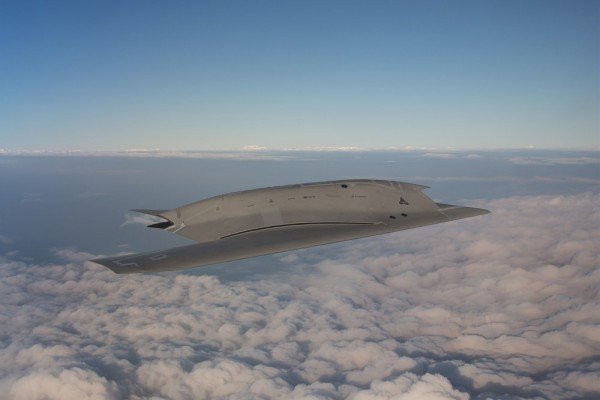
nEUROn UCAV finishes successful test campaign in France

With the completion of its 100th flight in February, the nEUROn UCAV technology demonstrator has completed its test campaign in France.
Throughout this entire campaign, the nEUROn and associated equipment demonstrated exemplary availability and reliability.
In the first phase, the purpose of the tests was to open the flight envelope (including with weapon bay doors open), to test the electro-optical sensor and to evaluate datalink performance.
In the second phase, most flights were dedicated to infrared and electromagnetic signature/detection confrontations against operational systems.
These confrontations, which produced all the expected results, were performed under the authority of the French defense procurement agency DGA. The nEUROn, in full stealth configuration, was operated by Dassault Aviation.
Stealth-related data and feedback will serve as a reference for future aircraft projects.
A new chapter now opens for the nEUROn with evaluations that will take place in Italy, then Sweden.
nEUROn is a European program for an unmanned combat air vehicle (UCAV) technology demonstrator, conducted by Dassault Aviation as prime contractor under the authority of French defense procurement agency DGA. It heralds tomorrow’s defense programs, since it federates expertise from across Europe (France, Italy, Sweden, Spain, Greece and Switzerland).
dassault-aviation