Translate

Showing posts with label ARGENTINA AIR FORCE. Show all posts

Mar 30, 2026

🇦🇷 Argentina’s F-16s enter flight training phase


Argentina’s F-16 Fighting Falcon fleet has reportedly entered the flight training phase following its arrival in December 2025. After several months without visible activity, initial flying operations now appear to be underway.

The period immediately after delivery was focused on integration. Infrastructure, logistics and pilot preparation needed to be established before any flight activity could begin. This explains the absence of operations in the early months.

Flight training is being conducted from Río Cuarto, with support from Top Aces. The involvement of a contractor reflects a structured approach to pilot conversion and the rapid build-up of operational capability.

The start of flight operations marks a transition from delivery to operational development. Early sorties are expected to focus on familiarisation and the gradual build-up of pilot proficiency.

Mar 25, 2026

Argentina’s push to rebuild its armed forces through privatization funds


Argentina has announced a new initiative aimed at rebuilding its long-neglected military capabilities by allocating 10% of revenues from privatizations to a dedicated defense fund. The measure, confirmed by presidential spokesperson Manuel Adorni under the administration of Javier Milei, reflects a broader attempt to address decades of underinvestment in the country’s armed forces.

Since the Falklands War in 1982, Argentina’s military has faced persistent budgetary constraints, limited modernization, and the long-term effects of international embargoes and political restrictions. As a result, many of its platforms have aged without adequate replacement, leaving significant capability gaps across all branches.

The newly proposed funding model seeks to bypass traditional budget limitations by linking defense spending to revenues generated from the sale of state assets, including public companies, land, and other government holdings. Estimates suggest that between $1.5 and $3 billion could be raised over time, depending on the pace and success of privatization efforts.

This approach does not guarantee a steady flow of funds, but it provides a potential mechanism to finance major acquisitions without placing additional strain on Argentina’s fiscal balance. In that sense, it represents both a financial workaround and a political signal: defense is once again being framed as a long-term state priority.

Recent developments suggest that this shift is already translating into concrete steps. Argentina has moved forward with the acquisition of Danish F-16 Fighting Falcon fighters, marking a significant upgrade in its air combat capabilities. At the same time, discussions are reportedly underway regarding the possible procurement of UH-60 Black Hawk helicopters, which would enhance tactical mobility, logistics, and rapid deployment capabilities.


Beyond aviation, the broader modernization effort also appears to include plans for new naval assets, armored vehicles, and potentially even submarine programs. While many of these initiatives remain at an early or exploratory stage, they point to a more comprehensive attempt to rebuild Argentina’s military posture after decades of relative stagnation.

From a strategic perspective, the initiative can be interpreted as an effort by the Milei administration to confront a long-standing structural issue. Rather than relying solely on incremental budget increases, the government is attempting to inject capital into the defense sector through extraordinary means, leveraging privatization as a funding source.

Whether this model proves sustainable will depend on multiple factors, including the success of privatizations, political continuity, and broader economic conditions. However, the intent is clear: Argentina is seeking to reverse years of decline and reestablish a minimum level of credible military capability.


Jan 10, 2024

Argentina is expediting the purchase process of 24 F-16s from the former Royal Danish Air Force and anticipates finalizing the acquisition by the first half of 2024.


Although there hasn't been an official confirmation yet, the Argentine Government seems to be aiming to finalize the purchase of F-16 fighter jets for the Argentine Air Force by the first half of this year. The recent shift in the country's political landscape under President Javier Milei, aligning closely with the United States and Israel, appears to be facilitating positive advancements in negotiations, aiming to bring an end to a nearly decade-long saga of discussions and deliberations. However, Argentina's challenging economic and financial situation remains a factor of caution regarding any forthcoming announcement in the next few months.

As previously revealed, Argentina is in advanced discussions with the United States for the acquisition of 24 F-16 MLU fighter planes from the Royal Danish Air Force. Additionally, the recent appointment of new military leadership within the Armed Forces ensures continuity in negotiations and endeavors towards acquiring combat aircraft. Particularly noteworthy is Brigadier General Xavier Isaac's appointment to lead the EMCOFFA, overseeing the study and analysis of proposals for Argentina's future supersonic fighter.

Consistently highlighted in various discussions are the three primary contenders: Denmark's F-16 MLU, China's FC-1 Xiaolong (JF-17 Thunder Block III), and India's HAL Tejas. However, the U.S. proposal has gained momentum in recent months, overshadowing China's proposal. This momentum is evident in the authorization to transfer six F-16 Block 10 and 32 F-16 Block 15 aircraft to Argentina by the U.S. State Department, with the approval of the U.S. Congress. Similar decisions have been made regarding the acquisition of four P-3C/N aircraft from the Royal Norwegian Air Force, with the purchase agreement being signed on October 17.

The resurgence of diplomatic ties between Buenos Aires and Washington has reignited ongoing negotiations initiated by the previous administration. Credible sources from the Ministry of Defense have confirmed to Zona Militar the favorable disposition and understanding of the U.S. government to execute the operation. There are even indications of improvements to specific negotiation aspects, extending the negotiation timelines until the first semester of this year.

Specifically, these aspects pertain to financing, payment structures for the purchase, and notably, strategies for the maintenance and support of the F-16 fleet. Proposals include the establishment of a Logistics Maintenance Center for Argentina's Fighting Falcons and potential regional operators. There are also discussions about the possibility of locally manufacturing certain components of the fighter jets. Furthermore, although specifics have been handled cautiously, other necessary weapon systems required by the Argentine Armed Forces have been proposed.

The Argentine Government is currently evaluating the finer details before making any official announcements. This evaluation process takes into account Argentina's precarious economic situation and the substantial local, regional, and global implications of the purchase. This prospective acquisition represents the most significant procurement for the Argentine Armed Forces in the 21st century thus far.


Dec 17, 2023

Ukraine to Receive Mi-17E Helicopters from Argentina in Unexpected Diplomatic Gesture


Argentina’s recent decision to transfer two Mi-17E transport helicopters to Ukraine marks a significant diplomatic shift and strategic move in both nations’ military affairs. This decision, made during Ukrainian President Zelenskyy’s visit to Buenos Aires, stands as a testament to Argentina's revised foreign policy under its new leadership.

Initially acquired from Russia, these Mi-17E helicopters were utilized for logistical support in Antarctica. However, operational challenges arose due to difficulties in obtaining spare parts caused by sanctions. Despite these obstacles, the United States facilitated the transfer by offering Argentina a financial incentive. This deal involved offsetting the helicopters' cost against Argentina’s planned purchase of F-16 fighter jets from Denmark.

The maneuver not only strengthens Ukraine’s aerial capabilities for troop and supply transportation but also aids Argentina in its military modernization efforts, potentially at a reduced cost. Furthermore, it underscores Argentina’s commitment to upholding international order and supporting Ukraine’s territorial integrity, sending a clear message of solidarity to the international community.

The Argentine Air Force (FAA) had been operating two Mil Mi-171E helicopters for Antarctic operations since 2011. These helicopters, managed by Grupo Aéreo 7 from BAM Mariano Moreno in Buenos Aires, were utilized for general transportation and Search and Rescue (SAR) missions. Specifically adapted for Antarctica, the Mi-171Es were equipped with extra fuel tanks, a loading crane, and featured a distinct bright orange upper fuselage.

Despite their crucial role in Antarctic operations, maintaining these helicopters proved challenging for the FAA, especially concerning spare parts procurement and overhauling. The situation worsened after Russia’s invasion of Ukraine in February 2022. Consequently, the United States urged Argentina to donate the helicopters to Ukraine, despite opposition from the outgoing Argentine government.

With the new Argentine government in place, finalizing the terms of the donation will take place soon. The United States is actively seeking ways to compensate Argentina for the helicopters. Meanwhile, the FAA will need to address the void created by the Mi-171Es' retirement from supporting Argentine Antarctic operations.

Nov 18, 2022

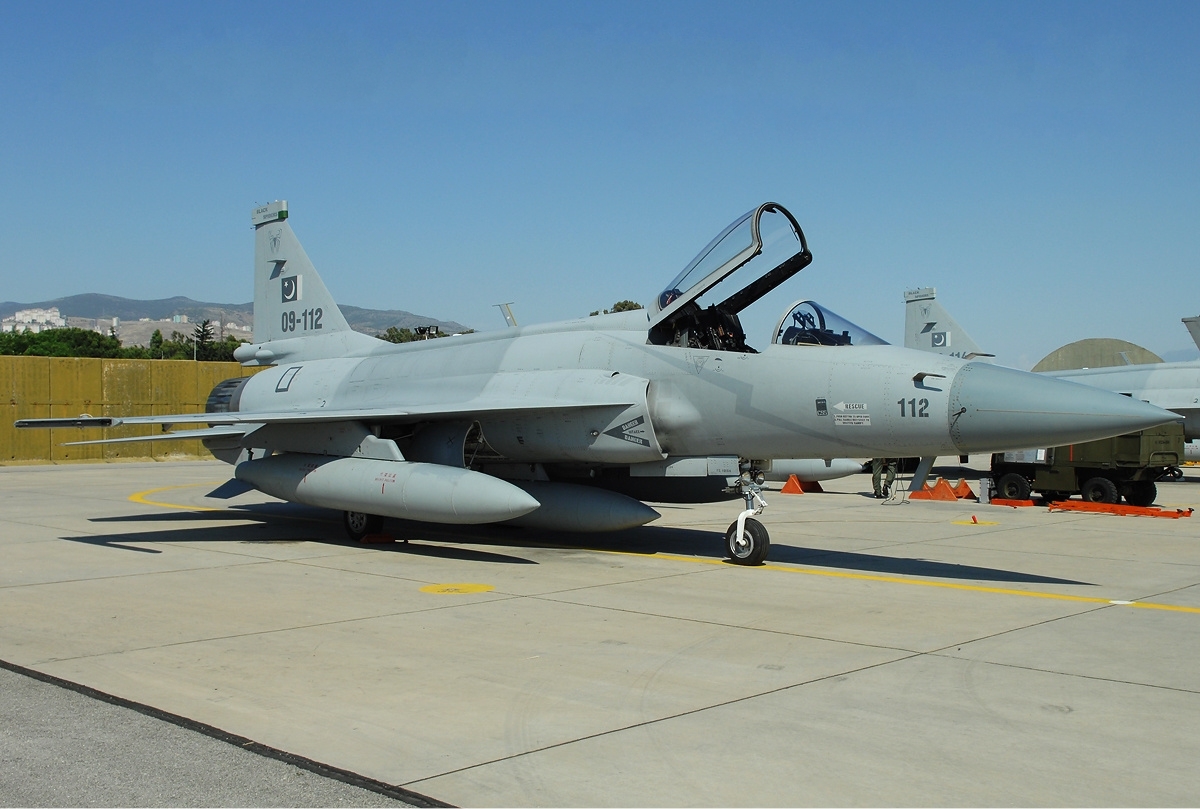
Argentina near to select the JF-17 as future Air Force fighter


The bid submitted for the JF-17 weapon system complies with all the requirements established by the Argentine Air Force.

Details were given on the requirements established by the Argentine Air Force (FAA) and the models studied for its future supersonic multi-role fighter in a September report provided by the Chief of Cabinet of Ministers to the Argentine Congress.

Deputies of PRO (opposition party to the current Government) made the following diagnosis before asking questions to the Chief of Cabinet about the future incorporation of a supersonic fighter for the Argentine Air Force (FAA):

«At present, only a handful of A-4AR aircraft are in limited operational conditions. The aforementioned complement is not even a deterrent, much less sufficient to guarantee the integrity of the vast national territory.

Not only are the current capabilities patently insufficient, but they have also become dangerous for aviators, which could result in invaluable human losses of highly qualified military personnel. The situation of the equipment and its capabilities is serious and dangerous, affects the fundamental function of the force and allows the infringement of national sovereignty.»

The requirements established by FAA were:

  • Multi-role supersonic fighter.
  • In-flight refueling capability compatible with the FAA’s existing refueling aircraft.
  • Airborne electronically scanning radar (AESA).
  • Tactical Data Link capability.
  • Electronic self-defense capability.
  • Logistic and temporal potential and projection.
  • No components of British origin.
  • Availability (supply) for the use of armament.

The models under evaluation are the following:

  • JF-17
  • F-16
  • HAL TEJAS
  • MIG-35

The bid submitted for the JF-17 weapon system complies with all the requirements established by the FAA and includes according to the information submitted by the Argentine Ministry of Defense

  • Technology transfer to national companies
  • Spare parts
  • Simulators
  • Instruction for personnel
  • WS-13 engines of Chinese origin
  • Ejector seat of Chinese origin
  • Short- and medium-range air-to-air missiles (BVR capability)
  • Ninety percent compatibility with JF-17 Block IIIs being manufactured by Pakistan for its own Air Force
  • All material is free of restrictions

The JF-17 Thunder is a single-engine multi-role combat aircraft developed jointly by the Pakistan Aeronautical Complex and the Chengdu Aircraft Corporation of China. The builders say that the JF-17 can be used for multiple roles, including interception, ground attack, anti-ship, and aerial reconnaissance.

58% of the JF-17 airframe, including its front fuselage, wings, and vertical stabiliser, is produced in Pakistan, whereas 42% is produced in China, with the final assembly taking place in Pakistan.

The JF-17 Block III is the latest version of this type with a new electronically scanned radar as well as advanced electronics.

Second-hand Lockheed Martin F-16 fighter jets such as those offered by the US so far, could not meet the requirements (they lack AESA radar and they can’t be refueled by FAA KC-130H aircraft).

Meanwhile the US will do everything possible to prevent Argentina from buying Chinese or Russian defense material, so as not to allow the establishment of military relations with its geopolitical opponents in the region.

As already reported, the FAA has been searching for a new supersonic fighter aircraft since when the Dassault Mirage III interceptor fleet was retired in 2015.

It looks like the UK is the biggest hurdle: in the last years in fact Argentina tried to purchase JAS-39 Gripen fighters from Sweden and KAI FA-50 Fighting Eagle jets from South Korea but since these aircraft use British equipment such as ejection seats built by Martin Baker, the UK blocked both the options.

Other potential solutions that have been reported included surplus Spanish Mirage F1s and Tranche 1 Eurofighter Typhoons, Leonardo M-346FA/FTs, CAC J-10s, and Aero L-159s. Even the Sukhoi Su-24 ‘Fencer’.

theaviationgeekclub 

Mar 4, 2018

Argentine MoD, FAdeA reach deal for three Pampa IIIs

A contract for three FAdeA IA-63 Pampa III advanced training aircraft for the Argentine Air Force was approved on 23 February, according to the official bulletin of the Chief of the Cabinets of Ministers.
The USD30.3 million contract was paid half up-front and the remainder is to be disbursed as deliveries are made.
In addition to the three aircraft, state-owned FAdeA is also providing Ground Control Mission Planner Station software, two Mobile Mission Planner Stations, and back-up equipment.
The contract was initially revealed on 14 December 2017. The Ministry of Defense (MoD) and FAdeA had been negotiating a production contract since early 2017 and expected to conclude the deal that same year, but budget decisions delayed its conclusion.
janes

Nov 11, 2017

South Korean KAI In Advanced Talks With Argentina and Botswana About FA-50 Golden Eagle

Korea Aerospace Industries Co. (KAI), the country's sole aircraft manufacturer, said Friday it is in talks with nine countries to export its trainer aircraft.
The company exported a total of 145 trainer planes -- made up of the turboprop KT-1 basic trainer and the supersonic T-50 advanced jet to countries in Europe and emerging markets in Asia, Africa, Latin America and the Middle East. The total value of sales has reached US$3.7 billion so far.
In a press meeting, KAI President and Chief Executive Kim Jo-won said talks with Botswana and Argentina are at an "advanced stage" and "good results" are expected later this year or early next year.
"As the countries with which KAI are in talks are developing economies, they require financial loans from South Korean banks in order to place the aircraft order with KAI," Kim said.
yonhapnews

Jan 6, 2017

Argentinian Kfir negotiations set to resume

Israel Aerospace Industries (IAI) has so far exported 40 Kfir Block 60 upgraded fighter aircraft, and plans to assemble and upgrade another 12-14 for Argentina.
Sources say negotiations about the proposed sale to Argentina are about to resume, following two previous rounds of talks that did not result in a contract.
Sources in Latin America say the price of the proposed deal is the main stumbling block, but “not the only one”.
The Kfir Block 60 is the latest version of the fighter, which includes J-79 engines. It also takes the aircraft back to zero flight hours after a total overhaul, and will cover the next 1,600 flight hours before another overhaul is required.
The upgraded fighter carries an Elta 2032 active electronically scanned array radar, and will have an open architecture that will allow the customer to install other systems.
According to Elta, the radar provides an all-aspect, look-down, shoot-down performance, operating simultaneous multi-mode air-to-air and advanced strike missions.
Kfir jets are in service with the air forces of Colombia, Ecuador and Sri Lanka.
The Colombian air force has upgraded its Kfirs to the existing level, dubbed C-10/12, which includes an Elta EL/M-2032 radar, a Rafael Litening targeting pod, a head-up display colour cockpit, and an aerial refuelling system.
flightglobal

Sep 3, 2016

US cleared to complete T-6C sale to Argentina

A 30-day Congressional notification period has closed on a proposed sale of 24 Beechcraft T-6C Texan trainers to the Argentine air force, clearing the way for the US government and industry officials to complete negotiations on the estimated $300 million deal.
Coming only two months after the final delivery to the US Navy under the 20-year-old Joint Primary Aircraft Training Systems (JPATS) programme, the proposed T-6 sale to Buenos Aires offers a timely lifeline to the T-6C production line in Wichita, Kansas.
“We look forward to continuing our conversations with Argentina to offer the Beechcraft T-6C military trainer,” Beechcraft says.
By late June, Beechcraft had delivered more than 400 T-6 Texan IIs to the US Air Force and nearly 300 to the Navy, replacing an aging fleet of Cessna T-37s and Beechcraft T-34s. The company also has received a recent order from the UK Ministry of Defence to supply T-6 trainers for replacing Embraer Tucanos.
flightglobal

Aug 6, 2016

USA DSCA APPROVES T-6C DEAL FOR ARGENTINA

The U.S. State Department has approved a possible $300 million foreign military sale to Argentina for T-6C Texan aircraft.
Buenos Aires requested 24 of the trainer aircraft, as well as spare engines, initial spare parts, support equipment, communications equipment, studies and surveys, contract logistics support and technical services, aircraft technical publications, aircraft ferry and support, life support equipment, initial maintenance training, initial pilot training, follow-on training, alternate mission equipment, Air Force Material Command services and travel, unclassified minor modifications and engineering change proposals, ground-based training system, operational flight trainer and operational flight trainer spare parts.
upi

Jan 21, 2016

Argentina declares state of emergency, allows shooting down aircraft

The Argentine government on 19 January implemented a state of security emergency, setting in place new procedures aimed at making it easier to fight organised crime and human and drug trafficking, and to secure the country's borders.
As part of these efforts, the government mandated an increase in security procedures regarding air transport and the acquisition of systems needed to improve maritime surveillance capabilities for ports, borders, and jurisdictional waters.
For its airspace, the government said its state of emergency allows the air force to identify, warn, intimidate, and eventually force uncooperative aircraft to land.
The presidential decree is not a 'shoot-down law', but it basically allows for a similar procedure to be applied if it is needed, and expands its application to other security areas, such as rivers and land borders.
janes

Jan 6, 2016

The Rise And Fall Of The Argentine Air Force

There was a time when the Fuerza Aérea Argentina (Argentine Air Force) was considered to be one of the best Air Forces in Latin America, if not the world. Created into its own independent entity out of the Argentine Army in 1945, the Argentine Air Force began a massive modernization program which saw them becoming the first country in South America to operate jet aircraft.
This occurred when they took delivery of British made Gloster Meteors in 1947. As well as operating a formidable bomber force that was made up of Avro Lincolns and Lancasters, all of which were also acquired from Britain.
In later years, Argentina went as far as attempting to develop their own indigenous jet aircraft with the aid of former Luftwaffe personnel and other German engineers. A program which resulted in the creation of the FMA IAe 33Pulqui II, making Argentina the first country in Latin America to develop its own jet aircraft and 6th in the world to do so. Even though the Pulqui never entered service (the Government had decided to purchase F-86 Sabers from the U.S. Instead.) , it still showed just what the Argentine Air Force was truly capable of and as the years passed, they continued to build up its fleet by adding newer and more advanced aircraft to its already impressive line up.
But that all changed in the 1980’s, the Falklands War in 1982. Where in an attempt to shift attention away from their troubled economy, the Military Junta which ruled the Latin American country at the time, invaded the British Territories of East and West Falklands.
Thinking that the British government (who had supplied Argentina with a number of military equipment in the years before the invasion) would be unable, if not unwilling, to commit military forces to retake the islands.
The resulting conflict saw the Argentine Air Force sustain heavy losses, losing dozens of fighters, helicopters, cargo aircraft, and even two Canberra Bombers, the majority of which were shot down by Royal Navy and Royal Air Force Harrier jets.
Many had believed to be no match for Argentina’s fleet of supersonic Mirage jet fighters.
By contrast, the Argentine Air Force could only boast of one air to air kill when 2 IA-58 counter-insurgency aircraft shot down a scout helicopter during the battle of Goose Green. Even though both the air force and navy had gained some successes during the conflict, it still was not enough to secure a victory for Argentina as the British were able to retake the islands just after two months since the war began. It also did not help that a number of aircraft and equipment had been captured and shipped back to Britain after the Argentine surrender.
The years following the war saw the Argentine military as a whole and especially the Argentine Air Force , took a sharp decline as the country’s economy worsened and traditional arms suppliers placed arms embargos on their former client.
This saw the Latin American nation unable to procure new assets. After some of these embargoes were lifted in the 1990s and Argentina was able to acquire upgraded A-4s from the United States, the military still continued their steady decline throughout the decade and into the 2000s.
Today, the Argentine Air Force is nothing more than a shadow of its former self. 2015 saw the Argentine Air Force retiring their remaining Mirage and Dagger Fighters, as their airframes had reached a point where they were no longer safe to fly.
Leaving only their remaining fleet of A-4AR “Fighthawks” and IA-63 advanced jet trainers to fill the gap left by these aircraft. Both of which are unsuited for air to air combat and are largely outmatched by aircraft used by their neighbors Chile and Brazil. Even more so, a shortage of spare parts could also see their A-4 fleet being grounded in the near future.
Recent attempts to acquire new aircraft such as the Chinese JF-17, the Swedish Saab Gripen (which is made with British components) and even secondhand Kifr jets from Israel have all failed due to either technological, political, or economic restrictions suffered by the Argentine government.
Problems in the air force also extend to their fleet of C-130 transport aircraft, as their airframes are starting to show their age. These aircraft provide a vital component of the air force, as they are used to not only supply Argentina’s arctic bases, but also assist in supplying their peace keeping contingents in Haiti and Cyprus. Though these aircraft have undergone major upgrades, and Argentina has shown interest in acquiring new aircraft to replace the C-130s, it is unknown whether if they would be able to keep their current fleet flying for long, or even if they will have a transport wing as the economic situation in the country worsens.
It is believed that in the years to come, the Argentine Air Force will cease to exist as a major military component of the Argentine Armed Forces and with an economy in shambles and embargoes still in place due to the Falklands war, it is still unknown whether if the Argentine Air Force will ever fully recover. It is possible that what was once Latin America’s most formidable air forces, maybe flying into the sunset for the last time.
defensionem

Nov 14, 2015

Argentina to sign for AESA-equipped Kfir fighters

Argentina is expected to sign a contract on 10 November covering the purchase of 14 Kfir Block 60 fighters. The nation's air force opted to acquire upgraded examples of the Israel Aerospace Industries-produced combat aircraft, which have been non-operational for two decades.
IAI had been offering a Block 60 version of the roughly 40-year-old Kfir design, powered by a GE Aviation J79 engine. The company says the powerplant will be supplied in a "zero-hour" condition after a complete overhaul, with replacement required after 1,600 flight hours.
The upgraded fighter also will be fitted with an Elta Systems EL/M-2032 active electronically scanned array (AESA) radar, and use open architecture avionics that will allow the customer to instal other systems. Elta says the sensor provides an all aspect, "look-down shoot-down" performance, and will support simultaneous air-to-air and strike missions, with the ability to track up to 64 targets.
flightglobal

Aug 17, 2015

Argentine Air Force cuts working hours, retires Mirage fleet

The Argentine Air Force is drastically cutting staff working hours and decommissioning its last fighter aircraft amid continuing budget issues.
A recently published daily agenda indicates that the service's working hours have been significantly reduced, from 0800 to 1300; rationing of food, energy consumption, and office supplies has been directed headquarters staff and property residents; and only the minimum personnel required to staff headquarters, directorates, and commands are working.
These orders, issued on 11 August, take effect 18 August. A next step will cut Monday and Tuesday as working days. Moreover, air force officials said any aircraft taken out of service will not undergo maintenance for now.
janes

Apr 29, 2015

Saab not selling Gripens to Argentina

A proposed sale of 24 Saab Gripen E/F combat aircraft to Argentina is highly unlikely to happen, a senior company representative told reporters on 27 April.
"[A Gripen sale to Argentina] is not something that we are involved in, and isn't something that we would consider at present. Maybe in the future, if relations with the UK were to improve it could happen, or [if relations don't improve] then perhaps we could source some [UK-made] components from elsewhere, but right now no," representative said.
Nilsson referenced the United Kingdom as the British government has indicated that it would veto any Gripen E sale to Argentina, which disputes its sovereignty of the Falkland Islands (Malvinas). The United Kingdom will manufacturer many of the aircraft's flight and mission systems.
Prior to Saab's most recent statement on the issue, Brazilian government officials had said that they did not think that the United Kingdom would veto any such sale to Argentina (Brazil's interest in the sale lies in the fact that the Argentine aircraft would likely be sourced from its licenced production facility that is being set up to partially satisfy the Brazilian Air Force's order for 36 aircraft).
It is likely that Argentina will not be able to wait this long for a replacement fighter anyhow, and while this might make the country an attractive prospect for the Gripen C/D, which Saab is to continue marketing and developing in parallel to the E/F, the Swedish manufacturer is unlikely to want to upset such an important industrial partner as the United Kingdom in offering even this aircraft.
The Gripen E is one of a number of types that have been linked with a possible Argentine sale over recent months. Others include surplus Lockheed Martin F-16 Fighting Falcons from the United States, the Israel Aerospace Industries Kfir, CAC FC-1 (JF-17 Thunder), and J-10 fighters from China as well as Sukhoi Su-24 'Fencer' aircraft leased from Russia. While some commentators have dismissed the Su-24 proposal as a Latin American hoax, it surfaced again only a few days ago during a meeting between Russian president Vladimir Putin and Argentine president Cristina Fernández de Kirchner. Of all these options though, the Chinese FC-1 proposal appears to be the frontrunner at this stage.
janes

Apr 24, 2015

Argentina And Russia Could Be in Potential Deal With SU-24

The Argentinian President is in Moscow to sign a series of strategic partnership deals with Russia's President Vladimir Putin.
While focussing on trade, energy projects and communication - agreements on military cooperation will also be signed.
Among them could potentially be a deal for Moscow to supply the Argentinians with 12 Sukhoi SU-24 attack aircraft.
forces

Mar 25, 2015

UK Seeks To Update Falklands Air Defense

Britain is to invest US $268.7 million over the next 10 years strengthening its military presence on the Falkland Islands and has already started looking for a contractor to build a key element of a ground-based air defense (GBAD) system.
Defence Secretary outlined plans to deploy helicopters and upgrade port facilities along with the GBAD system to boost Britain's military on the islands.
Two Chinook support helicopters will be operational by the middle of next year along with communications capabilities for the British headquarters at Mount Pleasant airfield.
A number of projects to replace some of the aging infrastructure are also included in the long-term capability plans, including the refurbishment of Mare Harbour.
The introduction of the Chinooks is a significant capability which will provide reactive, 24/7 tactical mobility, in order to allow a swift and decisive response to any emerging incidents.
The announcement follows a review of the islands' defenses conducted by the MoD over the last 18 months or so.
The British defend the island with a force including four Typhoon jets, an offshore patrol vessel, a ground based air defense system and infantry.
There are about 1,200 soldiers, sailors and airmen based on the Falklands.
Even before the announcement, Britain had already taken a significant step toward updating its air defenses on the Falklands by kick-starting a competition to supply a key element of a new ground-based system.
With an aging Air Force, Argentina poses no threat to the islands. The Argentineans, though, have been trying, so far without success, to modernize a force that consists of Mirage III, Super Entendard and Nesher combat jets.
The Buenos Aires government has always denied media reports that it was in talks to buy or lease Sukhoi Su-24 jets from Russia in a beef-for-fighters barter.
defensenews

Mar 2, 2015

Argentine technical mission to China to evaluate JF-17

In the coming weeks a technical delegation from Argentina's Air Force will be travelling to China to assess the convenience of purchasing Chinese jet fighters to replace the obsolete French made Mirages.
Only a month ago president Cristina Fernandez was in Beijing where she sealed an “integral strategic alliance” with China.
Negotiations remain secret but according to Argentine sources the purchase could range between 14 and 20 aircraft, basically the FC-1/F-17 'Thunder'. The single engine fighter is considered modern, affordable for developing countries, and has been tested in combat.
Another option is the Chengdu J-10B, and according to the website China Military Online, closely linked to the Red Army, this fighter has the capability of confronting the “RAFs' Typhoons stationed in the Falkland Islands”.
Likewise Argentina's defense links with China are believed to be quite advanced in reference to the supply of 'Malvinas Class' offshore patrol vessels, a polar icebreaker exploration vessel to replace the ”Almirante Irizar” and the 21-ton infantry armored vehicle Norinco VN1 8x8 with 105 mm gun and 120 mm mortar-armed versions, which also includes an amphibious version.
If the agreement is concluded, it could mark a major step in Argentina's long-standing effort to revive its military capabilities and would constitute a major success for China's 15-year endeavor to expand its military influence and market share in Latin America.
mercopress

Feb 17, 2015

Former China PLAAF Pilot says Argentina has bought J-10 'Typhoon beater'

A former PLAAF pilot has published an article on China Military Online advocating that Argentina buys the J-10B combat aircraft
Argentine-Chinese talks on aerospace co-operation have previously focused on the less capable JF-17 FC-1.
China Military Online, the website of the semi-official PLA Daily newspaper, has published an analysis advancing the case for China to supply the Argentine Air Force with the J-10B combat aircraft rather than the CAC/PAC JF-17/FC-1. The article was published a week after the visit to China by Argentine president Cristina Fernandez de Kirchner early this month and the reported establishment of a joint Chinese-Argentine fighter aircraft working group.
janes

Feb 7, 2015

Argentina and China agree fighter aircraft working group

Argentina and China are to form a working group to look at the possible introduction into Argentine Air Force (FAA) service of a new Chinese fighter type.
The working group, which was discussed during a visit by between Argentine president Cristina Fernández de Kirchner to Beijing, will look at the possible transfer of a range of military equipment to Buenos Aries. Chief among this equipment is either the Chengdu FC-1/JF-17 or the J-10 fighter aircraft.
Ahead of any transfer of aircraft, the working group will examine means by which the FAA might integrate such aircraft into its inventory, and support them once in service. Argentina stands to receive 14 fighter aircraft should the proposed transfer go ahead.
For some years now, Argentina has been trying to replace its antiquated and increasingly unserviceable Mirage IIIEA, Dagger, and A-4 Skyhawk fighter fleets with a newer and more capable type.
News of the Argentine-Chinese working group comes weeks after it was reported that Russia had courted Argentina with the possible lease of Sukhoi Su-24 'Fencer' strike aircraft. While the UK Ministry of Defence took these reports seriously enough to review the defence of the Falkland Islands, the Su-24s would have no really operational utility for the FAA.
Other, more realistic, options that have been touted over recent months include surplus Spanish Mirage F1s, Israeli Kfirs, and Saab Gripen E/Fs. All of these appear to have stalled for either economic or political reasons.
The Chinese FC-1/JF-17 has also been previously touted as a possible option for the FAA.
janes