Translate

Showing posts with label CN-235. Show all posts

Mar 1, 2026

El Uso de Aviones Militares Españoles por la Fuerzas Armadas de Estados Unidos

Aunque es un hecho bastante conocido entre quienes siguen de cerca la aviación militar, siempre resulta interesante repasar la historia de los aviones diseñados y fabricados en España que han servido —y aún sirven— en las Fuerzas Armadas de Estados Unidos.

No se trata de grandes flotas ni de programas masivos, sino de aeronaves elegidas para misiones discretas, especiales y de bajo perfil, donde no “gritar” presencia militar estadounidense es casi tan importante como la capacidad técnica.

Los protagonistas de esta historia son tres nombres bien conocidos en la industria aeronáutica española: el CASA C-212 Aviocar, el CN-235 y el C-295. Tres aviones distintos, pero unidos por un mismo patrón: su uso por parte de EE. UU. en misiones donde la discreción, la flexibilidad y la operación desde pistas austeras son clave.

El origen: el programa EDSA y la “batalla” del Aviocar


A comienzos de los años 80, la United States Air Force lanzó el programa European Distribution System Aircraft (EDSA). El objetivo era claro: crear una especie de “servicio de mensajería aérea” en Europa para mover repuestos críticos —como motores de F-15 y F-16— entre bases estadounidenses, sin recurrir a los grandes y costosos C-130.

En esa competición, el CASA C-212 Aviocar se enfrentó directamente al Shorts C-23 Sherpa. Técnicamente, el Aviocar convencía a muchos: rampa trasera, gran capacidad STOL y una robustez probada. Sin embargo, el contrato acabó en manos del Sherpa en 1983, en gran parte por razones logísticas (una bodega algo más “cuadrada”) y políticas, con fuerte presión británica.


El contrato por 18 aviones desató una "feroz batalla política" en Washington D.C.. Se dice que hubo un intenso lobbying británico liderado por el gobierno de Margaret Thatcher, quien defendía la producción en Belfast (Irlanda del Norte), una zona muy castigada económicamente en aquel momento.

El “desquite” del C-212: operaciones especiales y perfil bajo


Pese a perder el EDSA, Estados Unidos sí acabó operando el C-212. La USAF adquirió seis unidades de la versión -200. El Aviocar acabó siendo preferido para misiones de operaciones especiales debido a su rampa trasera más versátil para lanzamientos.


Los C-212 Aviocar sirvieron en el 435th Tactical Airlift Wing en Alemania durante los años 80 y 90. Más tarde recibieron la designación C-41A, y fueron asignadas al United States Special Operations Command.

El interés por parte de las unidades de operaciones especiales se debió a la discreción ya que el Aviocar podía operar desde pistas cortas y sin preparar, lanzar paracaidistas por rampa o puertas laterales, y no llamaba la atención. En la Europa de la Guerra Fría, su silueta era común y pasaba mucho más desapercibida que un avión militar estadounidense “clásico”.

Algunas de estas aeronaves operaron desde la base de Rhein-Main (Alemania) y otras lo hicieron bajo contratos logísticos vinculados a la inteligencia estadounidense, a menudo a través de compañías pantalla. 

Mientras que los 18 Sherpas originales de la USAF se retiraron tras la caída del Muro de Berlín (1990), el C-212 ha seguido sirviendo décadas después en el Mando de Operaciones Especiales (USASOC).

Así el US Army (Ejército) adquirió un C-212, usado fundamentalmente en cursos de lanzamiento en paracaídas, y la USAF (Fuerza Aérea de los Estados Unidos) adquirió un total de 6 C-212-200, asignados al Mando de Operaciones Especiales. Los dos primeros fueron entregados en 1987, mientras que los otros cuatro lo fueron en 1990. 


En 2020 permanecían en servicio 5 unidades, que serían modernizados ese mismo año con nueva aviónica según contrato adjudicado a la filial de Airbus en Estados Unidos, Airbus Defence & Space (DS) Military Aircraft Inc., empresa que tiene sede en Mobile, (Alabama). El valor del contrato fue de 10 Millones USD

Décadas después, varios C-41A seguían activos en misiones de entrenamiento de paracaidismo y apoyo a fuerzas especiales, hasta su modernización con nueva aviónica en los años 2020.

Aunque el número de C-41A en servicio siempre ha sido reducido, todo apunta a que el CASA C-212 Aviocar sigue activo y, sobre todo, apreciado dentro del ecosistema de las operaciones especiales estadounidenses. Ha sido utilizado en conflictos difíciles, como Iraq o Afganistán.

Asignado al U.S. Special Operations Command, este veterano avión ha demostrado durante décadas una versatilidad difícil de igualar: infiltración y exfiltración de tropas, lanzamientos de paracaidistas y suministros, y entrenamiento realista con plataformas “no estándar”. Su sencillez, capacidad STOL y perfil discreto explican por qué, pese a su rareza, continúa teniendo un hueco allí donde la eficacia y el bajo perfil pesan más que los grandes números.


(C-212 Aviocar operado por el contratista 'Blackwater')

El CN-235: del Tansporte discreto e Inteligencia “en la sombra”

Si el C-212 fue el pionero, el CN-235 representa el salto cualitativo. Diseñado conjuntamente por España e Indonesia, este bimotor se convirtió en una plataforma ideal para misiones de transporte táctico e inteligencia.


Dentro de la Fuerza Aérea estadounidense, su uso se concentra en el Air Force Special Operations Command, especialmente en unidades de “vuelo no estándar” como el 427th Special Operations Squadron, con base en Pope Field, Carolina del Norte. Estos aviones suelen volar sin marcas visibles de la USAF, con esquemas civiles o matrículas poco identificables.

Su tarea oficial es el "entrenamiento y apoyo táctico", pero en la práctica proporcionan transporte discreto para fuerzas de élite (Delta Force, SEAL Team 6) y personal de la CIA.

Estos aviones suelen volar con matrículas civiles o esquemas de pintura blanca y azul muy sencillos, similares a los de una aerolínea regional, para no ser identificados como activos militares en aeropuertos extranjeros.

Más allá del transporte, el CN-235 ha sido utilizado como plataforma ISR (Intelligence, Surveillance and Reconnaissance), con sensores SIGINT, antenas externas y sistemas de vigilancia electroóptica. Su capacidad para operar desde pistas de tierra y permanecer largo tiempo en zona lo ha convertido en una herramienta muy valiosa en escenarios sensibles, desde Europa del Este hasta África o Oriente Medio.

A esto se suma el papel de los contratistas privados, que operan CN-235 civiles para el Pentágono en misiones donde un avión militar oficial podría generar problemas diplomáticos. En estos casos, el avión español vuelve a cumplir su función clave: estar presente sin hacerse notar. 

Recientemente se han registrado despliegues de estos aviones en regiones como Europa (por ejemplo, en la base de RAF Fairford) para misiones de Inteligencia, Vigilancia y Reconocimiento (ISR) bajo el mando del Mando Europeo de EE. UU. (EUCOM). 

Uno de los episodios más llamativos asociados al uso estadounidense del CASA CN-235 surgió a raíz de la denominada Operación Absolute Resolve, vinculada a la captura de Nicolás Maduro en enero de 2026. Según informaciones publicadas por medios especializados en defensa y análisis OSINT, al menos un CN-235 del Air Force Special Operations Command —fabricado en la planta de Airbus Defence & Space en Sevilla— habría participado en la operación en funciones de inteligencia, vigilancia y reconocimiento (ISR). Estas aeronaves, caracterizadas por su bajo perfil, autonomía y capacidad para operar desde aeródromos poco preparados, resultan especialmente adecuadas para misiones sensibles donde la discreción es prioritaria. Aunque el Pentágono no ha detallado oficialmente el orden de batalla aéreo empleado, este episodio refuerza la idea de que el CN-235 es una plataforma plenamente integrada en el ecosistema de operaciones especiales estadounidenses, actuando como multiplicador silencioso en misiones de alto valor estratégico.


Es común su uso en "Zonas Calientes": Se han desplegado de forma persistente en el norte de África, el Sahel y Afganistán. Su ventaja es que pueden permanecer mucho tiempo sobre un objetivo y operar desde pistas de tierra donde un avión de inteligencia más grande no podría aterrizar. En estos casos opera en manos de los Contratistas Privados. Empresas como Leidos, Sierra Nevada Corporation o la antigua Blackwater han operado flotas de CN-235 para el Pentágono.

El CN-235 y Big Safari 

Se sabe que el 645th Aeronautical Systems Group, más conocido como "Big Safari" (la unidad que gestiona los proyectos más secretos de modificación de aviones en EE. UU.), ha trabajado extensamente con el CN-235, utilizándolo para probar nuevos radares, sistemas de guerra electrónica y equipos de comunicación satelital antes de instalarlos en flotas más grandes.

Se han rastreado contratos adjudicados a empresas como L3Harris o Sierra Nevada Corporation (socios habituales de Big Safari) específicamente para la "modificación de células CN-235" y se han detectado CN-235 con trayectorias de vuelo circulares (típicas de patrulla o pruebas de sensores) operando desde aeropuertos vinculados a Big Safari, como Waco (Texas) o Greenville (Texas), donde L3Harris tiene sus hangares de alto secreto.

El Apoyo invisible del CN-235 en visitas presidenciales


El CASA CN-235M-100 del AFSOC (Mando de Operaciones Especiales de las Fuerzas Aéreas de EE.UU.) apoyó la visita sorpresa del presidente Biden a Europa del Este en febrero de 2023. Esta aeronave, equipada para inteligencia y comunicaciones en tiempo real, vigiló la frontera polaco-ucraniana para asegurar la seguridad presidencial utilizando antenas especializadas bajo su fuselaje, probablemente para la recopilación de señales y comunicaciones (SIGINT/COMINT), permitiendo transmitir información en tiempo real a los mandos.

Durante la visita, el avión operó cerca de las fronteras de Ucrania y Bielorrusia desde Polonia para detectar amenazas, partiendo hacia la base aérea de Pope el 22 de febrero de 2023 tras repostar en la RAF Mildenhall.

El HC-144 Ocean Sentry: el CN-235 “visible” de Estados Unidos


Existe, sin embargo, una excepción a este uso en las sombras. El HC-144 Ocean Sentry, variante del CN-235, es operado abiertamente por el United States Coast Guard. En junio de 2024, la flota de 18 aeronaves terminó la actualización al standard HC-144B "Bravo". Este proyecto reemplazó la aviónica obsoleta por un nuevo sistema de gestión de vuelo (FMS) y pantallas de control de cabina modernas, mejorando la navegación y el monitoreo de equipos e integró el sistema de misión Minotaur (desarrollado por la Marina de EE. UU.), que fusiona datos de radares y sensores en tiempo real para compartirlos con otras unidades y plataformas. 

Este avión se ha convertido en un pilar para misiones de vigilancia marítima, búsqueda y rescate y lucha contra el narcotráfico en costas estadounidenses y el Caribe.

El HC-144.ha participado en numerosas misiones a lo largo de su carrera, entre ellas su intervención en la misión de búsqueda y rescate del deportista Marquis Cooper, la respuesta al terremoto de Haití de 2010, misiones medioambientales de vigilancia del vertido de petróleo de Deepwater Horizon, el transporte de animales marinos en peligro de extinción para su rehabilitación, y su participación en las operaciones de ayuda tras el huracán Sandy.

Estos aviones están distribuidos estratégicamente para cubrir las costas de EE. UU. y el Caribe, operando desde bases en Miami, Florida, Cape Cod, Massachusetts, Corpus Christi, Texas y en el Aviation Training Center en Mobile, Alabama. 


El C-295: la gran oportunidad que pasó


El último capítulo lo protagoniza el C-295. A mediados de los 2000 fue uno de los grandes candidatos al programa Joint Cargo Aircraft (JCA) del Ejército estadounidense. El C-295 fue el gran candidato para el programa, destinado a reemplazar a los C-23 Sherpa y C-12 Huron. Incluso se llegó a plantear una línea de ensamblaje en Alabama. Sin embargo, el contrato terminó en manos del C-27J Spartan.

Pese a ello, el C-295 no desapareció del radar estadounidense. El C-295,ha tenido presencia es en el sector de los contratistas privados que trabajan para el Pentágono. Empresas de servicios aéreos y logística especial (como las que operan desde aeródromos vinculados a misiones de inteligencia) han evaluado o utilizado ejemplares del C-295 para contratos de transporte en zonas donde se requiere un avión STOL (despegue y aterrizaje corto) con mayor capacidad que el CN-235.

Se ha detectado el uso de C-295 por parte de empresas tecnológicas estadounidenses (como Collins Aerospace) para certificar sistemas de aviónica avanzada, como la suite Pro Line Fusion, que luego se instala en los aviones vendidos a otros países. 

Aunque la Fuerza Aérea de EE. UU. (USAF) no lo tiene como avión de inventario estándar se han reportado avistamientos ocasionales de C-295 con marcas de la USAF en aeropuertos internacionales, lo que suele indicar misiones de enlace diplomático o transporte de delegaciones militares en regiones donde el modelo es común (como Europa o Asia).

A primera vista puede resultar extraño que la Fuerza Aérea de Estados Unidos opere un número muy reducido de C-295, un modelo que no forma parte de su inventario estándar y que añade complejidad logística a una flota ya de por sí enorme. Sin embargo, precisamente esa “rareza” es la clave de su valor operativo.

Según analistas y personal con conocimiento del tema, estos aviones están asignados al 427th Special Operations Squadron,  unidad especializada en el uso de aeronaves “no estándar”. Su misión es la baja visibilidad, no “gritar” presencia militar estadounidense como lo haría un C-130 Hercules.

Unidades de inteligencia han mostrado interés en la variante SIGINT/ELINT (inteligencia electrónica) del C-295 debido a su mayor autonomía frente al CN-235, utilizándolo en ocasiones para pruebas de integración de sensores desarrollados por firmas estadounidenses. 

El uso del C-295 por parte de Estados Unidos no responde a una carencia de aviones de transporte, sino a todo lo contrario: es una elección consciente para operar en las sombras. Estas aeronaves dan apoyo a operaciones del SOCOM, del Joint Special Operations Command y, en determinados contextos, de actividades encubiertas vinculadas a la Central Intelligence Agency.

Como vemos, la razón por la Estados Unidos elige una reducida flota de aviones de fabricación española. es clara. En determinadas misiones —especialmente las vinculadas a fuerzas especiales, inteligencia o apoyo encubierto— la eficiencia logística pasa a un segundo plano frente a la discreción. 

Que Estados Unidos lleve más de cuatro décadas recurriendo a aviones de diseño español, es uno de los mejores elogios posibles para la 'modesta'  industria aeronáutica española.

Oct 22, 2023

Ecuador Expands Military Fleet with Two Airbus C295 Transport Aircraft

Ecuador's president, announced via his social media platforms that he has successfully secured a deal with Airbus Defence & Space for the acquisition of two C295 aircraft.

"We have finalized the purchase of two C295 aircraft from Airbus. The Minister of Defense, Luis Lara, has signed a contract that will strengthen the @EjercitoECU and @armada_ecuador with two aircraft that will be used for security and to assist Ecuadorians in times of emergency.", posted on "X"

The Ecuadorian Minister of Defense, Luis Lara, officially stamped the agreement for the procurement of two C295 military transport planes. One of these aircraft is earmarked for the Ecuadorian Army, while the other will serve the Ecuadorian Navy.

The Ecuadorian Armed Forces are already familiar with this aircraft family, given that the Air Force employs three C295s for transport and cargo tasks. The Army utilizes two CN235s, while the Navy operates an additional pair of CN235s specially configured for maritime patrol operations (MPA).


Related:


May 25, 2019

Mauritania receives CN-235 transport aircraft from UAE

The Mauritanian military announced on 13 May that it had received a transport aircraft from the United Arab Emirates (UAE).
The aircraft could be identified as one of the CASA/IPTN CN-235M-110 transport aircraft that the UAE acquired from Indonesia in the 1990s.
The Mauritanian military described it as a Spanish-Indonesian aircraft designed for reconnaissance, parachuting, troop and cargo transport, and medical evacuations. It also released a photograph showing a medium transport aircraft with four-blade propellers.
Airbus announced in November 2017 that the UAE Air Force and Air Defence had ordered five of its C295 transport aircraft to replace its existing CN235s.
janes

Sep 3, 2018

Indonesia develops gunship variant of CN-235 aircraft

Indonesian manufacturer PT Dirgantara (PTDI) has begun work on a gunship variant of the CN-235 twin-engine multipurpose aircraft.
The aircraft, which is based on the company’s CN-235-220 airframe, is being developed as a demonstrator platform, and will be marketed to potential customers in the Middle Eastern, African, and Central and Southeast Asian regions.
The aircraft is being modified to carry one single-barrelled 30 mm DEFA 553 aircraft cannon on the portside aft of its fuselage. The weapon has been salvaged from a retired Douglas A-4H Skyhawk that was formerly in service with the Indonesian Air Force.
The DEFA 553 cannon has a muzzle velocity of 810 m/s, and can fire up to 1,200 rds/min at both air and surface targets. There are also plans to complement this weapon with electro-optical targeting systems and a laser designator. However, the company has yet to decide on systems that will be selected for these roles on the demonstrator.
Other differences that the gunship demonstrator will feature over earlier versions of PTDI’s CN-235 include using General Electric (GE) CT7-9 turboprop engines, instead of the older CT7-7. The aircraft has also been built with wingtip devices to improve the aircraft’s overall fuel efficiency.
janes

Nov 18, 2017

United Arab Emirates orders five Airbus C295 aircraft

The United Arab Emirates Air Force & Air Defence has ordered five Airbus C295 medium transport aircraft.
The agreement, announced at the Dubai Airshow, takes the C295 orderbook past 200, underlining the type’s market leadership in its class.
The aircraft will serve with the UAE Air Force replacing the existing CN235s still in operation. Deliveries will begin in the fourth quarter of 2018.
Orders for the C295 in the Middle East and North Africa (MENA) region now total 51.
C295 sales pass the 200 mark.
airbus

Nov 21, 2015

In Spain, Jordan's King Shows Interest in A400M, C295

King Abdullah II of Jordan showed interest in the A400M airlifter and the multirole C-295 aircraft during his visit to the Airbus Defence and Space factory in Getafe near Madrid.
King Abdullah visited the facilities of Airbus with King Felipe VI of Spain. Both monarchs took a photo inside the cockpit of an A400M already prepared to be delivered to the British Royal Air Force.
In July 2014, Jordan announced an agreement with US company ATK to convert a Royal Jordanian Air Force C-295 into a gunship to provide “additional capabilities, more firepower and flexibility for the defense of the Kingdom.” That new C-295 will join two smaller AC-235s made by Airbus in Spain and also modified for ground attack by ATK.
evillarejo@defensenews.com defensenews

Oct 31, 2014

Mexican navy orders two more Airbus Military C295 transports

The Mexican navy has ordered two more Airbus Military C295s to add to its four-strong fleet of the medium transports.
Announced on 29 October, the new aircraft will add to the navy’s fleet of Airbus Military transport aircraft, which includes six CN235s and two C212s in addition to the C295s.
The navy will operate the new aircraft for military, civil and humanitarian missions.
The Mexican air force operates six C295s, with four more on order, all of which are expected to be delivered by mid-2014.
Two CN235s are also operated by the federal police in Mexico, making the nation the largest Airbus Defence and Space customer in Latin America.
In May, Mexico carried out an evaluation of the company’s A400M tactical transport in country. A “Grizzly” was flown to Mexico City International airport and carried out a series of demonstrations.
flightglobal

Oct 9, 2014

Airbus Delivers 18th HC-144A (CN-235) Aircraft to US Coast Guard

Airbus has delivered the 18th HC-144A Ocean Sentry maritime patrol aircraft to the U.S. Coast Guard. The Ocean Sentry is based on the Airbus CN235 with more than 235 currently in operation by 29 countries.
The latest HC-144A will join a fleet of Ocean Sentries operating from Coast Guard Air Stations in Cape Cod, Mass.; Mobile, Ala.; Miami and most recently Corpus Christi, Texas. This month Air Station Corpus Christi turned over the maritime patrol mission to the HC-144 after the retirement of the last HU-25 Guardian aircraft.
The Coast Guard competitively selected and acquired the HC-144A. The aircraft is effective and efficient in a broad range of demanding maritime patrol missions, including search and rescue, homeland security and disaster response.
The Department of Homeland Security recognized the Coast Guard's HC-144A program as its 2013 DHS Project of the Year. Airbus Defense and Space has worked to deliver to the Coast Guard this capability consistently on or ahead of schedule and on cost. The HC-144A achieved initial operational capability with the Coast Guard in 2008.
The U.S. Coast Guard's Ocean Sentry fleet recently completed its first 50,000 hours of flight. The demonstrated maintainability of the HC-144A aircraft allows the Coast Guard to fly more hours per airframe in a year with the Ocean Sentry than any other aircraft in its fleet.
marketwired

Jul 9, 2014

Jordan to arm donated IOMAX Block 1 BPAs, UAE to order Block 3 aircraft

Jordan is to arm the six IOMAX Border Patrol Aircraft (BPA) Block 1 precision strike turboprop aircraft that were gifted to the country by the United Arab Emirates (UAE) in 2013.
This new capability will allow the BPA aircraft to carry six GBU-58 250 lb precision-guided bombs and/or six AGM-114 Hellfire missiles. Additionally, precision strike weapons training will begin immediately for the Royal Jordanian Air Force (RJAF). The intelligence, surveillance, and reconnaissance (ISR)/weapons training and weapons integration will be completed with operational employment of the platforms to occur by the end of the third quarter of 2014.
When the Block I IOMAX aircraft were first donated to Jordan by the UAE in the latter half of 2013, they were handed over in an unarmed configuration to be used purely for ISR duties. However, with all six aircraft now operational with the RJAF, the US government has approved IOMAX to proceed with weaponising these platforms.
Once armed, the six BPAs will join the RJAF's two Airbus CN235-100M gunships, and six Cessna C208B Grand Caravan turboprop command, control, communications, computers, intelligence, surveillance and reconnaissance (C4ISR) platforms. The RJAF recently announced its intention to convert one of its Airbus C295 tactical transport aircraft into a gunship also.
While the Jordanian aircraft will not be equipped with a gun at this time, IOMAX plans to integrate the GAU-19B 12.7 mm (.50 calibre) Gatling gun pod onto the Block III aircraft currently being developed for the UAE and other potential export customers; dubbed Archangel. The gun is being supported in the UAE by a number of former US Air Force Fairchild-Republic A-10 Thunderbolt II pilots who are now advising the UAE government.
janes

Jun 22, 2014

Jordan Seeks To Convert C-295 Into Gunship

Jordan is stepping up its gunship capability following the signing of a deal with aircraft builder Airbus Military and weapons supplier ATK to convert one of the C-295 transports in service with its Air Force into an aerial enforcer.
The Jordanian state-owned King Abdullah II Design and Development Bureau signed a deal at Eurosatory to work cooperatively with ATK and Airbus to develop a C-295 gunship.
The twin turboprop C-295 is best known as a transport aircraft but is increasingly being offered in special mission roles. The Jordanian deal is the first time it will be used as a gunship.
The signing comes just weeks after the Royal Jordanian Air Force took delivery of two smaller Airbus CN-235 transports converted into the gunship role, where they are known as the AC-235.
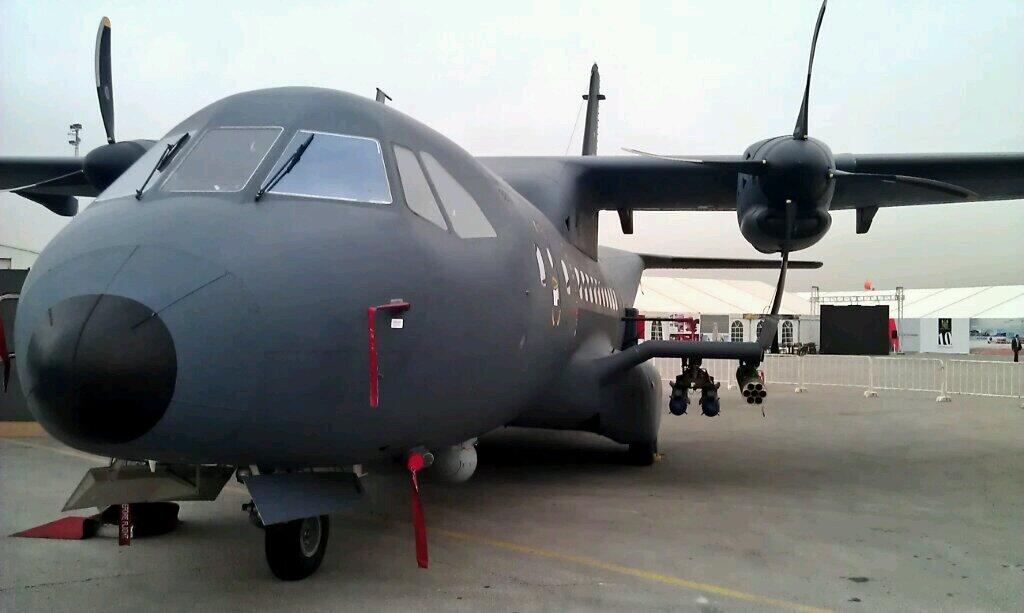
The AC-295 gunship configuration will be based on the AC-235, which includes integrated mission and fire control systems, electro-optical and radar sensors, Hellfire missiles, ATK’s side-mounted M230 30mm chain gun, an integrated defensive suite, and 2.75-inch guided rockets.
The prince would not confirm final fleet numbers but a source said it was possible a new aircraft would also be purchased from Airbus Military to round out the total Jordanian gunship capability to four aircraft.
defensenews

Jun 11, 2014

Ecuador Increases C295 Fleet by 3 Aircraft

Ecuador has added three C295 transports to its fleet of Airbus Defence and Space military aircraft. The European aerospace company announced June 9 that it had already delivered the first aircraft from its factory.
The order has been on Airbus’ books for sometime but the company has only just been cleared to reveal the deal following the handover of the first aircraft June 6.
Delivery of a second machine to the Ecuadorian Air Force is expected soon with the final aircraft following by the end of the year.
The deal includes a full service support program.
The Army and naval forces of the Latin American nation already operate two Airbus C212s and four CN235s.
Aside from the Ecuador order Airbus has also secured orders this year for a further 17 C295s from undisclosed customers.
These included eight from North Africa, two Middle East customers and a first intelligence and surveillance variant delivery in Latin America.
The executive said he expected to add to the order tally “very soon” with an announcement of a Middle East special operations customer.
Airbus is also developing a gun-ship version of the C259 for an unnamed Middle East customer.
The company already has Jordan as a customer for a gun-ship version of the smaller CN235 aircraft.
defensenews

May 7, 2014

May 3, 2014

Jordan receives first CN-235 Gunship

ATK and King Abdullah II Design and Development Bureau (KADDB), has delivered the first modified CASA-235 light gunship aircraft to Jordan. ATK was awarded a contract by KADDB to modify two of the country's CASA-235 transport aircraft into special mission aircraft. The completed aircraft has been delivered to the customer and will be featured during the 10th edition of the Special Operations Conference and Exhibition (SOFEX), May 6-8, 2014, in Amman, Jordan.
CN-235 Gunship began flight and gun test program in the fall of 2013, with accuracy validation completed in March 2014.
atk

Jan 16, 2014

Greek fighter jets harass Turkish recon aircraft


A Turkish aircraft conducting a reconnaissance flight over Aegean international airspace was harassed by Greek F-16s five times, the Turkish Armed Forces (TSK) announced on Tuesday.
A CN-235 aircraft was harassed by Greek fighter jets for two minutes and 37 seconds while the radar lock of the Greek air defense system was kept on.
In a previous incident, four F4-E/2020 Phantoms were put under radar lock by Greece's Patriot missile defense system twice, for 15 seconds each time, at 3:20 p.m. Turkish time on Dec. 23. The jet fighters were on a training flight in international waters off Greece's Ikaria Island in the Aegean, the military said.
Media reports quoted military sources as saying this was the first time that Turkish military aircraft were threatened by Greece's long-range missile defense system. The military has also reportedly notified the Foreign Ministry about the incident.
Turkish and Greek warplanes have engaged in dogfights over the Aegean many times in the past but Greece has never activated its missile defense system against Turkish aircraft.
Turkey and Greece are at odds over boundaries of their airspace due to a long-running territorial dispute over the Aegean.
Read more

Dec 6, 2013

ATK Completes First Flight Test of its Light Gunship for Jordan

ATK announced it has completed the first flight test for the Kingdom of Jordan's two CASA-235 light gunship aircraft. ATK was awarded a contract to modify two of the country's CASA-235 transport aircraft into highly-capable and cost-effective special mission aircraft.
In collaboration with KADDB, ATK developed and provided the system integration and aircraft modifications to turn a CASA-235 cargo plane into a multi-mission gunship. These modifications include installation of an electro-optical targeting systems, a laser designator, aircraft self-protection equipment, a synthetic aperture radar, and an armaments capability that can provide sustained and precise firepower in a variety of scenarios using Hellfire laser-guided missiles, 2.75-inch rockets, and a side-mounted M230 link-fed 30mm chain gun. The gun is automatically aligned to the target, cued by a camera in conjunction with the mission management and fire control solution. These capabilities are integrated with and controlled by ATK's Mission System, which provides both day and night reconnaissance and fire control capabilities, and the ability to acquire, monitor and track items of interest.
atk

Dec 5, 2013

Spain to operate fewer A400Ms, but seeks 3 A330 MRTT tanker purchase


Spain’s air force expects to be able to employ only around half of the A400M tactical transports on order from Airbus Military, but hopes to widen its fleet renewal effort to also introduce a new fleet of A330-based tankers.
Ejército del Aire (Spanish Air Force) will receive 27 A400M aircraft, but due to budget restrictions it's planne to operate and maintain only 14.
Madrid’s first A400M is due to be delivered in January 2016, followed at a rate of four or five per year for its air force until 2022. Despite the smaller than expected size of the future active fleet, Ejército del Aire wants to operate the type in a multi-role configuration, featuring defensive aids and satellite communications equipment, and a modular air-to-air refuelling kit.
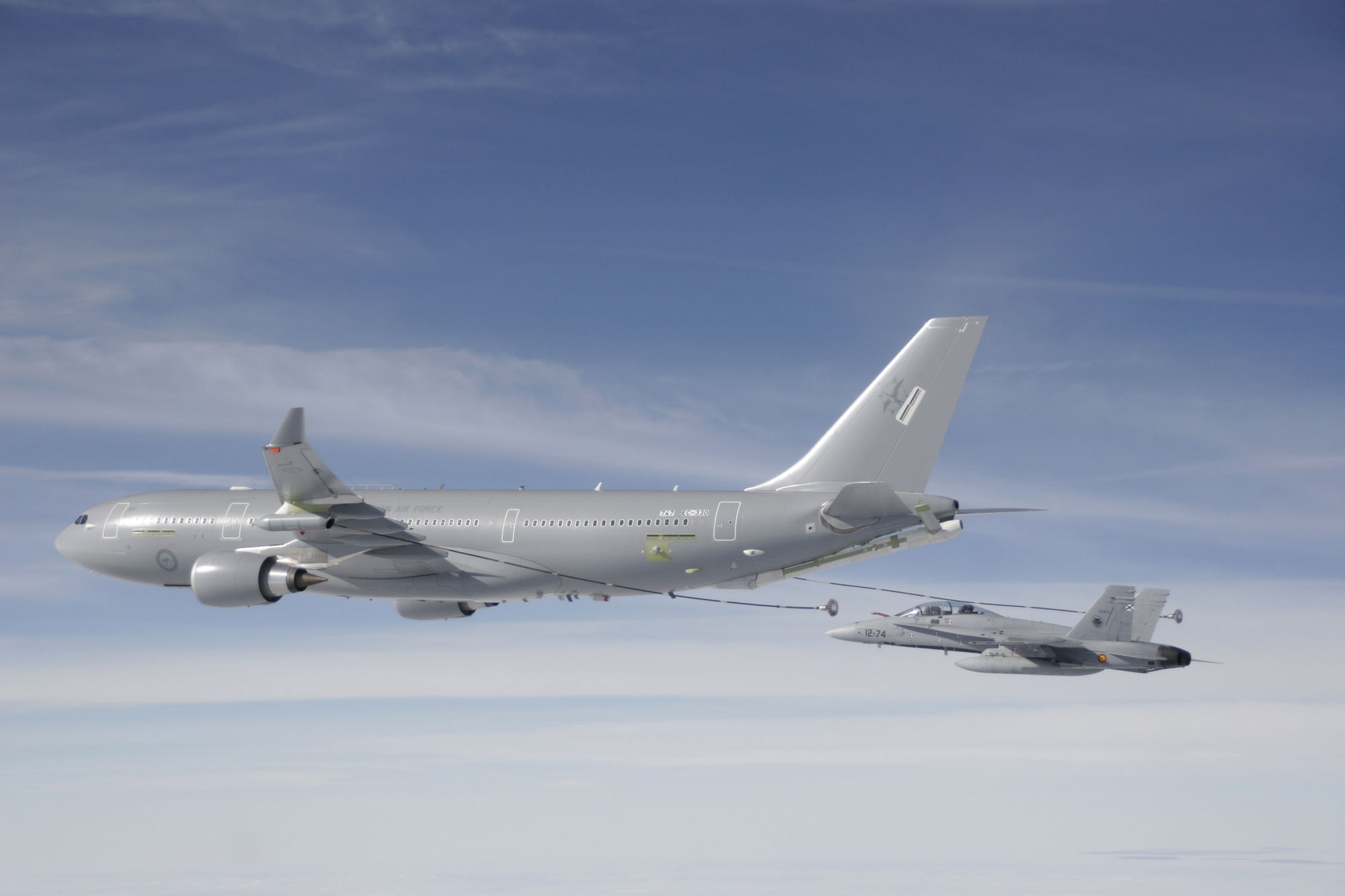
The Spanish air force also hopes to acquire three A330 multi-role tanker transports from Airbus Military, with these to represent its contribution to a proposed pooled fleet being eyed by the European Defence Agency. To also be suitable for national VIP transport tasks, the type would provide a replacement for the air force’s current Boeing 707s, although no funding has yet been allocated for such an order.
The acquisition of a new tanker is one of two top priorities for the Spanish air force, with the other being a plan to acquire a medium-altitude, long-endurance unmanned air system capability.
Longer term, the air force would like to acquire a multi-role successor for its existing Airbus Military C295/CN235 medium transports, with airborne early warning and electronic warfare as potential applications beyond the airlift role.
flightglobal

Oct 14, 2013

3 Firms Join Pre-Bid for 3 Philippine Air Force Planes

Three firms joined the pre-bid conference held Monday by the Bids and Awards Committee of the Philippines Department of National Defense for the acquisition of three brand new medium-lift fixed-wing aircraft.
The firmst that bought bid documents were Alenia Aermacchi, which may offer its C-27J model, EADS Casa Airbus Military, C-295 model, and PT Dirgantara Indonesia/Indonesian Aerospace (IAe/Persero), C-235 model.
defense-studies

Oct 11, 2013

Indonesian navy officially commences operations of CN235 MPA aircraft

The Indonesian Navy has started operating the maritime patrol aircraft CN235 MPA version following its delivery to the Defense Ministry from the country`s aircraft.
The CN235 MPA aircraft, the first of three aircraft units ordered by the Navy, was delivered by PTDI.
The CN235 MPA aircraft, will be based at the Juanda Naval base in Surabaya, East Java.
In addition to the military aircraft version, the country`s Navy has also operated several units of maritime patrol aircraft of CN212 produced by the PTDI.
The other two CN235 MPA units of aircraft will be operational in 2014.
Indonesia actually needs 54 units of CH121 and 21 units of CN235 MPA to control its territory.
South Korea and Turkey also use the CN235 MPA, and Brunei Darussalam, Malaysia, South Korea, Pakistan, United Arab Emirates, Senegal and Burkina Faso were also operating the CN235 aircraft.
antaranews

Oct 4, 2013

IAe hands over maritime patrol CN235 to Indonesia's navy

Indonesian Aerospace (IAe) handed over the first of three maritime patrol-configured CN235s to the Indonesian navy.
Indonesia contracted IAe to build the three CN235 PATMAR, in 2009. They will complement the navy’s NC212s.
The aircraft has been fitted with a search radar, forward-looking infrared camera, identification friend or foe transponder, tactical navigation systems and a bubble window to equip it for a surveillance role. In addition, IAe says the CN235 has been fitted with winglets to improve its stability. IAe adds that it has received expressions of interest from other countries.
flightglobal

Aug 9, 2013

El primer UAV de la Armada que espiará a los piratas de Somalia

El Skeldar V-200, de Saab será el primer UAS que va a adquirir la Armada española,con el objetivo de quese utilice enla Operación Atalanta de lucha contra la piratería en el océano Índico.
Este helicóptero no tripulado complementará los medios existentes en Inteligencia, Vigilancia y Reconocimiento (ISR) que hasta ahora viene desarrollando el avión P-3 Orión o el D.4 Vigma, versión de patrulla marítima del CN-235.
Embarcará en los Buques de Acción Marítima (BAM), en buques anfibios y escoltas.
El objetivo es “espiar” las bases y campamentos de los piratas somalíes a una altura máxima de 3.500 metros, y no efectuará misiones dede ataque pues no posee capacidad de armamento.
Esteban Villarejo, Por Tierra Mar y Aire