Translate

Showing posts with label SUPER HORNET. Show all posts

Mar 29, 2026

Los cazas que podría operar España en un futuro portaaviones CATOBAR


La posible construcción de un portaaviones con sistema CATOBAR abriría un abanico completamente nuevo de opciones para la Armada española. A diferencia del actual LHD Juan Carlos I, limitado a aeronaves STOVL como el Harrier o el F-35B, un portaaviones CATOBAR permitiría operar cazas convencionales con mayor carga, alcance y versatilidad.
Los estudios de viabilidad ya apuntan a una ala embarcada de hasta 30 aeronaves, lo que situaría a España en un nivel completamente distinto dentro de la aviación naval europea.
En ese contexto, varias opciones empiezan a tomar forma, aunque con planteamientos muy distintos entre sí.

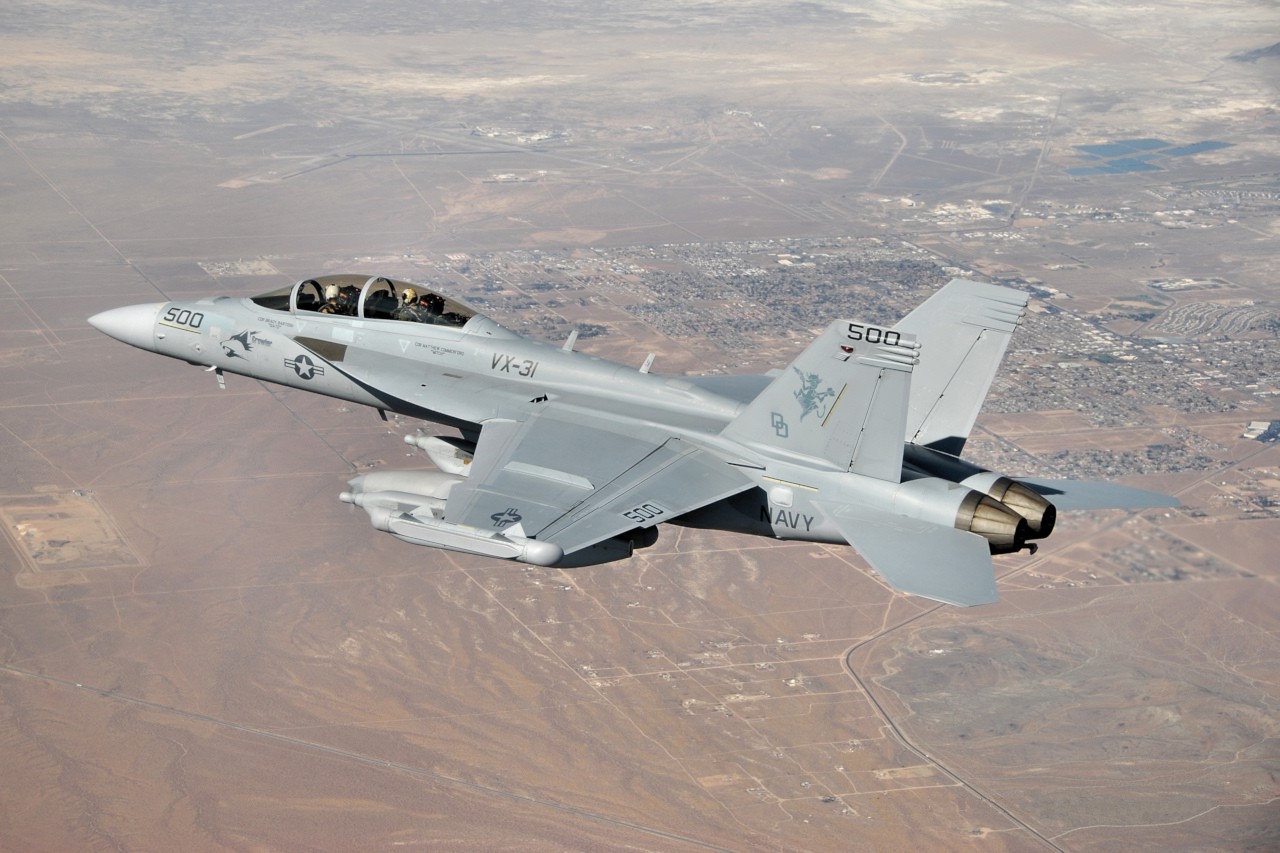
F/A-18 Super Hornet 


El F/A-18E/F Super Hornet se presenta, probablemente, como la opción más continuista para España en un escenario CATOBAR. Diseñado desde su origen para operaciones embarcadas, cuenta con décadas de experiencia en la Armada estadounidense, lo que le aporta una base operativa sólida y un sistema logístico plenamente maduro. Además, la experiencia previa española con la familia Hornet facilitaría una transición relativamente natural, tanto en la formación de pilotos como en el mantenimiento.
Sin embargo, se trata de un caza de cuarta generación en un entorno cada vez más condicionado por amenazas más avanzadas. Aunque sigue siendo una plataforma muy capaz, su relevancia a largo plazo en escenarios de alta intensidad genera dudas, especialmente a medida que los sistemas de quinta generación se generalizan. En este sentido, podría ofrecer una solución pragmática y de bajo riesgo en el corto plazo, pero con limitaciones claras a medida que evolucionen las necesidades operativas.

Rafale 


El Dassault Rafale M representa, probablemente, la alternativa europea más coherente en un escenario de portaaviones CATOBAR. Es, a día de hoy, el único caza no estadounidense plenamente operativo en este tipo de plataformas, lo que le otorga una ventaja significativa: no se trata de una solución teórica, sino de un sistema ya probado en servicio real. Su elevada polivalencia y su integración en el ecosistema industrial europeo encajan bien con las aspiraciones de autonomía estratégica que España ha venido mostrando en distintos programas de defensa.
Sin embargo, el componente industrial introduce algunas incertidumbres. Francia opera actualmente una flota relativamente limitada de Rafale M —en torno a unas cuarenta unidades— y el futuro de su sustituto naval dentro del programa FCAS sigue siendo incierto en su vertiente embarcada. En ese contexto, no es evidente que la producción del Rafale M se mantenga a largo plazo, lo que podría condicionar tanto la disponibilidad futura del modelo como su evolución.
Aun así, su elección también implicaría concentrar una parte importante de las capacidades en un único proveedor, en este caso Francia, algo que históricamente España ha tratado de evitar manteniendo cierto equilibrio entre socios. Además, aunque se trata de un caza muy avanzado dentro de su generación, su evolución tecnológica se sitúa por detrás de las plataformas de quinta generación. Pese a ello, en términos de equilibrio entre capacidades, viabilidad e integración política, el Rafale M se perfila como una de las opciones más realistas.


F-35C Lightning II 


El F-35C representa la opción más avanzada desde el punto de vista tecnológico en un escenario CATOBAR. Diseñado específicamente para operar desde portaaviones con catapultas, incorpora capacidades de baja observabilidad, sensores de última generación y una integración plena en entornos de guerra en red, lo que lo sitúa en una categoría claramente superior a los cazas de cuarta generación. Además, su uso por parte de la Marina estadounidense garantiza un alto grado de interoperabilidad con aliados clave y una base operativa ampliamente consolidada.
Sin embargo, su posible adopción por parte de España no puede analizarse únicamente en términos técnicos. En los últimos años, España ha descartado la adquisición del F-35B, en parte debido a las implicaciones de dependencia tecnológica asociadas al programa, un factor que también estaría presente en la versión naval. La integración en el ecosistema del F-35 implica un grado elevado de control externo sobre mantenimiento, actualizaciones y gestión de sistemas críticos, lo que plantea interrogantes en términos de soberanía operativa.
En este contexto, aunque el F-35C ofrecería la solución más avanzada desde el punto de vista militar, su adopción estaría condicionada por consideraciones políticas, industriales y estratégicas que van más allá de sus capacidades puramente operativas.


Hürjet 


El TAI Hürjet introduce una variable distinta dentro del debate, alejándose de los cazas embarcados tradicionales para situarse en un enfoque más ligero y potencialmente disruptivo. Aunque concebido originalmente como entrenador avanzado y avión de combate ligero, el desarrollo de una versión naval por parte de Turkish Aerospace Industries abre un escenario que, hasta hace poco, no formaba parte del análisis. Este movimiento coincide, además, con la decisión española de adquirir hasta 30 Hürjet dentro del programa Saeta II, lo que sugiere una convergencia interesante entre necesidades operativas e industrialización a medio plazo.
En paralelo, la Armada española se enfrenta a un problema estructural evidente: la retirada progresiva de los Harrier en la próxima década y la ausencia de un sustituto STOVL tras descartarse el F-35B. En ese contexto, un sistema más ligero, con menores costes de adquisición y operación, podría ofrecer una solución intermedia para preservar la aviación embarcada sin asumir las cargas económicas y logísticas asociadas a cazas pesados como el Super Hornet, el Rafale M o el F-35C. La posible evolución del Hürjet hacia una plataforma naval —con refuerzos estructurales, gancho de apontaje y adaptación a operaciones embarcadas— refuerza esa hipótesis.
Además, la creciente relación industrial entre España y Turquía aporta una dimensión adicional. La combinación de la experiencia española en construcción naval y operaciones embarcadas, junto con el desarrollo aeronáutico turco, podría sentar las bases de una solución conjunta más accesible y sostenible en el largo plazo. Sin que exista confirmación oficial de un vínculo directo entre ambos programas, la coincidencia temporal y estratégica resulta difícil de ignorar. En este sentido, el Hürjet no debe entenderse tanto como un sustituto directo de los cazas embarcados convencionales, sino como una posible vía para redefinir el modelo de aviación naval española en términos más realistas desde el punto de vista presupuestario y operativo.


Jan 10, 2024

US Navy F/A-18 Super Hornets, operating from the aircraft carrier Dwight D. Eisenhower, successfully intercepted and neutralized a Houthi rebel attack in the Red Sea.


On Wednesday 10th, a total of 18 drones, two cruise missiles, and an anti-ship missile were downed by the F/A-18 Super Hornets from the Dwight D. Eisenhower, alongside the destroyers Gravely, Mason, Laboon, and the British warship HMS Diamond. The Houthi rebels, based in Yemen, targeted ships in the Red Sea with this barrage, although no damage was reported.

This incident marks the 26th attack by Houthi rebels on commercial shipping routes in the Red Sea since November 19, according to the US Central Command. The attack occurred off the Yemeni port cities of Hodeida and Mokha. Vessels in the area were cautioned to proceed at maximum speed and transit with caution, reporting any suspicious activity, as advised by the UK Marine Trade Operations.

While the Houthi rebels did not formally claim responsibility for the attacks, anonymous Houthi military officials indicated that their forces had "targeted a ship linked to Israel in the Red Sea."

These assaults have consistently targeted ships in the Red Sea, a critical passage connecting the Middle East and Asia to Europe via the Suez Canal, including the narrow Bab el-Mandeb Strait. The strait, only 29 kilometers wide at its narrowest point, handles a substantial portion of global maritime trade, with nearly 10% of all oil traded at sea passing through it, representing an estimated $1 trillion in goods annually.

To counter these attacks, a US-led coalition of nations has been actively patrolling the Red Sea. Despite warnings from the US, there has been no widespread retaliatory strike, although American troops were involved in a previous incident where Houthi vessels were sunk, and 10 rebel fighters were killed.

Simultaneously, a tentative cease-fire between the Houthi rebels and a Saudi-led coalition supporting Yemen’s exiled government has held for months. The concern now is that any escalation in sea conflict or potential reprisal from Western forces could reignite tensions in Yemen, the poorest nation in the Arab world, and jeopardize the fragile cease-fire.


Jan 8, 2023

India near to sign deal for 26 French Rafale M for Indian Navy


Following the Indian Air Force (IAF), the Indian Navy will receive Rafale fighter aircraft from France. The Rafale was previously chosen by the Indian Air Force (IAF) for its new squadron, and now the Indian Navy is set to acquire the Rafale M to deploy on INS Vikrant.

The Indian Navy rejected the American F/A-18 Super Hornet in favour of the Rafale deal. The Navy tested both fighter jets earlier this year at the Indian Naval Station Hansa in Goa.

The Indian Navy intends to retire 43 obsolete Russian fighter jets, the MiG-29K and MiG-29KUB, from its fleet operating out form INS Vikrant and INS Vikramaditya carriers.

INS Vikramaditya is a Kyiv-class aircraft carrier of the Soviet Union which has been modernized in India. Both these warships are STOBAR aircraft carriers.

businessworld

Apr 22, 2020

Germany approves Super Hornet/Growler buy to replace Tornado fleet

The German government has approved the procurement of the Boeing F/A-18E/F Super Hornet and EA-18G Growler to partially satisfy its Tornado replacement requirement, national media has reported.
German Defence Minister Annegret Kramp-Karrenbauer has told the US government that Berlin has given clearance for the Luftwaffe to acquire 45 Super Hornet and Growler aircraft as part of its wider plans to replace 90 Panavia Tornado Interdiction and Strike (IDS)/Electronic Combat Reconnaissance (ECR) aircraft with 85 new platforms from 2025.
The 30 Super Hornet multirole and 15 Growler electronic attack (EA) jets would enable the Luftwaffe to fulfil its airborne nuclear strike and EA requirements within the required timeframe, Der Spiegel reported Kramp-Karrenbauer as saying in mid-April. The remaining 40 aircraft would comprise additional Eurofighters to add to the 143 already received (of these, 38 early Tranche 1 aircraft are set to be replaced by the same number of Tranche 3 aircraft
janes

Apr 7, 2018

India re-opens competition to supply 110 fighters

A global competition to sell more than 100 fighters to the Indian air force re-opened for the third time in a decade on 6 April.
The IAF released a 73-page request for information to six companies to supply 110 single- and twin-seat fighters over a maximum of 12 years.
Facing a 3 July deadline, responses are expected from the Boeing F/A-18E/F Block III, Dassault Rafale F3R, EurofighterTyphoon, Lockheed Martin F-16 Block 70, United Aircraft Corp MiG-35 and Saab Gripen E.
It will be a familiar competition for the six bidding teams. The same teams squared off in 2009 for the Medium Multi-Role Combat Aircraft (MMRCA) contract for 126 fighters. India selected the Rafale, but cancelled the contract seven years later.
Instead, the IAF awarded Dassault a contract to deliver 36 Rafales in 2016, and launched a competition for a contract to build 114 single-engine fighters, which limited the field to the F-16 and Gripen.
The IAF scrapped that contest two months ago under pressure from the Indian Congress to consider single- and twin-engined fighters.
The new RFI re-opens the competition to twin-engined fighters made in the USA, Western Europe and Russia.
The RFI sets no standards for the number of engines in the IAF’s future fighter, and repeatedly references the singular or plural term, “engine/s”, in requests for data about the propulsion system.
About 82 of the 110 fighters should be single-seat aircraft and the rest should be two-seat versions, the RFI says.
A maximum of about 16 or 17 fighters can be built outside the country, but the rest must be built within India by local companies or an Indian production agency, the document shows.
As expected, technology transfer and “Made in India” will be priorities in the IAF’s bid evaluations. The bidders must describe in their responses to the RFI how they will use Indian companies as suppliers for systems and aircraft production.
flightglobal

Apr 3, 2018

Kuwait Has Acquired 28 Super Hornets

Boeing was awarded a contract worth up to $1.17 billion to produce and deliver 22 F/A-18E and 6 F/A-18F Super Hornets for the government of Kuwait by 2022, the US Defence Department announced on 30 March.
State Department approval of the sale of F/A-18 Super Hornets to Kuwait was first announced in November 2016, with the country requesting a total of 40 Super Hornets, including 28 fighters for initial delivery, plus the option to order 12 more. Boeing was to provide Raytheon APG-79 active electronically scanned array radars and 20mm guns for the jets, per the original sale announcement.
flightglobal

Dec 25, 2017

US Navy Block III Super Hornet upgrades to begin this spring

Unlike the legacy Hornet fleet, the Super Hornet modification will not entail one large replacement such as the centre barrel, says Dan Gillian. Instead, modifications will be distributed across the aircraft with a focus on corrosion, a perennial hurdle for the carrier-based aircraft.
After testing two F/A-18 “learning aircraft,” Boeing found corrosion was well maintained on Super Hornets that fly regularly but cropped up often on aircraft that had been grounded for a while. Boeing will not change materials on the aircraft but plans to use data analytics to predict how the navy should handle varied corrosion issues, Gillian says.
flightglobal

Dec 6, 2017

Canada Scraps Plan To Buy 18 New Brand Superhornets, Plans To Buy 2nd Hand Hornet from Australia

Canada is scrapping a plan to buy 18 Boeing Co (BA.N) Super Hornet fighter jets amid a deepening dispute with the U.S. aerospace company, three sources familiar with the matter said on Tuesday.
Instead, the Liberal government will announce next week it intends to acquire a used fleet of older Australia F-18 jets, the same kind of plane Canada currently operates, said the sources, who asked not to be identified because of the sensitivity of the situation.
The move underlines Ottawa’s anger at a decision by Boeing to launch a trade challenge against Canadian planemaker Bombardier Inc (BBDb.TO), which the U.S. giant accuses of dumping airliners on the American market.
It also casts into question the future of Boeing’s military sales in Canada. Boeing says its commercial and defense operations in Canada support more than 17,000 Canadian jobs.
Canada and Mexico are locked into increasingly acrimonious negotiations with the United States over the NAFTA trade pact, which President Donald Trump says has not done enough to protect U.S. jobs.
reuters

Sep 16, 2017

Canada cleared to buy 18 F/A-18E/Fs

The State Department has made a determination approving a possible Foreign Military Sale to the Government of Canada of ten (10) F/A-18E Super Hornet aircraft, with F414-GE-400 engines; eight (8) F/A-18F Super Hornet aircraft, with F414-GE-400 engines; eight (8) F414-GE-400 engine spares; twenty (20) AN/APG-79 Active Electronically Scanned Array (AESA) radars; twenty (20) M61A2 20MM gun systems; twenty-eight (28) AN/ALR-67(V)3 Electronic Warfare Countermeasures Receiving Sets; fifteen (15) AN/AAQ-33 Sniper Advanced Targeting Pods; twenty (20) Multifunctional Information Distribution Systems–Joint Tactical Radio System (MIDS-JTRS); thirty (30) Joint Helmet Mounted Cueing Systems (JHMCS); twenty-eight (28) AN/ALQ-214 Integrated Countermeasures Systems; one hundred thirty (130) LAU-127E/A and or F/A Guided Missile Launchers; twenty-two (22) AN/AYK-29 Distributed Targeting System (DTS); twenty-two (22) AN/AYK-29 Distributed Targeting Processor (DTP); one hundred (100) AIM-9X-2 Sidewinder Block II Tactical Missiles; thirty (30) AIM-9X-2 Sidewinder Block II Captive Air Training Missiles (CATM); eight (8) AIM-9X-2 Sidewinder Block II Special Air Training Missiles (NATM); twenty (20) AIM-9X-2 Sidewinder Block II Tactical Guidance Units; sixteen (16) AIM-9X-2 Sidewinder Block II CATM Guidance Units. Also included in this sale are AN/AVS-9 Night Vision Goggles (NVG); AN/ALE-47 Electronic Warfare Countermeasures Systems; AN/ARC-210 Communication System; AN/APX-111 Combined Interrogator Transponder; AN/ALE-55 Towed Decoys; Joint Mission Planning System (JMPS); AN/PYQ-10C Simple Key Loader (SKL); Data Transfer Unit (DTU); Accurate Navigation (ANAV) Global Positioning System (GPS) Navigation; KIV-78 Duel Channel Encryptor, Identification Friend or Foe (IFF); CADS/PADS; Instrument Landing System (ILS); Aircraft Armament Equipment (AAE); High Speed Video Network (HSVN) Digital Video Recorder (HDVR); Launchers (LAU-115D/A, LAU-116B/A, LAU-118A); flight test services; site survey; aircraft ferry; auxiliary fuel tanks; aircraft spares; containers; storage and preservation; transportation; aircrew and maintenance training; training aids and equipment, devices and spares and repair parts; weapon system support and test equipment; technical data Engineering Change Proposals; technical publications and documentation; software; avionics software support; software development/integration; system integration and testing; U.S. Government and contractor engineering technical and logistics support; Repair of Repairable (RoR); repair and return warranties; other technical assistance and support equipment; and other related elements of logistics and program support. The estimated total case value is $5.23 billion.
dsca

Dec 24, 2016

Trump Tells Twitter He Wants A Super Hornet With F-35 Capabilities

President-elect Donald Trump again took to Twitter on Thursday to question the cost of the F-35 fighter jet, advocating for modernization of a fourth-generation Boeing alternative that experts say would not likely be possible.
“Based on the tremendous cost and cost overruns of the Lockheed Martin F-35, I have asked Boeing to price-out a comparable F-18 Super Hornet!” he tweeted at 5:26 p.m. EST.
Lockheed Martin stock, which had closed at $252.80 a share, tumbled down to $247.75 at about 7 p.m. EST, a 2 percent decline. At the same time, Boeing stock shot up by about 1.49 percent, increasing from $157.46 to $158.95 a share.
What this means for Lockheed Martin and its top competitor Boeing in the long term is not exactly clear. Although the F-35 has been plagued with its share of cost overruns and technical issues, the F/A-18E/F Super Hornet is a fourth-generation plane that lacks many of the capabilities that define a fifth-generation plane, such as stealth and sensor fusion. Redesigning a Super Hornet to meet the same requirements as the F-35 would require years of development and engineering time and probably billions of dollars.
defensenews

Nov 22, 2016

Canada Plans to Buy 18 Super Hornets, Start Fighter Competition in 2017

Canada will explore an interim buy of 18 Super Hornet fighter jets from Boeing, a blow to Lockheed Martin that kicks a final decision on whether to procure the F-35 further down the road.
"Canada will immediately explore the acquisition of 18 new Super Hornet aircraft to supplement the CF-18s until the permanent replacement arrives," the Canadian government announced in a release. "Canada's current fleet is now more than 30 years old and is down from 138 aircraft to 77. As a result, the Royal Canadian Air Force (RCAF) faces a capability gap."
Canadian Defence Minister Harjit Sajjan said Canada will launch a larger fighter competition next year, after it wraps up its defense policy review. But the competition will likely take about five years, which kicks the decision into the next administration. Liberal Party Prime Minister Justin Trudeau had vowed not to buy the F-35 joint strike fighter.
"We have a capability gap. We have selected the minimum number of aircraft to meet this capability gap here. At the same time, we are launching a full competition and making sure that we take the appropriate time, without cutting corners to get the right airplane," said Sajjan.
"Boeing is honored to provide the Royal Canadian Air Force with the only multi-role fighter aircraft that can fulfill its immediate needs for sovereign and North American defense," the company stated in a news release. "The Super Hornet's advanced operational capabilities, low acquisition and sustainment costs, and Boeing's continued investment in the Canadian aerospace industry — US$6 billion over the past five years alone — make the Super Hornet the perfect complement to Canada's current and future fighter fleet."
Meanwhile, Lockheed Martin was less pleased with the decision, restating its hope that the Canadian government would ultimately purchase the fighter.
“Lockheed Martin recognizes the recent announcement by the Government of Canada of its intent to procure the 4th generation F/A-18 Super Hornet as an interim fighter capability,” the company said in a statement. “Although disappointed with this decision, we remain confident the F-35 is the best solution to meet Canada's operational requirements at the most affordable price, and the F-35 has proven in all competitions to be lower in cost than 4th generation competitors. The F-35 is combat ready and available today to meet Canada's needs for the next 40 years.”
Further down the road, Lockheed could strip Canadian industrial participation — which totals 110 Canadian firms with $750 million in contracts, according to Lockheed —should the country ultimately opt not to by the F-35. The company has not signaled whether it would be willing to do so.
defensenews

Jan 29, 2016

Kuwait To Sign Deal for 28 Eurofighters

Kuwait is expected to sign a deal to buy 28 Eurofighter aircraft on Jan. 31, acording to an Italian Ministry of Defense source.
Italy, which is one of the four industrial partners on the Eurofighter program alongside the UK, Spain and Germany, has taken the lead in marketing the aircraft to Kuwait.
Two senior Kuwaiti Military officials confirmed on Wednesday that the Minister of Defense Khaled al-Jarrah al-Sabah will sign the Eurofighter contract on Sunday.
The decision came after repeated US delays regarding the acquisition of a new fleet of Boeing F-18 Super Hornets
"We were trying to acquire the F-18 Super Hornets and replace the existing fleet of F-18s with Super Hornets and Eurofighter Typhoons," he said. "However, we cannot wait for the American approval and need to update our Air Force now."
A second official stated that a meeting was held with Italian Air Force officials in Turin in mid-November.
"We have discussed the Eurofighter deal, which was expected to be finalized in Kuwait in December but was delayed due to problems on the pilot training," he said.
"Our Air Force wanted to send the pilots for training in the United Kingdom, not Italy, due to the language barriers; however the deal was finalized after there was an agreement on sending them to train in Italy," he added.
"The training program is expected not to take less than 18 months," he said.
Kuwait has agreed to buy 22 single-seat and six twin-seat Typhoons in a government-to-government agreement.
Industry sources have said the deal, which could be worth up to €8 billion (US $8.7 billion), could see the Kuwaitis become the first export customer for the active electronically scanned array radar being developed for the jet.
The aircraft are expected to be new-build, third tranche, swing-role versions of the fighter, with deliveries starting in 2019 and possibly covering munitions such as the Storm Shadow and Meteor.
defensenews

Nov 21, 2015

LRASM begins Super Hornet flight testing

The US Navy has begun airworthiness testing of LRASM Missile on the F/A-18E/F Super Hornet carrier-borne strike fighter.
Developed and integrated under an accelerated programme to meet the Offensive Anti-surface Warfare (OASuW) Increment 1 programme, LRASM is a highly autonomous, precision-guided anti-ship standoff weapon that leverages the basic design of the AGM-158B Joint Air-to-Surface Stand-off Missile Extended Range (JASSM-ER) but introduces additional sensors and systems specific to the offensive anti-surface warfare mission. It has been conceived to be able to penetrate sophisticated shipborne defences and with reduced dependence on intelligence, surveillance and reconnaissance platforms, network links and GPS navigation.
janes

May 8, 2015

US Near to Sell 40 Super Hornet to Kuwait

The US s nearing agreement to sell up to 40 F/A-18 E and F Super Hornet strike fighters to Kuwait.
The deal, has yet to be officially announced, but officials in Washington have confirmed an agreement is close.
Any deal will would require approval from the US Congress, but it's unlikely a proposed sale to Kuwait, a staunch US ally in the Persian Gulf, would meet serious opposition.
A major Super Hornet sale would breathe new life into the Boeing production line, which is working on new aircraft for the US Navy and Australia, but which will deliver the last of those aircraft by the end of 2017. Boeing officials have said production of two aircraft per month, or 24 per year, is necessary to keep the St. Louis, Missouri production line at the break-even point.
The Navy has not officially requested any Super Hornet variants since the 2014 budget. But Congress added fifteen EA-18G Growler electronic attack variants into the 2015 defense acts, and the service listed 12 Super Hornets in its 2016 unfunded requirements list.
In Kuwait, Boeing had been up against the Eurofighter Typhoon. Kuwait tentatively agreed in early 2014 to go with the Typhoon, but subsequently backed off.
It is not yet clear how many single-seat F/A-18Es and two-seat F/A-18Fs are involved in the Kuwait deal. Some media accounts reported a deal for 28 of the Boeing aircraft, while US sources indicate as many as 40 F/A-18s could be sold -- probably under an initial deal for 28 aircraft with an option for 12 more..
If confirmed, Kuwait would become the second international customer for the Super Hornet, after Australia, that operates 24 F/A-18Fs, and is set to take initial delivery this summer of the first of 12 EA-18G Growlers.
defensenews

Mar 31, 2015

Australia replaces Super Hornets with legacy F-18A Hornets in Iraq mission

The six Boeing F/A-18F Super Hornet fighters equipping the Royal Australian Air Force (RAAF) air task group (ATG) supporting coalition operations in Iraq have been replaced by what is understood to be the same number of older F/A-18A 'classic' Hornet.
The departing and incoming strike teams flew combat missions together during a two-week transition period.
The Super Hornets began operations in Iraq in September 2014. Since then they have flown more than 2,900 hours in more than 400 sorties.
janes

Mar 27, 2015

New US Navy EMALS Launch System Can't Launch Fighter if They Are Carrying Fuel Tanks

The U.S. Navy’s top can’t be launched off its newest aircraft carrier if they’re carrying fuel tanks, range because the ship’s high-tech catapults cause too much wear.
Military weapons testers view this as a deficiency that would “preclude the Navy from conducting normal operations” on the USS Gerald R. Ford until it’s corrected.
The previously undisclosed troubles with the EMALS catapult system from General Atomics add to shortcomings for the first in a new class of aircraft carriers being built by Newport News.
The 480-gallon tanks for extended flights are carried under the wings of two models of the F/A-18, the Super Hornet fighter and the Growler. The carrier’s electromagnetic launch system, made by General Atomics, puts more stress on the tanks than older steam-powered catapults, and that would cause premature damage to the planes.
The wing tanks and the pylons they hang from are designed to withstand twisting and yanking when an aircraft is launched, but the stresses add up over time. Given the test results, the warplanes wouldn’t be able to launch with fuel tanks.
The Navy says it will install corrective software on the launch system intended to reduce acceleration forces and will test it on board the USS Ford after delivery next March.
bloomberg

Mar 23, 2015

U.S. Navy wish list has 12 Super Hornets, eight F-35s

The U.S. Navy included 12 F/A-18 Super Hornet and eight F-35s on a list of "unfunded priorities" prepared for Congress.
The Navy's list was reviewed by senior Pentagon officials and the Joint Chiefs of Staff this week, and should be sent to U.S. lawmakers in coming days.
Top Pentagon officials are skeptical about the weapons wish lists, and worry they help lawmakers "cherry pick" specific weapons programs to fund, while crowding out bigger priorities.
A decision by Congress to fund the extra Boeing jets as part of the Navy's fiscal 2016 budget would help the company extend its St. Louis production line beyond the end of 2017.Company officials have said they must decide this summer whether to start shutting down the line or bet their own money to buy titanium and other supplies that take a long time to deliver, before Congress finalize the 2016 budget.
Ordering Super Hornets now would also preserve the option of ordering additional EA-18G electronic attack aircraft, or Growlers.
Boeing has said it needs to build two jets a month at the facility to maintain current pricing.
The company is also chasing a possible order from Kuwait that could keep the factory running through the end of 2018.
reuters

Mar 11, 2015

Australia upgrades Radar Warning Receiver of RAAF Super Hornets

Australian Assistant Minister for Defence, announced that a collaborative research program between the Defence Science and Technology Organisation (DSTO) and the US Navy has resulted in upgrades to the radar warning receiver in the Royal Australian Air Force’s F/A-18F Super Hornets.
The project, which began in 2008, will give the aircraft a greater ability to fight in a modern complex electronic warfare environment.
The radar warning receiver upgrade will soon be fitted to the US fleet of Hornets and Super Hornets and to Australia’s fleet in the near future.
defence.gov.au

Feb 28, 2015

U.S. Navy opens door to more orders of Superhornet, Growler

The U.S. Navy on Thursday opened the door to further purchases of F/A-18 and EA-18G fighter jets, saying it may ask lawmakers to finance the planes as part of a list of "unfunded priorities" to be sent to Congress.
More orders would help Boeing extend its St. Louis F/A-18 production line beyond 2017, but congressional aides and defense officials said it remained unclear if Congress would ultimately fund more jets at a time when it has yet to reach agreement about removing budget caps that are due to resume in 2016.
Navy could face possible fighter jet shortfalls on its aircraft carriers next decade when most older model F/A-18s will be retired but the Navy will still be buying newer F-35 fighter jets built by Lockheed Martin Corp.
The Navy is also starting to work with Boeing on refurbishing existing jets to improve the current availability rate of the aircraft, which has sunk to around 50 percent.
reuters

Feb 13, 2015

Boeing offers Super Hornet with AESA radar To Malaysia

Boeing has been negotiating since 2002 on the Super Hornet deal with the Royal Malaysian Air Force, which currently operates eight F/A-18Ds.
The version of the Super Hornet to be sold to Malaysia is called the Block II, which went into operation in 2007, and could easily integrate into current aircraft systems as Malaysia has already been flying the Super Hornet.
He said the Super Hornet is flying the most advanced AESA radar, the APG-79 by Raytheon.
defense-studies