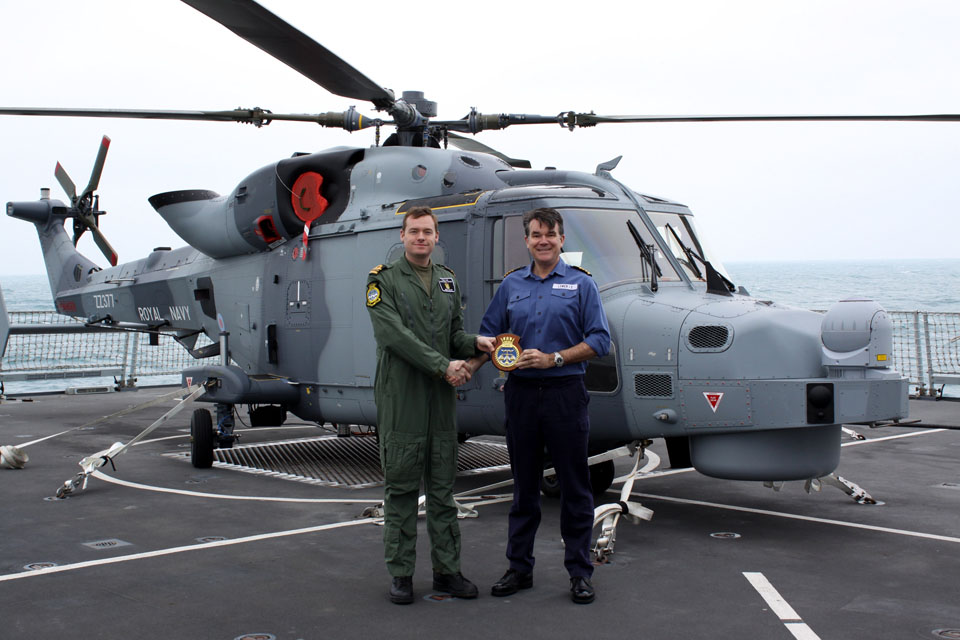
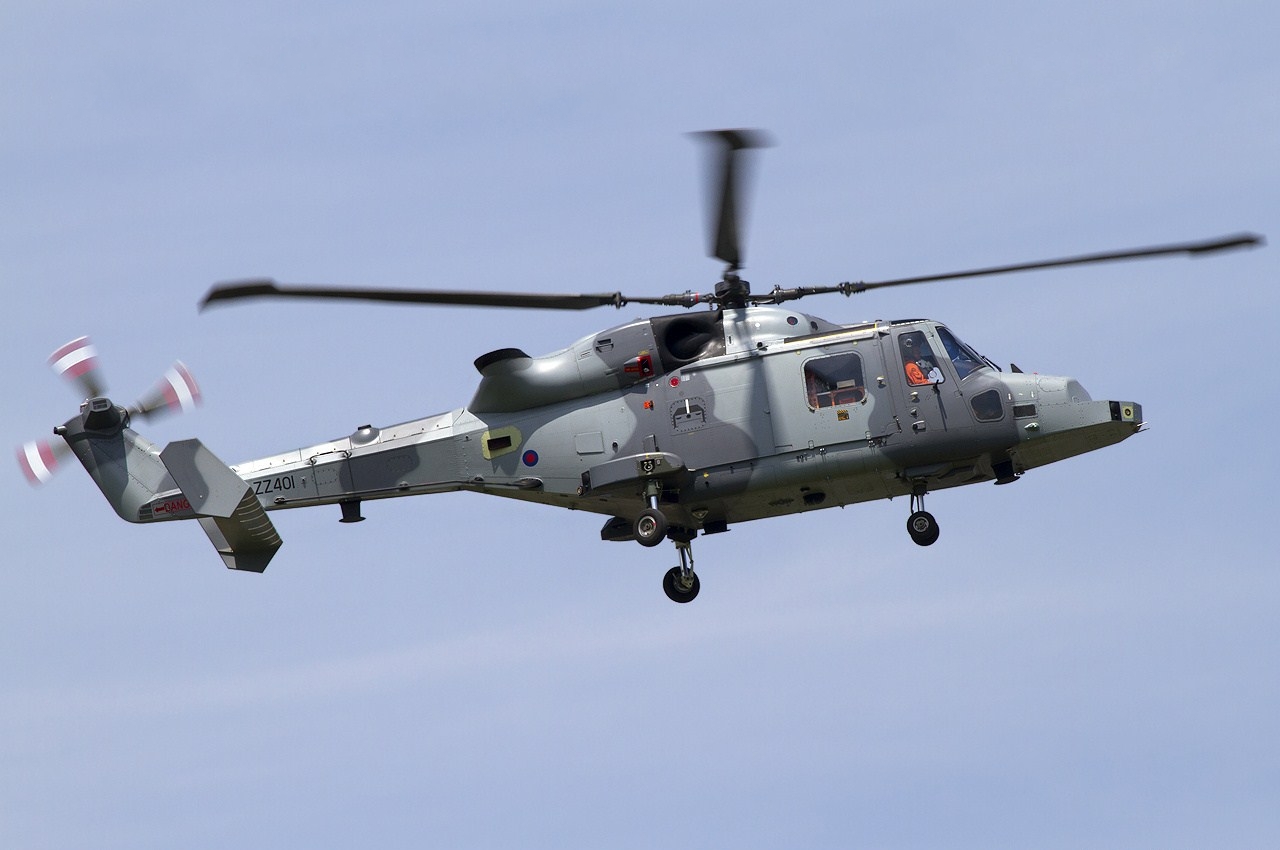
The UK Royal Navy's latest helicopter, the Wildcat, has landed on the HMS Ocean for the first time during Exercise Joint Warrior in the North Sea.
The attack helicopter was commissioned last year at Royal Naval Air Station Yeovilton in Somerset, and began its operational deployment at sea this year.
The new helicopters are scheduled to replace the Lynx helicopter.
naval-technology
Translate
Showing posts with label WILDCAT. Show all posts
Jun 2, 2015
Mar 30, 2015
First Operational Deployment of Royal Navy Wildcat maritime attack helicopter
The first Royal Navy Wildcat maritime attack helicopter has taken to the seas onboard HMS Lancaster.
The Type 23 frigate sailed from her home in Portsmouth on Saturday, March 21 for a routine nine-month Atlantic patrol tasking.
HMS Lancaster is the first ship in the Royal Navy to deploy with the new Wildcat Helicopter.
This deployment will afford the Royal Navy the opportunity to understand and develop the aircraft and its support systems and maintenance procedures.
The Wildcat is designed for a variety of roles – anti-ship, anti-submarine, ship protection, casualty evacuation, battlefield reconnaissance and general utility.
westerngazette
The Type 23 frigate sailed from her home in Portsmouth on Saturday, March 21 for a routine nine-month Atlantic patrol tasking.
HMS Lancaster is the first ship in the Royal Navy to deploy with the new Wildcat Helicopter.
This deployment will afford the Royal Navy the opportunity to understand and develop the aircraft and its support systems and maintenance procedures.
The Wildcat is designed for a variety of roles – anti-ship, anti-submarine, ship protection, casualty evacuation, battlefield reconnaissance and general utility.
westerngazette
May 27, 2014
UK To Acquire Missile Warning System for Helos, Fixed-Wing Craft
Britain is buying a BAE Systems third-generation (Gen 3) common missile warning system (CMWS) that helps protect helicopters and fixed-wing aircraft against small arms fire and rocket-propelled grenades, as well as missiles.
The military will replace some second-generation systems and outfit new aircraft. Platforms, including Apache, Chinook, Wildcat and Merlin helicopters, will receive the equipment.
The contract will ensure armed forces will have around 300 systems in total. The system would be used predominantly on rotor-wing aircraft, but one fixed-wing platform would also be outfitted.
Small arms and rocket-propelled grenades have been a constant threat to air crews in Afghanistan.
defensenews
The military will replace some second-generation systems and outfit new aircraft. Platforms, including Apache, Chinook, Wildcat and Merlin helicopters, will receive the equipment.
The contract will ensure armed forces will have around 300 systems in total. The system would be used predominantly on rotor-wing aircraft, but one fixed-wing platform would also be outfitted.
Small arms and rocket-propelled grenades have been a constant threat to air crews in Afghanistan.
defensenews
Etiquetas:
APACHE,
ARMY AIR CORPS,
BAE SYSTEMS,
CHINOOK,
MERLIN,
RAF,
ROYAL ARMY,
ROYAL NAVY.,
UK,
UNITED KINGDOM,
WILDCAT
Apr 21, 2014
Wildcat helicopter replacing Royal Navy's Westland Lynx passes first major test
The newest helicopter in the Royal Navy's arsenal came through its toughest test, spending a fortnight taking part in Europe's biggest naval war games.
Wildcat joined HMS Dragon on Exercise Joint Warrior. It is the first time the helicopter – normally based at RNAS Yeovilton in Somerset with 700W Naval Air Squadron – has spent such a concerted time at sea, and the first time it has taken part in the exercise aboard a ship.
From next year, Wildcat will start to replace the Lynx as the mainstay of aerial operations by the Royal Navy's Type 23 frigates and Type 45 destroyers.
Although it looks similar to its predecessor, Wildcat is a different aircraft, from the way it handles, to the equipment aboard – which is a generation ahead of that on the Lynx.
Later this year Wildcat will go through two months of intensive Operational Sea Training with a Type 23 frigate to prepare ship and helicopter for deployment.
Wildcat is due to be declared operational in early 2015 and is due to deploy for the first time with a Royal Navy warship on the North Atlantic patrol next May.
westerndailypress
Wildcat joined HMS Dragon on Exercise Joint Warrior. It is the first time the helicopter – normally based at RNAS Yeovilton in Somerset with 700W Naval Air Squadron – has spent such a concerted time at sea, and the first time it has taken part in the exercise aboard a ship.
From next year, Wildcat will start to replace the Lynx as the mainstay of aerial operations by the Royal Navy's Type 23 frigates and Type 45 destroyers.
Although it looks similar to its predecessor, Wildcat is a different aircraft, from the way it handles, to the equipment aboard – which is a generation ahead of that on the Lynx.
Later this year Wildcat will go through two months of intensive Operational Sea Training with a Type 23 frigate to prepare ship and helicopter for deployment.
Wildcat is due to be declared operational in early 2015 and is due to deploy for the first time with a Royal Navy warship on the North Atlantic patrol next May.
westerndailypress
Etiquetas:
AW159,
ROYAL NAVY.,
TYPE 23,
TYPE 45,
UK,
UNITED KINGDOM,
WESTLAND LYNX,
WILDCAT
Mar 18, 2014
New Wildcat aircraft drops in on Type 45 Destroyer HMS Dragon for the first time
The Royal Navy’s Wildcat, the maritime attack variant of the Lynx helicopter, is currently undergoing extensive trials with 700W Naval Air Squadron.
From next year, Wildcat will begin to replace the Lynx Mark 8 as the helicopter which supports Royal Navy destroyer and frigate operations.
Wildcat will be a more permanent presence on board Dragon later this month as, for the first time, the helicopter is embarking on the ship for the latest Exercise Joint Warrior; a biannual exercise in which British and foreign armed forces hone their skills off the coast of Scotland.
The Wildcat roll-out programme continues apace, and plans are in motion for the current flight to be the first to complete operational sea training with a Type 23 frigate in the autumn.
gov.uk
From next year, Wildcat will begin to replace the Lynx Mark 8 as the helicopter which supports Royal Navy destroyer and frigate operations.
Wildcat will be a more permanent presence on board Dragon later this month as, for the first time, the helicopter is embarking on the ship for the latest Exercise Joint Warrior; a biannual exercise in which British and foreign armed forces hone their skills off the coast of Scotland.
The Wildcat roll-out programme continues apace, and plans are in motion for the current flight to be the first to complete operational sea training with a Type 23 frigate in the autumn.
gov.uk
Etiquetas:
AGUSTA WESTLAND,
AW159,
ROYAL NAVY.,
TYPE 45,
UK,
UNITED KINGDOM,
WESTLAND LYNX,
WILDCAT
Philippine Navy Looks at the Possibility of Acquiring AW-159 "Wildcat"Helicopter
The Philippines Department of National Defense announced on Monday that it has allocated funds for the acquisition of two brand-new anti-submarine warfare (ASW) helicopters for the Philippine Navy.
The Philippine Navy earlier announced that it is looking at the possibility of acquiring the AW-159 "Wildcat" as its ASW helicopters.
The ASW choppers will be assigned to the BRP Gregorio Del Pilar (PF-15) and BRP Ramon Alcaraz (PF-16).
The AW-159 is an improved version of the Westland Super Lynx military helicopter.
The AW-159 will serve in the battlefield utility, search and rescue and anti-surface warfare roles.
The AW-159 is fitted with forward firing CRV7 rockets and machine guns, pintle mounted machine gun, Sea Skua missiles and Sting-Ray torpedoes and depth charges.
The acquisition process for these ASW helicopters is expected to go on full gear once the Philippine Navy completes its five AW-109 order deal from AgustaWestland by the third quarter of 2014.
defense-studies
The Philippine Navy earlier announced that it is looking at the possibility of acquiring the AW-159 "Wildcat" as its ASW helicopters.
The ASW choppers will be assigned to the BRP Gregorio Del Pilar (PF-15) and BRP Ramon Alcaraz (PF-16).
The AW-159 is an improved version of the Westland Super Lynx military helicopter.
The AW-159 will serve in the battlefield utility, search and rescue and anti-surface warfare roles.
The AW-159 is fitted with forward firing CRV7 rockets and machine guns, pintle mounted machine gun, Sea Skua missiles and Sting-Ray torpedoes and depth charges.
The acquisition process for these ASW helicopters is expected to go on full gear once the Philippine Navy completes its five AW-109 order deal from AgustaWestland by the third quarter of 2014.
defense-studies
Etiquetas:
AGUSTA WESTLAND,
AW159,
PHILIPPINES,
PHILIPPINES NAVY,
WESTLAND LYNX,
WILDCAT
Jan 28, 2013
Royal Navy Wildcat makes flight debut
The UK Ministry of Defence has released images showing the first flight of a production example of the Royal Navy's new AgustaWestland Wildcat HMA2 helicopter.
Performed from the airframer's Yeovil production site in Somerset, the milestone was reached by aircraft ZZ397, which was previously due to have been accepted by the navy in mid-December 2012.
AgustaWestland will produce 28 Wildcats for the RN and 34 for the British Army under a programme worth more than £1.6 billion ($2.5 billion), with the type to enter use with the services in 2015 and 2014, respectively. The manufacturer will also deliver training and support services under a £250 million agreement signed during 2012.
Also being marketed to potential international customers as the AW159, the Wildcat won its first export competition in January 2013, when the South Korean navy selected the type for an initial eight-aircraft requirement. A contract signature for the roughly $560 million deal is expected soon, with deliveries sought from 2015.
Etiquetas:
AGUSTA WESTLAND,
ARMY AIR CORPS,
AW159,
MOD,
ROYAL ARMY,
ROYAL NAVY.,
SOUTH KOREA,
SOUTH KOREA NAVY,
UK,
UNITED KINGDOM,
WILDCAT
Nov 22, 2010
Primer vuelo del tercer Lynx Wildcat/ Third Lynx Wildcat flies

El tercer y último prototipo del AgustaWestland AW159 Lynx Wildcat (TI3) ha realizado su primer vuelo de prueba desde las instalaciones de Yeovil en el Reino Unido.
Los prototipos TI1 y TI2 ya están realizando ensayos de aviónica y envolvente de vuelo. El TI3 realizará ensayos de misiones de búsqueda y navales.
El primer helicóptero de producción será entregado en 2011 y será plenamente operativo con el ejército británico en 2014 y con la Royal Navy en 2015.
key.aero
_____________________________________
The third and final AgustaWestland AW159 Lynx Wildcat test aircraft has successfully completed its maiden flight on November 19 at the company’s Yeovil facility in the UK.
The aircraft, designated TI3, will complete a 600 hour integrated flight test programme.
TI1 continues to perform air vehicle and flight envelope testing while TI2 is undertaking the flight testing of the aircraft’s core and mission avionics systems, the systems and software having already been developed and tested on AgustaWestland’s Full Systems Integration Rig (FSIR). TI3’s main task will include undertaking load survey trials and naval development, including ship helicopter operating limit trials.
The first production aircraft will be delivered at the end of 2011 with the aircraft becoming fully operational with the Army in 2014 and the Royal Navy in 2015.
key.aero
Etiquetas:
AGUSTA WESTLAND,
LYNX MK 9,
REINO UNIDO .,
ROYAL NAVY.,
UK,
UNITED KINGDOM,
WILDCAT
Subscribe to:
Posts (Atom)