Translate

Feb 11, 2014

Indian Air Force will buy 14 Tejas squadrons


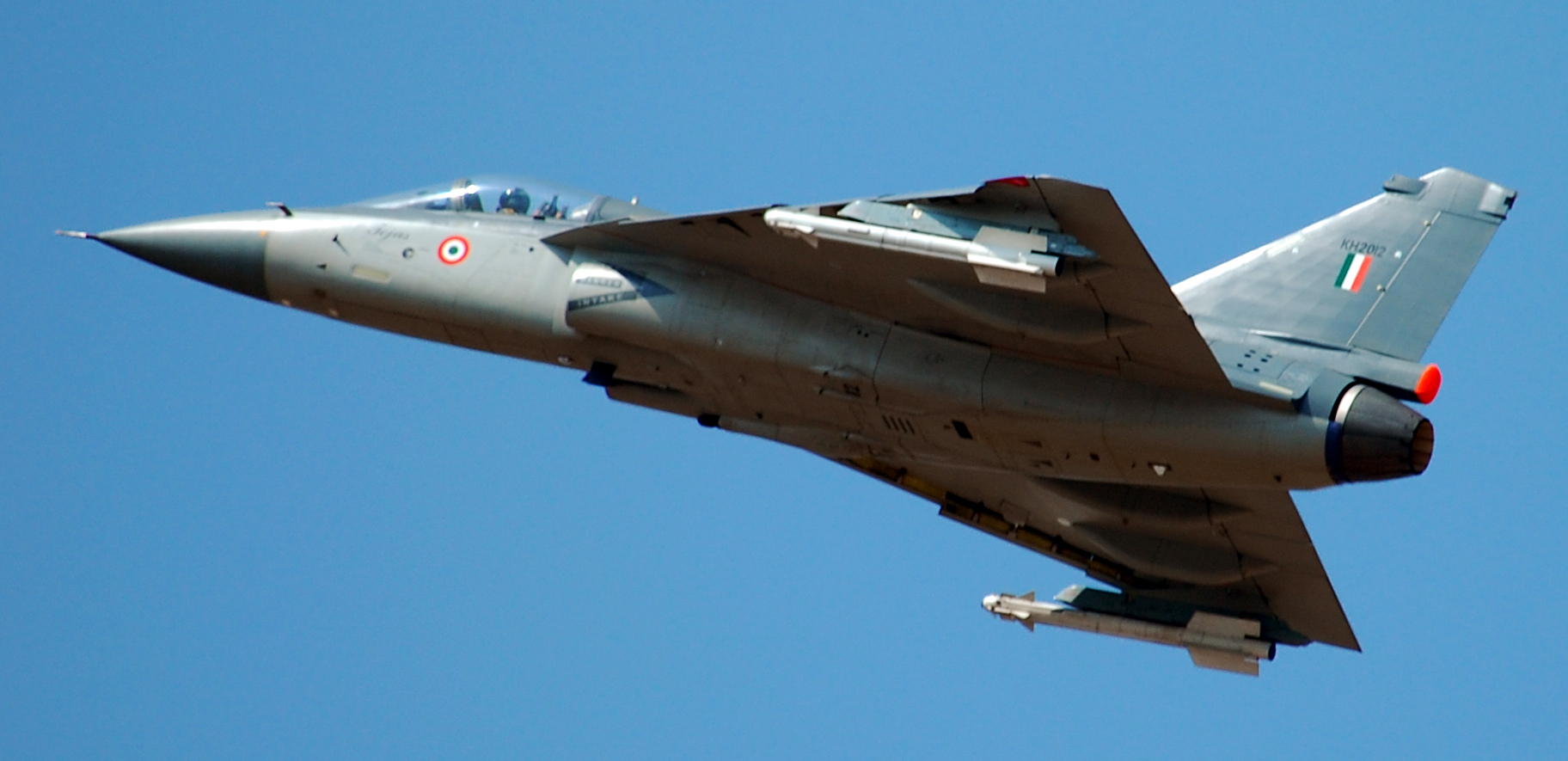
On December 20, when the Tejas was cleared for operational service in the Indian Air Force, Defence Minister declared 200 Tejas fighters would eventually enter combat service. Today, that figure quietly swelled to well above 300, with the government indicating the IAF would have at least 14 Tejas squadrons.
Each IAF combat squadron has 21 fighter aircraft; 14 squadrons add to 294 Tejas fighters. The 21 comprise 16 frontline, single-seat fighters, two twin-seat trainers and three reserve aircraft to make up losses in a war.
The MiG-21 and MiG-27 aircrafts of the IAF have already been upgraded and currently equip 14 combat squadrons. These aircraft, however, are planned for being phased out over the next few years and will be replaced by the LCA.
The IAF has committed to inducting only six Tejas squadrons — two squadrons of the current Tejas Mark I, and four squadrons of the improved Tejas Mark II. In addition, the navy plans to buy 40-50 Tejas for its future aircraft carriers.
business-standard

Spanish Navy continues with shipborne UAV trials despite challenges in Skeldar tests

The Spanish Navy says it is continuing with the testing of shipborne unmanned aerial vehicles (UAVs) despite what it described as an unsatisfactory initial trial with the Skeldar V-200 UAV.
During a six-month leasing period, Saab's Skeldar helicopter drone was embarked in Armada Española ships operating with the European Union Naval Force (EU NAVFOR) 'Atalanta' Somali counter-piracy operation.
But Armada Chief of Staff told that the UAV had suffered problems and that the Navy was not very satisfied.
Tmain problems had been mechanical issues and also Skeldar's integration with the ships' systems.
janes

Feb 10, 2014

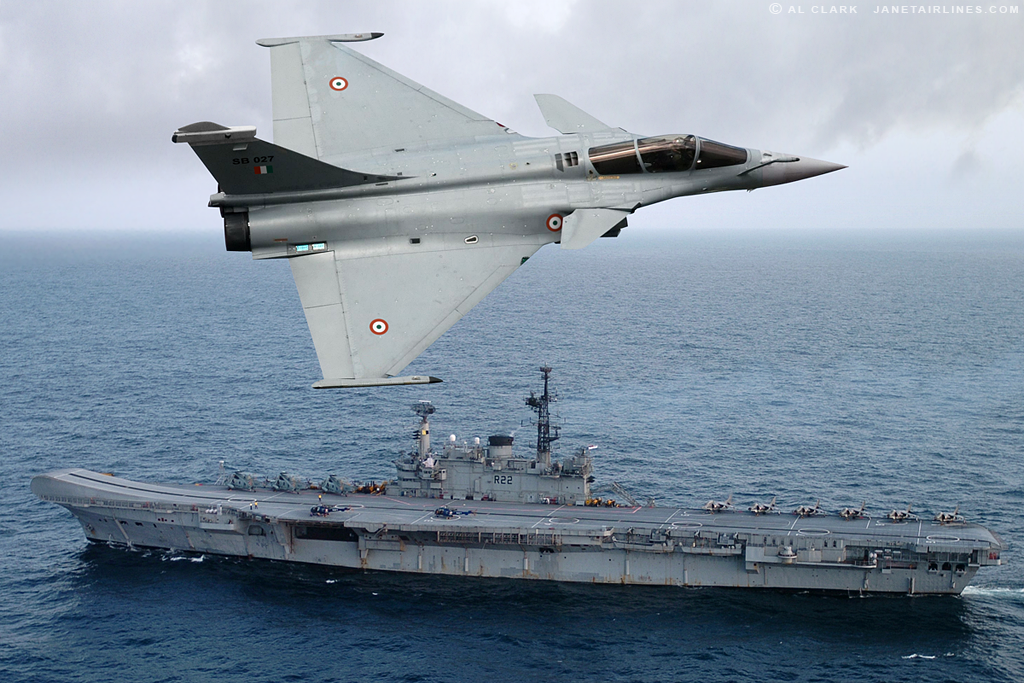
India delays Rafale deal after exhausting capital budget

India's military has postponed until the next financial year a plan to buy 126 fighter planes from France's Dassault.
New Delhi had picked the Rafale fighters for exclusive negotiations in January 2012 and had been expected to finalise the deal, by the end of March.
But negotiations to buy 18 planes off-the-shelf and build the rest in India have slowed and will stretch into the following fiscal year.
India has already spent 92 percent of its defence capital budget for this year si major procurement can only be possible in the next financial year.
India is in the midst of a $100 billion defence modernisation programme to replace Soviet-era planes and tanks, and narrow the gap with China.
India chose the Rafale after a bidding contest against the Eurofighter Typhoon.
India's air force, which launched the acquisition process in 2005, has said that delays will severely affect the fleet strength of the force.
The military was forced to turn to the overseas market because a programme to manufacture home-grown combat planes to replace ageing Russian MiG-21 fighters is running 15 years behind schedule.
reuters

First Indian MiG-29 Fighter Jet Lands on Vikramaditya

An Indian MiG-29 naval jet landed on a refitted former Soviet aircraft carrier Friday, marking the first such operation since the ship was delivered by Russia to India earlier this year.
The Vikramaditya, formerly known as the Admiral Gorshkov, was handed over to the Indian navy on November and arrived at a naval base in Kanwar in the beginning of January.
The process of the ship’s official commissioning will take between three and four months, according to the Indian navy. A team of Russian specialists arrived onboard the ship and will stay in India for a year to fix any possible glitches if needed.
The Indian Navy commissioned its first squadron of MiG-29K/KUB carrier-based fighters in 2013.
The squadron, dubbed the “Black Panthers,” comprises 12 single-seat MiG-29Ks and four two-seat MiG-29KUBs, which Russia supplied under a 2004 contract with the Indian Defense Ministry.
In January 2010, New Delhi and Moscow signed a deal for the delivery of an additional 29 MiG-29Ks to the Indian navy.
The Vikramaditya is expected to carry up to 24 MiG-29K/KUB fighter jets.
India has built with Russia’s assistance a training facility for naval pilots to practice aircraft carrier operations.
en.ria.ru

Italian Lawmakers Consider New Cuts to JSF Purchase

Eight months after the Italian parliament suspended new orders of the Joint Strike Fighter (JSF), members of the country’s biggest political party may try to halve the total purchase.
The center-left Democratic Party is preparing a policy document for approval in parliament which could seek to cut Italy’s planned purchase of JSFs from 90 to around 45. The country has already reduced its total buy from the originally planned 131 aircraft.
Sources sais the document would strive to make Italy invest in the multirole, ground attack version of the Eurofighter. Italy, a partner in the Lockheed Martin JSF program, has hitherto shown relatively little interest in the European plane.
The report follows a series of hearings in parliament’s two defense commissions about Italian military spending, held in the wake of the June vote by parliament to suspend further JSF orders.
Assembly work on Italy’s JSFs at the country’s Final Assembly and Check Out line at Cameri airbase in northern Italy has meanwhile proceeded according to schedule since kicking off last July.
Italian officials are proceeding with the procurement of 14 aircraft which were covered by full or initial industrial agreements. Three of the aircraft come from Low Rate Initial Production batch 6, three from LRIP 7, four for LRIP 8 and four from LRIP 9, including one F-35B jump-jet variant.
The components of the first aircraft, known as AL-1, are now emerging from the Electronic Mate and Alignment system, one of four at the base, which is run jointly by Alenia and Lockheed Martin and bankrolled by the Italian government.
Engine and electronics testing, including checks on the aircraft’s low observation signature, will begin shortly, with first flights and delivery in 2015.
Work on the second aircraft to be assembled started in November, with the third to start in March and the fourth in July. “All major components have arrived for AL-3 and some for AL-4 are arriving now,” said Palmer.
Alenia Aermacchi is meanwhile stepping up its work on JSF wings at Cameri, with the first two full wing sets destined for US F-35s now in production.
defensenews

Feb 8, 2014

UK sets 2019 target for AW101 Merlin HM2 Crowsnest introduction

The UK Royal Navy will field a new-generation organic airborne early warning capability in 2019, three years after it retires the last of its aged Westland Sea Kings currently tasked with protecting its surface fleet.
Dubbed Crowsnest, the project to replace the Fleet Air Arm’s Sea King Mk7 airborne surveillance and control system helicopters had previously been due to deliver its first adapted AgustaWestland AW101 Merlin HM2s for service trials from 2020, but only to achieve full operational capability in 2022.
The introduction of Crowsnest 18 months early will ensure HMS Queen Elizabeth has the full range of capabilities when it enters service.
The UK’s last Sea King Mk7s are due to be retired in March 2016.
flightglobal

Feb 7, 2014

India, Israel to Build Anti-Missile System

India and Israel will jointly build an integrated anti-missile system to be deployed against Chinese nuclear and conventional missiles.
The new program,has been approved by the Indian Defence Ministry, with a contract expected to be signed in the next six months.
The proposed missile defense program will see participation by Rafael and Israel Aircraft Industries.
The system will integrate the homegrown Prithvi air defense system, which is ready for induction next year, with the mobile detection radar being built by BEL in partnership with IAI.
defensenews

USS Donald Cook heads to Rota; 3 more DDGs to follow


The destroyer Donald Cook set sail from Norfolk, Va., for its new home port in Rota, Spain, the first of four destroyers over the next two years to be forward-deployed to that nation.
Ross and Porter, out of Norfolk, and Carney, out of Mayport, Fla., will follow Cook as the first U.S. ships to be homeported at Naval Station Rota since 1979.
Former Defense Secretary announced the Rota move in October 2011. Navy Secretary Ray Mabus announced the chosen ships in February 2012.
Basing ships in Rota will allow the Navy to provide more forward-based presence with fewer ships. Transit time from the U.S. to the operating area is eliminated, and the ships are able to respond quickly to a wide range of contingencies.
About 1,300 sailors and 2,100 family members will move to Rota. They’ll join the 1,300 sailors, 1,700 family members and 200 U.S. civilian workers already there.
Many active-duty sailors were thrilled with the chance to get orders to Spain, and Rota veterans told Navy Times of the excellent quality of life at the base.
navytimes

Future of F-35 in Japan Unclear as Costs Mount


Two years after Japan agreed to buy F-35 to replace its F-4EJ Phantoms, the government has yet to give more than the vaguest hints about its future fighter replacement plans as the Defense Ministry struggles with a rising tide of costs and difficulties with the troubled stealth fighter program.
Following instructions of Prime Minister to recalibrate Japan’s defense posture to counter rising concerns, the MoD released its five-year Mid-Term Defense Plan and 10-year National Defense Program Outline in December, one year early. Yet the two documents are singularly unrevealing about Japan’s fighter plans.
While the midterm plan is explicit about a number of important new programs, it states only that Japan will buy 28 F-35s through Japanese fiscal 2018. The long-range plan states only that Japan is considering increasing its fighter inventory from 260 to 280.
The plan also called for the purchase of 17 Bell Boeing V-22 Osprey tilt-rotor aircraft, three Global Hawk surveillance drones and 52 amphibious vehicles to counter the increasingly expansionist Chinese Navy and deter threats to Japan’s long southeastern island chain.
The plan for 28 F-35s is in line with the MoD’s December 2011 agreement to eventually deploy 42 of the fighters, which should be completed by around 2021, with 38 to be assembled in Japan under a final assembly and checkout deal, according to internal MoD planning documents, said defense analyst Shinichi Kiyotani.
Under a June 2013 foreign military sales agreement with the US, Japan committed to purchase the first four F-35As at US $124 million each. The price was already at a premium to theoriginally agreed, due to the then-continuing development and testing difficulties the F-35 program was facing.
Since then, prices have continued to climb, especially with the yen’s devaluation. The price of the first two fighters to be purchased for fiscal 2013 climbed, and the cost for the next four for fiscal 2014 has risen.
Bearing in mind the rising costs of the F-35 program, the MoD is still figuring out what it can do about the long-term replacement of around 200 F-15J fighters and 90 F-2 fighters.
defensenews

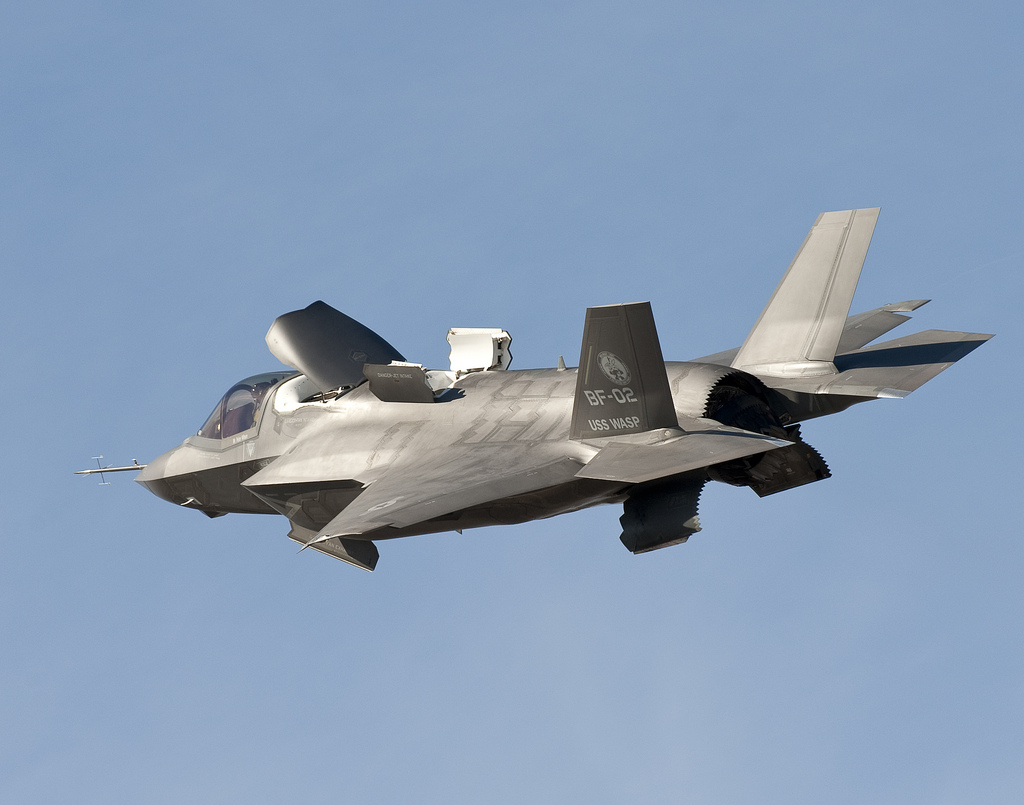
US Navy F-35 Set For Sea Trials After Tailhook Redesign


The naval version of the F-35 is due to start flight tests on an aircraft carrier at sea in October after Lockheed Martin have fixed the tailhook used to arrest the plane's landing on a ship's deck.
Lockheed was forced to redesign the tailhook after a test plane successfully landed 36 times with the new version during trials on land.
The problems with the tailhook and a pricey new pilot helmet had become symbolic of broader issues with the F-35 program as the complexity of trying to develop three different models simultaneously with a high level of shared parts led to a cascade of technical problems and cost overruns.
Lockheed and its partners on the F-35 program are looking to remove risks from the F-35C in the face an intense lobbying battle with Boeing Co., which wants the Navy to buy more of its F/A-18 planes, the mainstay of the U.S. Navy's existing carrier-based aircraft fleet.
The Pentagon plans to order 340 F-35Cs, 240 for the Navy and another 80 for the Marine Corps. The Navy aims to have its first squadron of jets ready to fly by early 2019, though a Pentagon watchdog last month cast doubt on whether the short-takeoff and landing version of the jet--known as the F-35B--would be ready for the Marines as planned by mid-2015. The U.S. Air Force is due to reach so-called "initial operational capability" with its F-35s in 2016.
wsj

Northrop Grumman to Demonstrate Faster, Simpler Way to Replace Obsolete Parts for B-2 Bombe


The U.S. Air Force will get a more affordable way to replace obsolete avionics on the B-2 stealth bomber under a contract awarded to Northrop Grumman Corporation.
The company will produce a functional replacement for a B-2 avionics box called the Audio Central Distribution Unit (ACDU). More significantly, the work will map out a smart, cost-effective way to address a growing threat to B-2 readiness: mission-essential parts that cannot be repaired or easily replaced.
An increasing number of LRUs on the jet face or will soon face obsolescence. In some cases, the company that produced an LRU is out of business or can no longer produce the unit. In other cases, the equipment required to test an LRU is no longer available.
The Common Processor concept is achieved by taking advantage of functional similarities among avionics LRUs on the B-2 today. Common hardware elements will be used in unique combinations to create different types of LRUs.
Northrop Grumman and the Air Force have identified 21 different current LRUs on the B-2 that could be replaced using the Common Processor. Each LRU has multiple copies on the jet.
northropgrumman

Russian Air Force Receives Israeli Designed UAV

The Russian Air Force has received six ‘Outpost’ (Searcher-II) UAV’s.
The platoon will be based in in Kamchatka and will perform tactical reconnaissance sorties in the region.
The ‘Outpost’ UAV has been produced by UZGA at its Nizhny Tagil factory, under license from Israeli IAI.
i-hls.com

Second LHD dock arrives in Australia

The hull of the second Landing Helicopter Dock (LHD), one of the two largest ships ever to be built for the Royal Australian Navy, has arrived in Melbourne.

Pentagon Drops Plan to Mothball USS George Washington Aircraft Carrier

The Pentagon has dropped a plan to retire one of its nuclear-powered aircraft carriers after the White House intervened to head off a brewing political fight.
The military had proposed an early retirement of the USS George Washington, reducing the U.S. carrier fleet to 10, as part of plan to deal with cost cuts imposed by Congress.
wsj

First Luftwaffe A400M on the assembly line

With a pair of A400Ms delivered to France’s Armee De L’Air and one known mission successfully completed, the German Luftwaffe is next in line for the new generation military airlifter.
Airbus Defence and Space A400M final assembly line in Seville this week started work on the first A400M for the German air Force.
The arrival of the fuselage for the aircraft – MSN18 – means all major structures for the first of 53 A400Ms for Germany is now being assembled in Spain.
Delivery of the Luftwaffe’s first A400M is set for November this year.
In December the second of the French A400Ms, now known as Atlas, became the first of type to perform an operational flight, delivering 22 tons of supplies in support of France's Operation Serval in Mali.
defenceweb.co.za

Feb 6, 2014

Helicóptero Superpuma del Ejercito del Aire por primera vez en el portaaeronaves Juan Carlos I

A finales del pasado mes de enero, en el marco del programa de pruebas de interoperabilidad de helicópteros de las Fuerzas Armadas con el portaaeronaves Juan Carlos I (LHD Juan Carlos I), se llevó a cabo la evaluación operativa con un helicóptero del Ejército del Aire HD-21 Superpuma del Ala 48. Con esta prueba se realizó la primera toma y despegue de una aeronave del Ejército del Aire en el buque.
Para conseguir la calificación de interoperabilidad se llevaron a cabo todas las pruebas requeridas por la Armada, en puerto ,y navegando la segunda. Se realizaron, entre otras tareas, plegado-desplegado de palas de rotor principal, rodaje en cubierta de vuelos, subida y bajada utilizando los distintos ascensores y compatibilidad de servicios (remolcado, lavado de turbinas, repostado, conexión alimentación externa, etc.). Tras la evaluación operativa las tripulaciones del Ala 48 recibieron durante tres días conferencias de ambientación marítima.
El Ejército del Aire da, de esta forma, un paso más para conseguir que sus helicópteros y tripulaciones puedan ser transportados y operar desde el Juan Carlos I, lo que beneficiará la capacidad expedicionaria del Ala 48 y la posibilidad de realizar misiones de recuperación de personal, operaciones aéreas especiales o aeroevacuaciones médicas.
ejercitodelaire

Lockheed launches civil version of C-130J military transport plane

Lockheed Martin launched the civil variant of its C-130J Super Hercules military transport plane, the LM-100J, saying it expected to sell about 75 of the planes to mining and energy companies, and other commercial and government customers in coming years.
Lockheed said it had asked the U.S. Federal Aviation Administration (FAA) to certify the LM-100J, which will mirror the four-engine C-130J military workhorse, but without military avionics and communications equipment.
Lockheed hopes to land an initial order for the new LM-100J aircraft this summer
The plane would be ideally suited for use by oil and gas operators and mining companies, which needed to deliver generators and other heavy equipment to austere locations around the world. The plane can also be used for aerial spray, firefighting, medical evaluations, humanitarian aid and VIP transport.
reuters

China Will Deploy Subs that Could Nuke Alaska or Hawaii This Year

China is set to deploy submarines sometime this year armed with nuclear tipped missiles capable of striking Alaska or Hawaii.
The People’s Liberation Army Navy (PLAN) Jin-class nuclear ballistic missile submarine is set to begin patrols in 2014 — armed with the PLAN’s new Ju Lang 2 (JL2).
With a range in excess of 4000 [nautical miles], the JL-2 submarine launched ballistic missile (SLBM), will enable the JIN to strike Hawaii and Alaska and possibly western portions of CONUS from East Asian waters.
The Jin, or Type 94, submarines are a developmental leap over the older Type 92 Xia-class submarines armed with the much less capable JL-1 SLBM.
The Jins — 11,000 tons fully submerged — will be the PLAN’s first bid to create a credible sea-based nuclear deterrent to operate with China’s land based nuclear ballistic missiles.
The missile has been under development by the Chinese for more than a decade.
If China plans for five or six of the Jin-class submarines, it’s likely to mimic the nuclear deterrent ability of smaller Western nations like the U.K. and France.
As part of creating a deterrent patrol, the PLAN has accelerated submarine operations.
It’s unclear when this year the first patrol will occur.
usni.org

North Korea Developing Mobile Missile


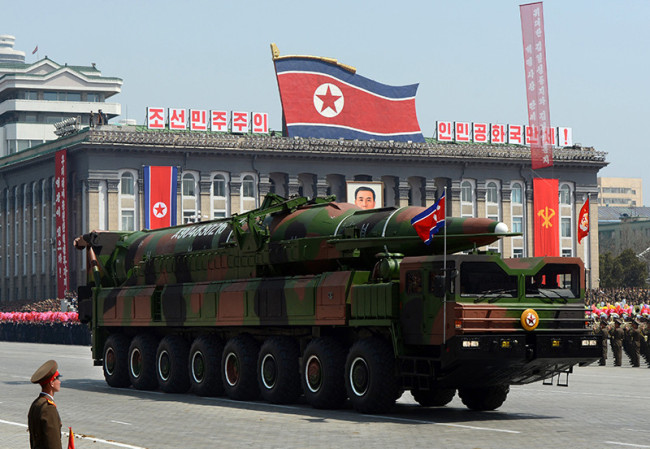
North Korea has taken the initial steps toward fielding a road-mobile intercontinental ballistic missile that could be capable of hitting parts of the U.S., according to U.S. intelligence agencies.
The KN-08 has been been displayed twice in parades, although it remains untested.
North Korea’s missile development, along with concern about Iranian weapons programs, is the principle rationale for the U.S. ground based-missile defense program managed by Boeing, which hasn’t had a successful interception test since December 2008.
The Air Force’s National Air and Space Intelligence Center said in its latest public report last year that the missile, also known as the Hwasong-13, is estimated to have a maximum range of at least 5,500 kilometers (3,420 miles), far enough to reach Alaska but not the Pacific Northwest.
bloomberg

Cut Carriers To Save Subs, Cyber From Sequester, US Thinktanks Say


In a recent budget war game, four U.S. thinktanks: Center for Strategic and Budgetary Assessments, American Enterprise Institute, Center for a New American Security, and the Center for Strategic and International Studies, all recommended that the Pentagon downsize the aircraft carrier fleet and move the money elsewhere for other programs.
None recommended to stop production of new carriers but all four separately concluded that current carriers due for overhaul should be retired instead.
breakingdefense

India, Dassault Rafale Deal Appears Stalled


Negotiations over the deal to sell 126 Dassault Rafale jets to India have stalled, according to Indian Defence Ministry. The sticking point involves issues governing license-production of the jets at state-owned Hindustan Aeronautics Ltd. (HAL).
A series of meetings held over the past three months have failed to resolve the stalemate, meaning it is unlikely the deal will be finalized during the current New Delhi administration.
At the beginning of the year, Rafale-maker Dassault met with the MoD, Indian Air Force and HAL to break the impasse. A planned visit by HAL Chairman R.K. has been postponed, putting a question mark over the entire program.
A Dassault executive said the company was informed at the last minute about the postponement of the HAL team visit to Paris.
However, a senior HAL executive said the visit was postponed due to a sudden company board meeting at home. The visit has just been postponed, not canceled.
At issue is the Indian Air Force’s insistence that HAL provide guarantees on the delivery schedule for the Rafale aircraft. According to the tender, 108 of the 126 jets are to be license-produced at HAL.
HAL in turn has shifted the onus of providing guarantees to Dassault, which initially refused before agreeing to help HAL adhere to the delivery schedule.
However, HAL has failed to take responsibility and guarantee the work of its sub vendors, which includes state-owned companies.
At the same time, the framework governing work share has not been finalized because the Indian side wants a greater percentage of subsystems and auxiliary work in the license production deal. The French say HAL will need to absorb Western technologies, so the work share can increase only as the license production progresses.
The Air Force, having suffered delays from HAL, is adamant that the delivery schedule is followed. Air Force sources say the delay in procurement of the fighter will severely affect the fleet strength of the force. The service had to search for a fighter aircraft in the overseas market because the homegrown light combat aircraft, proposed to replace Russian MiG fighters, is more than 15 years behind schedule.
Rafale was shortlisted alongside the Eurofighter Typhoon after the first round of competition; the US-made F-16 and F/A-18, Sweden’s Gripen and Russia’s MiG-35 were ejected after the technical evaluation.
After the flight trials and life cycle cost phase, Rafale was selected due to its low cost. Contract negotiations began in early 2012, with the goal of signing a contract in the current financial year ending in March.
defensenews
Feb 5, 2014

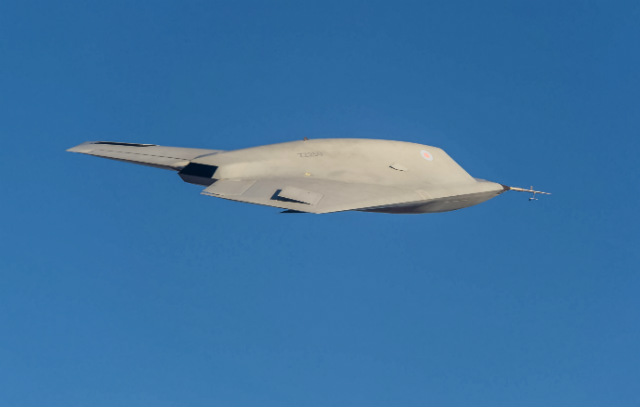
First images of UK’s classified unmanned stealth “superdrone”

Although the footage was shot in August 2013, today BAE Systems released it for the first time.
“Taranis“, the technological demonstrator of UK’s stealthy unmanned combat vehicle made its first flight on Aug. 10, 2013. Where the maiden sortie took place remains a secret.
The aircraft flew at the old British Nuclear test range at Woomera, Australia.
The only known thing is that the drone flew under the command of a BAE Systems’ test pilotand “made a perfect take off, rotation, ‘climb out’ and landing.”
Since then, a number of other test flights have taken place in much secrecy.
“Taranis” is an Unmanned Combat Air Vehicle (UCAV), described as “the most advanced aircraft ever built by British engineers”.
It’s a semi-autonomous pilotless system that will feature an intercontinental range and will be able to carry a wide variety of weapons, including PGMs (Precision Guided Munitions) and air-to-air missiles.
The Royal Air Force already operates a fleet of Reaper drones from RAF Waddington airbase.
theaviationist

Amphibious Ship America (LHA 6) Sails the Gulf of Mexico for Successful Acceptance Trials


The amphibious assault ship America (LHA 6) returned to Huntington Ingalls Industries' Friday following successful acceptance sea trials in the Gulf of Mexico.
During acceptance trials, America performed all required sea trial evolutions, including the operation of the hybrid gas turbine/electric-drive propulsion system. Other tests included anchor handling, steering demonstration, flight deck operations, and combat systems' evaluations.
When America enters the fleet, she will be the flagship of an Expeditionary Strike Group, strategically positioning Marine Expeditionary Units ashore across a full spectrum of missions, including humanitarian, disaster relief, maritime security, antipiracy and other operations while providing air support for ground forces.
America-class ships are 844 feet long and 106 feet wide and displace 44,971 long tons. The gas-turbine propulsion system will drive the ships in excess of 20 knots. They will accommodate a crew of 1,059 (65 officers) and 1,687 troops. The America-class will be capable of carrying a Marine Expeditionary Unit, including Marine helicopters, MV‐22 Osprey tiltrotor aircraft and F‐35B Joint Strike Fighter aircraft.
The newest class has an increased aviation capacity to include an enlarged hangar deck.
virtual-strategy

Russia May Build New Aircraft Carrier by 2023

The development and construction of a new aircraft carrier for the Russian navy could take about 10 years, a St. Petersburg-based ship design bureau said Monday.
The shipe design bureau could design both a nuclear-powered and conventional version of the aircraft carrier. The former would have a deadweight of up to 85,000 metric tons, while the latter – up to 65,000 tons.
The nuclear-powered ship would be able to carry some 70 aircraft and helicopters, while the conventional vessel – up to 55.
The new carrier would serve as a seaborne platform for new-generation fixed- and rotary-winged aircraft, in particular a fifth-generation fighter set to replace the Su-33 multirole fighter aircraft currently in service, as well as unmanned aerial vehicles.
The Russian navy needs at least four aircraft carriers: two for the Northern Fleet and two for the Pacific Fleet.
Russia has only one aircraft carrier, the Admiral Kuznetsov, built in 1985, with a displacement of 55,000 metric tons, a crew of 1,500 and capability to carry more than 50 aircraft.
en.ria.ru

Azerbaijan to modernize MiG-25 foxbats included in Air Forces’s inventory

Azerbaijan will modernize Mikoyan-Gurevich MiG-25 (NATO codename Foxbat) military aircrafts included in the inventory of the Air Force in the Aircraft Repair Plant of Azerbaijan.
Aircraft Repair Plant of Azerbaijan has implemented several modernization projects of MiG-25 foxbats so far. The Plant’s last project was related with the modernization of MiG-25 foxbats of Algeria Air Forces.
Azerbaijani Air Forces’s inventory includes 10 modified items of MiG-25 foxbats, 6 of MiG-25PD and 4 of MiG-25RB.
Azerbaijan purchased 8 items of MiG-25 foxbats from Kazakhstan in 1993.
apa.az

UK Voyager deliveries hit half-way point


AirTanker’s Voyager programme has hit the mid-point in its delivery of 14 modified Airbus A330s, with its latest example having arrived in the UK on 29 January.
Registered as ZZ337, the new aircraft landed at RAF Brize Norton after a delivery flight from Airbus Defence & Space’s modification facility in Getafe, near Madrid, Spain. It follows five previous examples adapted for the in-flight refuelling mission and flown by the service’s 10 and 101 squadrons, plus another which is currently held on the UK civil register and flown by AirTanker pilots.
A further two Voyager aircraft are on schedule to be delivered by May 2014, when the fleet is due to achieve full release to service status with the RAF. Five more examples, which are to provide a so-called surge capability, will follow between 2015 and late 2016.
flightglobal

Belarus ready to redesign decommissioned Su-27

The Belarusian military industrial complex is ready to redesign the Su-27 aircrafts which have been decommissioned.
It is possible to equip these fighter planes with advanced avionics and up-to-date weapons and protection equipment. As far as weapons are concerned, they will be of both air-to-air and air-to-surface classes.
The Belarusian head of state had earlier suggested modernizing Su-27, and the Defense Ministry made a decision pursuant to this suggestion.
In August 2013 Defense Minister told media that Su-27 had been withdrawn from service in Belarus. .”
belta

Feb 4, 2014

Boeing delivers first B-737 AEW&C to Turkey

Boeing has silently delivered the first airborne early-warning and control (AEW&C) aircraft to Turkey under a program that was launched more than a decade ago.
The defense procurement agency, the Undersecretariat for Defense Industries (SSM), and the Turkish Air Force simultaneously announced Jan. 31 that the AEW&C aircraft had arrived in Turkey for acceptance tests. The tests are to be followed by an inauguration ceremony Feb. 21 at the 3rd Main Jet Base Command in Konya.
Last year, Turkey Defense Minister said Turkey would impose sanctions on Boeing for the delays.
Under a 2003, contract Boeing was to develop and deliver four AEW&C aircraft to the Turkish Air Force by 2008.
Recent reports said Turkey demanded Boeing pay $600 million in penalties, but defense officials denied that.
There are disagreements over whether the delays stemmed entirely from the company’s shortcomings or whether they were due to extra features that Ankara demanded be installed on the aircraft.
Turkey officials said that Boeing only had to pay for the delays considered to be the company’s fault.
hurriyetdailynews

Feb 3, 2014

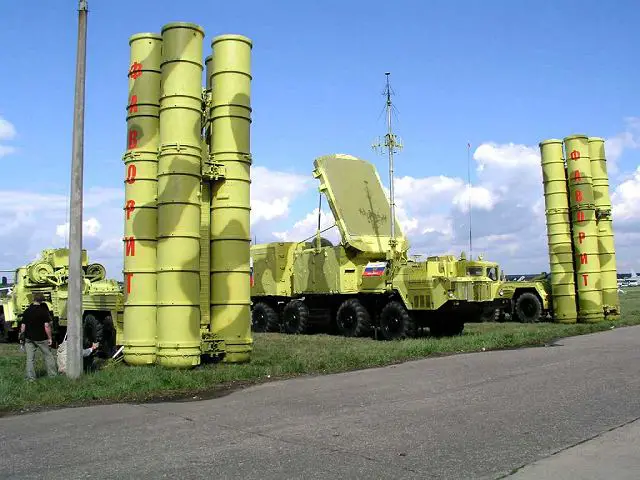
Russia sending advanced air defense systems to Kazakhstan

Russia is delivering S-300 advanced air defense systems to Kazakhstan.
Russia is trying to increase Russia's influence over former Soviet Union countries with a series of political, trade and security initiatives that aim to tighten cooperation among the states.
This move attempts to boost the capabilities of a post-Soviet security bloc, the Collective Security Treaty Organisation (CSTO), which combines Kazakhstan, Armenia, Belarus, Kyrgyzstan, Russia and Tajikistan.
Five divisions of S-300 will be delivered from the surplus of the Russian Defence Ministry. A division is usually made up of 12 rocket systems.
Russia said last year it was sending four S-300 divisions to Belarus.
The CSTO has faced criticism for its lack of activity since its inception in 1992.
Uzbekistan signed the original CSTO treaty but said last year it was suspending its membership in the bloc.
Russia signed a contract with Syria in 2011 to send four S-300 units to the war-torn country. A military source said last year that some parts had likely been delivered but had not been sent in full.
reuters

Final Flight of The Dambusters

The Royal Air Force’s 617 Squadron “Dambusters” have flown their final mission over Afghanistan and will be returning home to disband.
The last flight was a mission in support of coalition troops; the Tornado Force in Afghanistan fulfil the vital Close Air Support and Reconnaissance roles, providing protection and information from above directly to commanders on the ground. This task is now handed over to No II (Army Co-operation) Squadron from RAF Marham.
During their final operational tour the Dambusters flew 188 missions, clocking up more than 1500 total flying hours supported by 11,352 engineering man hours.
The Dambusters have a legacy of low level flying from their origins in World War II. In Afghanistan they carried out 14 Shows of Force, flying fast and low to deter enemy forces from attacking coalition ground troops.
raf